
Foodbank FAQs

If you require food relief, please visit the Find Food page which will help to connect you with local food relief services, or contact the Foodbank in your state or territory .

We need your help now. No child should have to go to school hungry, no parent should have to skip meals to feed their family and no Australian should have to suffer the stress and health impacts of not having the means to put food on the table.

Click here to see what you can do to help us end hunger in Australia.

You can also contact your local MP/Senator to ask what they are doing to help Foodbank, and whether they support the development of a long-term, whole of government Food Security Strategy.

More than half of all food insecure households in Australia (59%) are at the severe end of the food insecurity spectrum. This is 2 million households (2.3 million in 2023) where people suffer disrupted eating patterns and reduced food intake such as skipping meals or going entire days without eating, sometimes to protect other members of their household.

Read the Foodbank Hunger Report 2024 for more information

Food insecurity is “a situation that exists when people lack secure access to sufficient amounts of safe and nutritious food for normal growth and development and an active and healthy life” (Food and Agriculture Organisation of the United Nations). This is different to hunger, which is a sensation many of us experience often, but are able to address by simply opening a cupboard or a fridge. Food insecure people do not have this luxury and cannot regularly and routinely put a meal on the table for themselves or their family.

The face of hunger is diverse – those affected are young people, men and women, children and the elderly. They are single and in families, students, employed, unemployed and retired. Also at risk are people with disabilities, refugees and those of Aboriginal and Islander descent. The suffering is often hidden, but the reality is we’re all likely to know someone going without.

Many of us face the daily pressures of rising amenity costs, including rent, mortgage repayments and power bills. For some people, this pressure can result in tough choices such as, ‘Do I pay that bill or buy food?’.

The most common reason for households experiencing food insecurity in the last 12 months was increased or high cost of living. In these situations, people are forced to choose between food and other everyday necessities.

Check out Foodbank Hunger Report

To get through times of food insecurity, people often go without. When individuals are faced with food insecurity, meal-skipping is commonplace.

For parents, meal-skipping can mean the difference between their children having something to eat or going hungry.

Lack of food can significantly impact quality of life. Not having enough to eat can severely impact everyday functioning and wellbeing. Food insecure Australians most commonly report lethargy or tiredness, a decline in mental health and a loss of confidence because of lack of food.

Hello, we’re Foodbank. We believe everyone should have access to good food no matter their situation. We’re here for the everyday Australians who are going without. It’s our mission to create long lasting change in Australia by ending hunger.

In Australia, we provide food and grocery relief to 2,929 front-line charities and 3,220 school breakfast programs to help feed people in need. Last year alone, we sourced enough food for 92 million meals.

We are the only Australian food relief organisation to be an accredited member of the Global FoodBanking Network (GFN).

Foodbank works right across the Australian food and grocery supply chain from farmers, wholesalers, and manufacturers through to the retailers to source food and groceries.

Last year Foodbank sourced 48.1 million kilograms of food and groceries.

To ensure warehouses always have key staples in stock, Foodbank collaborates with manufacturers, suppliers and transporters to proactively supplement essential items that do not come in sufficient quantities via traditional food rescue channels.

Collaborative Supply Program

Foodbank is the only charity in Australia that collaborates with suppliers, manufacturers, and transporters in an innovative program to ensure consistent supplies of essential food items are available in its warehouses every day. The Collaborative Supply Program sees food manufacturers produce sought-after products using spare production capacity. Suppliers donate or subsidise the ingredients, packaging and delivery of the products to spread the commitment and enhance the sustainability of the program. Through this program, we are able to provide consistent supplies of breakfast cereals, fresh and long life milk, pasta and pasta sauce, canned fruit, baked beans and sausages. With every dollar invested in the program delivering $5 worth of food – clearly a sound investment.

Primary Produce Programs

Despite rural and regional Australians being more likely to be food insecure than their metro counterparts, farming communities work closely with Foodbank to donate grain, rice, milk, meat, eggs and fresh produce. Foodbank sources these essential products through relationships right along the supply chain, partnering with farmers, produce market associations, and peak bodies from paddock to plate. This farm fresh produce is collected by Foodbank and made available directly to our charity network to be provided to food recipients, used in Foodbank production kitchens, or used as manufacturing ingredients for the Collaborative Supply Program. For example, donated meat trim can be used in our protein program and become sausages.

Foodbanks across the country assist 3,220 schools around Australia through the direct and indirect delivery of School Breakfast Programs. Given the geographic spread and range of socio-economic circumstances, Foodbank prides itself in its ability to be flexibly and dynamic in terms of delivery and distribution models, to ensure the best possible outcomes for children at these schools.  Some Foodbanks also deliver nutrition education programs for adults and children alike to encourage improved nutrition literacy in the community.

‘Use By’ is the critical date mark as it signifies when a food must be consumed by for health and safety reasons. It is used on highly perishable foods, such as ready-made meals and items that are classified as high risk upon expiration. Foodbank does not distribute food at risk of exceeding its ‘Use By’ prior to being consumed. ‘Best Before’ is used to indicate quality rather than safety. It identifies the date after which food exceeds its peak quality.

‘Best Before’ dates are found on food such as fruits and vegetables, dried pasta, rice, tinned and canned foods. It is perfectly safe to eat food past its ‘Best Before’ date but some of its quality, flavour or texture may have been lost. Some of the food that Foodbank distributes is past its ‘Best Before’, however, we have worked with our manufacturing partners to ensure we meet their internal guidelines and that product is still safe to consume and the quality will not be unduly effected.  The items must also comply with all our other requirements ensuring they are safe to consume (i.e. no damage to the packaging and have been stored under appropriate conditions etc).

Foodbank plays a key role in times of community emergencies and natural disasters. Every State/Territory Foodbank is involved in disaster relief, providing essential supplies to support the work of emergency services and first responders as well as ongoing assistance to affected communities during the months and years it takes to recover.

Food relief is a crucial part of Australia’s social safety net, especially for anyone facing financial hardship. As of August 2024, nearly two million Australian households – about 1 in 5 – are experiencing severe food insecurity. It’s a surprising reality, especially considering Australia produces enough food to feed three times our population.

That’s where Foodbank steps in. As Australia’s largest food relief organisation, Foodbank provides more than half of all the groceries distributed to people doing it tough across the country. To better understand the impact of this work, Foodbank carried out a Social Return on Investment (SROI) study, looking at two key food relief models, Everyday Food Relief (EFR) and School Breakfast Programs, over the 2025 financial year.

The findings, shared in the report “Foodbank – it’s about more than the food”, show just how powerful food relief can be. For every dollar invested, there’s a return of $5.83 in social, economic, and environmental value, and every kilo of food distributed creates $43 in value.

Foodbank’s food and grocery rescue operations play a key role in addressing Australia’s $36.6 billion food waste problem, redirecting and/or repurposing approximately 37 million kilograms of food and groceries that may otherwise end up in landfill. In 2022, we saved 86.6 million kilograms of CO2 emissions. Foodbank worked closely with the Federal Department of the Environment and Energy, our sector peers and our supply chain colleagues in the development of Australia’s first ever National Food Waste Strategy. The Australian Government has committed to halving food waste by 2030 (consistent with Target 12.3 of the UN Sustainable Development Goals).

Foodbank is an active participant in Stop Food Waste Australia and the Fight Food Waste Cooperative Research Centre which are both committed to the goal of halving food waste by 2030.

Foodbank’s activities across Australia play a key role in delivering on at least five of the UN Sustainable Development Goals, which are aimed at ending poverty, protecting the planet and ensuring prosperity for all.  Foodbank’s operations are strongly aligned to the following five goals, SDG 2 Zero Hunger, SDG 1 No Poverty, SDG 10 Reduced Inequalities, SDG12 Responsible Consumption & Production, SDG 17 Partnerships for the Goals.

All levels of government have a role to play in addressing the root causes of food insecurity and working with organisations like Foodbank to ensure food relief is available while these causes are being addressed.

Federal Government funding for the food relief sector is not confirmed beyond next financial year. Ahead of the Federal election, Foodbank, is seeking three key commitments from all the parties and independents to ensure vulnerable people have consistent and reliable access to food:

  1. Sustained and adequate funding for food relief
  2. The establishment of dedicated disaster preparedness and emergency food relief programs
  3. The introduction of a national food waste tax incentive, making it easier for the food sector to redirect its surplus for food relief

Foodbank works with the entire Australian food and grocery industry from farmers, wholesalers, and manufacturers to retailers to source food and groceries.  In addition to food rescue, food and grocery companies and retailers make food/grocery donations to Foodbank as part of their commitment to corporate social responsibility. Many companies choose to make regular donations by increasing their production run or drawing straight from inventory in order to ensure that their product is consistently available to charities. They may also make special one-off donations at the time of natural disasters.

In addition, in an innovative and world-leading foodbanking program, Foodbank also collaborates with suppliers, manufacturers and transporters to proactively manufacture key staple foods to ensure that these are available year round. You can watch a 4-minute video about this impressive program here.

OUR HISTORY

Helping Victorians since 1930

Our work in Victoria dates all the way back to 1930, with the establishment of the State Relief Committee in response to the distress caused by the Great Depression. Today, our work continues – supporting Victorians with food relief in times of distress caused by financial hardship and through disasters such as bushfires, floods and drought.

In 2025, we are marking our 95th anniversary. It’s a bittersweet moment – evidence that the scale of the hunger problem and need for food relief persists to this day.

Take a look at our work across the decades

The State Relief Committee began as an initiative of the State Government of the day.

A group of eminent persons were called together by the Hon. EL Kiernan, MLC at Parliament house on 31st July 1930. They were asked to organise a state-wide appeal for goods and to coordinate the distribution to people in need during the Great Depression. Mr Harold Clapp, Chairman of the Victorian Railways Commissioners, was nominated as the Chair.

The community assisted in raising cash donations through such activities as concert parties, a VFL football variety show at the Melbourne Town Hall, moonlight excursions on the Bay and community singing. In the winter months of 1934 a Blanket Appeal was commenced in partnership with the Herald and Weekly Times. The 1937 blanket appeal raised 1200 pounds to purchase 4028 blankets.

A “Jam factory” was established and 20 unemployed women were hired to make jam from donated fruit. The 1939 annual report showed that 560,583 jars had been processed up to that time.

Following the end of the Great Depression, the State Relief Committee sought resolution as to its future.

Legislation was introduced into Parliament in 1940 which firmly authorised the continuance of the Committee’s work.

Organisers employed by the Committee visited country areas where donations of “5 shillings and promises of 19 sheep and 14 bags of wheat” were willingly arranged. Social auxiliary groups were established in country towns, the first at Macarthur in appreciation of the Committee’s assistance during bushfires in the area. The groups held balls and social functions to raise money.

Goods collected were distributed at local level through Public Assistance Committees, set up by local government, Ladies’ Benevolent Societies and other organisations registered with the Charities Boards of Victoria. Every effort was made to avoid overlapping by duplicating relief. Money was not given to applicants, the assistance was always in goods and/or food.

Individual efforts by community members were recorded in the minutes of meetings.

In 1953, First Constable G Hookey of Castlemaine was commended for his regular efforts to gather groups “to scour the orchards and despatch hundreds of cases of apples to the Committee.”

Through a Christmas effort commenced by the Herald and Weekly Times in 1954, vouchers were distributed to lonely pensioners while the Truth Toy Fund raised money to distribute toys to children. Boxes were placed at certain railway stations so that people could donate parcels of suitable clothing or household goods.

Disaster relief for victims of flood and fires was a continuing aspect of the work done by the Committee. Each Annual Report gave details of the help provided across Victoria.

The Chair, Mr Albert Monk, sought assistance from the Minister of the Labour and Industry Department in 1958 about the “meagreness of the sum provided by Treasury.” This was raised from £15,000 to £22,000 by the end of the decade.

Following severe bushfires in 1962, the Government directed that a State Disaster Plan should be developed.

The centre of operations was located at Police Headquarters in Russell Street, Melbourne within the precincts of D24 Radio Station. The Welfare Division was coordinated by the Committee together with other groups such as the Red Cross, Salvation Army and the Country Women’s Association.

A competition to “Give a Title” to a specially built home in Carrington Park Estate at Scoresby was organised for the Committee in 1960/61 and 151,449 tickets were sold.

Appeals for furniture and household goods were made regularly in country regions as well as the continued appeals in suburban areas.

In 1969 the stocks held were moved from the King Street location to new premises in Montague Street, South Melbourne. Concern about the quality of stock held over long periods led to the establishment of a sub-committee to direct and advise the reduction of holdings.

Trained social workers began being appointed into the community to provide more professional welfare assistance to those in need.

While the Committee first expressed concern over the changing focus towards counselling and referral, rather than emergency relief as the first step, by the end of the decade there were fewer applications through local police and more and more through social workers. There were also more providers of emergency relief being established in the community.

Dame Phyllis Frost, who had joined the Committee in the mid 1960s was appointed Chair in 1975. She organised a seminar in 1976 and invited the Premier, Hon. RJ Hamer, to give the opening address. It was attended by 200 people, many coming from the auxiliary groups in country areas.

The Committee continued to offer furniture as part of material aid resources and retired tradesmen assisted in repairing goods donated and collected by warehouse staff.

The annual reports of the Committee noted the increasing demand for assistance from such groups as deserted wives, migrants, Aboriginal people, aged and unemployed. In 1978 the organisation moved to premises in Jeffcott Street, West Melbourne.

During the severe Ash Wednesday bushfires in 1983 the Committee gained extensive support and recognition for the way in which assistance was sourced and distributed.

The Committee was able to solicit and receipt monetary donations as well as goods. Dame Phyllis Frost was the figurehead of the relief effort and gave tirelessly of her time and energy. Following the experiences of these bushfires, the State Disaster Plan was reviewed.

In 1986, the Act was changed and the name changed from State Relief Committee to the Victorian Relief Committee with increased powers. Many complimentary remarks were made in parliament about the work achieved by the organisation.

Up until this time the Committee had regularly received money from the Poor Box Funds but these were withdrawn in 1986 and became the Court Fund. At the same time the Committee noted that there were fewer donations from local government offices and sought to raise this matter with individual Councils and Shires.

The Committee faced a 38% reduction in funding in 1993 as the new State Government placed severe financial constraints across all government departments.

The decision was made to reduce the hours when the warehouse was open for a period. The Premier, Hon. Jeff Kennett, acknowledged the efforts made by the Committee in his foreword to the Annual Report.

Support of the Blanket and Christmas Toy Appeals continued through the fund raising efforts of the Committee. In 1995, Channel 9 provided publicity and promotion when Dame Phyllis Frost reported that the Committee was in danger of not being able to meet commitments for assistance. $250,000 worth of goods and donations were received.

Many businesses became long term suppliers. These included Uncle Tobys and the SPC-sponsored annual Share-a-Can days commencing in 1997.

After four decades of involvement, Dame Phyllis Frost retired as Chair in 2000. She remained Patron until her death, aged 87, in 2004.

Following government reviews of the work of the Victorian Relief Committee, new Chair Shirley Martin PSM, and CEO Hilary Bolton were appointed in 2001. The Committee chose to consult with representatives of government, business and the emergency relief sector to better determine the future.

With renewed vigour the committee then sought to develop partnerships and in 2003 the Salvation Army and Victorian Relief launched a joint Foodbank operation. A partnership was also established with Reverse Logistics and Coles Supermarkets Victoria to reclaim food products for distribution.

The demand for emergency relief saw a marked increase in the number of agencies working with Victorian Relief.

In 2006 the Victorian Relief Committee and Foodbank merged to become VicRelief Foodbank.

Following the tragedy of the Black Saturday bushfires in February 2009, VicRelief Foodbank played an integral role delivering food and material aid into affected communities. In the wake of the fires, the KickStart program commenced in affected areas to provide breakfast into schools. This eventually led to the establishment of the current statewide School Breakfast Clubs program, which is supporting students in 500 of the most disadvantaged state primary schools.

The 2010s has been a time of growth for Foodbank. Unfortunately, hunger continues to be a hidden but widespread issue across Australia.

In 2011, VicRelief Foodbank formally changed its name to Foodbank Victoria and continues to operate as such, part of the wider Foodbank federation operating nationally.

In 2013, there was a change in leadership with Dave McNamara appointed CEO after five years as Operations Manager.

A new visual identity for Foodbank nationally was introduced in 2014. This marked the start of a national approach to branding and an opportunity to increase awareness of Foodbank and advocacy around the the issue of hunger in Australia.

In 2015, Foodbank Victoria succeeded in securing State Government funding to implement the largest School Breakfast Clubs program in Australia.

After nine years as Chair, Alan Williams retired in 2015, with Board Director Dorothy Coombe taking over the role.

Now approaching the 90th anniversary as Victoria’s largest provider of emergency relief, Dave and Dorothy continue in their roles.

We open our warehouse for contactless drive-throughs for both food delivery and then collection during bushfires and COVID lockdowns during 2020-22. We launch the Community Bus Program and a pop-up supermarket for international students.

In 2022 Stephen Audsley becomes Chair. We respond to regional floods and begin building our Community Food Centres. The final  Hunger Ride takes place.

We open our Ballarat and Morwell Community Food Centres in 2023. The Community Supermarket pilot begins. Food Fight, our school fundraising program, launches.

In 2024 the School Breakfast Clubs Program expands to all Victorian State Schools, reaching 50 million meals served. We receive Federal funding for community cooking classes in Morwell and launch the Morwell Community Supermarket. Fruit Loop fundraiser begins.

Healthy food for all. Right across Victoria.

This year marked Foodbank Victoria’s 95th year providing food to Victorians who need us most. Back in 1930, the State Government established the State Relief Committee, providing for the many Victorians who were hit hard by the Great Depression. Since then, we’ve supported individuals and families through it all – from everyday emergencies, bushfires, pandemics, floods, and ongoing cost-of-living pressures, we’re here to help Victorians get the food and essentials they need.

By working with organisations across the food and grocery sector – from farmers right through to retailers – we’ve been able to distribute over 25 million meals in the last 12 months, and are currently feeding 69,000 Victorians every single day.

We believe that all Victorians should have regular access to healthy and culturally appropriate food. Our food purchasing program is rapidly expanding to help us feed the growing number of people who need our support.

All Victorians should have access to healthy food but in the last 12 months...

Every $1 donated creates 2 meals for someone in need

PULL UP A SEAT, THERE ARE PEOPLE TO MEET

Bill's story

“If it wasn't for Foodbank, I wouldn't be here.”

Read some stories

Give a Foodbank Gift Voucher this Christmas

GIFT A HAP-PEA CHRISTMAS

We’re so pea-sed that you want to help feed families in need this Christmas by making a donation on behalf of your friend or loved one.

We know some people can be impossible to buy for but we’ve got your back, whether your sister in law is an environmentalist wanting to avoid presents going to landfill or your brother is socially minded, or maybe you got the new staff member for Kris Kringle and you don’t know what to get them. Not only will people be impressed by your compassion, they’ll also be able to feel super smug knowing that they helped put food on the table at Christmas, for someone doing it tough.

To organise your gift voucher, pea-se contact our Supporter Care team on phoning 1800 943 005 or email SupporterCare@foodbankvictoria.org.au

FBV Gift Voucher image

One dollar is two meals created

Fundraising
ideas

The sky is almost the limit when dreaming up a fundraising activity. Whether you plan to hold your activity in your school, workplace, club or community, check out the following ideas for inspiration.

1. Morning or afternoon tea

Everybody loves a sweet or savoury treat, and a morning or afternoon tea at work, school, or with your community group is a great way to bring people together and collect donations!

2. Excellent entertainment

Who doesn’t love to be entertained? Organise a movie night, music concert, karaoke comp, talent show, art exhibit or theatre production and donate the ticket proceeds.

3. Dress-up or casual clothes day

Whether you dress up or dress down, leave the uniform in the cupboard and donate a gold coin for the occasion!

4. Trivia night

It can get competitive… but it’s a whole lot of fun! You can seek donations from local businesses for prizes.

5. Raffle or auction

Already holding an event where a raffle or live auction could take place? Collect donations of goods or services from local businesses and start selling tickets! (Make sure you check if permits are required.)

6. Barbecue or bake sale

Take your cooking skills to the community with a bake sale or barbecue. You can ask your local hardware store, supermarket or sporting club if they’ll host you.

7. Games night

Whether it’s board games, computer games or card games, gather some friends and make a fundraiser of it.

8. Luncheon or dinner party

Casual or fancy, dining with others is one of life’s great pleasures. Add a guest speaker, entertainment or raffle and you’ve got a great event!

9. Physical challenge or fitness event

Great for your health and great for giving back. Organise or participate in a fun run, bike ride, golf day, gym classes, walkathon, the list could go on and on!

10. Percentage of sales

Donating a percentage of your sales can be a great way to not only support Foodbank, but promote your business or product! Promotions can run on a particular Day or Week that is relative to your brand (for example, International Pet Day or Giving Tuesday), a milestone that your business may be celebrating, or a public holiday or event.


By becoming a Foodbank Fundraiser, you are helping us provide more meals, to more Victorians in need. Inspired? Click on the link below to read our Fundraising Kit or submit a Fundraising application.

Inspired to fundraise for Foodbank?

Start an online fundraiser

BECOME A FOODBANK FUNDRAISER

Interested in running a Fundraising activity to support Foodbank Victoria? We’d love to know more about the fundraising event or activities you are planning. Please fill out the fundraising application form below.

Please note that submitting a fundraising application form does not give you approval to commence your fundraising activity. The fundraising team will endeavour to be in touch within 3 business days to issue you an authority to fundraise.

Please note that Foodbank Victoria does not endorse the following community fundraising activities:

  • Telemarketing or door-to-door fundraising
  • Activities promoting gambling, alcohol or tobacco
  • Unsafe or illegal activities.

If you would like any advice or have any questions prior to completing this form please feel free to call us on 03 9362 8388.

VIC fundraising application form

About you

Please provide if you are organising a fundraiser on behalf of your workplace, community group, school, sporting club or other organisation

About your proposed fundraising event or activity

What support would you be seeking from Foodbank?

Foodbank loves to share stories about our amazing fundraisers

Volunteer with a charity partner

Other opportunities to give back

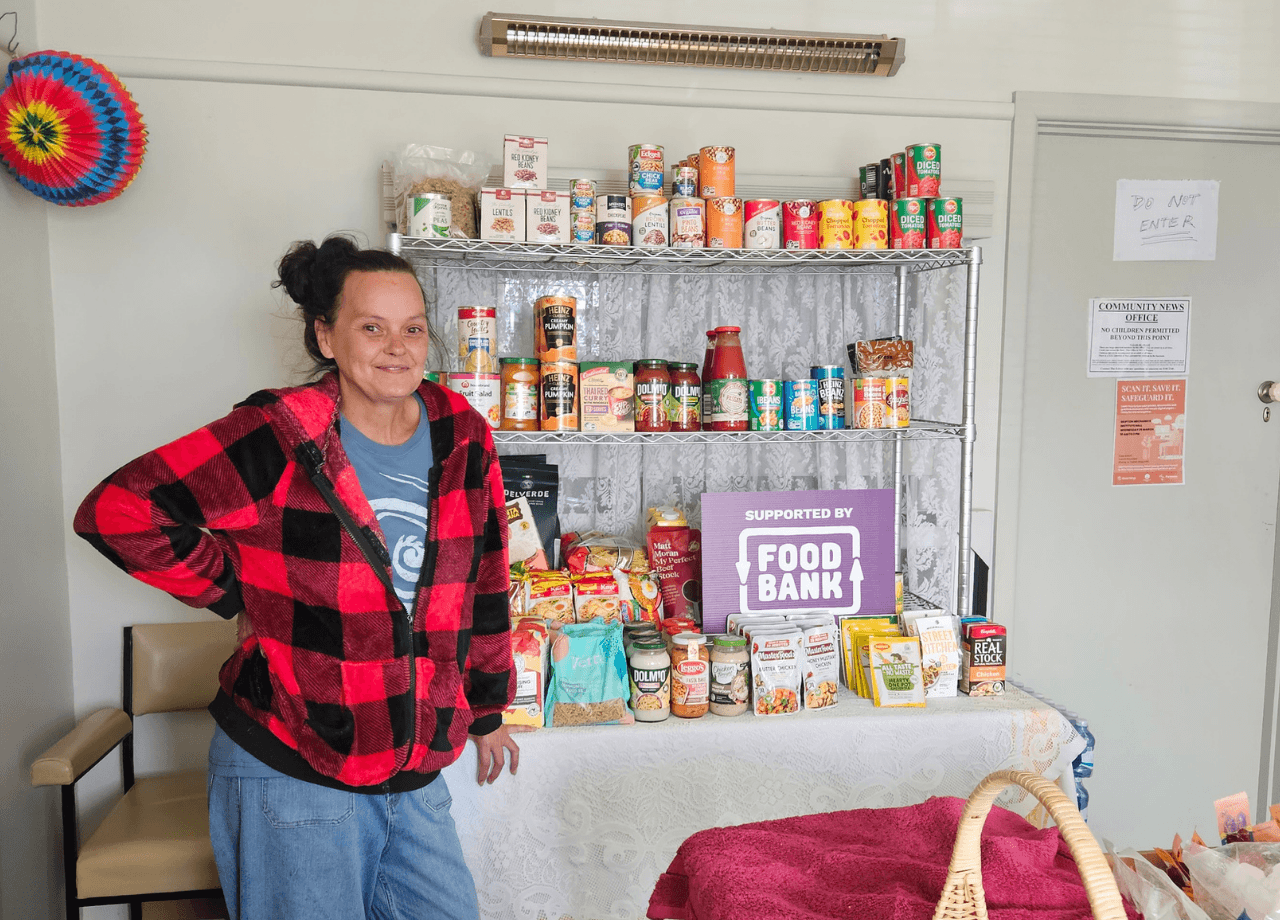
We provide food to more than 450 charity partners across Victoria. These charities distribute food to people in need via cooked meal programs, community pantries, emergency hampers and mobile soup kitchens.

Many of our charity partners are in need of more volunteers to help run their food relief programs. If you’d like to volunteer at a local charity, please contact them directly with the details provided in the map below.

Community Volunteering Program

If your organisation is a school, Government Department or local community group, you can register your interest below for a free volunteer opportunity for your organisation.

Free volunteering opportunities are adhoc and dates become available roughly 4 weeks in advance. We often need assistance during peak times or when we receive an influx of donations. If a free volunteer opportunity becomes available, we will contact you. If your organisation wants to select a specific date from our corporate bookings calendar payment would be required.

Note for Schools: Please note that this activity can accommodate 8 students and must be accompanied and supervised by 2 teachers for the duration of the activity. All students must be over 16 years old.

Register your interest

VIC community or sporting club volunteer enquiry form
*

Warehouse Volunteering

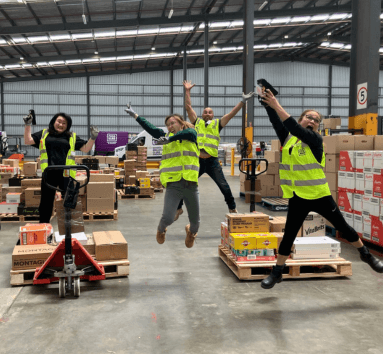
At Foodbank Victoria, our volunteers are the heartbeat of everything we do. Guided by our values of empowerment, accountability, respect, integrity, equality and diversity, we believe everyone has a role to play in the fight against food insecurity.

We welcome people of all backgrounds, experiences and abilities, and know that the most important qualities you can bring are kindness, a willingness to help, and a positive attitude.

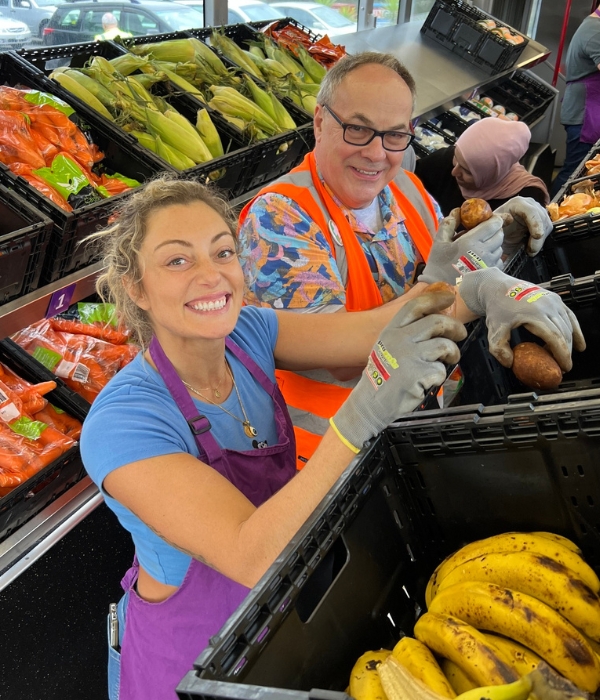
Whether it’s packing fresh produce in our warehouses, welcoming community members into our food centres, or supporting families through cooking classes, every role makes a direct impact in helping Victorians put food on the table.

We have opportunities across our sites in Yarraville, Altona, Brooklyn, Ballarat and Morwell, as well as off-site community programs. Whatever your skills or background, there’s a place for you in our team.

About volunteering at Foodbank

Thank you for your interest in volunteering at Foodbank Victoria.

We are looking for dedicated, fit & friendly folks, who are willing to commit to have a go.

If this sounds like you, and you’d love to make a difference to struggling Victorians, please get in touch at volunteering@foodbankvictoria.org.au for an opportunity to join our amazing volunteer team.

Many of our charity partners need more volunteers to help run their food relief programs. If you’d like to volunteer at a local charity, get in touch with us and we’ll be happy to connect you with one of our partners.

If you are able to support our work by making a financial contribution, please click here. For every $1 donated, 2 meals is created.

We have a variety of roles available across our organisation, including positions at our warehouses in Yarraville, Altona, Brooklyn, Ballarat or Morwell, as well as opportunities to assist in our community-facing markets or helping to deliver cooking programs to school families.

Morwell Community Food Centre

Warehouse Assistant | 9:00am – 2:30pm

Get hands-on in the warehouse, preparing fresh, chilled and frozen products for local charity partners. You’ll sort produce into boxes, assist with orders, and help charity representatives collect and load their food supplies. It’s active, practical work that keeps food moving where it’s needed most.

Receptionist | 9:00am – 2:30pm

Be the welcoming face of the CFC. You’ll greet community members, provide information about accessing food relief, and support the operations team with a mix of admin, kitchen and warehouse tasks. This is a varied role perfect for someone who enjoys connecting with people and being at the heart of the centre.

Community Food Market Assistant | 9:00am – 2:30pm

Bring the Food Market to life! You’ll welcome and check in community members on the iPad, explain how the shopping experience works, restock shelves, and offer friendly customer service. This role keeps the market safe, welcoming and well-stocked for everyone.

Hospitality Assistant | Flexible hours

Support our café-style space by helping with food preparation, service, and coffee making. Experience in hospitality is a plus, but not essential — training is provided for those willing to learn. Days and times vary, so please enquire to find out more.

Ballarat Community Food Centre

Warehouse Assistant | 9:00am – 1:00pm

Help prepare orders for local charity partners by packing fresh, chilled and frozen products and boxing up bulk fruit and veg. A practical role that keeps the warehouse running smoothly and efficiently.

Customer Service | 9:00am – 1:00pm

Meet and assist our charity partners as they collect food. You’ll locate orders and deliver them to vehicles, ensuring the process is smooth and supportive.

Community Food Market Assistant | Flexible hours

Welcome community members to the Food Market, check them in via iPad, explain how the shopping experience works, and keep the shelves stocked. You’ll play an important part in creating a safe, positive, and respectful environment for all.

Hospitality Assistant | Flexible hours

Join our café team by preparing food, serving customers, and assisting with coffee orders. While hospitality experience is welcomed, training is available for volunteers eager to learn. Enquire about days and times.

Brooklyn Warehouse

Warehouse Assistant | 7:00am or 9:00am start

Support the School Breakfast Club Program by picking pantry items, bread and packing food hampers for more than 1,300 schools across Victoria. You’ll also prepare stock for our Foodbank Supermarket Bus. Training is provided in all warehouse tasks, including scanning, pallet wrapping and safe equipment use.

Supervisor – Warehouse Assistant | 7:00am or 9:00am start

Help guide, support, and train community and corporate volunteers. This role involves supervising workflow, troubleshooting and assisting with training to ensure volunteers feel confident and engaged.

Supermarket Bus Supervisor | 8:00am – 2:30pm

Induct and supervise corporate volunteers on our mobile supermarket bus. You’ll travel from the Brooklyn Warehouse to partner sites, ensuring volunteers are safe, supported, and engaged in delivering food directly to communities.

Yarraville/Altona Warehouse

Fresh Team Member | 9:00am – 2:30pm

Work in our chilled area to pack fresh fruit, veg and refrigerated items ready for delivery.

Pick Pack Team Member | 9:00am – 2:30pm

Pack pantry staples for charity partner orders. Training is provided in scanning, pallet stacking and safe pallet truck use.

Rework Team Member | 9:00am – 2:30pm

Be part of the team that sorts donations and large deliveries of fruit and veg into smaller, manageable boxes for distribution.

Supervisor – Pick Pack & Rework | 9:00am – 2:30pm

Support, guide and train volunteers in their packing or rework areas. This role ensures smooth operations and helps new volunteers settle in with confidence.

Wrapper | 9:00am – 2:30pm

Play an important role in preparing orders for dispatch by operating our wrapping turntable. Every order you wrap will be on its way to families across the state.

Customer Service | 9:00am – 2:30pm

Work directly with charity partners as they collect orders. You’ll locate their goods and assist with vehicle loading — an opportunity to connect with the organisations Foodbank supports.

Admin Assistant | Flexible hours

Assist our fundraising and corporate partnerships teams with admin tasks such as preparing mail-outs and name badges. You may also be invited to contribute to short-term project work when opportunities arise.

Off-site

School Cooking Class Volunteer | 2:00pm – 6:00pm

Support our School Cooking Class Program, helping students and families prepare and cook meals together. Volunteers must hold a Working with Children Check. Commitment is one afternoon a week for four weeks during Victorian school terms. To apply, email: volunteering@foodbankvictoria.org.au

Supervisor – Farms to Families Markets | Variable hours

Travel with the team to our Farms to Families Markets, where you’ll oversee corporate volunteers and ensure safe, smooth operations. Duties include set-up, volunteer supervision, manual handling, and pack-down. These markets bring food directly into communities where access is most limited.


We understand people have busy lives, so we offer flexibility in shifts in our warehouse. Once a week is amazing, but we also take blocks of time, fortnightly, monthly, just school holidays, not school holidays – basically we’ll work you into the schedule as it works for you. We ask that you commit to 12 shifts a year. At this stage we are unable to offer one off volunteering.

If you’re interested in volunteering with a group from work, please contact corporatevolunteers@foodbankvictoria.org.au.

Brooklyn Warehouse: Monday to Friday, 7am-12pm or 9am-2.30pm shifts

Yarraville/Altona Warehouse: Monday to Friday, 9am-2.30pm

Ballarat and Morwell Community Food Centres: Monday to Friday. Please contact us for information on hours.

Off-site roles: Monday – Friday. Please contact us for information on hours.

No weekend shifts.

Yarraville Warehouse: 4/2 Somerville Road, Yarraville, VIC 3013.

Altona Warehouse: 441-459 Kororoit Creek Road, Altona, VIC 3018. 

Brooklyn Warehouse: Warehouse G, 77 Millers Rd, Brooklyn, VIC 3012.

Morwell Community Food Centre: 477 Commercial Road, Morwell, VIC 3840.

Ballarat Community Food Centre: 3 Soho Road, Mitchell Park, VIC 3355.

Volunteers must be over 18 years old.

Due to the physical nature of these roles, volunteering involves significant amounts of manual handling and a reasonable level of fitness is required.

Manual handling tasks include lifting, lowering, bending, pushing, pulling, holding, twisting, turning, repetitive movements and standing for extended periods of time. Some heavy lifting up to 15kg may be required.

Volunteering may not be suitable for anyone with muscular, skeletal or back injuries. Please consider if this type of volunteering is right for you. We do not allow volunteers to participate if we determine volunteers are unable to perform tasks safely.

Individual volunteering

Giving back to your community

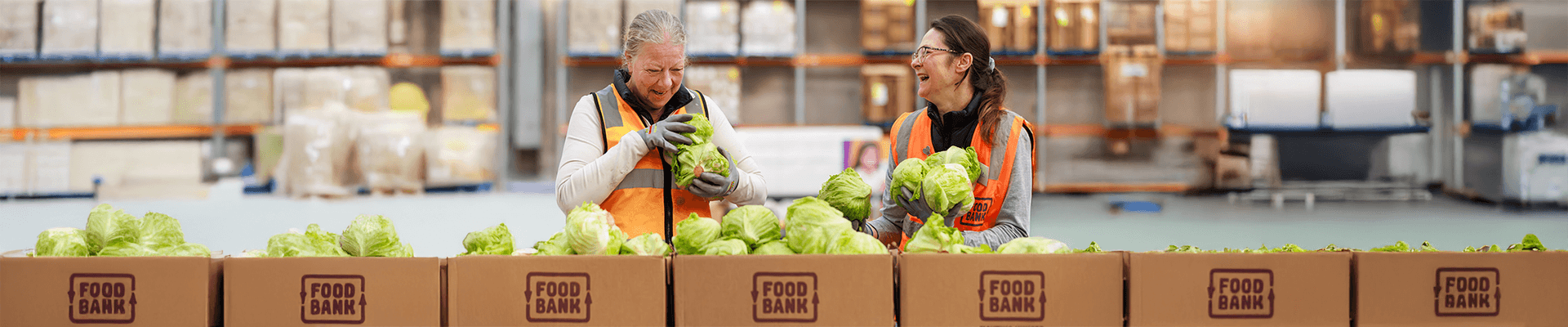
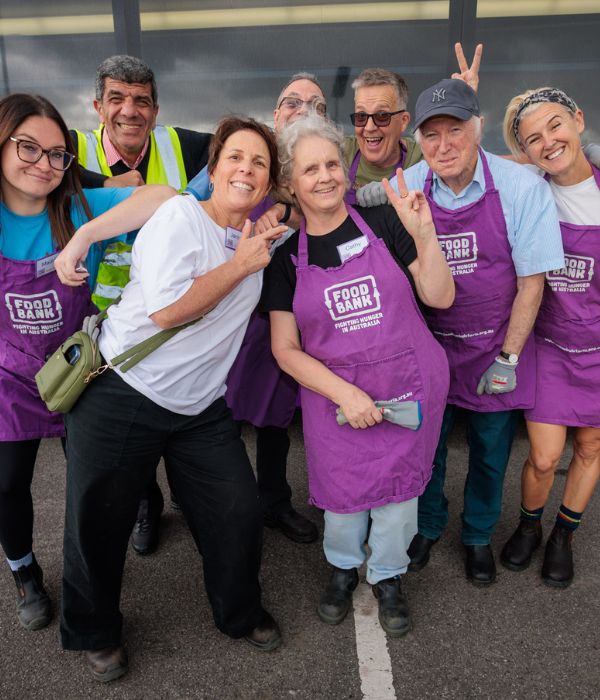
Our valuable volunteer team are integral to the day to day operations of our warehouse, sorting and packing fresh produce, key staples and household items for families in need.

We are incredibly grateful to our team of volunteers.

Warehouse Volunteering

Helping hands in our warehouse, sorting and packing food for distribution.

Learn more

School Breakfast Club Volunteering

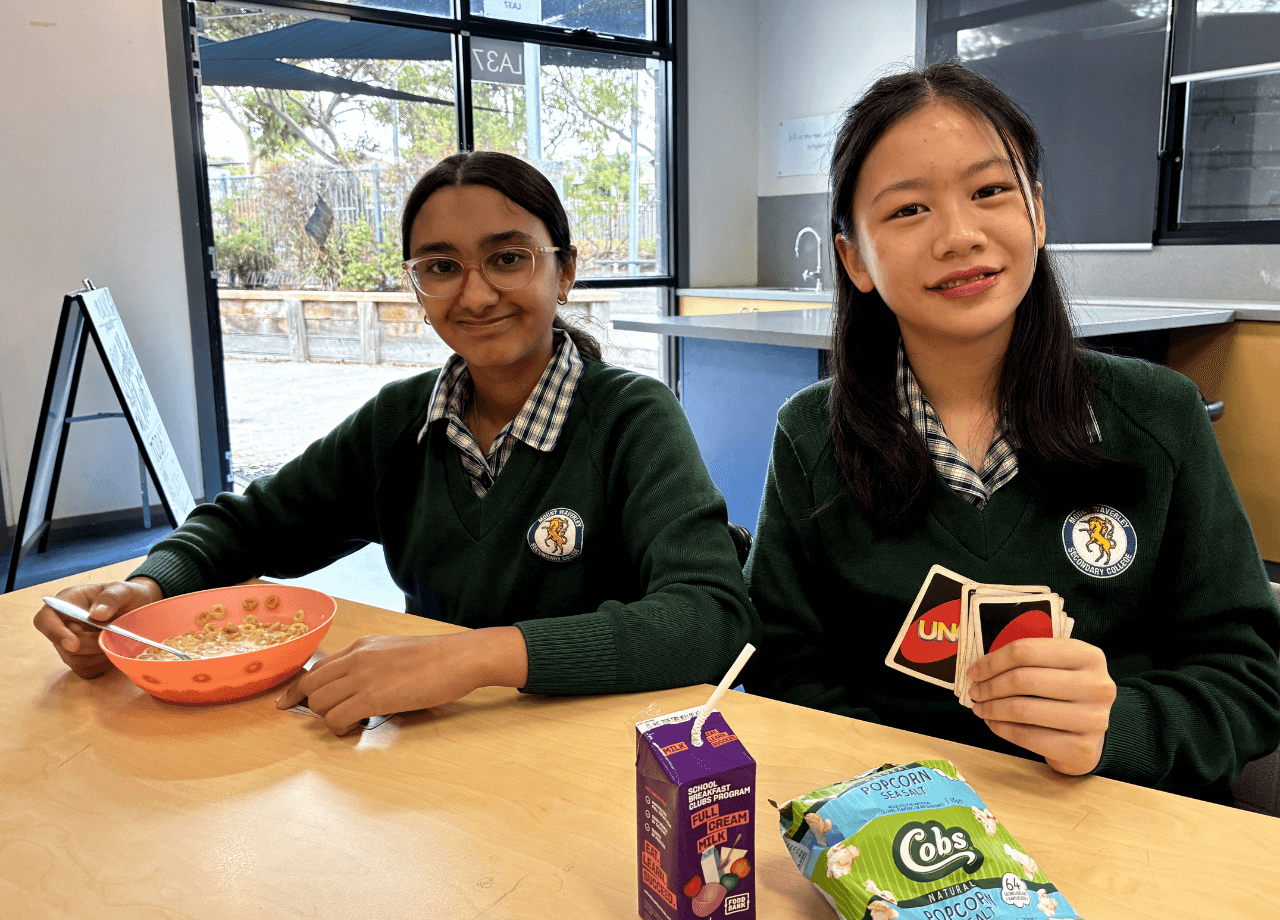
Helping to ensure students can start their day with a healthy breakfast.

Learn more