
Harvard Research Addresses Food Waste, Hunger, and Climate Change Crisis in Australia

June 2022,

Harvard Law School Food Law and Policy Clinic identifies policy recommendations designed to decrease food waste, support food donation, and combat climate change in Australia.
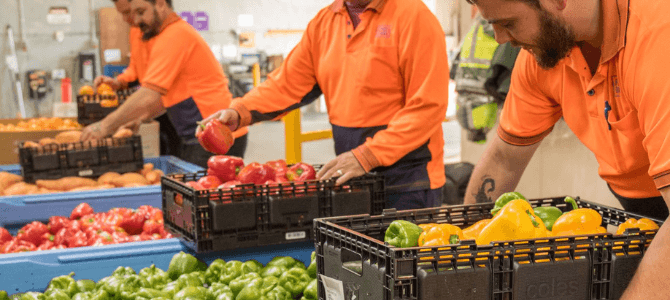
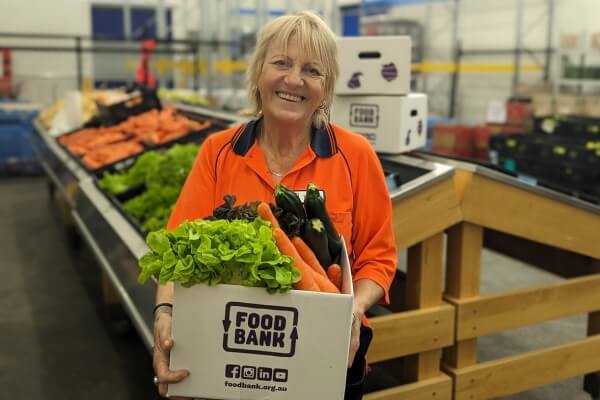
Foodbank volunteers preparing the fruits for donation

(June  23, 2022)—A new analysis of food donation laws and policies in Australia was released today by the Harvard Law School Food Law and Policy Clinic (FLPC) and The Global FoodBanking Network, with recommendations to help reduce food waste, feed people experiencing hunger, and combat climate change. The research and recommendations were released in partnership with Foodbank Australia as part of The Global Food Donation Policy Atlas, which maps the laws and policies affecting food donation around the world.

  • In Australia, 7.6 million tons of food are wasted annually, costing AUD$36.6 billion, while approximately 3.24 million Australians, or 13.6% of the population, live below the poverty line.
  • Between 625,000 and 1 million Australians receive food assistance each month, a quarter of whom are children.
  • Food insecurity rates are particularly high for the indigenous population–22% to 32% depending on location.
  • Food donation offers an important solution to reduce the amount of safe, edible food that ends up in landfill and divert it to people who need it most.

We can feed people experiencing hunger. We produce more food than we need, yet much of it ends up in a landfill, where it instead contributes to global methane emissions,

Said Emily Broad Leib, clinical professor of law at Harvard Law School and faculty director of the FLPC.

“Australia has already made a national commitment to reduce food waste and increase food recovery. National leaders across the globe, including in Australia, can build a bridge between surplus food and people who are hungry by encouraging food donation. Our hope is that leaders in Australia and beyond will take action on food waste, climate change, and hunger by implementing our recommendations.”

The Global Food Donation Policy Atlas, supported by Walmart Foundation, identifies the existing laws and policies that support or hinder food recovery and donation, featured in a comprehensive Legal Guide and Policy Recommendations for strengthening frameworks and adopting new measures to fill existing gaps. The analysis featured in these country-specific reports are also encapsulated in an interactive atlas tool that allows users to compare policies between countries participating in the project.

The research focuses on six legal issues that influence food donation: food safety for donations, date labeling, liability protection for food donations, tax incentives and barriers, government grants and funding, and food waste penalties or donation requirements. For each country, FLPC developed recommended actions, including the following for Australia:


  • Food Safety Australia New Zealand (FSANZ) should amend the Food Standards Code (FSC) to explicitly state which food safety provisions apply to food donation.
  • The Australian government and its relevant departments and agencies should promote consumer education and awareness on the meaning of date labels in partnership with the private sector.
  • The Australian government should enact national legislation that establishes clear and comprehensive liability protection for food donors and food recovery organizations.
  • The Australian government should amend the Income Tax Assessment Act of 1997 to cover costs incurred in the transport, storage, and refrigeration of donated food.


There is a new normal, with the average monthly demand for food relief in Australia up 50% on pre-COVID levels. On top of this, the frequency and intensity of natural disasters in Australia demonstrate the importance of implementing policies and practices that can immediately respond to crises. The time for smart policy reforms is now so we can reduce food loss and waste, deliver positive climate outcomes, and ensure those confronted with economic turmoil are supported through essential food relief.

said Brianna Casey, Chief Executive Officer for Foodbank Australia.

“An estimated 768 million people are facing hunger globally, and that number is likely to rise as food price spikes, supply chain issues, and climate change continue to strain our food systems,” said Lisa Moon, president and CEO of The Global FoodBanking Network. “Food banks help ensure more people have access to food while also reducing food loss and waste. Strong food donation policies are absolutely critical to this work—they help food banks serve their communities in the most effective and efficient way.”

“Public policy relating to food recovery and donations is complex and varies across countries making it hard to improve how surplus food gets to communities that need it,” said Eileen Hyde, senior director for community resilience at Walmart.org. “The recommendations coming out of the Global Food Donation Policy Atlas are crucial in overcoming barriers to food access, and the Walmart Foundation is pleased to support this great work that seeks to accelerate effective and sustainable solutions.”

Globally, 1.3 billion tons of edible food–a third of production and enough to feed every undernourished person on the planet–is lost and wasted every year while hunger persists and climate change accelerates. This wasted food ends up in landfill and rots, producing methane, a greenhouse gas. About 10% of all greenhouse gas globally is caused by food waste.

Atlas project research is available for 16 countries: Argentina, Australia, Canada, Chile, Colombia, Costa Rica, the Dominican Republic, Guatemala, India, Kenya, Mexico, Peru, Singapore, South Africa, the United Kingdom, and the United States. An interactive map, Legal Guides, Policy Recommendations, and Executive Summaries for each country are available at atlas.foodbanking.org.
9 May, 2022

2,500 MEALS FOR THOSE IN NEED ON THE NSW CENTRAL COAST

Mars Food Australia, Sodexo and Foodbank are combining resources to cook up a storm in a week-long special event to help people in need of food relief on the NSW Central Coast.

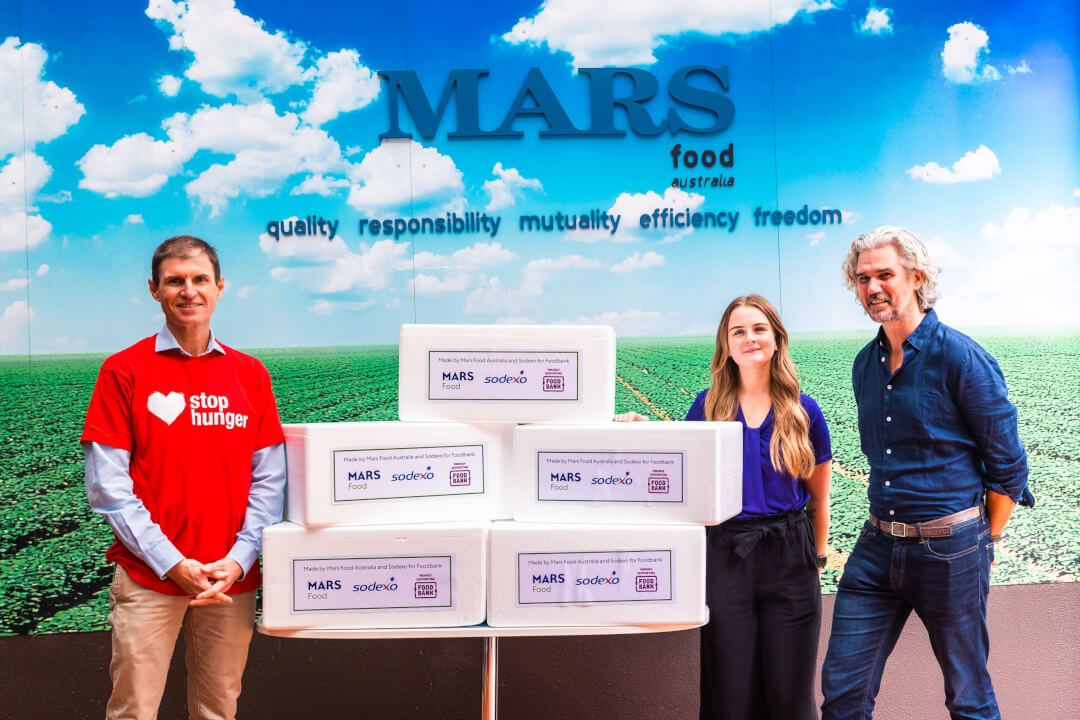
Mars Food Australia, Sodexo and Foodbank preparing meals

The wider staff team at Mars Food Australia is returning to the company’s production facility at Wyong– the first time many have been on site since COVID-19 restrictions took hold – and their commercial R&D kitchen has been converted into a master chef’s culinary workshop to produce meals for local people in need.

During the COVID-19 lockdowns in 2020, the demand for food relief increased by 47 per cent according to Foodbank. In 2021, more than one in six Australian adults hadn’t had enough to eat and, of those, almost 40 per cent had not been in this situation prior to the COVID-19 pandemic.

In response to this need, more than 100 staff across all areas of the Mars Food business, along with staff from Sodexo, have volunteered their time to produce up to 2,500 meals, working two shifts a day throughout the week (9-13 May). Local charities who are part of Foodbank’s network will collect the meals and distribute them to individuals and families on the Central Coast.

Mars Food Australia’s General Manager, Mr Bill Heague, said there was huge enthusiasm for the project amongst the team at their Central Coast facility.

“With everyone finally returning to the site here at Wyong, we wanted to celebrate with a project that got us working together, side-by-side with colleagues, doing something worthwhile for our community,” Mr Heague said.

“We firmly believe that dinner time matters, and we know finding opportunities to cook and share meals with family and friends is good for both physical and mental wellbeing. It’s the foundation of our business.

“As a food company that’s committed to making healthy and good tasting food products that bring people together, what better way to do celebrate our return than by producing meals for those experiencing food insecurity in our local community,” he said.

“With everyone finally returning to the site here at Wyong, we wanted to celebrate with a project that

got us working together, side-by-side with colleagues, doing something worthwhile for our community,” Mr Heague said.

“We firmly believe that dinner time matters, and we know finding opportunities to cook and share meals with family and friends is good for both physical and mental wellbeing. It’s the foundation of our business.

“As a food company that’s committed to making healthy and good tasting food products that bring people together, what better way to do celebrate our return than by producing meals for those experiencing food insecurity in our local community,” he said.

Sodexo, an integrated facilities management services company, with a base on the Central Coast, has teamed up with Mars Food Australia to provide support services and the key food ingredients required to make up the 2,500 meals.

Mr Keith Weston, Executive Director, Energy and Resources and Group Strategic Accounts, Australia, said Sodexo is keen to collaborate on this week-long event to support the local community.

“When we work with stakeholders who share our values, great things can happen. This collaboration also supports Sodexo’s global Stop Hunger program and mission to improve quality of life for people everywhere we operate,” he said.

The teams will be cooking fresh meals with ingredients from Sodexo and sauces and meal bases from Mars Food Australia to create a range of meal options: Dolmio spaghetti bolognaise, Masterfoods butter chicken, Masterfoods beef stroganoff and a vegetable curry.

Brianna Casey, Foodbank Australia CEO, said Foodbank is thrilled to be a partner in this project and help get these meals directly to those who have fallen on tough times in the local area.

“Foodbank provides relief to more than one million Australians every month, and with the cost of living increasing, this figure is not likely to go down any time soon,” Ms Casey said.

“We are so grateful to our wonderful partners – Sodexo and Mars Food Australia – who work tirelessly to support us and have done so for many years.

“We know that a nutritious meal is more than just food. It not only relieves the burden of stress, it enables families to unite and bond at the dinner table. That’s what Mars Food and Sodexo’s cook up will enable for many families and individuals doing it tough right now,”

The four charity partners who will be collecting and distributing meals throughout the week are:

The Entrance Public School which runs a pantry for families and is well known in the community.

FIAM Incorporated Care Arm which runs an outreach service for people in need who can’t travel and shares food with a local homeless support service.

Toukley Neighbourhood Centre which runs a pantry and delivery service for people in need.

Coast Shelter which provides a range of services and personal supports for people experiencing homelessness or domestic and family violence.

Mr Heague said Mars is striving to helping alleviate the growing hunger problem on a world-wide scale.

“Globally, Mars Incorporated is committed to delivering 25 million meals to people in need of a healthy meal by 2025. This project will contribute towards that goal and go some way to helping families struggling with food insecurity and going through difficult times,” he said.

featured image

New Government must commit to essential food relief sector

Thursday 21 April 2022

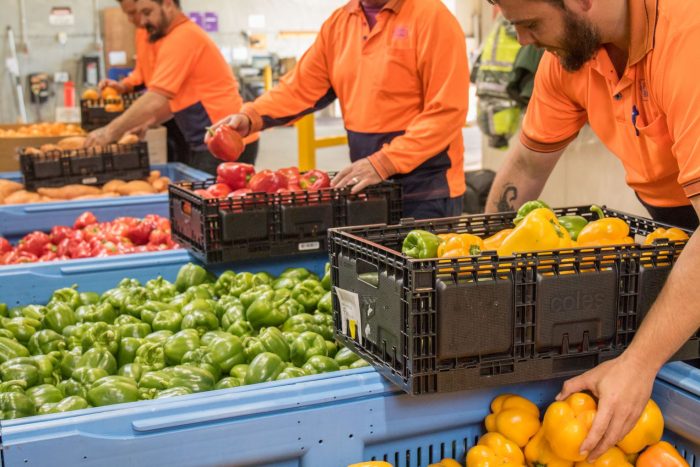
workers putting bell peppers in big trays

Australia’s national food relief sector has come together to ensure those experiencing hardship are not forgotten in the lead-up to the Federal election and beyond. Foodbank, OzHarvest and SecondBite are calling on all sides of politics to deliver improved food relief funding and tax incentives to help reduce food waste and feed more people. 

The three charitable organisations work towards the common goals of eradicating hunger and halving food waste by 2030. They act as a vital frontline safeguard in times of individual and community adversity, whether prompted by disasters such as the recent floods, global pandemic and Black Summer bushfires, or everyday poverty and inequality.

Together, the organisations are providing food relief to more than a million people per month across Australia, distributing more than 85 million kilograms of food and groceries in the 2021 financial year. Yet despite these record volumes, the current community need is not being met, and Federal Government funding for the food relief sector is not confirmed beyond next financial year.

Ahead of the Federal election, Foodbank, OzHarvest and SecondBite are seeking three key commitments from all the parties and independents to ensure vulnerable people have consistent and reliable access to food:

             1. Sustained and adequate funding for food relief

             2. The establishment of dedicated disaster preparedness and emergency food relief programs

             3. The introduction of a national food waste tax incentive, making it easier for the food sector to                 redirect its surplus for food relief


Speaking on these requests, Ronni Kahn AO, Founder of OzHarvest said:

“In spite of what has clearly been minimal support from the Federal Government in the past, we have a strong history of working to reduce food waste and improve food security. Our food rescue activities not only support vulnerable communities, but are crucial from a climate change perspective, preventing more than 134,000 tonnes of greenhouse gases from being emitted in the last 12 months alone.”

Steve Clifford, CEO of SecondBite, added:

“Our sector is focused on impact and delivering a strong social return on investment across both food rescue and food relief activities. Research has shown that every dollar invested in food waste prevention delivers $7 back to the economy, so in addition to the social and environmental benefits, investing in the food relief sector makes good economic sense.”

Foodbank Australia CEO, Brianna Casey, concluded:

“This election presents an opportunity for our political leaders to acknowledge that Australia has a hunger problem and that demands on the food relief sector will only continue to grow, particularly given increased cost of living pressures and the frequency and severity of natural disasters. It is only appropriate that support for this vital sector be commensurate with its impressive impact.”


National Food Relief Sector Funding and Policy Priorities

CELEBRATING FARMERS FEEDING AUSTRALIA

This year, we have extended National Farmers’ Federation’s Ag Day from one day on 19th November, to an entire week to raise awareness of the support we receive from the Australian agriculture industry in the form of many unique programs and highlight the gaps where support is still needed.

Foodbank works actively with the selfless and generous agri-industry to ensure we provide more than 17 million kilograms of fresh produce, milk, eggs and protein needed to assist the more than one million Australians each month doing it tough and who might otherwise go without.

Despite enduring some of the toughest periods on record, Australian growers, producers and farmers have continued to support Foodbank over the years. In 2020, Foodbank sourced 88 million meals for its charity partners – 30% of which was sourced directly from our agri programs and 40% was distributed back into helping those in regional and rural areas.

We are so fortunate to have such strong relationships with our wonderful growers, farmers and producers who help us ensure those doing it tough have access to fresh fruit and vegetables, meat, dairy products, rice and so much more.

says Brianna Casey, CEO Foodbank Australia

We work with our partners all the way along our ‘surprise chain’ to rescue perfectly imperfect products, meaning we’re filling empty tummies rather than landfill, and ensuring our farmers’ hard work to produce world class food is not wasted. We are also fortunate to have farmers and agribusinesses across the country making regular donations and engaging in seasonal programs to ensure we have a consistent supply of products year-round.

This AgDay, we not only want to say a massive thank you to everyone in the agri-sector, but we also want to celebrate this year’s theme, ‘Choose your #AgVenture’, highlighting the many and varied exciting careers in agriculture, both inside and beyond the farm gate. Whether you live in the city or in the country, there is an exciting career to be found in agriculture.

“My AgVenture to date has been spent living in the city, but my connection to agriculture has been constant and enduring, and I couldn’t be more grateful to be working closely with National Farmers’ Federation members right across Australia as we strive towards zero hunger in Australia” says Brianna Casey, CEO Foodbank Australia.

Last month Foodbank revealed in the Foodbank Hunger Report 2021 that one in six Australian adults haven’t had enough to eat in the last year and, even more shockingly, 1.2 million children have gone hungry.

We produce enough food and groceries to feed our population three times over, yet we know there are many people across Australia going without. Foodbank provides an avenue to connect those vulnerable Australians with essential food relief, much of which is donated by Australia’s world class farmers, growers and producers.

This week is a chance for us to highlight the wonderful agri-programs we are fortunate to have, enabling us to produce everyday essentials like sausages and pasta. In a country the size of Australia these programs also couldn’t happen without the support of equipment and transport providers to help us get it to where it is needed the most.

Throughout the week, Foodbank will be highlighting its agri program partners and how their products make a difference to the lives of many in our communities across the country every day.

Follow us on our socials to stay up to date.

THANK YOU WOOLWORTHS

AND YOUR AMAZING CUSTOMERS

bags with foodbank logo


In September, Woolworths stores around the nation offered their customers to round up their total for Foodbank. With each donation being under $1, we were blown away to raise an astounding $770,000. This money will help us get food and groceries where they are needed the most around Australia. A massive thank you to Woolworths for helping us through thick and thin over the past 20 years and for having the most amazing customers.

purple HEART

Hunger, a fact of life for too many in Australia

20 October 2021

Foodbank has revealed one in six Australian adults haven’t had enough to eat in the last year and, even more shockingly, 1.2 million children have gone hungry.


The Foodbank Hunger Report 2021, released today, shows that more than half of people impacted by severe food insecurity go a whole day every week without eating.


The report, now in its 10th year, highlights that the pandemic continues to deliver challenges that are exacerbating pre-existing issues in our community. In addition to those who were already struggling before COVID-19, the pandemic has caused others to experience vulnerability for the first time. In fact, more than one in three of last year’s food insecure Australians (38%) had never been in that position before.


According to Foodbank Australia’s CEO, Brianna Casey: “This is especially disheartening in light of the gains made last year when the Federal Government’s Coronavirus Supplement was able to reduce poverty for so many.”


Ms Casey says the issue of food insecurity in Australia has never been more prominent than it is right now.


“The global pandemic has put a spotlight on the crisis that for too long has gone under society’s radar,” commented Ms Casey.


The report highlights that food insecurity is not restricted to the ‘obvious’ vulnerability groups in the community such as homeless people and the unemployed. It shows people of every age, living alone, in families and in groups are susceptible. Food insecurity is shown to affect people in cities right through to those in remote areas and surprisingly, it affects more people in some form of employment (64%) than those who have none.


“The key findings in this report are indeed confronting, but we can’t fix a problem we don’t understand or acknowledge. Although Foodbank is now providing food relief to a record one million people a month, we know many experiencing hardship feel there are others worse off and don’t ask for help. That is heartbreaking to know, and if there is one thing I can stress, it’s that there is no shame in asking for help, and in fact, it’s exactly what we’re here for. Life happens to us all, and we’re here for everyone,” said Ms Casey.


The Foodbank Hunger Report provides a snapshot of the prevalence and depth of the issues of food insecurity as well as insights into the day-to-day experience of people in our community who are doing it tough.

Read Foodbank Hunger Report 2021

Danone’s Two Good yoghurt announces official partnership with Foodbank Australia

13th September: Danone, the leading global food and beverage company – manufacturer of Two Good yoghurt – has launched its partnership with Foodbank Australia, the country’s largest food and grocery relief organisation.

With the belief that everyone should have access to good food, Danone’s Two Good has teamed up with Foodbank to help reduce food waste and lend a hand to Aussies in need.

As part of Two Good’s new ‘Eat Good. Do Good’ campaign, Danone will be donating 10c from every 150g pot of the delicious, low-sugar yoghurt purchased between 13th September 2021 until 31st October 2021.

Xavier Gonzalez, Senior Brand Manager of Protein & Wellness said: “At Danone we strongly believe that everyone deserves access to good food and have been supporting Foodbank in their mission to help Aussies doing it tough – providing 24,000kgs in donations alone over the past year.

Two Good’s less excess focus (2g sugar, no artificial additives) and belief that good food should never go to waste, made it the perfect fit for a consumer facing partnership with Foodbank Australia.

Throughout this campaign, we’re using our brand platform to encourage people to ‘eat good and do good’ – for each delicious Two Good pot purchased $0.10 will be donated to Foodbank to support Aussies in need.”

With every $1 donated to Foodbank going towards two meals, our consumers will have the opportunity to make a tangible difference.

Just one 150g pot of Two Good’s delicious, low-sugar yoghurt each day throughout the month of October can provide six meals to Australians in need. By choosing Two Good, you’ll also be opting for a nutritious yoghurt without the excess sugar – helping your body eat good, while doing good”.


Media enquiries

Rebecca Collins
Foodbank Australia
+61 409 786 132
E rebecca@foodbank.org.au

Nescafé Blend 43 to roast more than 12m cups of coffee for Foodbank 

Nestlé’s iconic coffee brand Nescafé Blend 43 has announced a new partnership with Foodbank which will see 220,000 custom Foodbank Nescafé tins or 12.5 million cups of coffee distributed to people in need.  


Manufactured in Gympie Queensland, the dedicated 100g tins of Nescafé Blend 43 will help ensure a sustainable supply of coffee to Foodbank across Australia from September 2021.  


Foodbank Australia CEO, Brianna Casey, said that for many Australians faced with food insecurity, coffee can be one of the first items that they forego. 


“Coffee is consistently one of the most in-demand items for our network of food relief charities across the country, as a humble cup of coffee can have far more benefits than a morning caffeine hit.   


“We find that many of the people we support often become socially isolated. Having coffee in the cupboard can play a significant role in helping to keep people connected – and this collaboration will mean we can ensure a reliable supply,” said Ms Casey.  


Nestlé General Manager of Beverages, Andrew McIver said, “We’re really proud to be able to work with Foodbank and manufacture a bespoke Nescafé Blend 43 product for Foodbank, made in Gympie Queensland”.  


“We understand the simple pleasure that a cup of coffee can bring – one that many of us often take for granted – and we believe it’s something everyone should be able to enjoy.  


Nescafé has long been committed to helping bring people together. While that may not be possible for all Aussies to do right now, a hot cuppa can often be just the ticket to also take an important break – which is something many of us need now, more than ever.” 

Media enquiries

Rebecca Collins
Foodbank Australia
+61 409 786 132
E rebecca@foodbank.org.au

Nu-Pure Partners with Foodbank

September 2021 

Foodbank is excited to announce their latest partnership with Nu-Pure Beverages. 

Nu-Pure Beverages is a family-owned business that manufactures 100% Australian-made beverages. Founded in 2005, they are the experts in spring water. Nu-Pure water is sourced from specially selected pristine Australian springs and has a natural and nourishing balance of minerals.

Brianna Casey, CEO of Foodbank Australia said, “We are delighted to welcome Nu-Pure into the Foodbank family. Water is absolutely an essential item that we need to have available for people in times of crisis. It’s even more important during times of natural disaster, when people can be cut off from clean water entirely.” 

COVID-19 and economic uncertainty have created new needs while putting enormous pressure on non-profit organisations. As a result, it has become increasingly crucial for Foodbank to have impactful partnerships like this one with Nu-Pure to help make a difference. 

Most recently, Nu-Pure donated water to Foodbank Victoria to assist during the latest lockdown. 

Barry Hamilton, Owner and Managing Director of Nu-Pure Beverages, said, “Donating water has been a great way for Nu-Pure to support Foodbank, have a meaningful impact and give back to the community. We look forward to continuing to work on this partnership.” 

Together we hope to support more people in the community by providing 

water for healthy, natural hydration. 

Media enquiries

Rebecca Collins
Foodbank Australia
+61 409 786 132
E rebecca@foodbank.org.au

Nescafé Blend 43 to roast more than 12 million cups of coffee for Foodbank

NESCAFE TIN

Nestlé’s iconic coffee brand Nescafé Blend 43 has announced a new partnership with Foodbank which will see 220,000 custom Foodbank Nescafé  tins – or 12.5 million cups of coffee – distributed to people in need.

Manufactured in Gympie Queensland, the dedicated 100g tins of Nescafé Blend 43 will help ensure a reliable supply of coffee to Foodbank across Australia from September 2021.

Foodbank Australia CEO, Brianna Casey, said that for many Australians faced with food insecurity, coffee can be one of the first items that they forego.

Coffee is consistently one of the most in-demand items for our network of food relief charities across the country, as a humble cup of coffee can have far more benefits than a morning caffeine hit.


“We find that many of the people we support often become socially isolated. Having coffee in the cupboard can play a significant role in helping to keep people connected – and this collaboration will mean we can ensure a reliable supply”

– Foodbank Australia CEO, Brianna Casey.

NESCAFE MUG

Nestlé General Manager of Beverages, Andrew McIver, said that Nestlé understands the significance of a cup of coffee and is proud to be working with Foodbank to create a bespoke product for vulnerable Australians.

“We’re really proud to be able to work with Foodbank and manufacture a bespoke Nescafé Blend 43 product for Foodbank. We understand the simple pleasure that a cup of coffee can bring – one that many of us often take for granted – and we believe it’s something everyone should be able to enjoy.” said Nestlé General Manager of Beverages, Andrew McIver.

Nescafé has long been committed to helping bring people together. While that may not be possible for all Aussies to do right now, a hot cuppa can often be just the ticket to also take an important break – which is something many of us need now, more than ever.

– Nestlé General Manager of Beverages, Andrew McIver