THANKS TO YOU, THE RECOVERY HAS BEGUN

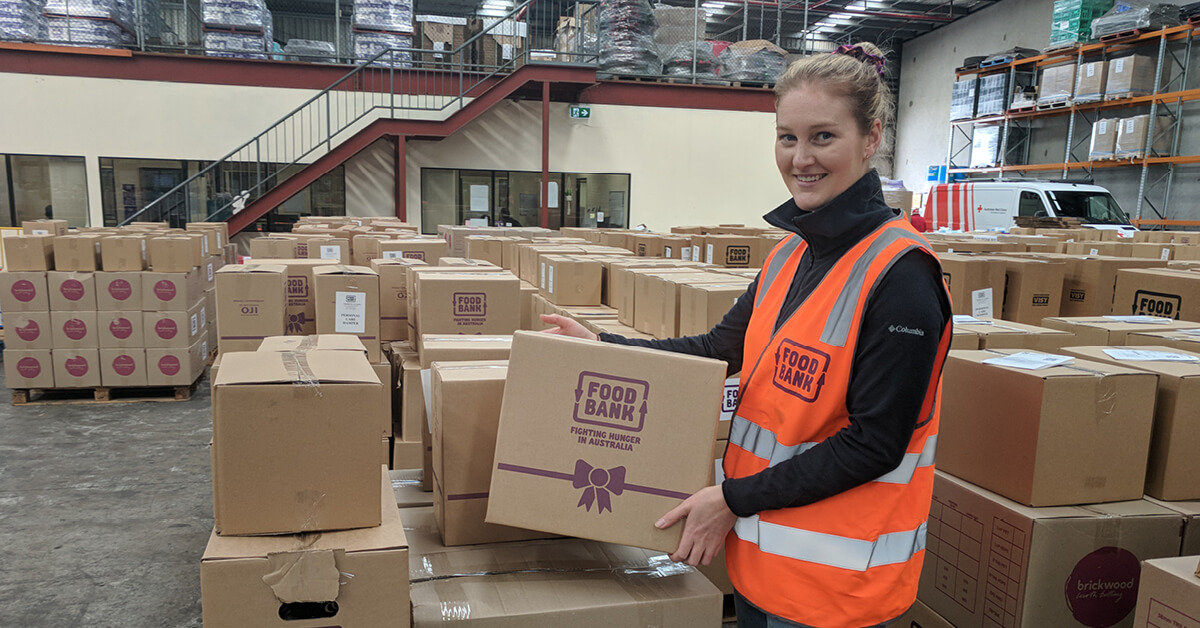
Thanks to the heartfelt generosity of people like you, Foodbank has been there to support and comfort Australians as they navigate the devastating aftermath of the bushfire crisis. Your support, through volunteering, donating essential supplies or via a financial donation, has enabled Foodbank to work quickly to help those who needed it most.

As part of the official emergency response network, our primary focus throughout the crisis has been to deliver exactly what is needed, when and where it’s needed in order to efficiently and effectively support the relief efforts.

Together, since the beginning of January, we have been able to answer the desperate call for help and our emergency response relief efforts included:

  • 9 semi-trailers sent to the South Coast NSW (places like Cobargo, Narooma, Bega, Bermagui, Eden, Womboyn)
  • Over 1,000 pallets (approx 435, 943 kilos) of food, groceries, fresh produce, personal hygiene items and pet food have been distributed
  • Over 30,000 kilos of carrots and sweet potatoes have been flown by helicopter into NSW national parks for Australia’s endangered native animals.


These devastating bushfires have left people all over our state in need of our continued support. We can only be there for them because of supporters like you – thank you.

FOOD INSECURITY & WOMEN

“I’d rather miss out, so she doesn’t have to. She asks why I’m not eating with her, but we don’t always have enough for both of us.” Gen Y single mum.

There’s nothing like a mother’s love… and this is what we clearly see in Foodbank’s latest Hunger Report. Women, and especially mums, bear the brunt of food insecurity.

More than 1 in 4 Australian women (27%) have experienced food insecurity in the last 12 months, experiencing high levels of anxiety, stress and low energy. Mums experiencing food insecurity are twice as likely to feel like a bad parent when there is not enough food in the house (50% of mothers strongly agree compared to 26% of fathers.)

With your incredible support, Foodbank can continue to reach out to more women and families like Mandy’s in the community, making sure Australians don’t go hungry. You are truly making an impact – thank you.

More Information

YOUR GENEROSITY DELIVERED HOPE TO COBARGO

In amongst the stories of heartbreak during the bushfire crisis, there are stories of incredible generosity and gratitude. The small community of Cobargo was one of the hardest hit. Thanks to people like you, Foodbank was able to quickly support this community that had lost so much.

“We just got out with our lives,” said Cecilia Matthews. “We fell asleep while we were waiting to evacuate and woke when we felt the extreme heat around the house. I can’t believe the generosity we’ve seen – so much food and water donated.”

Foodbank CEO, Gerry Andersen visited the Cobargo showgrounds and met the 50 homeless families living in a tent city, waiting to work out what to do with the rest of their lives.

“It’s wonderful to see our Foodbank community pulling together to support Bushfire affected communities and partners like Coles and Bobbins Transport helping us deliver a semi-trailer loads of much needed fresh produce and grocery items.”

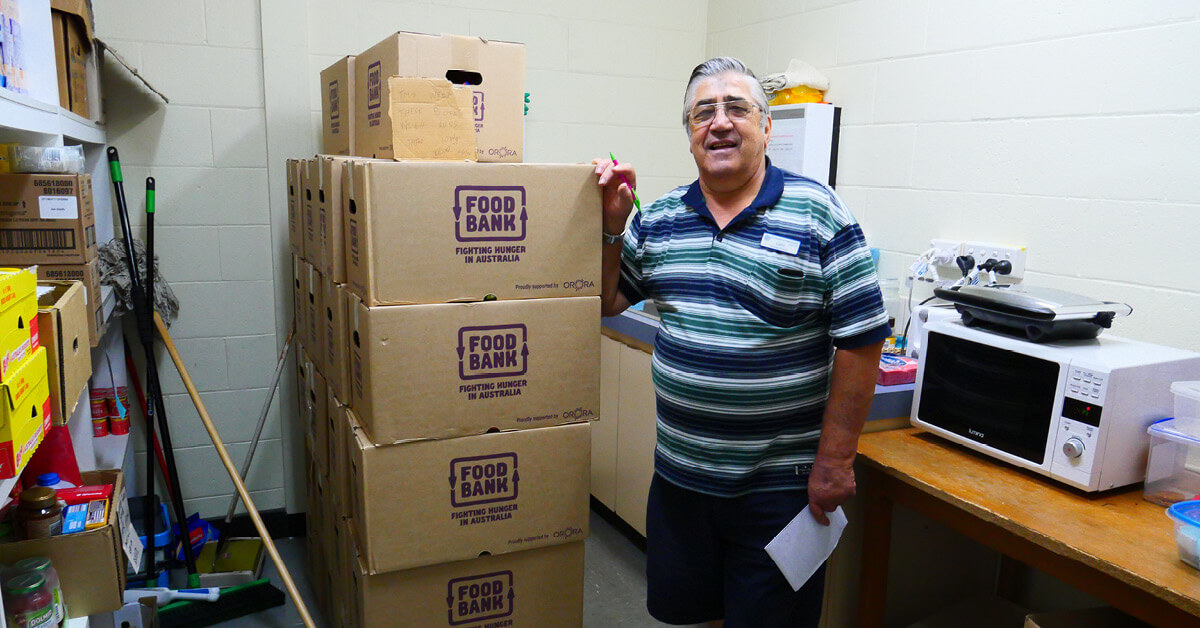
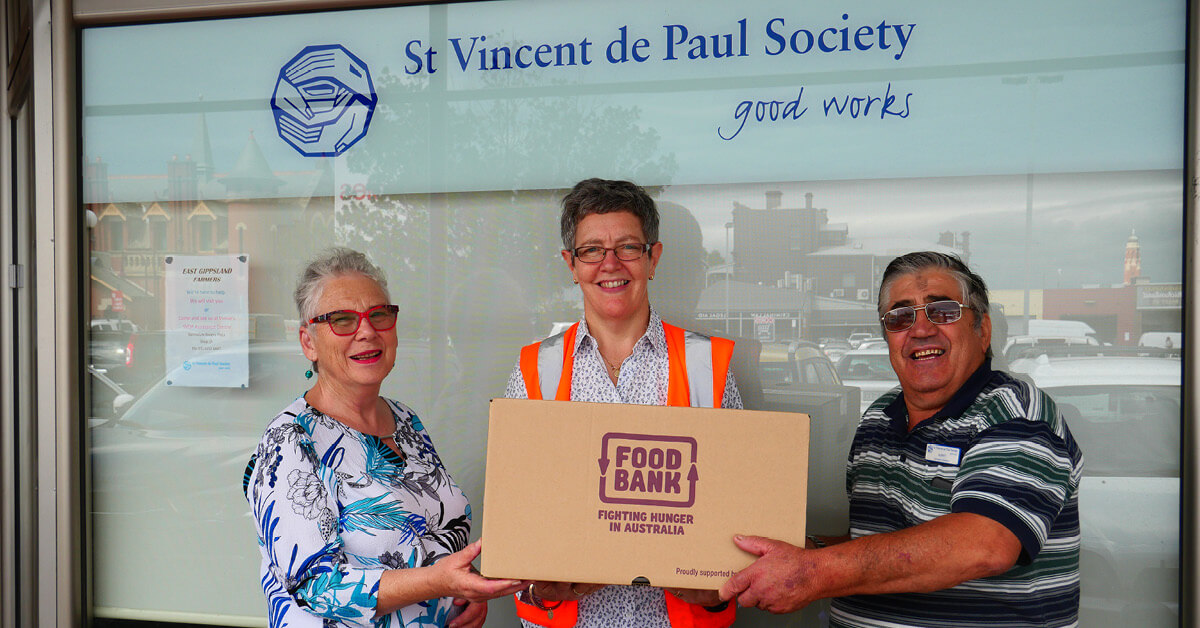
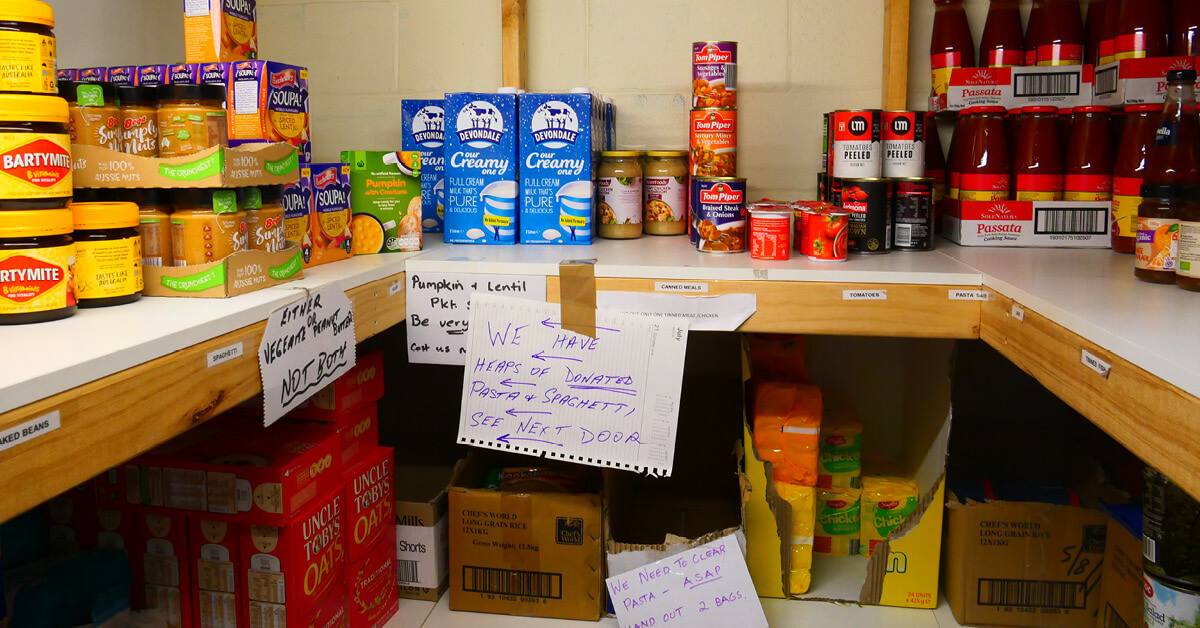
Foodbank partner charity, Sapphire Community Pantry was open around the clock to help.


“It’s heartbreaking to see people arriving in tears who have lost so much. These donations of water, fruit and veg, and staples are helping people get back to normal. But there are many months of recovery ahead. Businesses have gone under, people are struggling. We really need the support to keep going.”

MESSAGE FROM FOODBANK AUSTRALIA CEO, BRIANNA CASEY

We made it! After what has seemed like the longest and toughest year imaginable, we are crossing our fingers and toes that this summer will be a very different one to the last. That said, experience has taught us well, so every Foodbank across the country is ready should we be called upon to assist with emergency food relief, no matter the natural disaster. Being a La Nina year, this is more likely to be cyclones and floods than drought and bushfires, but as the fires currently burning on Queensland’s Fraser Island and the consistently high fire danger warnings in Western Australia are showing us, anything is possible in an Australian summer.

As the year draws to a close, it would be remiss of me not to acknowledge the tireless efforts of every state and territory Foodbank team across the country, including their wonderful volunteers. Most teams have not had a moment’s pause this year, transitioning straight from drought to bushfires and then COVID-19, on top of our everyday role of assisting those experiencing food insecurity for any number of reasons.

Foodbank’s unrivalled ability to scale up and reach more vulnerable communities than we ever have before is only possible because of our incredible donors and supporters. I’ve never been prouder to be a Foodbanker, and I have been so humbled by the generosity, kindness and compassion we have seen from Australian businesses, manufacturers, retailers, farmers, community groups and general members of the public this year. Please know how grateful we are and how much your support has touched the entire Foodbank family.

I hope the festive season is a happy, healthy and relaxing one for you, your team and your family, and – border restrictions permitting – we look forward to seeing you next year!

Meet our Farmers & Growers

Here in Australia, 7.3 million tonnes of food is lost or wasted every year. And while a large proportion of this food is still perfectly edible, around 5 million Australians are struggling to put food on the table.

That’s why we work with farmers and growers right across the country to source, rescue and distribute healthy food to Victorians in need.

Get to know some of the big-hearted heroes helping us fight hunger and food waste.

Where does Foodbank food go?

Celebrating women in food: Morgan Deans

As part of our International Women’s Day celebrations, we couldn’t help but include a feature on one of our very own female Foodbankers, Morgan Deans.

Morgan’s compassionate nature and passion for food couldn’t be more fitting to her role as Food Donor Coordinator at Foodbank Victoria.

“I always knew I wanted to work in international development and help people. So I actually did two degrees at LaTrobe University, Agricultural Science and International Development. Through that I interned at quite a few farms across Victoria, mainly working in fresh produce exports, which led me to my current role here at Foodbank Victoria.”

Morgan sums up her role as diverse, exciting and rewarding.

“It’s my job to manage all of the fresh produce donations that come through our warehouse. I work closely with farmers locally and interstate to source beautiful fresh produce for our charity partners and our Farms to Families Markets.”

With more than 2 million kilograms of fruit and vegetables leaving Foodbank’s Yarraville warehouse every year, Morgan says her job is much like playing Tetris, having to coordinate logistics, storage, supply and demand. And while challenging at times, she explains her role as the perfect career, combining her love for food and agriculture, and helping those in need.

“What I love most about my role is firstly, being able to give back to the community and secondly, seeing the amazing generosity and support of our donors. Without them we wouldn’t be able to distribute the food that we do, every day.”

Morgan suggests there are two main reasons why farmers and growers donate to Foodbank Victoria.

“Unfortunately a large quantity of fruit and vegetables produced by growers fall outside the standard spec, which means they don’t meet consumer expectations. This can be due to size, colour, shape and even temperature.”

“Many of the farmers and growers I work with are committed to reducing food waste and by donating produce to us, we’re able to make sure that Victorians who may be struggling to access healthy food receive the fresh fruit and vegetables they need,” she continued.

Morgan explains land, resources and climate change are the biggest challenges for the horticulture industry.

“I think we’re entering a really interesting time at the moment in agriculture with climate change and the severe weather conditions that go along with it. Access to land and water is becoming more limited. I’m not sure what the future of food looks like, but I do know that farming practices will have to change and adapt to those conditions.”

She adds that while there are obstacles, the industry is constantly evolving, and not just in practices.

“When I first started working in food, I didn’t see too many women working in the industry. But I am seeing that start to change. Each year I am meeting more women on farms and more women working right across the supply chain, which is really exciting.

Click here to read more inspiring stories from some of the farmers and growers whelping us provide vital food relief and support to Victorians in crisis.

Stephanie Corrigan, Corrigans Produce Farms

“I grew up on the farm. As a kid I followed my uncle and my grandfather around trying to learn the business. When I was on school holidays, I’d be working in the produce pack houses. I absolutely loved everything about it.”

We’re celebrating International Women’s Day by getting to know some of the hard-working women that are helping us provide vital food relief to Victorians in need, just like Stephanie Corrigan, a sixth generation farmer at her family’s business, Corrigans Produce Farms.

Stephanie wears many hats in the family business, describing her role as varied, hands-on and exciting. She explains there is no such thing as a typical week and on any given day she could be in the field monitoring crops, overseeing logistics or taking care of sales and marketing.

Located in Clyde Victoria, the family farm has been growing vegetables like celery, lettuce, silverbeet, kale and onion for almost seven generations.

“I work alongside with my mother, my uncle, another uncle that works out in the fields and on the tractor, my sister, my cousins. Everyone from our family pretty much ends up on the farm in one way or another. I’m actually sixth generation and we have the seventh generation on the way. They’re running around in their training gumboots, which is great to see.”

Stephanie says understanding every aspect of how the farm operates is important to her.

“My mother was one of the first women to work on the farm. She has always encouraged me to get involved in the family business. Most of what I know I learnt from my mother and my uncle.”

“It’s hard to describe each of our roles as we all do a little bit of everything. From managing plantations to answering the phone in reception, we all pitch in to get the job done.”

She also says family ties extend beyond the Corrigans.

“A lot of our employees are also related. We have a lot of employees that are coming up to their tenth or fifteenth anniversary here on the farm. Some of them have sisters or husbands working here.”

When asked what she loves most about working on the farm, Stephanie replies, “continuing my family’s legacy.”

“Going on and off the farm throughout my career, I’ve developed an appreciation for the the farming world. It’s a diverse and interesting industry and more people should be onboard.”

While she enjoys her career in horticulture, she suggests farming does have its challenges.

“Weather is one of the biggest struggles we have as farmers. The fact that our product is grown outside means that sometimes, our vegetables are affected by heavy rain, hail or dry conditions. This has a huge impact on the look, shape and size of our vegetables and sometimes they don’t make it to supermarket shelves.”

“We have to try and add value to these products or find ways to re-purpose them. We send a lot of unwanted produce to food processors and local cow farmers, we sell produce all shapes and sizes at the wholesale market and we also donate left over vegetables to charities like Foodbank,” she continued.

Stephanie says putting food waste back into the soil is key to the farm’s sustainability.

“Soil nutrition is very important. We use a lot of vegetable waste in our crop rotations. It provides vegetables with the nutrients they need to grow and it reduces the chances of disease from forming. We don’t have to use many chemicals. We just let nature take its course.”

Corrigans Produce Farms are Australia’s biggest producer of kale and supply 25 per cent of Australia’s leeks. There’s no signs of the family slowing down, having recently acquired a new farm in Devon Meadows to move further into exports.

We asked Stephanie for tips on how we consumers, can help our farmers through tough times. She replied,

“We take a lot of pride and care in our plants. We nurse them from a young seedling, to a trans-plant, through to a mature product. Sometimes the mature product may not look perfect, but they’re still perfectly edible with all of the love and care that has gone into growing them.”

Corrigans Produce Farms regularly donate vegetables to Foodbank Victoria. These vegetables are distributed to our charity partners and used in our Farms to Families Market which in recent weeks, has been bringing free fresh produce to Victorian communities recovering from bushfires in East Gippsland.

Click here to read more inspiring stories from some of the farmers and growers whelping us provide vital food relief and support to Victorians in crisis.

Meet our Farmers & Growers

Celebrating women in food: Natasha Rus

“As consumers, we all need to support our farmers through extreme weather conditions. We need to learn to love imperfect produce that has been affected by hail damage, rain and unpredictable circumstances.”

To celebrate International Women’s Day we decided to hit the road and get to know some of the women that are helping us provide fresh healthy produce to food insecure Victorians.

Natasha Rus has been working in the food and hospitality industry for 16 years. From working in warehouses to her current role as Category Manager at LaManna Premier Group, Natasha believes there are plenty of opportunities for women to progress within the industry.

“Although the fresh produce sector is a male dominated industry, I’ve had many opportunities to grow and develop. Throughout my time I’ve seen more and more women working in produce. I think this is absolutely fantastic.”

As category manager, Natasha describes her role as fun, dynamic and challenging.

“I manage supply and demand right across the organisation, from growers right through to retailers. No single day is ever the same and the industry is constantly changing.”

With more than 700 staff members and sites across Australia, LaManna Premier Group are a third generation Australian fresh produce grower and marketer. Natasha explains that while she loves her role, there are challenges.

“One of the biggest issues we are facing at the moment is sustainability and waste management. In this industry we need to find more efficient and effective ways to grow produce so that our farms have that element of sustainability, especially through drought seasons.”

Natasha shares her love for working with different people right across the supply chain. She suggests we all have a part to play in helping our farmers reduce waste and achieve a sustainable future.

“We should all understand that fresh produce isn’t like a canned good. It doesn’t turn out exactly the same 100 per cent of the time. If a piece of fruit has a small mark or is misshaped it’s still just as juicy and tasty as the perfect looking fruit on the shelf.”

She adds that we as consumers, can make a huge difference during times of extreme weather.

“We need to support farmers through extreme weather conditions. We need to learn to love imperfect produce that has been affected by hail damage, rain or unpredictable circumstances so that farmers don’t have to throw away perfectly edible produce just because it doesn’t meet our expectations.”

LaManna Premier Group donate regularly to Foodbank Victoria and other Foodbanks across Australia. In fact, the group were recently awarded a Certificate of Appreciation from Foodbank Australia for their consistent and generous donations out of North Queensland. This fresh produce is vital to the work that we do, helping us provide healthy and nutritious produce to Victorians in need.

Click here to read more inspiring stories from some of the farmers and growers whelping us provide vital food relief and support to Victorians in crisis.

Tina Lamattina and Josephine Ingle, A&G Lamattina & Sons

“We’re fortunate enough to be feeding Australians fresh, healthy and nutritious food that we are just so proud of. That makes us extremely happy.”

This year we’re celebrating International Women’s Day by shining a light on some of the amazing women that we have the pleasure of working with here at Foodbank Victoria – just like second generation farmer, Tina Lamattina, and her daughter, Josephine Ingle.

Based in Victoria’s Mornington Peninsula, A&G Lamattina & Sons are a well-oiled family business that have been growing fresh fruit and vegetables since 1955. Tina, who was once a medical student, swapped the city life for the farm 36 years ago.

“I actually got my apprenticeship with my wedding ring when I married Russell. Russell’s parents started the business here in Australia and his grandparents and great grandparents were farmers in Italy.”

She shared fond memories of her early years on the farm, saying “the business was a lot different in those days. We basically worked out of the kitchen. Today, we each specialise in a different area. I oversee many aspects of the business, from finances right through to bio-security practices. Josephine looks after the quality insurance and OH&S program.”

Josephine, who is a third generation farmer, grew up on the farm,  leaving as a young adult to study, she has since returned to help her family run the business.

“Along with my five brothers we oversee the majority of managerial positions. We have all grown up in the business since a young age. We’ve all left at some stage to complete our tertiary education. We’ve all managed to make our way back to the family and take over as the next generation.”

When asked what it’s like to work together as a family, Josephine replied, “working together as a family is really great. We have the ability to have a heated discussion about certain topics and still walk away loving each other. We understand each other’s strengths and weaknesses and we can bounce ideas off each other.”

Tina describes herself and her daughter as “stewards of our land,” sharing her passion and love for the food that they grow.

“We started the business simply because we love growing veggies, maybe it’s just our Italian heritage. Everything we grow has a purpose. If a bunch of celery doesn’t make it in someone’s basket, we will find another way to use it.”

The family were the first in Australia to package celery sticks and hearts into ‘on-the-go’ products which are still in high demand at supermarkets and retailers across Australia.

“The move to convenience for the consumer has been one of the biggest changes I’ve seen in Australia. We’ve evolved with these changes,” said Tina.

“We’ve been growing celery for decades and traditionally we always sold the celery as a bunch. Over the years we found that people were time-poor. They needed something they can fit in their fridge or something convenient like celery sticks that you can virtually eat out of the packet, on-the-go or in a lunch box.”

Tina added that, along with changes in consumer behaviour, she has also seen a greater commitment to sustainability.

“As farmers and citizens we are all more aware of our environment and our community, especially in the trying times that we have. Drought is an important issue and water is a very precious resource. We recycle our water and re-purpose waste into green manure, which acts as a natural nutrient for the soil.”

Tina, Josephine and the Lamattina family share our belief that all Australians should have access to healthy food. They regularly donate vegetables – including celery – to Foodbank so that our charity partners can provide their communities with fresh nutritious produce.

Click here to read more inspiring stories from some of the farmers and growers whelping us provide vital food relief and support to Victorians in crisis.

Meet our Farmers & Growers

Catherine Velisha, Velisha Farms

“If we, as a society, are able to change our mindset and be more accepting of produce in all their states, including appearance, then that would be one of the greatest changes we could see for our industry.”

To celebrate International Women’s Day, we thought it timely to put a spotlight on some of the incredible women who are helping Foodbank Victoria put food on the table for vulnerable Victorians.

We caught up with Catherine Velisha, Managing Director of Velisha Farms, to chat about her journey within the family business, life on the farm and how we can all support our local farmers and growers.

From working in her father’s packing facilities and the wholesale markets during her 20s, to becoming managing director of the family business in her 30s, Catherine Velisha is paving the way for women in the food and agriculture industry.

Catherine is the third generation in her family to embark upon a career in horticulture. Her Grandfather Abas Velisha, along with his brothers Mendu and ‘Uncle Jim,’ started vegetable farming in Australia in 1949. They were one of Australia’s first exporters of cauliflower and broccoli. Catherine joined the business in 2004 alongside her father, Veli Velisha.

“I started in the family business when I was 19, serving in various roles, from packing produce to trading at Melbourne’s wholesale market. I recently took over the business three years ago. It’s been a fun ride,” she recalls.

Since taking the reigns, Catherine has led Velisha Farms to greater pastures, establishing farming regions in Caldermeade, Lang Lang, Gippsland, Shepparton and various interstate locations, in addition to the Werribee South operation. Today, the farm grows more than just broccoli and cauliflower, producing a wide range of brassicas like celery, zucchini and iceberg lettuce.

As managing director, Catherine describes her role as “dynamic and exciting” with no one day the same.

With more than fifteen years in the family business, Catherine has seen the industry change and evolve.

“Our farmers and growers are in the media a lot more. There’s more discussion around food security, waste and where our food comes from. I think this is very exciting for our industry as its attracting a diversity of people who may have never considered working in agriculture.”

Catherine suggests this has been a positive step forward for the sector as businesses welcome a greater diversity of people and are encouraged to think about their waste.

“Our leadership team is constantly looking at ways to minimise our waste. We give our green waste to a local lamb farm, we donate out of spec vegetables and left over produce from Melbourne’s wholesale market to organisations like Foodbank Victoria, and we’re always looking at ways we can turn unwanted produce into something buyers would want to take home with them.”

When asked what we can all do to support our local farmers and growers, Catherine says,

“I think all of us, even we as producers, can sometimes take for granted the level of input that goes into producing fresh produce – the manpower, the water and the environment. If we, as a society, are able to change our mindset and be more accepting of produce in all their states, including appearance, then that would be one of the greatest changes we could see for our industry.”

Leading a team of 50 to 70 staff members at the Werribee farm including many women who work in various roles, Catherine describes working with people as the most enjoyable part of her job.

“The people I work with is what I love most about working in the horticulture industry. The success of our business is all thanks to our people. I’ve loved watching them grow, myself grow alongside them and our business growing along with us.”

Velisha Farms regularly donate fresh vegetables to Foodbank Victoria. These vegetables are made available to charity organisations right across the State for use in their community pantries, dining halls and food releif programs.

Click here to read more inspiring stories from some of the farmers and growers whelping us provide vital food relief and support to Victorians in crisis.

Meet our Farmers & Growers