
Mobile Food Hub hits the road to reduce hunger in regional SA

A grocery store on wheels providing free and discounted food is supporting regional SA to help families in need.

The roving Mobile Food Hub, supported by the state’s largest mobility organisation RAA, will be the first of its kind to operate in regional South Australia.

Customers are referred to the hub by local charities, schools and community groups.

They shop as they would in a normal grocery store, passing through a checkout counter at the rear of the medium sized truck. Bread, fruit and vegetables are free, and charities also provide the customers with vouchers to purchase a range of other heavily discounted food items.

Foodbank SA CEO Greg Pattinson said the food is sourced from Foodbank’s warehouses or donations from retailers, farmers and the food industry.

“Foodbank has long needed to have a food hub presence in the Riverland and other regions of South Australia. However, the distance between towns means it wasn’t feasible for families to have to travel to access food relief from a single Food Hub.

We know that families living in regional South Australia are 33% more likely to experience food insecurity than those living in metro SA. We know there are families in towns from Berri, Renmark, Loxton and Waikerie that are going without.

“The Mobile Food Hub for the Riverland will be a source of food relief for thousands of families who are experiencing hunger in regions.

“We cannot thank RAA enough for supporting this Mobile Food Hub, that will really hep us feed those in need.”

RAA is supporting Foodbank to purchase, custom fit, stock and resource its second Mobile Food Hub which carries 2 tonnes of stock.

Under the strategic direction of Foodbank, and in collaboration with welfare agencies, at-risk areas in SA will be identified and visited over the next two years at least.

RAA spokesperson Sally Warner said the Mobile Food Hub will help South Australians from diverse backgrounds and services, including those still recovering from the effects of floods, bushfires and the COVID-19 pandemic.

“This service will assist people and families in need of food relief, who currently have little or no access to welfare services,’’ she said.

“RAA has served the community since 1903 and this is an extension of our commitment to helping South Australians dealing with adversity.”

Visit www.foodbank.org.au/RAA

For further information contact:

Foodbank SA Media: Sarah Davies 0432 511 091 or sarahd@foodbanksa.org.au


About Foodbank

Foodbank is the largest food relief organisation in South Australia. Our mission is to end hunger. At Foodbank SA, we provide food relief to over 126,000 struggling South Australians every month. One third of those are children. Foodbank SA sources food from wholesalers, manufacturers, supermarkets and growers, saving more than 2.5 million kilograms of food from landfill each year. In the last 12 months, we have sourced enough food to put more than 6 million meals on the table of those doing it tough in this state.

In South Australia, Foodbank is the pantry for the charity sector, providing more than 70% of the food relief requirements. We work with more than 495 charity organisations and supports more than 500 school programs to distribute food relief across the state. We do this through our warehouses in Edwardstown, Whyalla, Berri, Mount Gambier and our operations in the SA Produce Market. Foodbank SA also distributes food direct to those in need through our Foodbank Food Hubs operating in Edwardstown, Bowden, Christies Beach, Elizabeth, Mount Gambier, Whyalla and support community food hubs in Port Pirie and Adelaide.

About RAA

RAA has come a long way since being founded by a small group of motoring pioneers in 1903. Today, more than 750,000 members choose RAA to deliver them peace of mind, through a trusted range of motor, home and travel products and services.

Members are at the heart of everything RAA does, so it’s always looking for new ways to better their lives and make it easy to focus on what really matters. As one of the state’s largest and oldest organisations, RAA is proud to help keep its members – and SA – moving in the right direction.
On the road with our Farms to Families Market truck

Have you spotted our purple pop-up market truck on the road recently? It may be little, but the bespoke food mover sure can carry a whole lot of fruit and vegetables! Here’s an inside peek into our recent trip to Morwell.


Introducing our new Face of Foodbank

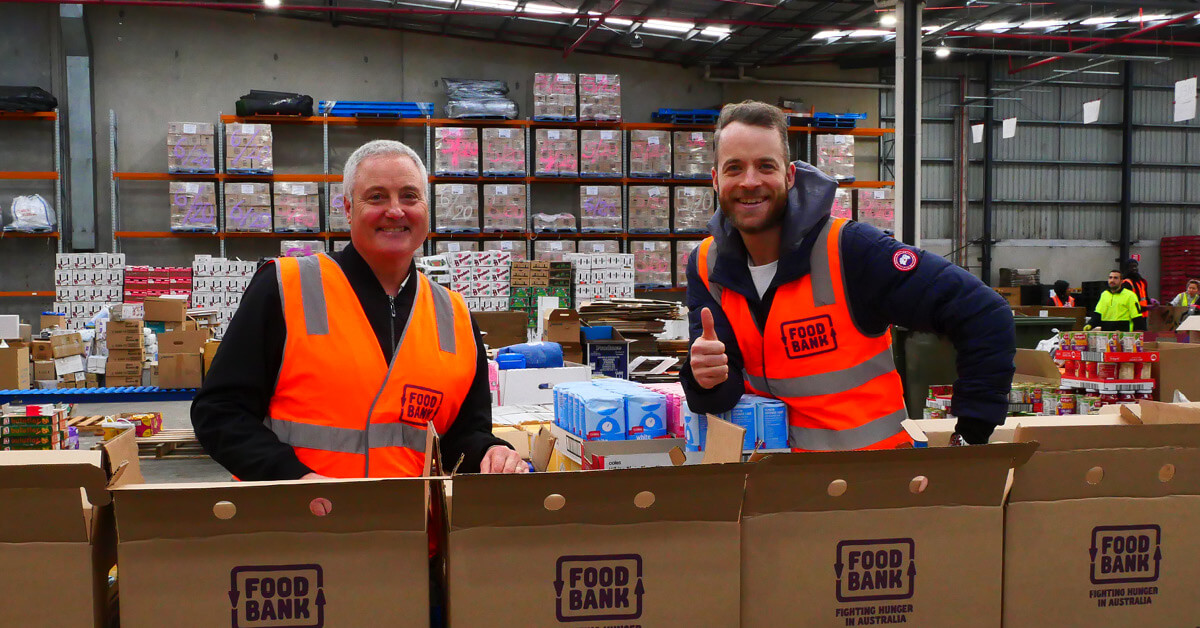
Spotted a familiar face on our social media networks recently? The one and only, Hamish Blake, has joined the Foodbank family as our new Ambassador and we couldn’t be more excited!

A dedicated family man and all round ‘do-gooder,’ Hamish shares our belief that every Victorian family should be able to put food on the table, and recently posted on his social media account in support of our COVID-19 Food Crisis Appeal. Stay tuned!

Check out Hamish Blake’s latest Foodbank post

School Spotlight: Hillsmeade Primary School

Hillsmeade Primary School is a large, multicultural, primary school with 865 students in the Narre Warren South/Berwick area.

Prior to implementing the School Breakfast Clubs Program in Term 2 2020, the school ran an independent Breakfast Club one day a week through the school canteen, with approximately 30 students attending per day. This is supported through staff and parent volunteers and student leaders.

Given the remote learning environment in which schools were operating for most of Term 2 this year, this school came up with some innovative ways to support students and their families.

When school returns to normal operation, they will set up outdoor furniture to create a space similar to an outdoor cafeteria, where students can sit with each other and their families, to enjoy breakfast.

Supporting the community during COVID-19

School Principal Jodie Bray says that with only 20-50 students attending school during Term 2, John Cardamone, of the school Well Being Team suggested making hampers to support families whose children were now unable to access the School Breakfast Club support.

“Staff were really quite upset after some of the phone calls they’d had with our families around them being in financial distress, given the state of COVID and their employment.  Teachers were reaching out and asking what are some of the things that we can do? And John came up with the idea of putting together hampers”, said Jodie.

The school have a structured intervention process and identified vulnerable families that required assistance through a series of tiered well-being checks.

Jodie explained that while the families at Hillsmeade are generally stable in their reported family occupation, they do now have some very vulnerable families due to job losses resulting from COVID-19.

“One of the families who always had regular work, we never thought would need something like this,” she says.

John also mentions that for families with children with challenging behaviors, or those requiring additional care at home, receiving delivered hampers has been greatly appreciated.

They both praise Felicity Pettingill who works in the canteen, who took on making up and distributing 30 hampers per fortnight. She also volunteers her time on a Monday to deliver the hampers because it better suits some families.

The school bought re-usable shopping bags which they filled with all the products supplied by the School Breakfast Clubs Program, including breakfast cereals, milk and lunches. The school have added a personalised message for the families, explaining the food has been provided the through the partnership with Foodbank as part of the School Breakfast Clubs program.

“It’s a little way of saying ‘we’re thinking of you’, from Hillsmeade,” says Jodie.

Jody reports the school loves the variety that the School Breakfast Clubs Program offers, given they were only providing cereal and toast previously, which they funded through their welfare budget. They are planning on introducing a cooked breakfast one day per week, as well as Friday Fruit, where the fruit is distributed amongst the classrooms to support the students to engage in healthy eating.

“We’re really big on supporting the social and emotional learning and the health and wellbeing of our community, so this has just partnered beautifully with that.”

Looking towards Term 3, Hillsmeade Primary School aim to continue to support their school community both with the food hampers and through their School Breakfast Club, in a ‘COVID-safe’ manner.

“We’re really prepared, we have safe work practices within our school, and we’ve mitigated the risks of operating in the canteen, and we’re ready to go” says Jodie.

Read more School Breakfast Club stories

School Spotlight: Echuca College

Echuca College has 800 students and their story involved the community banding together to support students with lunches.

While Echuca College only joined the School Breakfast Clubs program in Term 2, they were already running a successful Breakfast Club and Lunch program, so when remote learning came into effect, they adjusted to ensure they continued to support their students.

Dorinda, who looks after students well-being at Echuca College, said that many of the schools in the area came together under the co-ordination of a local teacher, and set up a Foodbank of their own that ran out of one of the local pubs.

Staff at the Hotel dedicated their time to making lunches for students in the area who would otherwise normally receive lunch at school. Echuca College contributed honey, vegemite, fruit cups and mini milks from the School Breakfast Clubs program to go alongside the sandwiches provided to local students.

Every Friday Dorinda would let the coordinator of the initiative know how many students needed lunch the following week, and by Monday and Wednesday they would have them packed into bags, ready to go out. The lunches were then delivered to students’ homes weekly on Mondays and Wednesdays.

Dorinda noted that “once the community worked out what was going on, they started getting donations to support the local initiative”. There were other small businesses including bakeries, the local IGA supermarket and cafés in the area that also contributed to the effort.

This is an excellent example of how communities came together during this time, and it certainly is lovely to hear how supportive the Echuca Moama community were towards students and families during remote learning.

Read more School Breakfast Club stories

Justin Dowling is Foodbank’s Hunger Hero for 2020

9th July 2020

In 2019, Woolworths increased donations to Foodbank by 50%, largely thanks to Justin Dowling, Woolworths Group’s General Manager – National Operations & Shared Services, who on Wednesday night received the 2020 Australian Institute of Food Science and Technology (AIFST) Foodbank Hunger Hero Award.

“It’s been a real privilege over the last few years to work closely with Foodbank and further build on the strong partnership that Woolworths and Foodbank have had together for the last 18 years,” said Justin as he accepted the award.

The Award recognises a person or team who has gone above and beyond to tackle food insecurity in Australia and Justin has done just that, fortifying the Woolworths – Foodbank partnership through food donations, transport support and team engagement.

Food Donations

With Justin leading the charge, Woolworths’ supply chain team reduced stock loss by 36% and stock to landfill by 5% and grew donations to Foodbank by massive 50% last year. It was thanks to these efforts that Woolworths became Foodbank’s biggest donor in 2019 with a total of 1.6 million kilograms of product donated.

Not only was this a great achievement in the fight against hunger in Australia, but also for Woolworths as a business, and the environment. As Justin explained, “It’s about us making sure we’re using the food and our resources in the best way we can.”

Transport

Justin’s support for Foodbank goes back many years, and in 2018 he pioneered the Foodbank – Woolworths Primary Connect initiative. This program leverages spare capacity in Woolworths’ national transport network to move essential food relief donations to where they are needed most.

As a result, Woolworths is also one of Foodbank’s biggest pro-bono transport providers, delivering more than $500,000 worth of transport support each year.

Team engagement

Justin has worked innovatively with Foodbank to further engage distribution centre (DC) team members in the donation process, without whom none of these successes would have been possible.

Bright purple Foodbank zones have been set up in DCs as collection points for donated product, serving as an eye-catching reminder to team members of the donation opportunity.

Sites now also compete to be the annual Woolworths Foodbank DC of the Year by achieving the highest donation conversion rate on the Foodbank DC League Table. This was implemented alongside strategic signage that enables each site to track their donations vs stock sent to landfill throughout the year.


The Foodbank team are incredibly grateful for the work Justin has done at Woolworths to champion the fight against hunger and provide food relief to Australians in need. As Justin highlights, “Our relationship is not just built on food donations and transport, it’s built on our values. We care deeply about vulnerable Australians and we are passionate about sustainability within our community.”

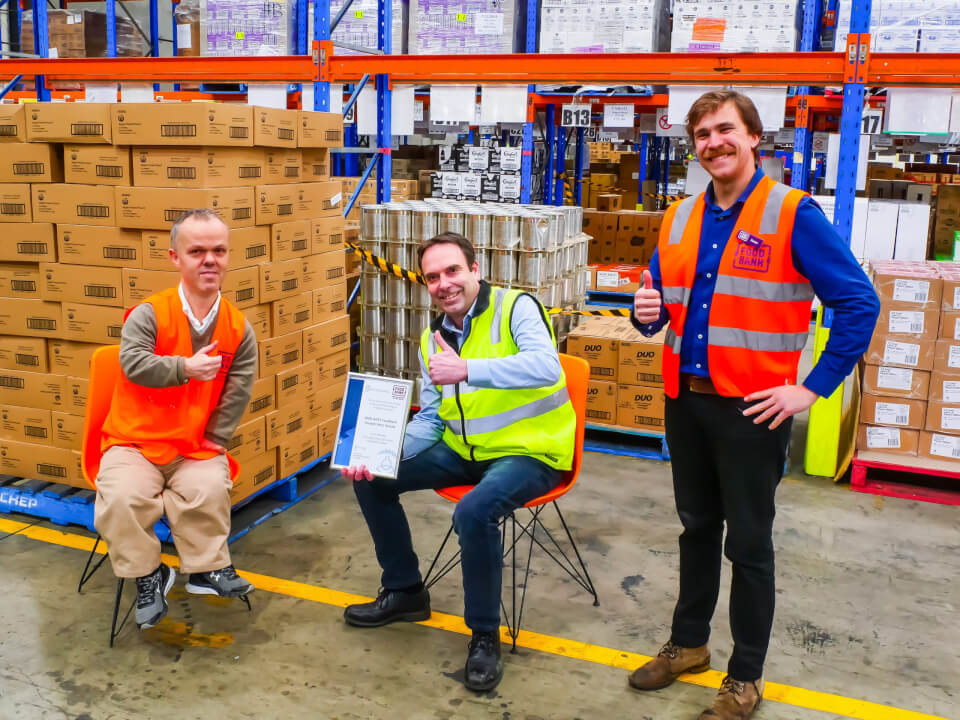
Michael Davidson, Foodbank Australia’s General Manager – National Supply Chain (left), and Daniel Parsons-Jones, Foodbank Victoria’s Food Donor Coordinator (right), present the AIFST Foodbank Hunger Hero Award to Justin Dowling, Woolworths Group’s General Manager – National Operations & Shared Services (centre).


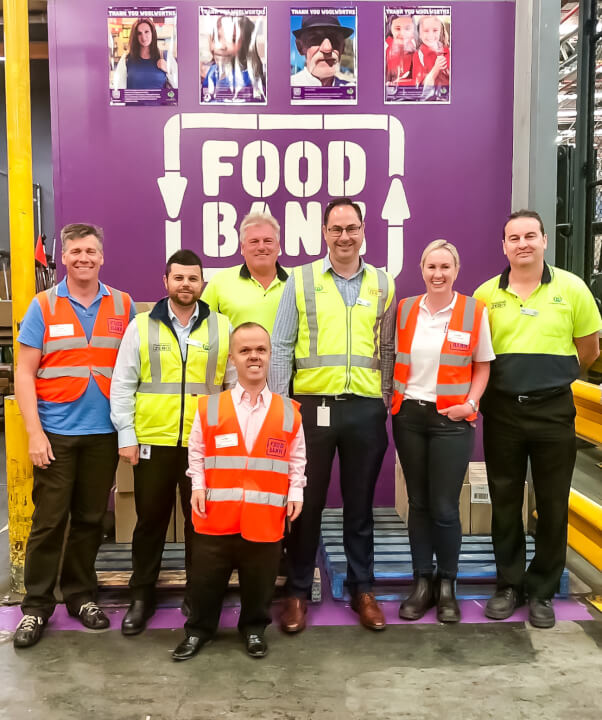
Woolworths and Foodbank team members celebrate the new purple Foodbank Zone at the Woolworths Melbourne Distribution Centre.

School Spotlight: Kilmore Primary School

Kilmore Primary School is an hour north of Melbourne and has 560 students. They started with the School Breakfast Clubs program in Term 2 of this year. Unfortunately, COVID-19 meant they were unable to start their Breakfast Club as planned. Instead, they responded by providing around 70 hampers to their students learning remotely, and offered a Grab n Go breakfast to those who continued to attend school.

Julie, the Assistant Principal, said they selected students “by outlining those most in need, then as they got more information about parents who had lost their jobs or situations had changed that list expanded”.

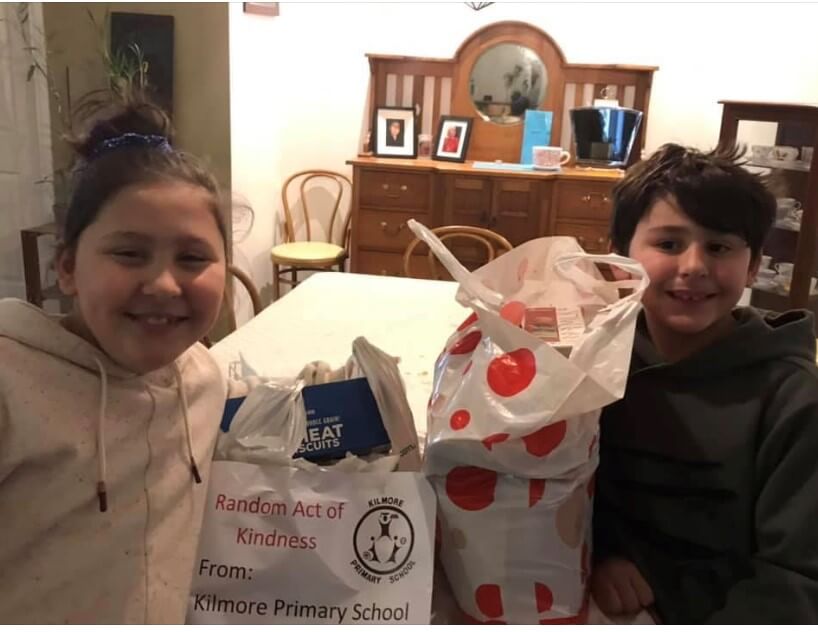
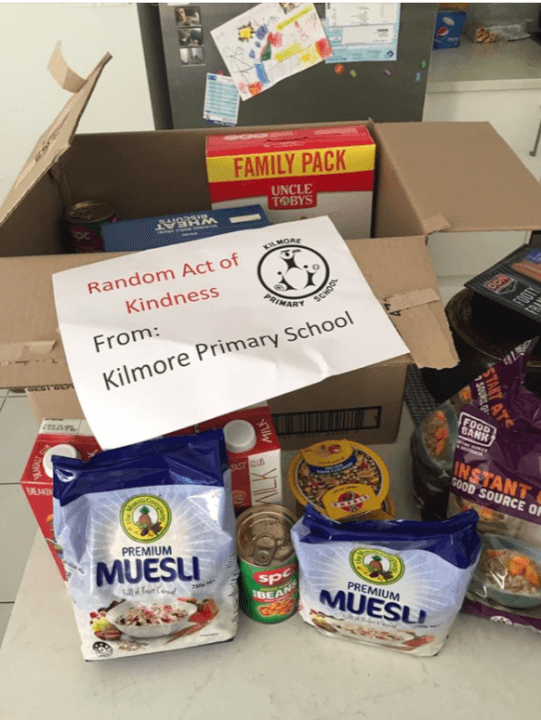
They also delivered their School Breakfast Club hampers a little differently. The staff dropped the food off to students’ houses with a note that it was a ‘Random Act of Kindness’. This was very well received by those students and families! They even had some families donate additional food, and one Grandmother donated Coles vouchers to be added to the hampers. Julie said the initiative “had a ripple effect”.

They received many phone calls and emails from families thanking them for their kindness. Julie also highlighted that none of this would have been possible without the support of the canteen manager, who is also a parent, and up to eight Education Support staff, who packed and delivered the hampers to each student’s home.

Julie noted that “it did take a bit of effort, but it was certainly well received. You don’t mind doing it when you get lots of positive feedback and you know the kids are getting some food, and you’re taking a bit of pressure off the home”.

Read more School Breakfast Club stories

Durkin Produce

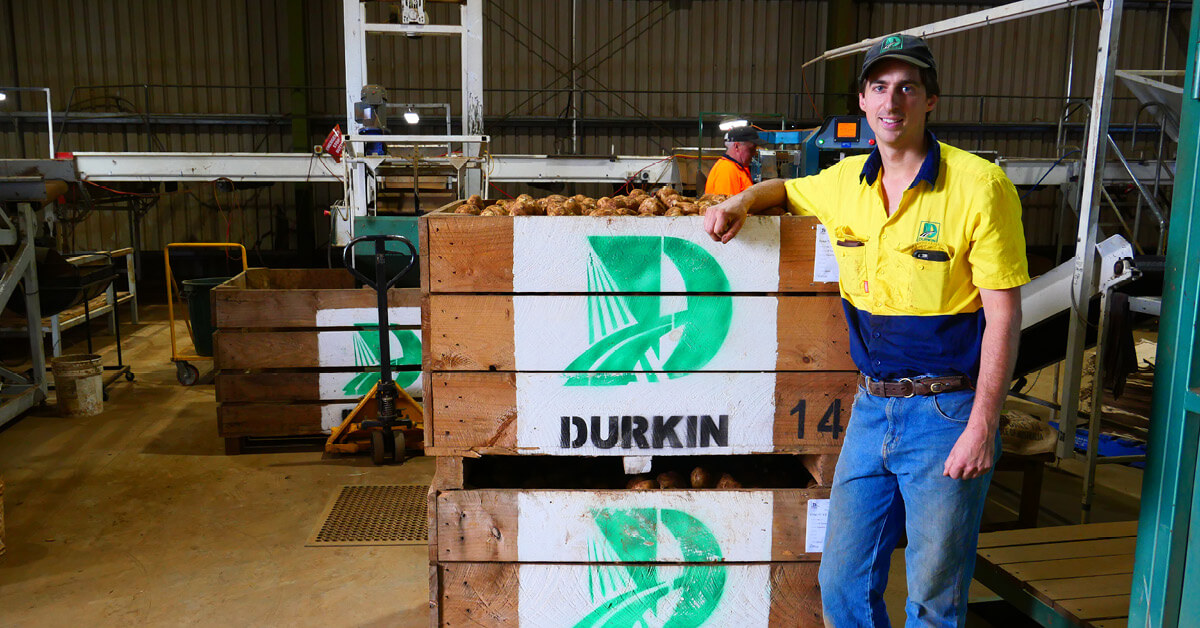
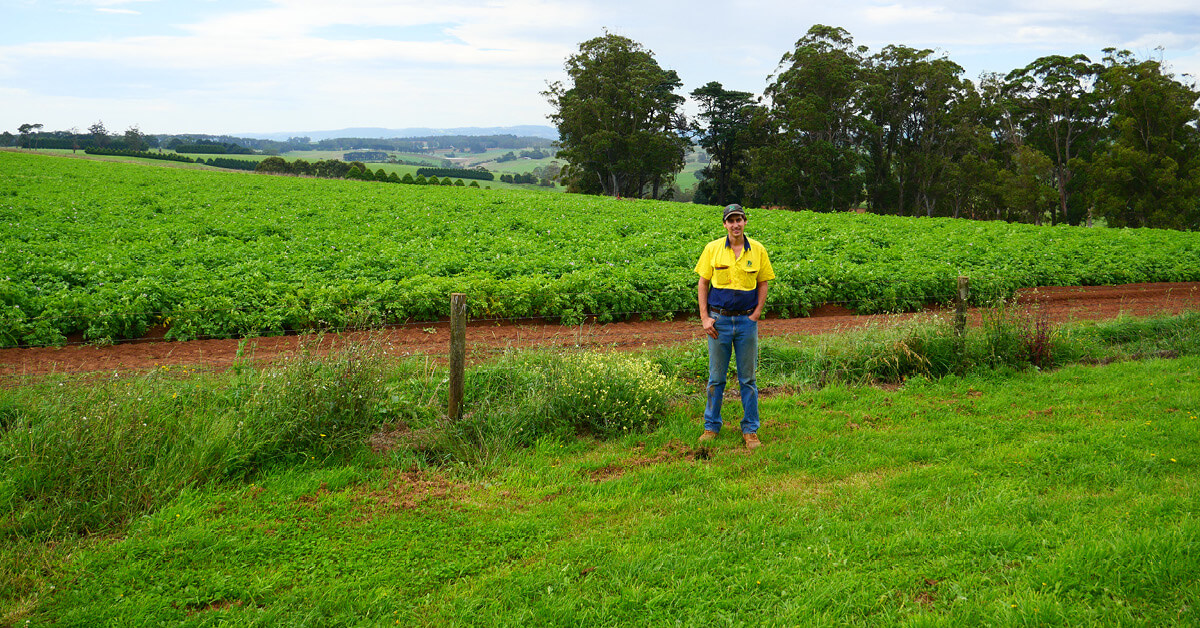
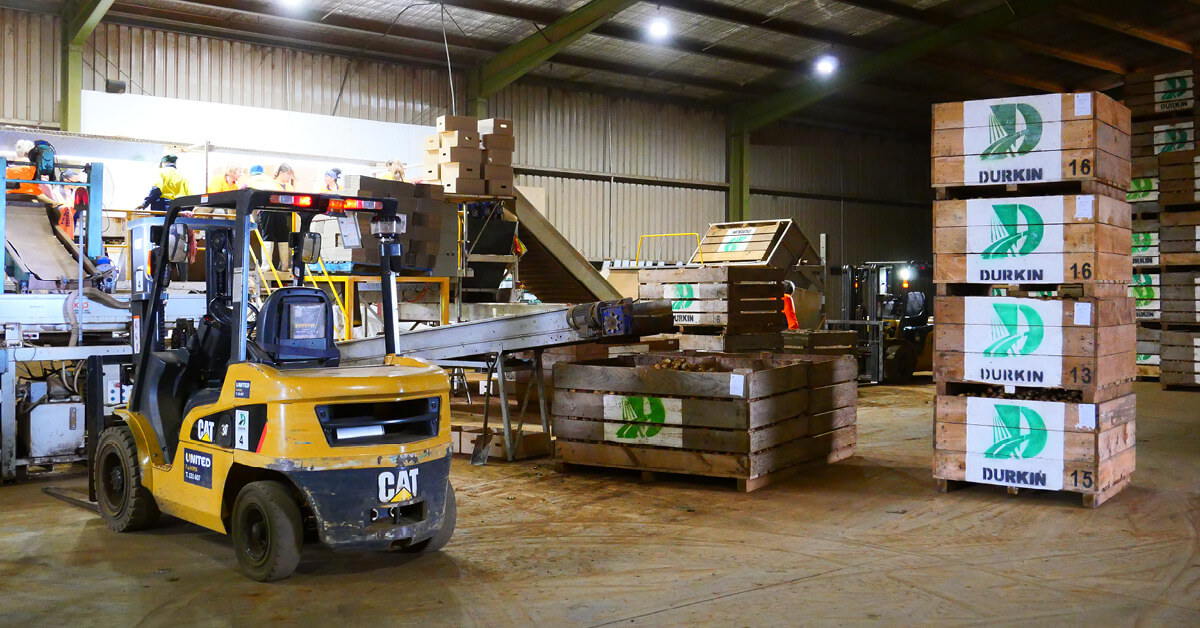
Located in Thorpdale, Victoria’s ‘potato capital,’ Durkin Produce have been long-term supporters of Foodbank, regularly donating potatoes to help feed those in need.

Father and son duo, Mike and Matt Durkin, oversee the harvest of 10,000 tonnes of potatoes a year for the Durkin Group. The farm supplies a large amount of potatoes to Woolworths and Aldi every year.

Son Matt says when working in the food industry, it’s important to have a social conscience.

“We like donating to Foodbank as it allows for some of our potatoes to make their way to some of those less fortunate in our community, and provide them with a good nutritious food staple,” he says.

Mike, who is in charge of the operation, says that aside from a social conscience, the benefit of farmers donating to Foodbank is that it avoids waste.

He says because consumers only want premium potatoes from supermarkets, many of their potatoes are unable to make their way to retailers.

“It’s very frustrating. There’s nothing wrong with the product apart from cosmetically or it’s out of specifications. But it’s just wasted.”

“The Thorpdale farming community is no different to any other. Everyone is involved in the footy and netball clubs, the school and kinder and things are tough in the bush.

“Whether you donate time or services or product, it’s part and parcel of living in regional Australia.”

It’s thanks to generous farmers and growers like Durkin Produce that we’re able to ensure hungry Victorians have access to healthy food.

Meet our Farmers & Growers

Nature’s Dairy

Every term we deliver breakfast, lunch and school holiday supplies to schools across Victoria so students can get a healthy start to the day and milk is one of the key ingredients! Where does it come from? From the hard-work farmers at Nature’s Dairy.

Meet our Farmers & Growers

School Spotlight: Maramba Primary School


Located in Narre Warren, Maramba Primary School holds a weekly Breakfast Club, providing healthy breakfast for students who may otherwise arrive at school hungry.

During the covid-19 lock down, Assistant Principal, Diane Morwood, said there was great concern for those students who were missing out on breakfast at home. To ensure students would have continued access to healthy food, Diane was able to provide students with School Holiday Supply Packs to enjoy during lock down and the school holidays.

“The School Breakfast Club holiday packs were a great help to families experiencing financial hardship during the holidays. We had many happy students who would otherwise have no food to eat. The smile on their faces when they returned to school was priceless.”

In term 2, Maramba Primary School was able to welcome students back to the classroom and back to Breakfast Club. Diane says the benefits of the program extend beyond breakfast.

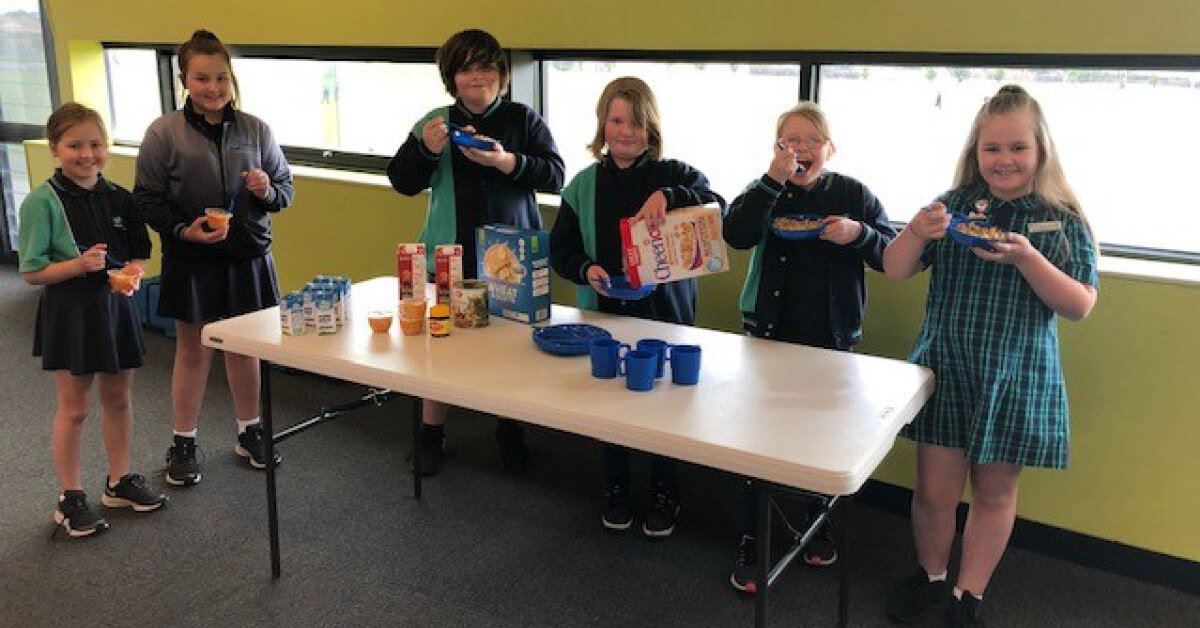
“Sharing breakfast with friends is a great way for all children to start the day and reinforces our school values of Respect, Relationship, Responsibility and Resilience. It also supports the development of some independence skills as children take responsibility for making their breakfast and cleaning up after themselves. The cheerios, fruit packs and milk are by far the most popular treat.”

Some of the regular Breakfast Club attendees also shared their thoughts on the program:

“If you do not have breakfast in the morning you can have it at school at our Breakfast Club so you are ready for the day,” – Macey.

“The Breakfast Club gives you energy for the day so you can make more ideas in the classroom,” – Finley.

“Breakfast club is for free,” – Amber.

“Breakfast is good for you and if you do not have it you are not ready for the day,” – Grace

We are so glad that the School Breakfast Clubs Program is putting smiles on student’s faces!

Read more School Breakfast Club stories