
Women bear the brunt of hunger in Australia
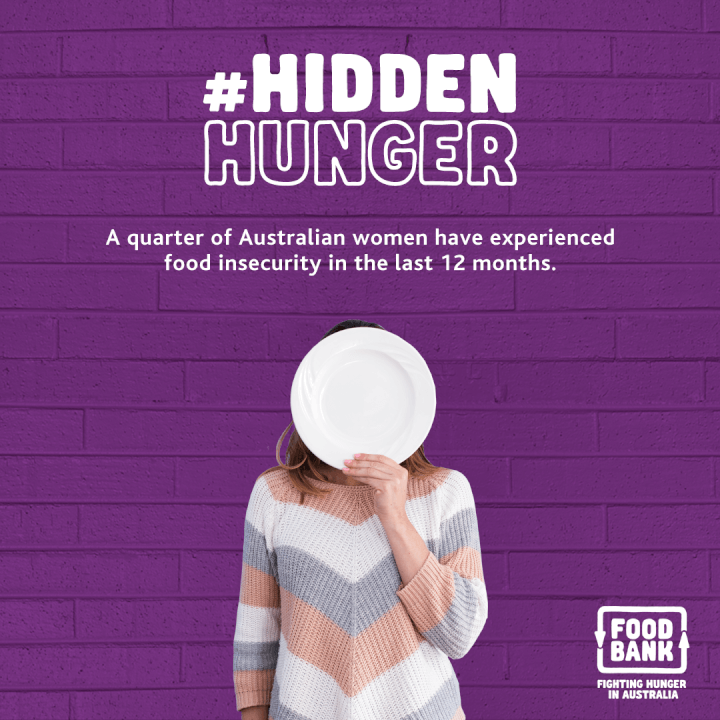
Foodbank has today revealed that women in Australia are 50% more likely to experience food insecurity than men and, in fact, a quarter of all women have experienced food insecurity in some form in the past 12 months.
The Foodbank Hunger Report 2019 discloses that the events that make women susceptible to food stress are also different to those for men. Women are significantly more likely at some time in their lives to have experienced domestic violence or financial abuse or to have raised children on their own for an extended time. Men, on the other hand, are more likely to have been unable to find a job for a lengthy period.
Food insecurity is also more likely to take an emotional toll on women the research finds, as they report being more likely to feel stressed and anxious than men. For example, mothers are twice as likely as fathers to feel like a bad parent when there is not enough food in the house.
The Foodbank Hunger Report, now in its seventh year, surveys 2,000 charities and 1,000 individuals from around the country who are experiencing food insecurity. Foodbank Australia CEO, Brianna Casey, explained the report aims to better quantify and understand what is a growing social crisis.
“We hear so many heart-breaking stories, from mothers skipping meals so their children can eat, to elderly women left on their own feeling isolated because they can’t offer their neighbours or friends so much as a cup of tea or coffee” she said. “We knew the situation was bad, but this year’s report confirms that it’s getting worse and the impact is skewed towards our most vulnerable women in the community.”
“In spite of the fact that Foodbank is now providing food relief for more than 810,000 people every month, what the report shows is that our charity network is still not meeting demand. There has been a 22% increase in the number of individuals accessing food relief in the past year and only 37% of charities believe they are meeting the full demand in their communities” stated Casey.
In the wake of these findings, Casey has challenged the government to act. “This problem is clearly not going away in fact its impact on the health and wellbeing of our communities is only going amplify. What is required is a long-term, whole-of-government plan to tackle this crisis head on. We are calling for a commitment to introduce a National Food Security Strategy to ensure we achieve zero hunger in this country by 2030,” Casey said.
The public can join the growing movement on social media to shine a spotlight on the issue of hunger in Australia by using the hashtags #HiddenHunger and #ZeroHunger, donating at www.foodbank.org.au or asking their local Member of Federal Parliament what they are doing to address food insecurity in Australia.

Foodbank is here for the long haul as the drought persists
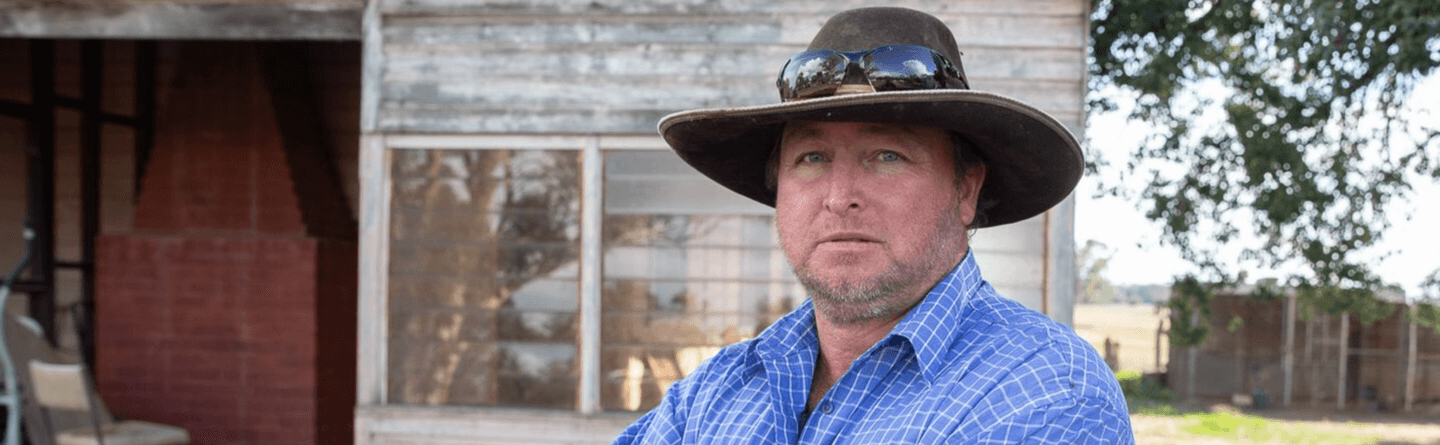
Over a year ago, the Australian public rallied behind farming communities struggling with the devastation of the ongoing drought. Drought conditions have worsened dramatically in others and it’s time to look after our rural communities.
Foodbank has unique insights into the impact of drought from two perspectives – firstly through the voices of rural and regional charities and schools who are increasingly reliant on our support; and secondly through shortages of some of our most important food items, from rice, milk and meat to breakfast cereals, fruit and veggies.
We are proud to have nurtured wonderful relationships with our farming communities. In fact, in good seasons, our farmers are among our most generous donors, regularly donating their produce – both perfect and imperfect – to help fight hunger in Australia. That’s why we are so determined to return that generosity. Our rural and regional communities need us now more than ever, and we are acutely aware of the need for support to be provided to those in crisis throughout the drought recovery period and beyond.
Foodbank is but one part in a much wider effort from many charities and organisations working collaboratively to provide the most effective and efficient relief to affected communities. We know that the impacts of drought are felt well beyond the farm gate, and Foodbank is here for you all. We are working closely with the National Farmers’ Federation, Country Women’s Association, support agencies and our charity network across drought-affected regions to identify what additional support is required in terms of food and grocery relief.
We are also keenly focused on rural mental health and wellbeing, not just for those directly affected, but also for those supporting our farmers and rural communities through one of the toughest periods they’ve ever had to face. It’s okay not to be okay, and we encourage you to reach out to one of the support services below if you or someone you know needs support.
- Lifeline on 13 11 14
- Beyond Blue on 1300 22 46 36
- Kids Helpline 1800 551 800
By harnessing our terrific relationships across the food and grocery sector, our established partnerships and the community’s ongoing support, we will continue to provide ongoing food and grocery assistance. Whether it be food or personal care items, Foodbank is here to make sure families feel supported throughout, and we assure you, we’re right here with you for the long haul.
Socceroo legend serves up breaky
Students of Campbellfield Public School in Sydney’s south west were treated to a soccer superstar serving them breakfast earlier this month.
Tim Cahill, Weet-Bix Ambassador, attended the breakfast club on a chilly morning before the school bell rang, to help serve Weet-Bix, toast, delicious fresh fruit and hot drinks to 180 local students attending Foodbank NSW & ACT’s School Breakfast 4 Health Program.
Breakfast club has never been so busy or chaotic with children lining up, hoping to be served by the ex-Socceroo striker himself. With breakfast eaten and tummies full ready to start the day, Tim led the assembly with ball juggling and words of inspiration, ‘Make your dreams big and bright, there’s no limit to what you can achieve!’.
More than 1 in 5 Australian children have experienced food insecurity in the last 12 months – right here in our backyard. Foodbank currently supplies 2,600 charities and provides 272,000 school breakfasts a week to more than 132,000 children in 2,000 schools.
Sanitarium, one of Foodbank’s National Donors, provides the iconic cereal in addition to other products to Foodbank School Breakfast programs around the country.
The Foodbank School Breakfast programs operate smoothly thanks to our generous National Donors and state government funding in various states.

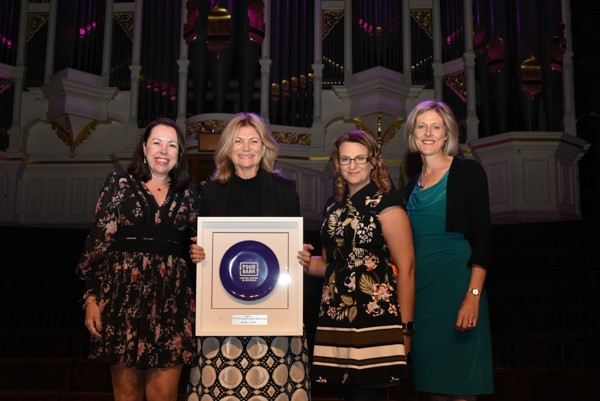
SYDNEY 30 May 2019: Foodbank’s national milk program partners – Parmalat, Lion Dairy & Drinks, Fonterra and Saputo Dairy Australia have collectively received the 2019 Foodbank Award for their collaboration to fight hunger in Australia.
Presented at the Food & Grocery Australia conference dinner held by the Australian Food & Grocery Council (AFCG) in Sydney yesterday, Foodbank praised its dairy partners for the extraordinary collaboration with regular contributions on the production of fresh milk to help Foodbank provide relief to more than 710,000 Australians every month.
Announcing Foodbank’s highest accolade, Foodbank Australia CEO, Brianna Casey, said; “This prestigious award is presented to an AFGC member or members showing vision, innovation and leadership in partnering with Foodbank to deliver greater impact in providing food and groceries to vulnerable families across Australia.
“This year, our dairy partners receive the award for what has proven to be an extraordinary eight-year collaboration providing 1 million litres of fresh milk a year. This industry sector program is unique to Australia and sets a benchmark for foodbank/industry partnerships around the world.
“Without the support of generous partners such as these wonderful milk companies, we would simply not be able to assist the millions of Australians accessing food relief from our network of 2,600 charities around the country.
“Despite facing turbulent industry and market conditions, Parmalat, Lion Dairy & Drinks, Fonterra and Saputo Dairy Australia supply Foodbank with fresh milk in every state and territory each and every week of the year. This allows school students around the country to have milk on their cereal when they sit down at a breakfast club, it enables pensioners to add milk to their cup of tea or coffee at the drop in centre and it provides families with a staple ingredient for meals such as mac and cheese,” Casey explained.
Also on the night, the Flight Centre Foundation’s General Manager, Anita Russell, was inducted into the Foodbank Hall of Fame. Announcing the induction, Casey said: “Anita has been at the centre of the Flight Centre/Foodbank relationship since its inception seven years ago. Not only is it an incredibly valuable partnership for Foodbank but, thanks to Anita, it is the north star of corporate engagement.
“From workplace giving recruitment drives to ‘The World’s Biggest Hamper Pack’, Anita has repeatedly challenged and motivated us and her Flight Centre colleagues to do more and achieve more. No idea has ever been too big or too crazy once Anita her applied her ‘can do’ magic.
“Thanks to her passion and energy, the relationship has gone from strength to strength such that Flight Centre staff and company have funded 8.2 million serves of long life milk as well as 2.4 million serves of pasta sauce, canned fruit and rice,” Casey said.
As a long-standing supporter of Foodbank, the Australian Food and Grocery Council (AFGC) provides a platform for Foodbank to present the Annual Foodbank Award at its premier, annual event, Food and Grocery Australia Dinner. Foodbank thanks the AFGC for allowing it to celebrate Foodbank hunger fighters and congratulates its award recipients.
Foodbank welcomes Labor’s commitment to helping hungry Australians
8 May 2019 – “Foodbank welcomes today’s commitment from Labor to double funding for food relief organisations” Foodbank Australia CEO Brianna Casey said today.
“We have made a case to all parties to deliver a National Food Security Strategy with significant funding to support it, to help address Australia’s food insecurity crisis,” she explained. “We look forward to working with the incoming government to ensure that vulnerable and disadvantaged Australians have reliable access to sufficient safe and nutritious food”.
Foodbank’s case for a National Food Security Strategy can be found here and its policy and funding priorities ahead of the federal election can be found here.
Hunger in Australia an election priority: Foodbank
8 April 2019 –Australia’s largest food relief organisation, Foodbank, has called on all sides of politics to ensure vulnerable families – especially those struggling to put food on their tables – are not forgotten in the lead-up to the federal election and beyond.
“This election presents an opportunity for our political leaders to acknowledge that Australia has a hunger problem, and commit to a long-term plan to do something meaningful about it,” Foodbank Australia CEO, Brianna Casey said today.
Foodbank currently provides food relief to more than 710,000 Australians each month, a quarter of whom are under the age of 19. The organisation’s latest research reveals that a startling 4 million Australians experienced food insecurity last year.
“While the circumstances that led them to their situations might be markedly different, what unites food insecure Australians is an overwhelming sense of helplessness” Ms Casey said. “This election presents an opportunity for our political leaders to deliver hope to hungry Australians by uniting on an enduring policy legacy that will benefit generations to come”.
Foodbank has warned that current duelling over tax breaks could distract from the very real problem facing so many Australians right now – uncertainty over where their next meal is coming from and the stigma and shame experienced when sending their children off to school with an empty lunchbox.
“The time has come to stop the short-term, band-aid solutions to hunger in Australia and deliver the country’s first ever National Food Security Strategy,” Ms Casey said. “We want 2019 to be the year we turn a corner as a nation and deliver outcomes capable of ensuring all Australians can live with dignity and have access to sufficient, safe and nutritious food.”
“There is not an electorate in this country that is not touched by food insecurity. It affects families, students, the elderly and people with disabilities. Almost half are employed and, most heartbreaking of all, 22% are children. In fact, children are more likely to be food insecure than adults in Australia today,” she explained.
“There is currently no cohesive federal policy platform or meaningful long-term funding underpinning the goal of individual food security in Australia,” Ms Casey went on to say. “In the absence of government action, we have started the process and call on an election commitment to develop a long-term policy that will ensure zero hunger by 2030.”
Foodbank’s case for a National Food Security Strategy can be found here and its policy and funding priorities ahead of the federal election can be found here.
Foodbank also supports ACOSS and its call to raise Newstart Raise the Rate.
Global FoodBanking Network certification
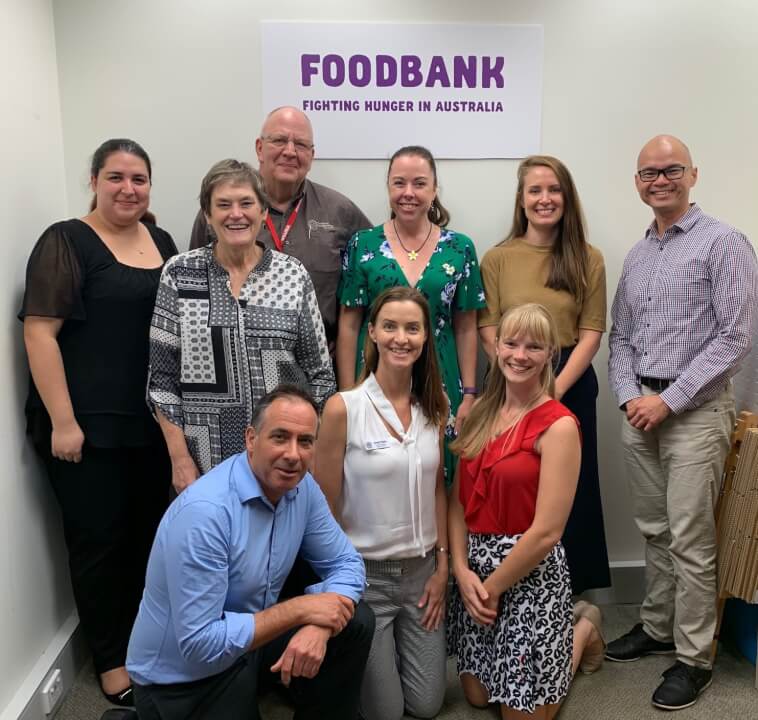
Foodbank completed a week long re-certification profess with The Global FoodBanking Network (GFN) in February.
Foodbank is one of 32 GFN member countries, only 19 of which are formally certified. The thorough process included a check of brand awareness, donor stewardship, food handling, recalls, advocacy, hunger messaging and much more.
We are thrilled to report that Foodbank Australia was noted to be ‘exceeding global best practice’ in many ways and that we have retained our Global Foodbanking certification.


1 in 5 Children go hungry in Australia
Log in