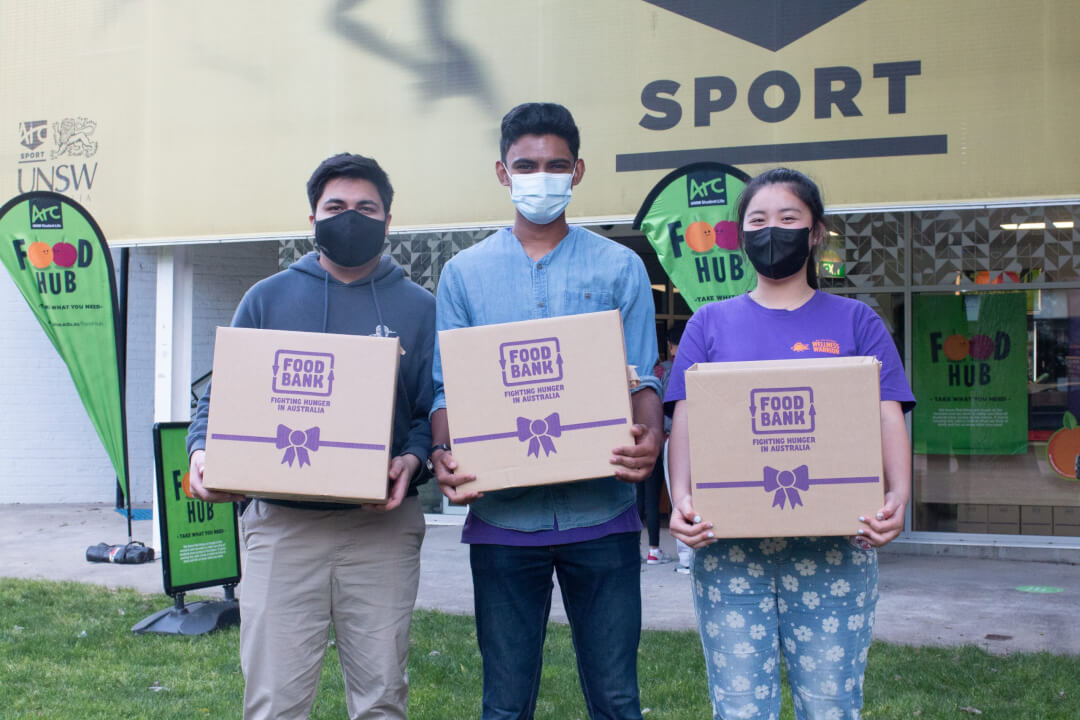
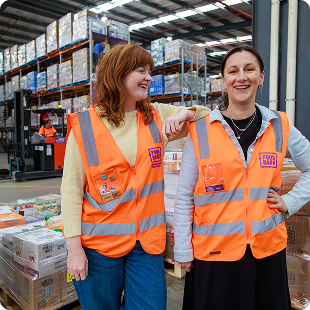
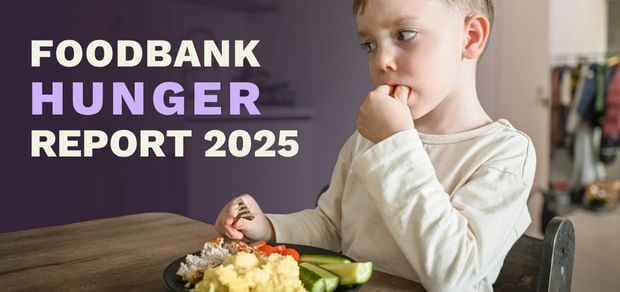
Foodbank’s in each state and territory have been working around the clock to ensure food and groceries continue to get to where they are needed the most.


9th September 2021

Over the past four months we have truly felt the impact of Delta. South Australia, Northern Territory and parts of Queensland were thrust into snap lockdowns, while ACT, Victoria and NSW continue to experience extended lockdowns with harsh restrictions.

Foodbank NSW & ACT reported an increase of more than 200% in the demand for food relief. They have received more than 20,000 requests for food hampers from international students since 6th July and more than 41,000 emergency relief hampers have been delivered throughout the state in the past 8-9 weeks thanks to the Resilience NSW, NSW police force, and help from NSW State Emergency Service and Australian Defence Force who stepped up to pack hampers at the warehouse.

Meanwhile in Victoria’s sixth lockdown, the team continue to work with the Australian Red Cross to distribute emergency relief hampers. Up until recently, Foodbank Victoria opened their warehouse doors on several occasions to offer a Covid-safe, drive-thru hamper collection. Unfortunately, during the last drive-thru on August 20th it was shut down by police 90 minutes into operations, due to overwhelming demand. The traffic queuing to enter the warehouse was banked up to the point it became a public safety issue. Despite 520 cars through and 1482 hampers distributed, there were nearly 1,000 cars turned away, signally the demand for food relief is only growing. The team are seeing the same demand its International Student Pop Up Store which is experiencing a 42% increase in students accessing the free food relief pop up in Melbourne.

Foodbank Australia is so grateful to all our supporters – our national donors and partners who stepped up and continue to offer support to ensure every community has access to emergency food relief now, and for as long as it is needed.

600,000 meals for hungry Australians: Mars Food Australia launches Collaborative Supply Program with Foodbank

27th July 2021

Mars Food Australia and Foodbank have launched a new partnership that will help provide more than 600,000 meals to Australians in need this year.

During the COVID-19 lockdowns in 2020, the demand for food relief increased by 47 per cent, with three in 10 of food insecure Australians facing hunger for the first time in their lives.

Foodbank Australia CEO, Brianna Casey, said this new collaborative supply program with Mars Food Australia will help Foodbank better respond to the increasing demand for food relief. Providing a steady, planned supply of food products will help meet the huge logistical challenge of getting food to hundreds of thousands of Australians doing it tough.

“This program helps Foodbank turn our food and grocery ‘surprise chain’ based on ad hoc donations and unpredictable food rescue opportunities, into a predictable, reliable ‘supply chain’,” Ms Casey said.

Bill Heague Mars Food Australia General Manager 3
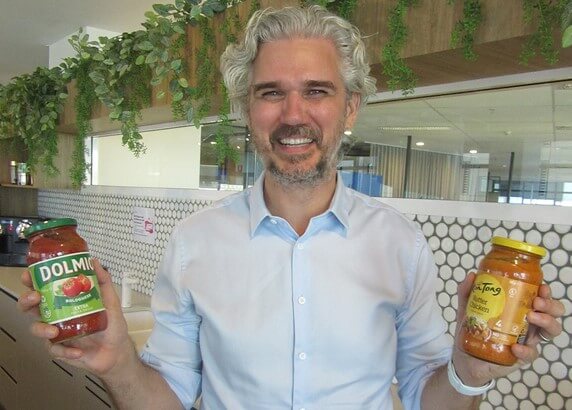
General Manager of Mars Food Australia, Mr Bill Heague, with some of the sauces being produced for Foodbank.

“Foodbank has never been more important than it is right now. We’re responsible for ensuring essential food relief can remain available in spite of lockdowns, border closures and panic buying.

“Unpredictable employment patterns and the broader economic fallout from COVID-19 has meant we have had to increase the quantity of food we’re providing to Australians from all walks of life. Partnerships like this with Mars Food Australia are vital in helping us meet this growing need,” she said.

Mars Food Australia is donating some of its most popular products, chosen for their versatility in the kitchen and ability to help create easy and tasty meals with ingredients commonly also available through food relief.

General Manager of Mars Food Australia, Mr Bill Heague, said Mars is committed to helping alleviate the growing hunger problem in Australia.

“Last year, through our monthly ad hoc Foodbank donations, we delivered 265,700 meals to people in need. But the pandemic made food insecurity an even bigger issue in our society, and we knew we could do more. We talked with Foodbank about what help they needed most, and a consistent supply of food products came out on top,” Mr Heague said.

“Keeping Australians healthy by providing dinnertime meals is a key ongoing goal for our company. This year we will increase our contribution by providing recipe bases and sauces for 600,000 meals for people in need through Foodbank, and we hope to grow this contribution even further in the future.

“It will help us achieve our goal of reducing the number of individuals and families who are struggling with food insecurity and going through difficult times.

“I’m a firm believer that dinner time matters, because we know that finding opportunities to cook and share meals with family and friends is good for both physical and mental wellbeing. It’s the foundation of our food business, side by side with providing healthy, easy, affordable and tasty meal options,” Mr Heague said.

Globally, Mars Incorporated is committed to delivering 25 million meals to people in need of a healthy meal, by 2025. Here in Australia that means one million meals for Australians by the end of 2021. The new Foodbank partnership will deliver 60 per cent of this goal.

As part of the new agreement with Foodbank, Mars will donate 175,000 jars and bottles of dinnertime products to Foodbank including Dolmio Bolognese and Carbonara Sauce, Kan Tong Butter Chicken Simmer Sauce and MasterFoods tomato sauce. These products alone contain 689,280 serves of vegetables.

-Ends-


Media enquiries

Rebecca Collins
Foodbank Australia
E rebecca@foodbank.org.au
+61 409 786 132

Vianney Segedin
Bite Communications
vianney@bitecom.com.au
+61 2 9977 8195
+61 451 811 465

Nestlé helps to make 1.2m meals with first-ever custom product for Foodbank

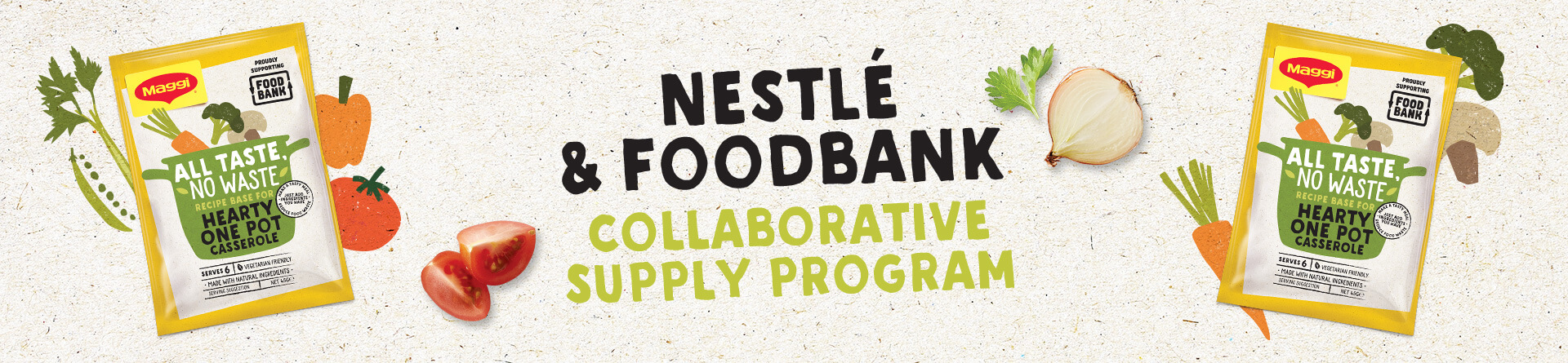
Nestlé has proudly partnered with Foodbank to create the first ever designed-for-Foodbank custom product, with more than 1.2 million serves being made to help support people in need.
19th May 2021

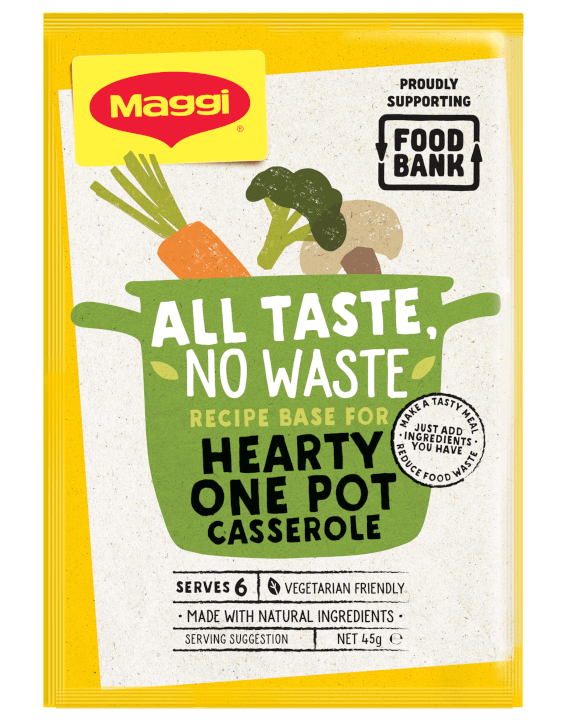
MAGGI Hearty One Pot Casserole is a recipe base that turns almost any combination of protein and vegetables into a delicious meal for six. By partnering with Foodbank, this versatile product will help people who’ve received food relief to create a delicious meal from the food they receive, and minimise food waste.

MAGGI Hearty One Pot Casserole recipe base was made possible thanks to a team of 12 partners brought together as part of Foodbank’s unique MAGGI Collaborative Supply Program: Olam Spices, GrainCorp Foods, Fonterra, GS Hall, Dominion Salt, NZ Sugar, Tate & Lyle, Boxer & Co, Huhtamaki, Labelmakers, Oji Fibre Solutions and Nestlé.

Each partner donated their resources and time to create this product that will go directly to Foodbank and the charities they support. The recipe base was proudly developed and produced by Nestlé in Cambria Park, NZ.

Foodbank Australia CEO, Brianna Casey said, “Food insecurity continues to be a very real issue for many people as they struggle day-to-day to make ends meet.

“Foodbank receives a huge range of donated food every day. MAGGI Hearty One Pot Casserole recipe base will be the ultimate value-add, enabling people to easily prepare wholesome, tasty meals.

“The past 12 months have been exceptionally challenging. In fact, in 2020 we saw a 47% increase in demand for food relief from pre-COVID-19. Many people continue to face financial pressures – and thousands have been affected by recent floods, as well as those still recovering from the bushfires last year.

“We are so grateful to Nestlé and other partners who have led the creation of this product, and so generously donated their goods and services.”

Nestlé General Manager of Foods, Kristina Czepl said, “We understand that food relief depends on what is available, and people can get a mix of items and not necessarily know how to turn them into a nutritious meal.

“Our team is passionate about supporting the community and relished the opportunity to put together a product that is versatile so that people can use any ingredients they have or that are affordable, to create a nutritious meal – that’s delicious too.

“The development of MAGGI Hearty One Pot Casserole recipe base would not have been possible without the support and generous donations of our partners in the supply chain.”

The MAGGI Hearty One Pot Casserole recipe base, which features a tomato and mushroom flavour profile, will be rolled out in the new MAGGI recyclable packaging to Foodbanks across Australia and New Zealand from late May 2021.

Foodbank sourced record amount of food and grocery relief in 2020

4th FEBRUARY 2021: Foodbank revealed today it sourced a record amount of food and groceries in 2020 to meet the higher demand for food relief due to COVID-19.

Last year, Foodbank obtained 48.8 million kilograms of food and groceries via both donations from the food and grocery sector and the purchase of key staple items, thanks to funding from the Federal Government, corporate Australia and individuals. This record volume of food and groceries equates to 87.9 million meals – an increase of nearly 15 percent on 2019, enabling Foodbank to generate a social return on its activities worth more than $1 billion.

COVID-19 continues to have a devastating impact on many Australians, temporary residents and international students. In March 2020, when the pandemic hit, Foodbank was forced to upscale fast to meet the immediate demand for food relief. Charities reported demand for food and grocery relief increased by an average of 47% throughout the year as businesses closed and jobs were lost. The Foodbank Hunger Report 2020 released in October, revealed more than a quarter (28%) of those experiencing food insecurity due the pandemic had never faced it before.

Foodbank Australia CEO, Brianna Casey, says it has been an incredibly demanding period and the organisation could not have met the urgent need without such widespread and significant support.

“We are so grateful to our very generous donors and partners, who continue to enable us to source essential items and ensure we can quickly get them to those who need them the most. Last year saw us face one crisis after another; off the back of a persistent drought and the catastrophic Black Summer fires, we then had to reach out and ask for even more support in March when COVID-19 hit and unemployment rates skyrocketed.

“In a ‘normal’ year, Foodbank provides relief to more than 815,000 Aussies every month, but 2020 wasn’t a normal year and in the three months from April to July, Foodbank purchased more food and groceries than we had in the previous three years. Without our donors and partners, and the support of the Federal Government, we simply couldn’t have responded in the way we did.”

Foodbank provides food and groceries to over 2,400 charities and 2,500 schools. More than 40% of all food and groceries distributed by Foodbank nationally goes to regional and rural communities. The leading hunger relief organisation works with the entire Australian food and grocery sector including farmers, wholesalers, manufacturers, and retailers who donate and redirect surplus product so it can be distributed and those who need it most via Australia’s charity network.

Foodbank accepts donations of ambient, chilled, fresh food, private label products and personal and household care items. Products may be out of specification, close to expiry, deleted product, surplus to requirement or have damaged or incorrect packaging. If your organisation can help Foodbank provide food and groceries to vulnerable members in our communities, please email supplychain@foodbank.org.au

More students to benefit from School Breakfast Clubs

January 2021

We’re excited to announce our School Breakfast Clubs Program has reached a milestone with 1,000 schools now participating across Victoria, allowing more students to learn with a full stomach and get the most out of school.

More than 15 million nutritious meals have been served to students since the program’s launch in 2016. Delivered in partnership with the Victorian Government, the program providing free breakfasts for kids at participating Victorian schools.

In 2021, the program will be delivered to 1,000 schools, providing free breakfasts, lunches and school holiday supplies to those most in need, as well as a Cooking Classes Program for parents and children at selected schools.

Despite the transition to remote and flexible learning in Term 2 and 3 2020, more that 2.5 million meals were delivered to students ensuring no student went hungry.

In Term 4, a further 1.2 million meals were provided to students, along with over 6,700 school holiday packs to support students and their families over the summer holidays.

Foodbank Victoria CEO, Dave McNamara, is thrilled to see this vital program delivered in more schools.

“Since 2016, Foodbank Victoria has been proud to deliver this vital program providing healthy meals to kids who might otherwise go without, giving them a happy, healthy start to the day.”

The School Breakfast Clubs program provides more than just nutritious food – it improves concentration, builds social skills, and gives kids a better chance to create a bright future for themselves through learning,” he says. 

Read more School Breakfast Club stories

Foodbank bracing for a further rise in hunger


12th OCTOBER 2020: Foodbank, Australia’s leading food relief organisation, today reported that demand for food relief is up and believes it has not yet seen ‘peak hunger’ in the COVID-19 crisis.

The organisation today published a special edition of its annual Foodbank Hunger Report which revealed that, while government assistance measures such as JobSeeker and JobKeeper have provided much needed temporary relief, charities and food insecure Australians alike have an extreme sense of unease about the future as these measures are rolled back. More than one in three (35%) food insecure Australians receiving benefits don’t know how they will cope or expect they will not cope well at all.

Foodbank Australia CEO, Brianna Casey, said this year’s report emphasises that COVID-19 is having a profound effect on the food security of Australians. “The report highlights that, while need for food relief has become somewhat erratic and unpredictable, charities are reporting that overall demand is up by 47% and many of those now experiencing food insecurity (28%) have never before needed support,” Casey explained.

People seeking assistance at least once a week have more than doubled since last year (from 15% to 31%). “Those who were already struggling before coronavirus hit have been impacted more quickly and seriously than others as they have lower resilience against life’s turbulence,” Casey commented.

“In addition, we are seeing new groups reach out for help, in particular casual workers and international students. These individuals tend to be younger, so it’s not surprising that our report shows it’s Australia’s youth who are bearing the brunt of COVID-19. They are going without food more often than any other age group with 65% of food insecure Gen Z (aged 18-25) going hungry at least once a week compared to 25% of food insecure Baby Boomers (56-74) and 25% of Builders (75+).”

Now in its eighth year, the Foodbank Hunger Report brings together research between April and August undertaken with both charities and individuals experiencing food insecurity.

Key Statistics

  • Charities are seeing overall demand up by an average of 47%.
  • The proportion of food insecure Australians seeking food relief at least once a week has more than doubled since last year, from 15% to 31%.
  • When it comes to COVID-19 causing hunger in the community, young Australians are being hit the hardest. 65% of food insecure 18 to 25-year-olds are going without food at least once a week due to the pandemic.
  • More than a quarter (28%) of those experiencing food insecure had never faced it before the pandemic.
  • Charities are seeing significant numbers of two new groups in particular: casual employees and international students.
  • 43% of food insecure Australians are going a whole day a week without eating vs 30% in 2019.
  • 61% of food secure Australians have accessed food relief since COVID-19 hit but the other 40% have not reached out for the help they need. The most common barriers to accessing relief are embarrassment (33%), shame (30%) or thinking there might be others in greater need (33%).
  • While government assistance, such as JobKeeper and JobSeeker, have provided vital temporary relief for many, 62% say they are not receiving the assistance they need.
    • 37% say they need more than they’re getting,
    • 21% are ineligible for any additional support and
    • 4% have found it too difficult to apply
    • Post-COVID-19, almost 35% of food secure Australians don’t know how they will cope or expect they won’t cope at all when the additional government support is withdrawn.

Beiersdorf announces official partnership with Foodbank Australia

Following over hundreds of thousands of product donations, Beiersdorf pledges additional support to Victoria during the current lockdown
31st August 2020

Clynton Bartholomeusz, Managing Director of Beiersdorf Australia (left), and Brianna Casey, CEO of Foodbank Australia (right), launching the partnership at Foodbank NSW & ACT

Today Beiersdorf Australia – manufacturer of NIVEA and Elastoplast products – has announced its official partnership with Foodbank Australia, the country’s largest food and grocery relief organisation.

In 2020, Beiersdorf Australia has donated hundreds of thousands of products to Foodbank Australia, locally driving its ‘Care Beyond Skin’ program. Their most recent donation, just this month, is of over 50,000 personal care items, including hand sanitisers which will be distributed to those in need in Victoria.

Clynton Bartholomeusz, Managing Director of Beiersdorf Australia said, “For nearly 140 years, we at Beiersdorf have had ‘care’ at the heart of everything we do. Our purpose, Care Beyond Skin, not only expresses our passion for skincare, but it embodies our commitment to also caring for people and communities in need. That is why we are so pleased to become an official national donor with Foodbank Australia and support the important work they do.”

This is not the first time Beiersdorf and Foodbank have joined forces. During this year’s bushfire crisis, Beiersdorf donated thousands of products including Elastoplast essentials and NIVEA sun care.

Brianna Casey, CEO of Foodbank Australia said, “We are incredibly grateful for Beiersdorf’s continual support and generous donations of skin and personal care products, and are delighted to be welcoming them as an official national donor.”

“Thank you to everyone at Beiersdorf for your ongoing commitment to Foodbank Australia which enables us to support Australians doing it tough not only now but for the long term.”

Globally, Beiersdorf has pledged 50 million Euros as an immediate international support program to help communities in their fight against COVID-19 pandemic. It will team up with international organisations as well as local authorities to bring the support to the people in need. The global immediate measures are:

  • Donation of 1,000,000 litres of disinfectant
  • Donation of at least 5,000,000 NIVEA skin and hand care products to medical staff all around the world
  • Direct financial support for NGOs, both international organisations as well as local partners of the Beiersdorf Group
  • Beiersdorf commits to double any employees’ personal donations

Unique partnership takes insecurity out of the ‘surprise’ chain

11th August 2020

Foodbank Australia’s ongoing partnership with General Mills Australia is rethinking how companies can contribute and take some of the insecurity out of the food donation ‘surprise’ supply chain.

In a model that is unique to Foodbank Australia, General Mills’ Rooty Hill plant in Western Sydney will produce on average 10,000 dedicated meals of Latina ™ Fresh ricotta and spinach agnolotti each month, for the next year, for people in need.

Foodbank Australia Chief Executive Officer, Brianna Casey, said with the ongoing impacts of COVID-19 being felt right across the country, the value of this new partnership is immeasurable.

“With one in five Australians already having faced food insecurity at some point last year, widespread unemployment and an economic recession have hit hard and fast for families everywhere. People are doing it tough right now and it’s partnerships like this Collaborative Supply Program that enable us to plan ahead and make every dollar go further.”

“General Mills are taking the proactive step to guarantee access to delicious, nutritious pasta for Australians who are struggling to put food on the table right now and for the year ahead, and we couldn’t be more grateful,” said Ms Casey.

Foodbank Australia’s General Manager – National Supply Chain, Michael Davidson, added, “This model allows us to move beyond important, but unpredictable products diverted from
landfill to a constant supply of basic essentials like this premium pasta product from General Mills.”

“We’ve seen this model operate to great success with other pantry staples and are excited to see this further extension of our partnership with General Mills come to life.”

“As a world-leader in this field, and the only foodbank globally to be driving a collaborative supply program with food and grocery industry partners, this really sets the standard for other manufacturers and foodbank organisations. It will have a tremendous impact on ensuring we can provide to those in need,” said Mr Davidson.

The program is a collaboration between Foodbank Australia, General Mills and its supply chain. While General Mills donates the time and labour to make the product, suppliers have generously donated the raw ingredients and packaging to dramatically reduce the cost.

Ferraro Dairy Foods, based in Tullamarine, is supplying the ricotta for the pasta filling. Ferraro Dairy Foods General Manager Brad Ferraro said it was important to help Foodbank during this difficult time.

“At Ferraro Dairy, we are always prepared to help families and people in whatever way we can. That’s why it’s great to be involved with this initiative and support people who are hurting in multiple ways.” said Mr Ferraro.

General Mills Australia Managing Director Peter Everett has called on industry peers to engage in similar partnerships to ensure a bigger impact on the community.

“We’ve created a template which people and companies can follow using resources and networks they already have to make an even greater difference,” Mr Everett said.

“It’s taken a huge effort from our staff putting this together and while it’s tough for our suppliers to make this donation due to COVID-19, we think it’s the perfect time to make that difference and be a force for good given the impact it will achieve at this critical time.”

“The chosen product, chilled, premium Latina™ Fresh Ricotta and Spinach Agnolotti, takes all of a family’s needs into consideration, being a great source of protein and quick and easy to make for a family meal,” said Mr Everett.

In addition to product donation, General Mills, through its Foundation, provided Foodbank Australia with a charitable grant of over AU$200,000 (US$ 150,000) to help Foodbank respond to the significant increase in community need for food staples due to the pandemic.

With COVID-19 causing new demographic groups to access food relief for the first time, it’s more important than ever to support the community.


Justin Dowling is Foodbank’s Hunger Hero for 2020

9th July 2020

In 2019, Woolworths increased donations to Foodbank by 50%, largely thanks to Justin Dowling, Woolworths Group’s General Manager – National Operations & Shared Services, who on Wednesday night received the 2020 Australian Institute of Food Science and Technology (AIFST) Foodbank Hunger Hero Award.

“It’s been a real privilege over the last few years to work closely with Foodbank and further build on the strong partnership that Woolworths and Foodbank have had together for the last 18 years,” said Justin as he accepted the award.

The Award recognises a person or team who has gone above and beyond to tackle food insecurity in Australia and Justin has done just that, fortifying the Woolworths – Foodbank partnership through food donations, transport support and team engagement.

Food Donations

With Justin leading the charge, Woolworths’ supply chain team reduced stock loss by 36% and stock to landfill by 5% and grew donations to Foodbank by massive 50% last year. It was thanks to these efforts that Woolworths became Foodbank’s biggest donor in 2019 with a total of 1.6 million kilograms of product donated.

Not only was this a great achievement in the fight against hunger in Australia, but also for Woolworths as a business, and the environment. As Justin explained, “It’s about us making sure we’re using the food and our resources in the best way we can.”

Transport

Justin’s support for Foodbank goes back many years, and in 2018 he pioneered the Foodbank – Woolworths Primary Connect initiative. This program leverages spare capacity in Woolworths’ national transport network to move essential food relief donations to where they are needed most.

As a result, Woolworths is also one of Foodbank’s biggest pro-bono transport providers, delivering more than $500,000 worth of transport support each year.

Team engagement

Justin has worked innovatively with Foodbank to further engage distribution centre (DC) team members in the donation process, without whom none of these successes would have been possible.

Bright purple Foodbank zones have been set up in DCs as collection points for donated product, serving as an eye-catching reminder to team members of the donation opportunity.

Sites now also compete to be the annual Woolworths Foodbank DC of the Year by achieving the highest donation conversion rate on the Foodbank DC League Table. This was implemented alongside strategic signage that enables each site to track their donations vs stock sent to landfill throughout the year.


The Foodbank team are incredibly grateful for the work Justin has done at Woolworths to champion the fight against hunger and provide food relief to Australians in need. As Justin highlights, “Our relationship is not just built on food donations and transport, it’s built on our values. We care deeply about vulnerable Australians and we are passionate about sustainability within our community.”

Michael Davidson, Foodbank Australia’s General Manager – National Supply Chain (left), and Daniel Parsons-Jones, Foodbank Victoria’s Food Donor Coordinator (right), present the AIFST Foodbank Hunger Hero Award to Justin Dowling, Woolworths Group’s General Manager – National Operations & Shared Services (centre).


Woolworths and Foodbank team members celebrate the new purple Foodbank Zone at the Woolworths Melbourne Distribution Centre.

Leave no one behind

Vulnerable students and migrants from Nepal living in Australia have felt the full social and economic impacts of COVID-19. With fewer resources to support themselves during the crisis, many Nepalese students experienced the anguished fear of not knowing where their next meal was coming from, until Foodbank became part of their world.


Amit Thapa, Founder of the Friends of Nepal Association, reached out to Foodbank, and along with the Non Resident Nepali Association, more than 1,000 Nepalese students in Australia were assisted with food relief, including hundreds of Foodbank hampers. Funds provided by the Federal Department of Social Services enabled Foodbank to fill the hampers with quality key staples such as instant noodles, breakfast cereal, UHT soy milk, fruit cups, tea and coffee, tinned tuna and beans, and savoury and sweet biscuits. Hampers were topped with five kilograms of rice, ensuring it would feed a person for four weeks. Packaged with love and dignity, the hampers were distributed throughout the Nepali student community across Australia, providing much-needed relief at a time when they needed it most.