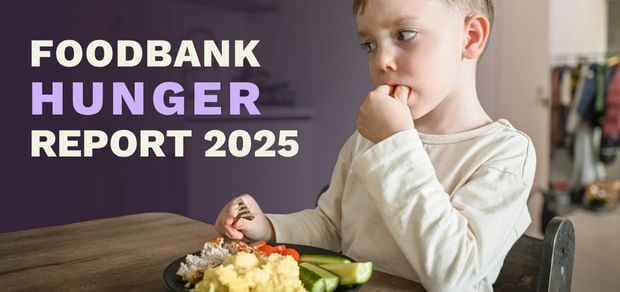
Children are going hungry

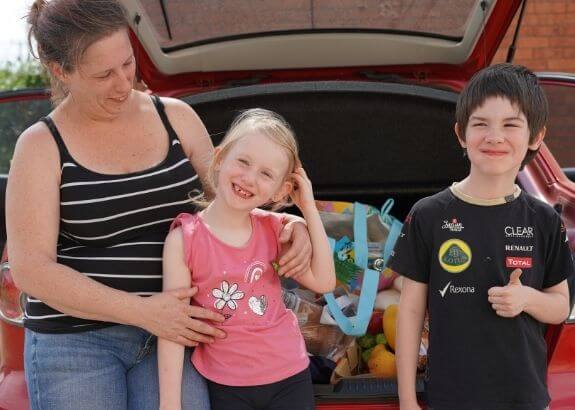
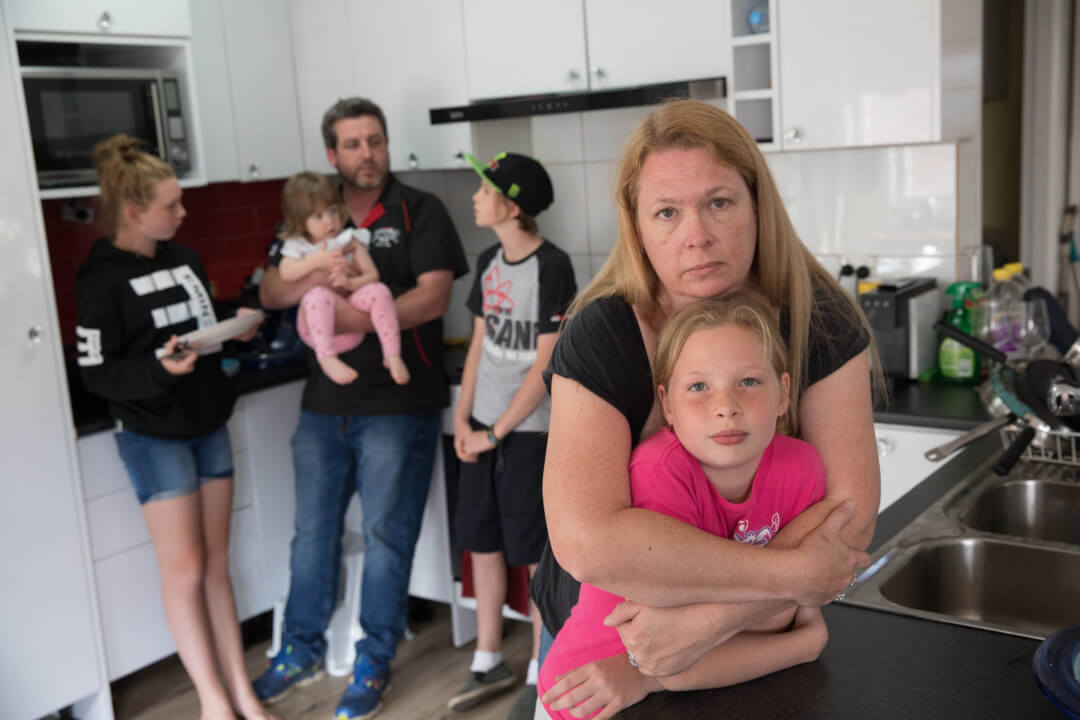
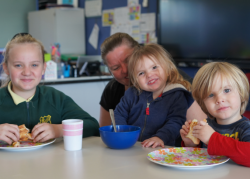
Hard-working mum Hayley absolutely adores her beautiful kids, Grace, Peter and Jake.

Struggling to afford the basics for her family was heartbreaking for Hayley.

She’s always worked incredibly hard to provide for them, but when she lost her job due to COVID-19, it suddenly became much harder to feed them every day.

“My greatest fear is that my kids will go hungry. Things are so expensive… it’s hard to get on top of stuff – and with no income coming in, it’s even tougher.”

The tragic reality is that Hayley is just one of many parents overwhelmed with worry right now about how to feed their children.
Children are going hungry

Even before COVID-19, three children in every classroom across NSW and ACT were going to school without breakfast. Today, the situation is much worse.

Foodbank nationally has seen a 78% surge in demand for food relief. Hunger is no longer a hidden crisis, and children are going hungry at alarming rates.

Foodbank’s School Breakfast 4 Health program now serves over 137,000 meals each week to kids who would otherwise go without. But with more children going hungry than ever before, we urgently need your help to meet the skyrocketing demand.

Everyday Aussie kids are arriving at school with an empty lunchbox, some don’t even know if there will be dinner on the table at night.

Hayley shared, “It’s so scary to think what would happen to my children if Foodbank wasn’t around… I don’t know how we’d cope.”

When a child goes to school hungry, there’s much more at stake than just empty bellies, their entire education can be put at risk.

Just imagine how hard it is for a young child to concentrate on the maths or science problems in front of them, when all they can feel is the pain deep of their rumbling tummies.

In fact, teachers estimate that the average student loses more than two hours of learning time when they arrive at school without breakfast. That lost time quickly adds up over weeks and months. You can only imagine the devastating impact on these students as they fall further and further behind their peers.

It’s heartbreaking, but sadly, the obstacles facing hungry kids don’t stop there.

Teachers also say that students who arrive without having eaten a nutritious meal are more likely to express their emotion in disruptive behaviours. Without food in their stomachs, these kids can become restless, irritable, angry and easily upset. On top of that, many hungry kids feel too ashamed to attend their School Breakfast 4 Health program.

We’re working with local schools to help ensure that every hungry child gets the food they need, but that means we need even more food than ever before. With so many kids in need across NSW and ACT right now, we urgently need your help to feed every single hungry child like Grace, Peter and Jake.

Can you give generously today to provide nutritious breakfasts for hungry children and help them start the day right and achieve their very best at school?

Your support will mean so much to parents like Hayley. Many are struggling to cope with the stress of losing their jobs, and some are being forced to decide whether or not to feed their kids when the money has run out.

You’ll be helping thousands of kids like Grace, Peter and Jake:

  • Improve their nutrition and eating habits
  • Improve their mental and physical health
  • Reduce the number of children who stay home from school
  • Help them engage with a clear mind and full stomach in class
  • Help them develop social and leadership skills.
 

Please donate today to provide the wholesome, nutritious meals that children need to do their best every day.

A Word from Gerry

Thank you. Your unwavering support through the most challenging time in Foodbank’s history has eased the pain and distress of countless hungry Australians. There are no words that can truly express my gratitude.

Foodbank has supported Australians in need through the generous support of people like you.

The sheer scale of the COVID-19 crisis has been heart-wrenching, and Foodbank will be relied upon to assist families in putting food on the table for years while they recover.

Not so long ago, hunger was a hidden crisis, affecting 1 in 5 Australians. Today, as we emerge from the bushfires and COVID-19, this statistic is now 2 in 5 people.

That’s 50% more families living day to day, skipping meals. Feeling daily stress, grief and guilt as their children go to school with rumbling tummies and empty lunch boxes.

I am mindful that this crisis has affected many of our supporters personally. If you are struggling to put meals on the table, please reach out to us.

The overwhelming generosity of the community assisted us to source food and employ emergency labour to create and deliver 9,800 hampers, a simply extraordinary number of food relief parcels.

Your support of Foodbank has brought hope to families like Kylie’s – a family already doing it tough, but hit so hard by our recent crisis that she was constantly in tears as she could not feed her children.

This food will help our family 1000% for the next few weeks. It means we will be able to get by and we’re not going to be struggling,” said Kylie.

Your kind heart has ensured people like Jay, who lost her job in the beauty industry, had food to put on the table. Jay’s story is of an overnight transformation. She was privately renting with no money worries, and then suddenly had no income, no money – having to live with friends or in emergency accommodation.

Jay’s story is sadly one that has been played out around the country right now. People who never imagined they would ever have to come to Foodbank for help, suddenly thrown into a desperate situation.

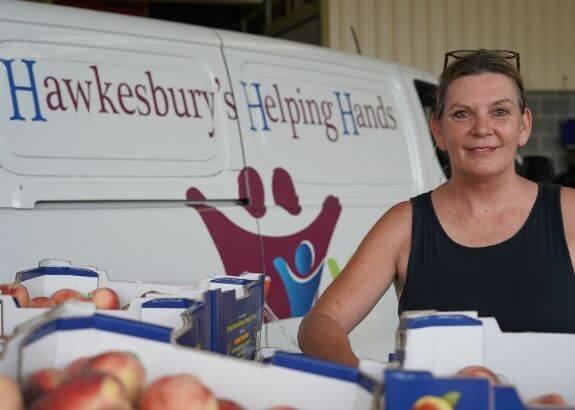
It’s a story that Charity Partners like Mama Lana’s and Hawkesbury Helping Hands see every day. Linda Strickland, Founder of Hawkesbury Helping Hands, says “most of the stories are heartbreaking and many days I can hardly hold it together… but we need to get the food out, and we need to get it out very, very quickly because people are starving in our community.”

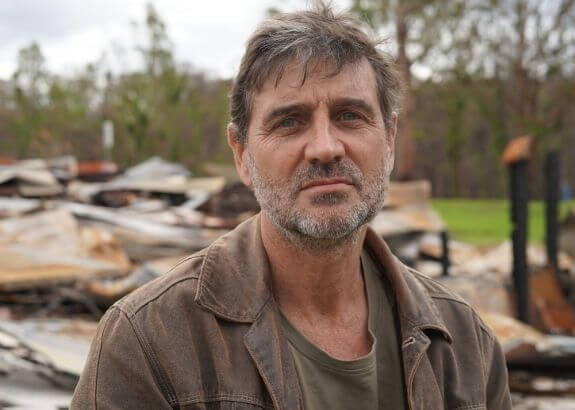
Right across Australia, so many people are struggling. Often these are people who have been victims of devastation just as they were trying to help others – people like Phillip, one of the firemen on the front line in the community of Kiah, trying to save homes in the bushfire crisis. Phillip lost his own home, and only just escaped with his life.

“We need help here,” says Phillip. “Recovery is going to take a long time. We need to let people know we still need assistance here. It’s going to take years to rebuild.”

As COVID-19 restrictions ease further and we adapt to our new normal, I am witnessing the return of hope – for new jobs, a boost to our economy and re-connection. But for some, there is little hope right now. Your gift will support Australians who have lost homes, jobs and their loved ones to get back on their feet.

On behalf of the many thousands of Australians who are going hungry right now, I’d like to say a very special thank you for your ongoing support. Every dollar you give makes a difference.

Donate Now

YOUR KINDNESS IS SUPPORTING THE BUSHFIRE RECOVERY


On behalf of the community of Kiah – and so many other communities across NSW and ACT – thank you for your wonderful support throughout the bushfire crisis earlier this year.

Phillip Novak was one of the RFS fire fighters on the front line in the NSW South Coast town of Kiah, trying to save homes and lives. Like far too many Australians caught up in this summer’s devasting fires Phillip lost his own home, and only just escaped with his life.

“In just half a minute, the structures I was protecting were enveloped in flames. It was a tempest of just unimaginable proportions,” said Phillip.

Bushfire recovery

The day after the fire took his home, Phillip had help from Foodbank. “It was just chaos. Smoke was still in the air and we were just reaching out to get basic assistance. The food pantry at Merimbula was the first place that helped us,” he said.

As you would expect the road to recovery for these communities will be long. Communities just like Kiah are reliant on continuing food relief and families like Phillip’s still benefit from your kindness. In March alone, 473,000 kilos of food and groceries were delivered to bushfire affected areas.

As Phillip explains, “We’re all having difficulty with just day to day living – we’ve lost the things that make a home.

“Simple things like receiving food is an important part of rebuilding our lives.”

THANK YOU FOR HELPING FEED KYLIE’S FAMILY

“When you’re fighting between paying rent or buying food, you don’t know what to do.”

When we last wrote to you, Kylie and her young children, like so many thousands of other Australian families, had reached breaking point.

Thanks to your generous support, Foodbank has stepped in to relieve their distress and hunger.

Without you, Kylie and her kids would have gone hungry.

For Kylie, not being able to feed her own children was heart-breaking. “You have to send your kids to school with food. You can’t send them with nothing.

“A neighbour told me about the Foodbank charity partner pantry. They were the most welcoming bunch of ladies, able to help us when we needed it.

“I was blown away with the generosity, and what we’ve received with everyone’s help.

“To go home with this food… it means I don’t have to sit and cry about not having any money or food. We can now eat – and that’s the most important thing to me, for my kids.”

INCONCEIVABLE IMPACT – AND A DESPERATE NEED

Supporting communities after the devastating bushfires was always going to be a challenge. But when COVID-19 hit, the challenge was more than doubled.

“We have witnessed a 50% increase in demand for food relief, while simultaneously our volunteer work force was more than halved overnight. At least 25% of our charity partners closed down,” said CEO Gerry Andersen.

“We now face the future with 2 in 5 people experiencing food insecurity – a shocking toll caused by recent events.

“Meeting need is always a complex process. We need to know that our response will pass the test of time to get through not only the crisis phase, but also the lengthy recovery phase.”

The future is uncertain. But what we know for sure is that bushfire affected communities will need support for many months to come. Foodbank is committed to helping vulnerable Australians in need, and we are so grateful for your support.

Thanks to your kindness Foodbank can be to help hungry Australians.

WE ASKED, YOU RESPONDED – THANK YOU

We were overwhelmed by your incredible response to our appeal in the aftermath of COVID-19.

In the space of one week, Foodbank received a 50% increase in demand for food relief. Prior to this, thousands of people were already missing out – we did not have enough for more than 373,000 people in NSW and ACT who needed urgent hunger relief. Now we are facing a whole new hunger crisis on an unprecedented scale.

Our first action in the response plan was to escalate the sourcing, packing and delivering food hampers to unprecedented levels. To achieve this, we needed to source more food urgently, as panic buying had stripped shelves bare. We also had to employ emergency labour, as our volunteer workforce was significantly impacted by COVID-19. The people we could normally call upon were unavailable – working from home, laid off or in isolation.

Thanks to you, in a short space of time, we have been able to help so many Australians. We have packed and distributed 9,800 hampers – that’s around 118 tonnes of product.

Foodbank will continue to pack hampers to meet demand, and for as long as is needed. This is an ongoing crisis with an uncertain future.

We are so grateful for your continued support in putting food on the table for hungry Australians.

COVID-19 UPDATE

THE LONG ROAD AHEAD

Even though restrictions have eased, the COVID-19 nightmare continues for many people impacted by job losses and increased hardship. Australia is now in its first recession in 29 years. The staggering 50% increase in demand for food relief in recent months does not seem likely to decline any time soon.

Charity Partner Lana Borg from Mama Lana’s says that currently between 80 to 100 people seek their help each night. Linda Strickland of Hawkesbury Helping Hands has witnessed a leap from 300-400 to over 2,000 people a week at their centre for food relief. “The Salvation Army came from Katoomba to pick up food; 90% of the guys up there have lost their jobs. Most of the stories are heart breaking and many days I can hardly hold it together.” she said.

Paul joined Foodbank as a volunteer after losing his corporate job because he wanted to have ‘a purpose’. He confided that after giving his time at Foodbank and witnessing the scale of the food relief operation that “the number of people that need this type of help is frightening.”

“Foodbank has been involved in disaster response and recovery for decades; cyclones, floods and, of course, the unprecedented bushfires last summer. We know recovery takes months, even years,” said CEO Gerry Andersen.

Thanks to your support, Foodbank can be there for the thousands of Australians who continue to need our help. Thank you.

COVID-19 Stories

The Worst Hunger Crisis in Generations

During the Great Depression, parents would often starve themselves so their children could eat.

Today, it’s happening again.

COVID-19 has shattered livelihoods, inflicting hunger on thousands of Australian families for the first time.

At Foodbank, this is the most substantial and sustained demand we’ve ever faced, and it’s a constant battle to help everyone who needs us.

Before the COVID-19 emergency even began 1 in 5 Australians already lived with food insecurity. Now, thanks to crushing job losses, that number has doubled. 2 in 5 Australian families now struggle to feed their children.

Sad Renee and her family

Every day, Foodbank hears more and more stories of parents skipping meals so their children can eat.

One of these parents is Brendan, a 43-year-old father of four who is currently out of work.

“I’ve worked every day since I was 14,” Brendan told us, the anguish clear in his voice. “I never thought this would happen to us. I’m applying for jobs right now, but I feel a lot of shame right now because I can’t provide.”

The problem may seem so big you may ask yourself, “What can I possibly do?”. But now more than ever before, the power is in your hands.

Every $1 you donate provides $6 of food for families in crisis. Every $1 means the difference between parents being able to feed their children, or not.

Hundreds of thousands of Australians are still out of work – and Government assistance measures won’t last forever. How will these families feed their kids then?

Help your fellow Australians and their children escape the worst hunger crisis since the Great Depression.

Glasshouse yields over 58 tonnes of donations to Foodbank

Foodbank NSW & ACT is proud to announce University of Western Sydney’s National Vegetable Protected Cropping Centre (NVPCC) has joined the fight against hunger!

The world-class education and research facility for Australia’s protected cropping specialists, the glasshouse has produced a stunning quantity of more than 58,000 kilograms of fresh produce from production and research trials. Produce like capsicums, cucumbers and eggplants have been donated to Foodbank to support families in need. This donation is more important now than ever before as the COVID-19 crisis hits our communities.

“The NVPCC glasshouse delivers high-quality research outcomes that improve Australia’s ability to produce food crops in advanced protected cropping systems,” said Distinguished Professor David Tissue.

Foodbank receives several full crates of fresh produce from NVPCC each week. With the help of Foodbank volunteers and charity partners, this produce is distributed to vulnerable Australians across NSW and the ACT.

Foodbank NSW & ACT CEO Gerry Andersen says “the demand has increased massively by almost 50% and yet 25% of the food coming into our warehouses has dropped because demand is so great in the supermarkets.”

“This means that the productive capability of Western Sydney University’s experimental glasshouse trials is of even greater benefit to us given the extraordinary effects of rising unemployment, the effects of summer fires and drought on food prices, and the impacts from COVID-19 on home food consumption. This donation will help Foodbank feed vulnerable Australians with nutritious produce during this difficult time” said Mr Andersen.

For more information on the NVPCC glasshouse, please visit: www.westernsydney.edu.au/nvpcc.

THANKS TO YOU, THE RECOVERY HAS BEGUN

Thanks to the heartfelt generosity of people like you, Foodbank has been there to support and comfort Australians as they navigate the devastating aftermath of the bushfire crisis. Your support, through volunteering, donating essential supplies or via a financial donation, has enabled Foodbank to work quickly to help those who needed it most.

As part of the official emergency response network, our primary focus throughout the crisis has been to deliver exactly what is needed, when and where it’s needed in order to efficiently and effectively support the relief efforts.

Together, since the beginning of January, we have been able to answer the desperate call for help and our emergency response relief efforts included:

  • 9 semi-trailers sent to the South Coast NSW (places like Cobargo, Narooma, Bega, Bermagui, Eden, Womboyn)
  • Over 1,000 pallets (approx 435, 943 kilos) of food, groceries, fresh produce, personal hygiene items and pet food have been distributed
  • Over 30,000 kilos of carrots and sweet potatoes have been flown by helicopter into NSW national parks for Australia’s endangered native animals.


These devastating bushfires have left people all over our state in need of our continued support. We can only be there for them because of supporters like you – thank you.