 Log in

Please select a valid form.

Schools can make a big difference when it comes to creating a healthy eating environment. When children and young people eat well, they learn better, are more alert and are more likely to grow and develop to their full potential.
Darley Primary School, which is located 60 kilometres from Melbourne in the outer suburb of Bacchus Marsh understand the importance of this through their engagement with the School Breakfast Clubs Program, the Healthy Schools Achievement Program and the Healthy Eating Advisory Service. These programs and services help schools to transform their food offerings, so students are surrounded with healthier food and drink options.
It is with this in mind that Darley Primary School has embraced healthy eating programs and services supported by the Victorian Government.
The Programs and Services Available to Schools
The Healthy Eating Advisory Service (HEAS), delivered by Nutrition Australia, in partnership with the Victorian Government, supports community-based organisations to create and promote healthier food environments. HEAS provides free resources for promoting healthier food and drinks across the whole school food environment, including the canteen and food service, the classroom and broader school community.
HEAS supports schools to develop healthy eating policies, provide healthier food and drinks, integrate healthy eating activities into the curriculum and engage the wider school community to promote healthier choices. HEAS has been a valuable resource for Darley Primary School to make healthy changes within their school environment, in particular the school canteen menu.
The Healthy Schools Achievement Program is a free Victorian Government initiative, delivered by Cancer Council Victoria that supports schools to create healthier environments for children, staff and families. The Achievement Program takes a settings-based approach to health and wellbeing and has seven health priority areas, with accompanying benchmarks, for schools to work towards. Darley Primary School have been working on two of these priority areas, Healthy Eating and Oral Health, and Mental Health and Wellbeing.
The School Breakfast Clubs Program, supported by the Victorian Government and delivered by Foodbank Victoria, provides free and healthy food to 1,000 Victorian government schools, including Darley Primary School. The School Breakfast Clubs Program is helping Darley Primary School achieve their Healthy Schools Achievement Program benchmark, as it provides a range of ‘green rated’ or ‘Everyday’ menu items and offers students a safe place to interact with their peers and staff.
It cannot be overstated just how much of an impact these programs and services have within the school environment, helping students have the best chance at fulfilling their potential, both physically, emotionally, and academically.
Individually these programs and services offer valuable support to Victorian schools, however integrating all three ensures that children are provided every opportunity to both learn about and receive fresh healthy food.
Using The School Breakfast Clubs Program to increase student intake of healthy food, foster positive social interaction and improve nutrition literacy.
The School Breakfast Clubs Program fills bellies, but it also offers a space for students to socialise in the morning. Students from different year levels come together, share a meal and socialise with people that they may not normally interact with.
Wellbeing Officer at Darley Primary School, Cherie says that the Breakfast Club models positive social interaction, students regulate each other. The kids leave happy. In addition to what it provides the kids, it allows me as Wellbeing Officer to have very casual quick check in with almost 30 kids a day which I couldn’t normally do.”
Cherie has managed Breakfast Club for four years. During that time, she says, “the breakfast program was initially perceived as a service provided to those kids who don’t have breakfast. Now the younger kids come every day. It is now the norm for many students.”
Dale, Head of Health and Physical Education also highlighted the broader benefits of the School Breakfast Clubs Program, “I’m quite impressed that it’s not only the food, it’s the experience they get by actually eating and socialising with each other, it’s also learning to prepare and clean up after themselves. It’s the life lessons that everyone benefits from.”
In addition to the nutritious start and positive social interaction that Breakfast Club provides, students are also able to take advantage of the fresh fruit provided by the School Breakfast Clubs Program during their daily fruit break. During the fruit break teachers also educate students about nutrition and healthy eating.
Incorporating nutrition literacy into the daily fruit break is a practical way to educate students about the health benefits of fruit and vegetables.
Assistant Principal at Darley Primary School, Emma highlighted how having fruit available throughout the school has also given students the opportunity to take a break and self-regulate. “They might come to my office for a piece of fruit and share something that might be bothering them.”
Schools that provide healthy food throughout the day, as well as a safe and social environment for students to interact and enjoy a meal, means they are well on the way to being recognised for the Healthy Schools Achievement Program’s Healthy Eating and Oral Health, and Mental Health and Wellbeing health priority areas.
The Achievement Program also encourages schools to engage with their local school community to assist at Breakfast Club. If you would like to see how Breakfast Club can assist with achieving these benchmarks, please click here.
Using the traffic light system to choose healthier foods and drinks, and encourage discussion about healthy eating.
With the support of these programs and services, and the guidance provided by the Department of Education and Training (DET), School Canteens and Other School Food Services policy, Darley Primary School has been able to select and supply healthier food and drinks in the canteen and at Breakfast Club using the traffic light system. The traffic light system categorises foods and drinks as either GREEN (Everyday category), AMBER (Select carefully category) or RED (Occasionally category).
HEAS has been a valuable resource for Darley Primary School to make healthy changes within their school environment, in particular the school canteen menu. HEAS assists schools to provide and promote a variety of healthier foods and drinks, giving students the power to make healthy decisions. HEAS offers a wide range of services to help schools including:
Dale also notes the effort that has gone into developing a healthy canteen, “Our Canteen Manager Ben is working with a farm to fork model and is committed to working with the kids to provide healthier choices”. With support from HEAS, Ben has used FoodChecker to assess and receive free advice on the school canteen menu.
The Achievement Program at Darley Primary School
Tameaka is a local Health Promotion Officer from Ballarat Community Health and has been supporting Darley Primary School in their work towards the Healthy Schools Achievement Program benchmarks for the last four years.
For two years they focused on healthy eating, “We found that for success it’s important to have that key person at the school really driving things. We started on healthy eating two years ago and it has taken time to engage parents and students. We’ve found that adding more healthier options rather than taking foods off the menu has worked well. We are just ensuring that new menu options meet the healthy eating criteria.”
The Healthy Schools Achievement Program also highlights parent involvement as an important step in creating a healthy school environment. Including parents or guardians in the big decisions, whether that’s through the transition of the canteen menu, assistance at Breakfast Club, or offering support to families outside of the school environment, will more likely result in healthy eating habits being adopted in the home. Darley Primary School are in the final stages of completing the Healthy Eating and Oral Health priority area. Tameaka emphasised that “the way they have engaged parents, staff and students has really made a big difference. It’s great to have the support of the whole school community. I think it is great that the canteen is now reflecting what kids are learning in the curriculum as well.”
Like Tameaka, there are many Health Promotion Officers throughout Victoria willing to assist schools in their effort towards being recognised as a healthy school. Health Promotion Officers are available to support schools who sign up to the Achievement Program. Their support varies and can range from providing guidance to schools who are looking to transition their canteen in accordance with DET School Canteens and Other School Food Services policy, through to providing recommendations to schools that can support them with achieving benchmarks set out by the
How to get involved
For schools who would like to take steps towards becoming a healthier school, we recommend you contact the Achievement Program team at Cancer Council Victoria. They will be able to connect you to a local Health Promotion Officer and provide you further information on ways your school can start working towards a healthier, more supportive environment for students, staff and families.
Or if you want to fast-track your schools’ efforts, why not start with the newly launched Vic Kids Eat Well. This exciting new state-wide movement is a partnership between the Achievement Program and the Healthy Eating Advisory Service. It aims to boost healthy food and drink options in the places children spend their time, including schools, out of school hours care, sports clubs, council operated facilities and more. It is designed to make healthy eating easier, more engaging and faster to implement. For more information visit https://www.vickidseatwell.health.vic.gov.au
We also recommend you visit the HEAS website. They have many resources that can assist you to provide and promote healthier foods and drinks in your school environment. You can also access an infographic from their website that provides an overview of all of the healthy eating and oral health services available to support schools with creating a healthy eating culture.
If you are interested in finding out more about the School Breakfast Clubs Program, head to the Foodbank Victoria website.

Today, Foodbank Queensland, the state’s largest hunger relief charity, has called out for urgent help to get emergency food supplies to Queenslanders hit by the floods.
Sara Harrup, Foodbank Queensland CEO, said the charity was working hard to get food and clean water out to the communities in desperate need.
“Today we launched the Foodbank Queensland Flood Appeal 2022 and are calling out for help to ensure Queenslanders experiencing hardship have access to emergency food supplies and the clean water they desperately need,” she said.
“With many frontline food relief charities having been flooded and now unable to support their communities, Foodbank is prioritising getting more food and non-food emergency items to these areas, as they have little or no supplies remaining, and heightened demand.
“These prioritised regions include Caboolture, Ipswich and Logan. Many other charities across Toowoomba, Wide Bay-Burnett and South-east Queensland are also reaching out for urgent support. In these regions alone, Foodbank Queensland supports more than 250 charities each week.
“We are doing everything we can to get food out, but we need your help – 100% of all donations will be used by Foodbank Queensland to get emergency food and water to those who need it the most as quickly as possible.
“This is not the first time our state has seen homes and businesses destroyed, but the one thing disasters bring out is the Queensland spirit – our communities are resilient and will rally together to help bring hope to those who have lost everything,” Ms Harrup said.
Funds donated to the Foodbank Queensland Flood Appeal 2022 will cover food, freight and resources to deliver to the hardest hit areas around Queensland in the coming weeks.
Thousands of Queensland residents have been evacuated, and major flood warnings are still in place for the Mary, Logan, Brisbane and Bremer rivers and Warrill Creek.
To donate to the Foodbank Queensland Flood Appeal, please visit www.foodbank.org.au.
ENDS
For media enquiries, contact Zoe Templeton, Marketing and Communications Manager:
M: 0435 133 601
As Australia continues to be impacted by the COVID-19 pandemic, ongoing poverty and inequality, and natural disasters, Foodbank Australia today revealed in 2021 it sourced 48.1 million kilograms of food and groceries, equating to 86.7 million meals, or 238,000 meals per day.
The country’s leading food relief organisation confirmed this figure is marginally down from its record 48.8 million kilograms of food and groceries sourced in 2020, in a crisis-filled year of Black Summer bushfires, drought, and the start of the pandemic with lockdowns initiated for the first time.
According to Foodbank Australia CEO, Brianna Casey, the continued huge volume of food and groceries needed for food relief is not unexpected, confirming many people are still doing it extremely tough.
“It’s not just COVID-19 contributing to food security issues in Australia” Ms Casey explained. “Right now, we’re seeing food supply problems in both Northern Territory and Western Australia after last week’s floods in South Australia cut both road and rail movement of food and groceries. Any supply chain interruption tends to hit vulnerable communities the fastest and the hardest, making our food relief efforts all the more important.”
“Although we are pleased to have been able to source this staggering amount of food and groceries in 2021 – a year in which many of our food donors and corporate partners also faced enormous challenges – it is a stark reminder of Australia’s ongoing hunger problem, which existed well before the global pandemic hit.”
“The Foodbank Hunger Report 2021 revealed one in six adults haven’t had enough to eat and 1.2 million children have gone hungry in the last year. We also know that two in five people seeking food relief do not get enough food for their household needs.
So, although 48 million kilograms seems like – and is – a lot of food and groceries, it unfortunately wasn’t enough to meet the current demand from those seeking food relief, let alone those who don’t even reach out for help because they think someone needs that help more than they do.

Foodbank sources a wide and diverse range of food and groceries to provide relief to more than one million people each month. Donations are sourced from the food and grocery sector and key staples are purchased thanks to funding from the Federal Government, corporate Australia and individuals.
Foodbank provides relief to 2,950 frontline charities and 2,890 school breakfast programs. It works with the entire Australian food and grocery sector including farmers, wholesalers, manufactures and retailers who donate and redirect surplus product to be distributed to those who need it most via Australia’s charity network.
“There’s no doubt of the size of the challenge we have in trying to ensure every Australian who needs food relief can access it, but thanks to the incredible generosity of Australia’s food and grocery industry and our many supporters, each day we are one step closer to achieving zero hunger in Australia,” Ms Casey said.
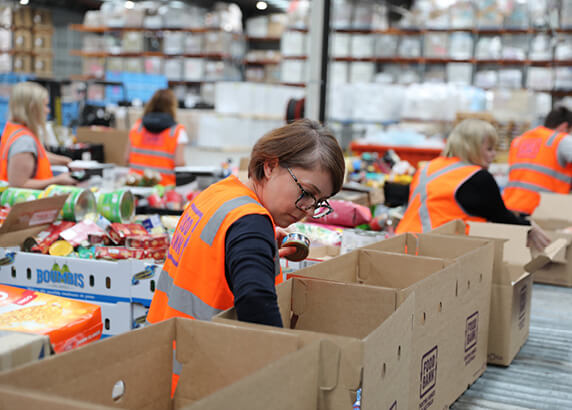
Thanks for raising your hand to volunteer at Foodbank Victoria.
You will be hands on in our warehouse packing food for Victorians who are doing it tough.
Here is everything you need to know:
In line with Government legislation, everyone onsite at Foodbank needs to be fully vaccinated. Proof of vaccination will be checked on arrival. Volunteers without proof of vaccination will not be permitted.
Due to the physical nature of working in a warehouse, volunteer roles involve significant amounts of manual handling, and a reasonable level of fitness is required.
Manual handling includes sustaining movements of repetitive lifting/bending, pushing/pulling, twisting/turning and walking for extended periods of time. Some heavy lifting up to 15kg may be required.
Warehouse volunteering may not be suitable for anyone with muscular, skeletal or back injuries.
Please consider if this volunteer activity is right for you. We do not allow volunteers to participate if we determine they are unable to perform the tasks safely and do not have alternative activities available on the day.
8.30am to 2.30pm
Please arrive on time as late arrivals will hold up the team induction.
Feel free to arrive any time between 8.15am-8.30am. Coffee/tea facilities are available on arrival.
Bring socks
For your safety we provide steel capped boots and gloves which are mandatory to wear.
Please bring long, thick socks to wear with the boots.
Alternatively, if you have your own steel capped boots you can BYO.
Bring your lunch and a drink bottle
We have a fridge, microwave, water and tea/coffee facilities. Lunch break is half an hour and there are no cafes nearby.
If you’d like to organise catering for your team, contact us for local caterer recommendations.
Wear comfortable clothing
suitable for bending, lifting and repetitive movements. Shorts/pants/leggings/jeans with a comfortable t-shirt and jumper is recommended.
The temperature inside the warehouse is generally the same as outside.
We do not have air-conditioning or heating in the warehouse.
Address: 4/2 Somerville Road, Yarraville.
Our warehouse is located within an industrial complex. Enter the complex at the intersection of Somerville Road and Whitehall Street.
There is free all day parking onsite. If you can’t find a park onsite most of the surrounding side streets have all day parking.
If you’re catching public transport, our warehouse is a 15-minute walk from Seddon or Yarraville station.
We follow DHHS guidelines and the safety of our volunteers and staff is our top priority.
Our COVID-Safe plan includes;
A full copy of our COVID-Safe plan can be emailed to you upon request.
Do not volunteer if you are unwell, experiencing any symptoms of COVID-19, are required to be in isolation/quarantine or have been in contact with someone with COVID-19.
For further information, please contact us on volunteering@foodbankvictoria.org.au
We look forward to welcoming you to our warehouse soon.
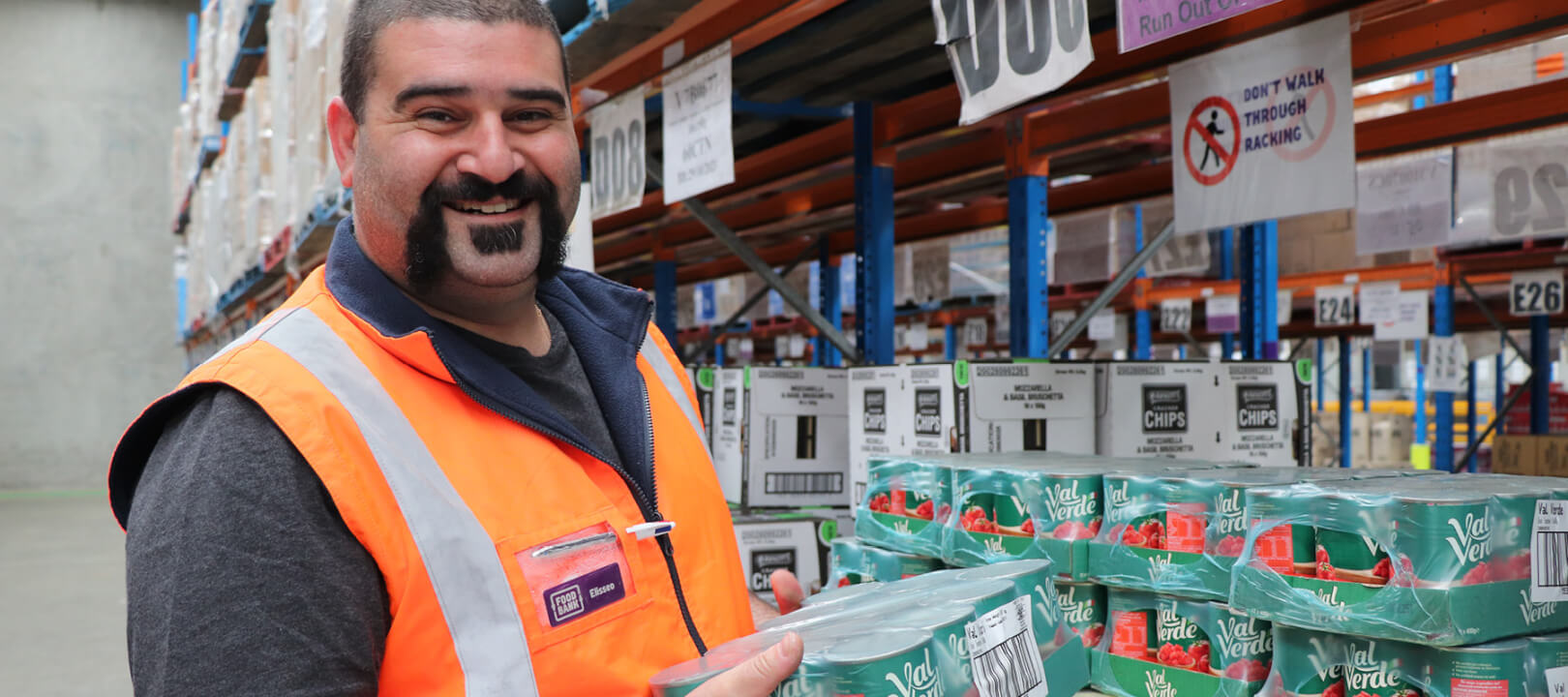
“I started as a casual forklift driver and then soon after a position came up as Warehouse Manager, and here I am”.
Was Foodbank what you expected?
Foodbank definitely exceeded my expectations. I came into this role as a casual and didn’t think it would be a long-term thing. But then I saw what we do here, how we affect people’s lives, and it became so much more than just a job. I really enjoy what we do here – the drive-thru’s, seeing people come in and drop off food donations – it gives you that warm, fuzzy feeling.
What does it feel like when you tell people you work at Foodbank?
It gives me a great sense of pride. The minute I mention Foodbank everyone says “Oh Foodbank! I’ve heard about them, they do really good work”. I’m very proud of the work we do here.
What is it like working side by side with volunteers?
It’s great – it’s still hard for me to get my head around the fact that there are people out there that are so selfless that they will come in here week after week and not only do their role, but do it well. They take real pride in what they’re doing.
What is something people might not know about Foodbank?
Although people know who we get our food to, I don’t think people realise that we are an actual warehouse. There’s a whole element of logistics that goes on behind the scenes with a lot of moving parts: we have trucks, vans, pop-up markets, lots of different programs. But we have an incredible team who get all these intricate moving pieces into place – from a logistics perspective alone, it’s amazing.
Is there anything you would like to say to our wonderful supporters?
Trust in us, and we will make that magic happen and get meals on tables to the people who need it. It makes me emotional to think of everything that has been donated so far, without the support of our donors none of this would be possible.

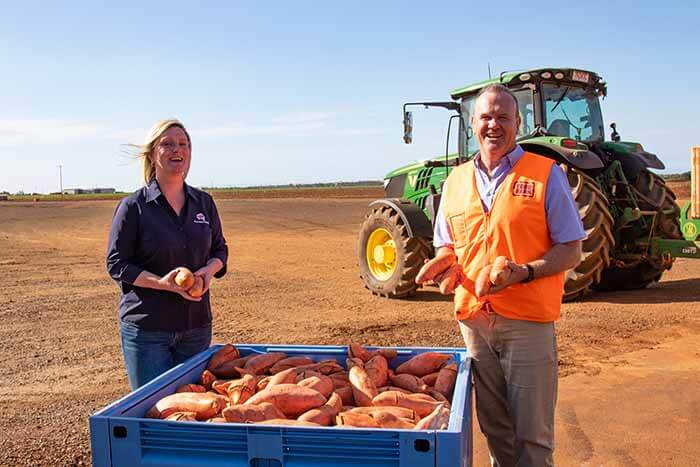
As demand for food relief rises, so too does the challenge of rescuing and sourcing enough food to ensure a nutritious meal is within reach for all Queenslanders in need.
We believe everyone deserve access to good quality food, all year round. However, whilst families are going hungry, sadly, millions of kilograms of food are wasted every year due to oversupply, labour shortages, and transport challenges.
That’s why we work closely with hundreds of farmers, retailers and manufacturers, from large corporations to local business, to help reduce food waste and get essential food and groceries to Queenslanders who need it most.
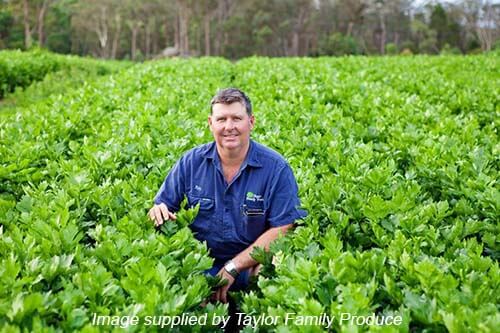
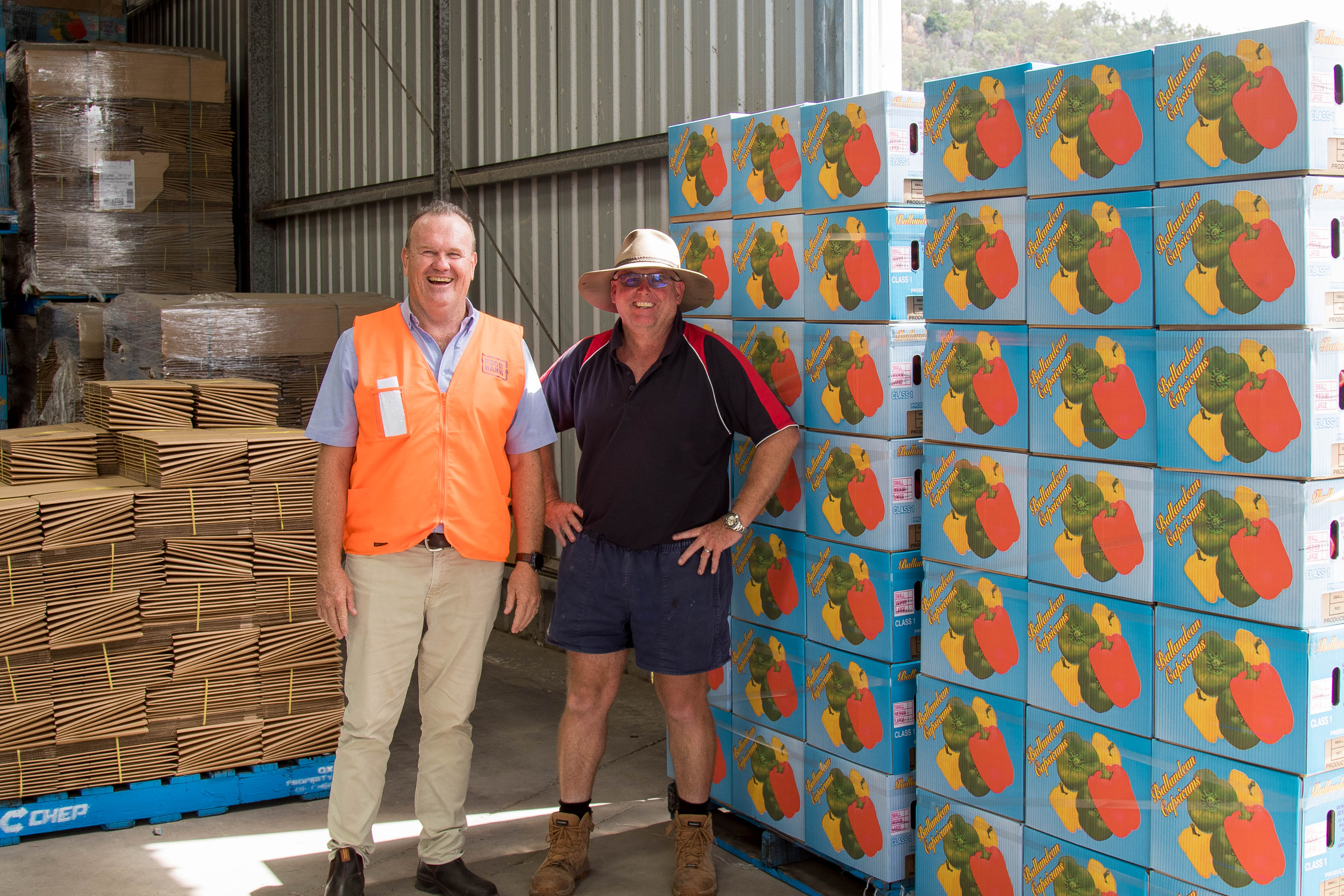
Taylor Family Produce is one of our very generous Queensland growers donating fresh produce to ensure healthy and nutritious food gets to communities that need it most. Located in the Granite Belt region of Amiens, they donate a variety of leafy vegetables, including lettuce and silverbeet.
Ray Taylor, Managing Director of Taylor Family Produce, said “When product is rejected or low value in the markets, we would prefer the product to go where it can help those in need rather than being wasted.”
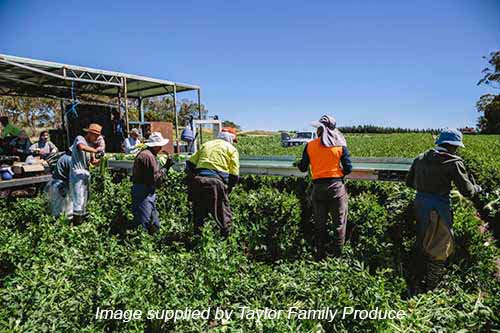
Bob McMillan, Foodbank Queensland Food Supply Manager, said Foodbank was proud to work with so many generous Food Donors to help feed hungry families, reduce waste and protect our environment.
“Our Food Donors help to ensure that we can get a consistent supply of fresh food and essential groceries to Queensland families in need, whilst reducing food waste.
“Thanks to our farming communities, more than 35% of all groceries rescued by Foodbank Queensland each year are fresh fruit and vegetables from more than seven farming regions in Queensland,” he said.
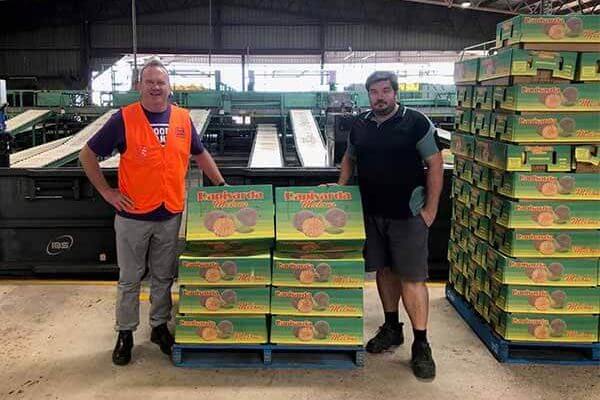
To all of our wonderful Food Donors, thank you for your continued support and for helping us feed the thousands of families who rely on us every week.
If you’re in the food industry and are interested in becoming a food donor, please click here.
To see Foodbank Queensland’s 2021 Food Partners, click here.
Nexus Care is one of Foodbank Queensland’s 300 Member Charities providing vital support to those most in need in the north Brisbane community.
The team at Nexus Care support Queenslanders experiencing hunger through their Fresh Start Food Program and School Breakfast Program. Developed by a nutritionist, the Fresh Start Food Program offers healthy, substantial food parcels to anyone experiencing hardship. The parcels contain quality, nutritious non-perishable items, a selection of fresh fruit and vegetables, meat, bread, and dairy products and are designed to create several meals to support a household.
In 2021 Nexus Care provided over 3,185 food parcels, which is equivalent to 127,400 meals in the year through their Fresh Start Food Program.
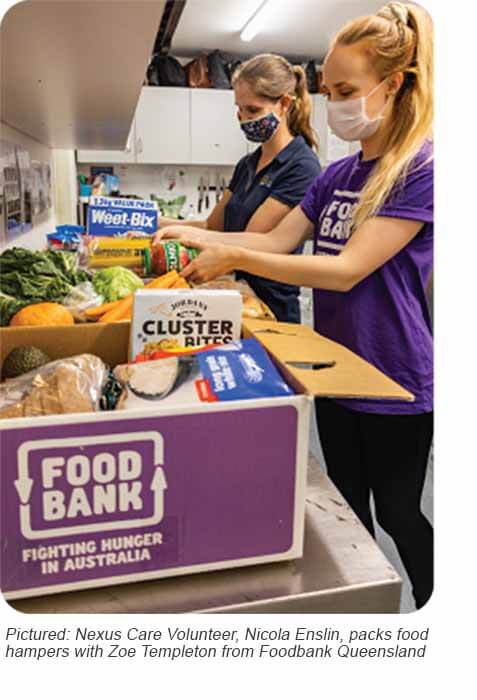
Suki O’Dea, Nexus Care Community Programs Coordinator, said they were passionate about giving dignity, hope and a fresh start to each person that came through their doors.
“The heart of Nexus Care is to alleviate poverty in our community.
“Foodbank is one of our key partnerships – We include four kilograms of fresh fruit and vegetables in each food parcel and would be unable to reach that target without our twice-weekly visits to Foodbank for quality fresh produce,” she said.
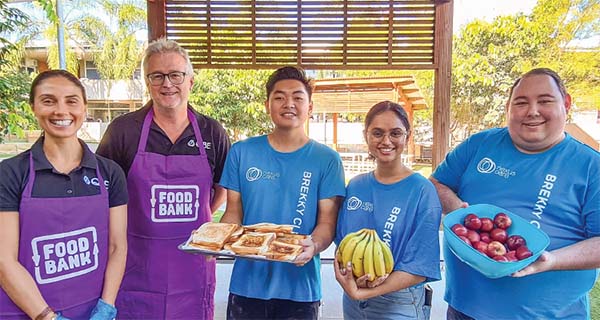
With the support of Foodbank Queensland, Nexus Care also runs a School Breakfast Program in five local schools, providing a nutritious breakfast to approximately 500 children a week.
Suki said their School Breakfast Program offered students a selection of milk, fruit, yoghurt and hot items such as toasties and pancakes.
“We would be unable to run our Brekky Clubs without the food provided by Foodbank,” Suki said.
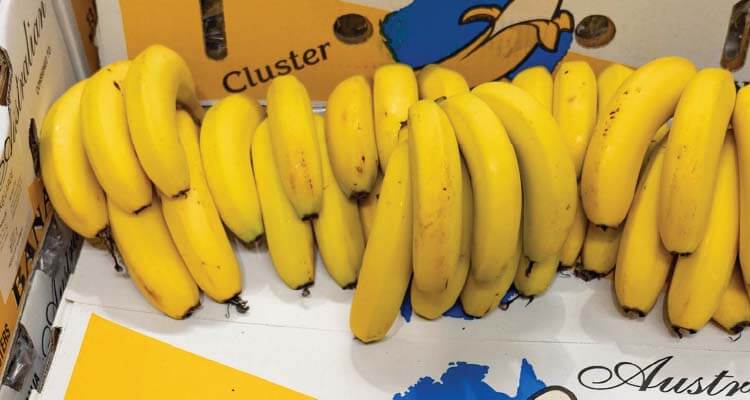
“Each Monday we collect 65kg of bananas for this program and without fail, every week I have the admin staff from one primary school tell me that their students say the Foodbank bananas are the best they have ever tasted. And they are very adamant about that – nothing tastes better than a Foodbank banana!
“At this school, the bananas are delivered early on a Tuesday morning and available from the office all week, often providing not only a breakfast, but also a lunch and sometimes afternoon tea as well,” she said.
As we see COVID-19 case numbers increase once again in the community, many of our frontline Member Charities are struggling to meet the rising need for food relief in Queensland. Sadly, the impacts of the pandemic are making it harder for many families to put food on the table, with many Queenslanders reaching out for help for the very first time.
Suki said Christmas was a particularly busy time for Nexus Care, providing food hampers to 420 Brisbane families in immense hardship as well as supporting families and partner organisations with 730 Christmas Treat hampers.
“What worked was the diversity of fresh produce from Foodbank that we could not have afforded to buy from our local shop. The quality and quantity of fruit and vegetables we collected from Foodbank was considerable and made a huge difference to our Christmas food parcels,” she said.
One of Nexus Care’s guests left this note after receiving a Christmas food hamper:
“I wanted to write to you to say a big thank you for the food parcel, the wonderful present for my son and helping out with my rent. I was so sick with worry and anxiety due to the horrible situation I am in and to know that my 9-year-old will now have a really beautiful Christmas is amazing. The work you all do is wonderful and while I never thought I would have to use your services, I am forever grateful you are there to provide for all those in need. Thank you.” – Anonymous
At Nexus Care, COVID-19 has seen the introduction of several new programs for people from non-English speaking and other backgrounds.
Suki said they run free classes designed to strengthen English language skills needed for finding and securing a job. “We also run a free personalised job-assistance program to assist people find meaningful employment. What better way to alleviate hunger than by securing worthwhile employment,” she said.
In partnership with Fareshare, Foodbank Queensland also supports Nexus Care by providing ready-to-eat meals.
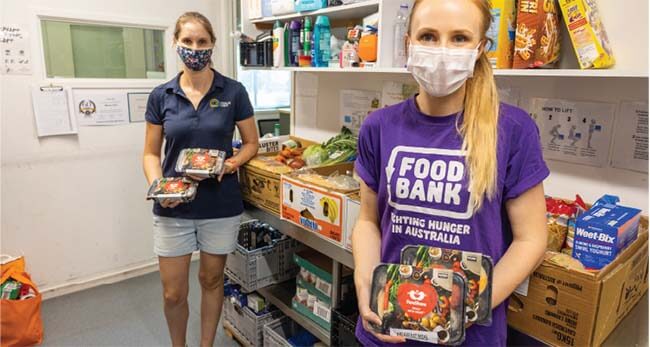
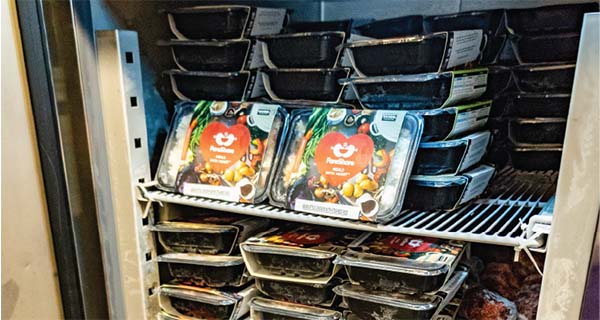
Suki said knowing there’s at least one nutritious meal a day is one less problem to solve for many people under significant stress.
“Fareshare meals have allowed us to customise our food relief provision to better meet the needs of our guests. Not everyone has access to suitable cooking facilities or the ability to be able to cook, so Fareshare is a wonderful inclusion to our program,” she said.
“George is a solo parent of three young children. He has a brain injury as well as managing mental health issues and because of this, needs meals that require minimal preparation and shortened cooking times. The first time we offered him Fareshare meals, the relief on his face was so obvious and he was ever so grateful. We had initially included a leg of pork in his food parcel, thinking that this would be a great treat for the family. He said no and explained that it would be too overwhelming for him and he just couldn’t manage it. The Fareshare meals allow him to feed the family well without the angst involved with cooking a more substantial meal.”
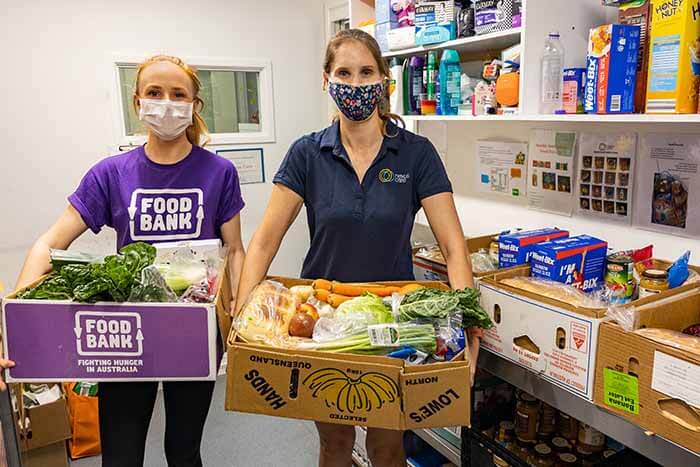
“We are so grateful for the amazing work of Foodbank, and it is a privilege to partner together. Thanks for being our pantry!” Suki said.
Foodbank Queensland is delighted to have been working with Nexus Care for more than 10 years to help give food and hope to families in Brisbane facing tough times.
If you are a Queensland charity, Foodbank Queensland membership is a great way to support your food relief projects, offering your organisation a reliable source of food and groceries all year round.
If you are in a position to help Foodbank Queensland provide more food across the state to support Queenslanders in need, please consider joining the fight against hunger as a regular giver.
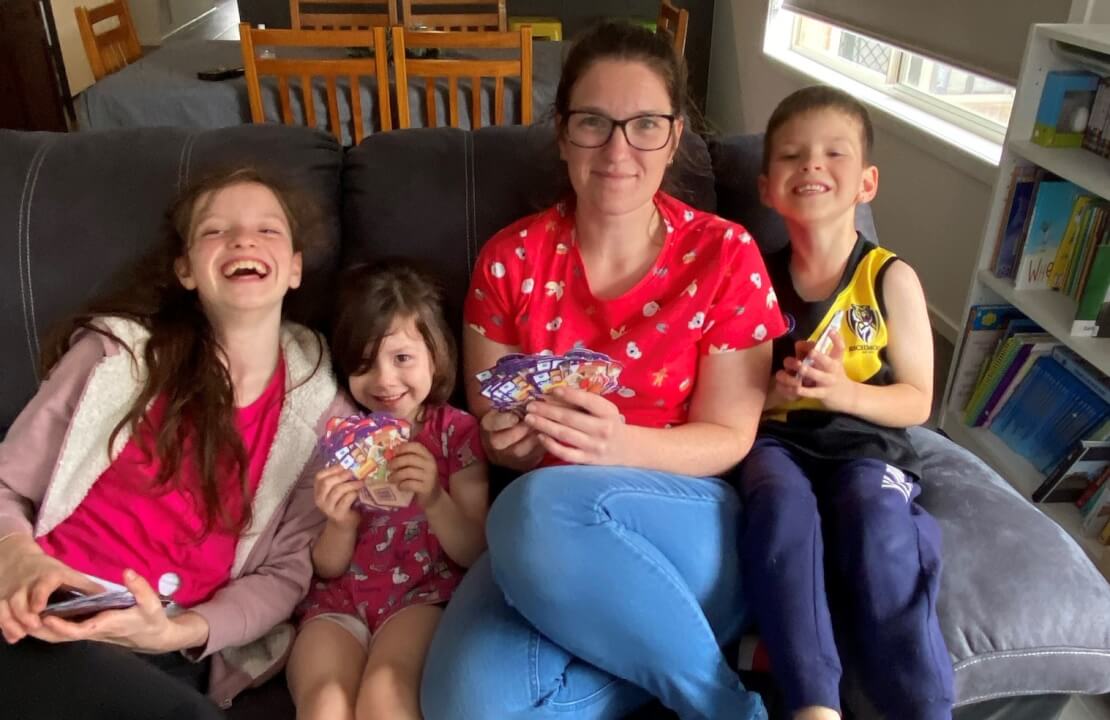
In November last year, Alex was looking at the festive season ahead and simply didn’t know how she would afford enough food for her four kids, Amelyia, Izabella, Archie and Peyton, much less presents under the tree.
Thanks to your generous donations not only did Alex have a full pantry, the money she saved on buying groceries provided the opportunity for the kids to get some lovely presents.
Alex now also has a full-time job! Not only does this provide financial security for Alex’s family, but so many other benefits as well. A sense of self-worth, and something important to do every day.
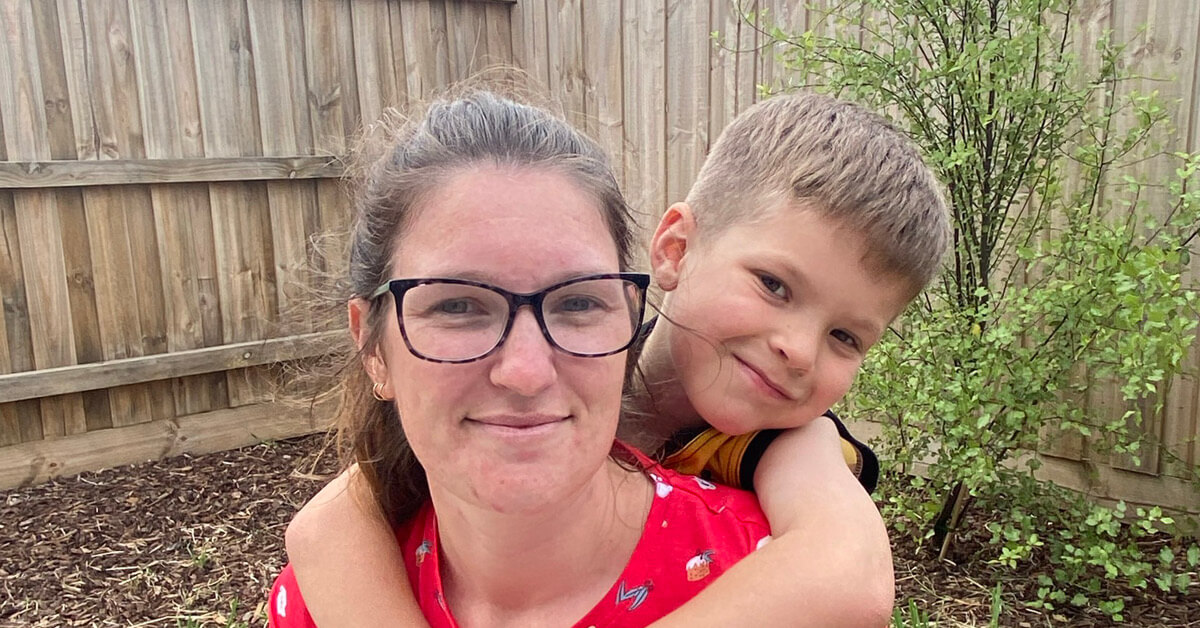
Thank you for supporting Alex and families just like hers through the festive season. Your special gift provided so much more than just food on Christmas Day – it gave hope, dignity, and reaffirmed self-worth.

Foodbank Victoria is thrilled to be introducing two whopping 18 metre ‘articulated buses’ (bendy buses) to it’s collection of vehicles. With the assistance and support of SkyBus and Kinetic, we have turned these buses normally used for airport transfers, into the coolest mobile supermarkets on the planet. (We think we may have a world first!).
With entry at the back and exit at the front, the 18-metre bendy buses offer a miniature supermarket experience with shelving and refrigeration stocked with a range of fresh produce, pantry and staple items. Each bus will support approximately 100 families at every location with around 15 kilograms of food per family.
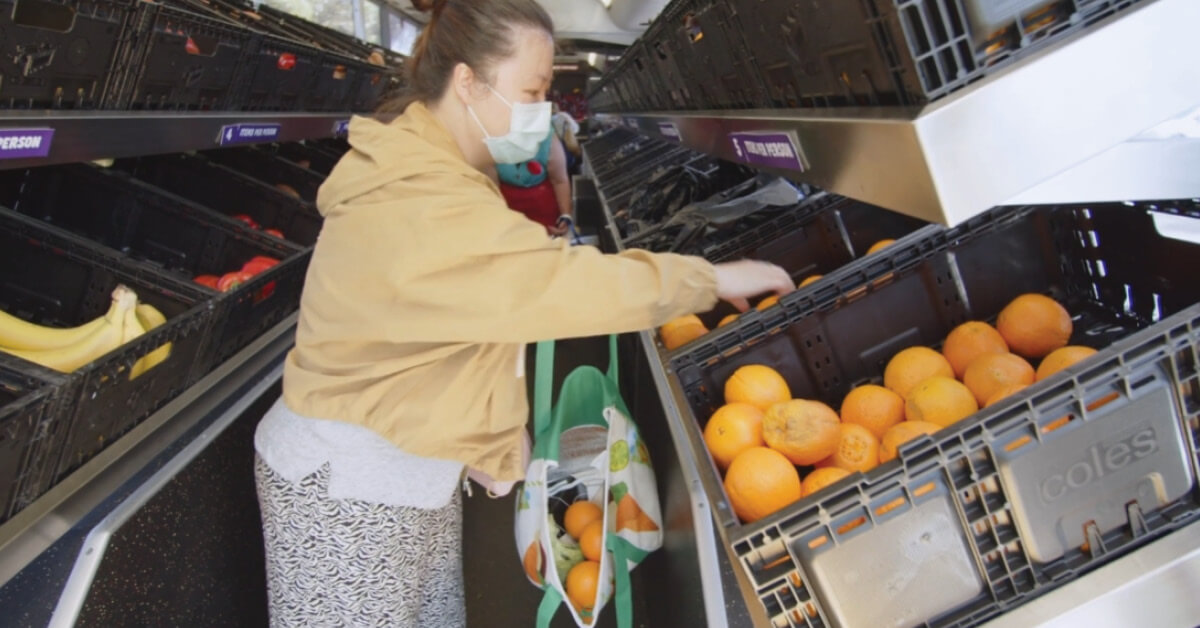
Foodbank Victoria CEO Dave McNamara says the mobile supermarket program will allow many struggling Victorians to access healthy and nutritious food.
“This is a concept that allows us to visit people who often don’t have the capacity to travel or who aren’t receiving food relief in the traditional ways. It also allows us to provide a truly bespoke food relief service to the emerging culturally and linguistically diverse communities around metro Melbourne”.
Keep an eye out and give us a wave if you see the big purple buses (sounds like a Wiggles reference. Funnily enough, the first bus is named Dorothy!) heading in your direction.
To see Dorothy in action, click on the arrow