Expiry and Distribution – A Quick Explainer

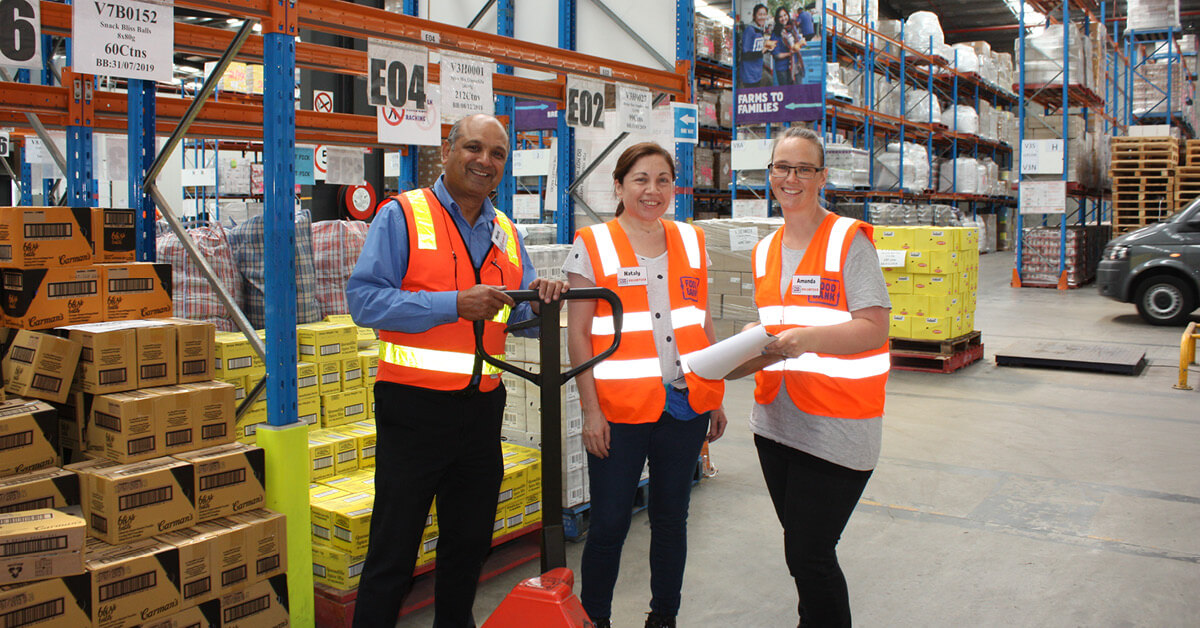
Foodbank Victoria receives a wide variety of food and grocery products from our donors. Many of our products come to us because they are close to the end of their shelf life, and we work hard to ensure that those products are supplied to our agency partners as quickly as possible.

Under Australian (and NZ) Food Safety Standards, there are two main types of expiry dates – ‘Best Before’ and ‘Use By’. Most food products you will see at Foodbank Victoria and on your supermarket shelves use one of these formats.

Use By Date (UBD)

This is a mark of product safety. You should not supply or consume foods after their Use By Date, and it is illegal to sell a product after its Use By has passed without an official shelf life extension from the product manufacturer. In some cases, shelf life can be extended by freezing a product before its Use By Date. Once thawed, it should be used immediately.

Best Before Date (BBD)

This is the most common format. Most packaged foods have a Best Before Date, which indicates the product’s quality up to that date. These products can be legally sold and safely consumed after their Best Before Date, although the quality will often begin to decline.

We have worked with over 2,000 food donors to develop the guidelines below. These are suggestions and not legal advice, but it is very similar to Foodbank Victoria’s own distribution guide.

Products with a Use By Date

Product Type
Suggestion for Charity Partner Issue Guide
Prepacked fresh meat, fish, and ready to eat meals Up to UBD, or in some cases may be hard frozen prior to UBD, and re-labelled accordingly
Other products with Use By expiry format Up to UBD

Products with a Best Before Date

Product Type
Suggestion for Charity Partner Issue Guide
Fresh / Chilled Products
Fresh bread BBD + up to 3 days
Eggs BBD + 2 weeks
Butter and butter blends BBD + 4 months
Margarine BBD + 4 months
Thickened cream BBD + 2 weeks
Sour cream, crème fraiche etc BBD + 4 weeks
Yoghurts and dips BBD + 2 weeks
Dairy desserts BBD + 2 weeks
Shredded cheese BBD + 4 weeks
Soft cheese (e.g. brie, camembert, blue) BBD + 4 weeks
Fresh cheese (e.g. feta, ricotta, cottage cheese) BBD + 4 weeks
Hard cheese (e.g. cheddar, edam) BBD + 2 months
Frozen Products
Frozen protein – uncooked BBD + 3 months
Frozen protein – cooked BBD + 6 months
All other frozen products BBD + 6 months
Shelf Stable / Ambient Products
Baby food Up to BBD
Dairy UHT Milk BBD + 8 weeks
Non-dairy UHT milk (e.g. soy, almond) BBD + 6 weeks
Pasta and rice BBD + 1 year
Dry cooking/baking ingredients (flour, sugar, salt,
herbs, powdered soup/meal base etc)
BBD + 1 year
Cooking oils and preserved foods BBD + 1 year
Coffee and tea BBD + 1 year
Water (non-carbonated) BBD + 1 year
All other shelf stable products BBD + 6 months
Non-food Products
Personal and household cleaning products Expiry + 1 year
Pet care products (tinned /wet) BBD + 1 year
Pet care products (dry) BBD + 6 months
Pet care products (chilled) Up to expiry

For further information, please visit the Food Standards Australia & NZ website (www.foodstandards.gov.au) or get in touch with us directly.
Foodbank serving up Aussie pork to people in need

1st October 2020

Amid the social and economic disruptions caused by COVID-19 in recent months, Australia’s pork industry has been working with the country’s leading food relief organisation, Foodbank Australia, to support Australians struggling to put food on the table.

In a collaboration involving the Federal Government and Australian Pork Limited (APL), Foodbank Australia’s provision of protein to members of the community in need has been boosted by weekly deliveries from several pork wholesalers across the country.

More than a quarter of Australian pork is usually consumed in foodservice outlets, so when restaurants, pubs and clubs across the country were forced to closed earlier in the year, alternative markets had to be found.

APL CEO Margo Andrae said while the rise in homemade meals increased pork sales at butchers and supermarkets, the supply chain has still been under pressure in adjusting to COVID-19 restrictions.

“Australia’s weekly pork production is very consistent,” Ms Andrae said. “Even with retail sale increases, we were looking at ways to take pressure off of our processors and wholesalers to ensure the market stayed as stable as possible and producers had some certainty.”

“We approached the Federal Government to talk about ways we could turn a challenge into a positive because while we had surplus product, there are lots of people facing food insecurity.”

Emergency relief funding made available to Foodbank by Federal Minister for Families and Social Services Anne Ruston enabled the initiative to commence.

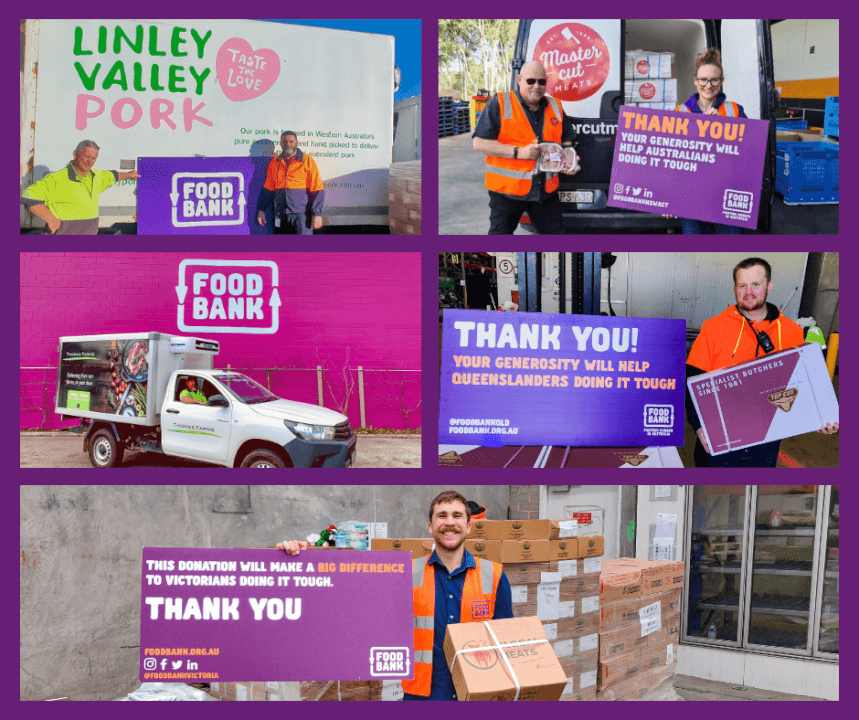
“Wholesalers Linley Valley Pork (WA), Holco (SA), Global Meats (Vic) Mastercut Meats (NSW) and Top Cut (Qld) have been pivotal in this wonderful initiative, providing pork to Foodbank at a significant discount to ensure the funding can be stretched as far as possible,” Ms Andrae said.

“We’re proud of the role our industry is playing in providing food security for those in need, but we’re also very grateful to Foodbank because the weekly supply arrangements have given processors and wholesalers added operational certainty for their businesses and employees.

“This has helped keep employees at our plants working and helped ensure producers could be confident they had a buyer.”

“Sadly, we’ve seen market failure in the US in recent months, where major pig processors have closed for extended periods. Thousands of pigs have been euthanised on-farm and prices have fallen dramatically, yet the need to feed Americans in-need has been more critical than ever. We are very grateful that by working together, we’ve avoided that sort of devastating scenario in Australia.”

Pork provided to Foodbank has included sausages, roasts, mince and forequarter chops, totalling 23,685 kilograms of made-to-order pork products over a three-and-a-half-month period. Based on this success, APL and industry wholesalers are looking at ways to continue working with Foodbank.

Foodbank Australia National Program Manager – Agriculture, Ms Jacqui Payne, explained how significant this supply has been to the Foodbank network nationally and to food relief recipients.

“We’re so grateful to APL and all the local wholesalers who have supported Foodbank through this period. Having a regular, reliable supply of a high-demand protein product such as pork takes the ‘surprise’ out of our supply chain and goes a long way in helping us end hunger in Australia.”

Melissa Parker from Mastercut Meats said the wholesaler, which has been supplying pork for distribution in NSW and the ACT, was keen to continue supporting Foodbank.

“As a family business, we’re always looking for ways to give back to the community,” Ms Parker said.

“This has been a fantastic opportunity to support Foodbank with supplies of premium Australian pork, helping those in need during this time of crisis, and also supporting our supply chain, our employees and Australian pork producers.”

A Helping hand for MUNGINDI as it’s only supermarket burns down

Friday 4th September, 2020 – A truckload of food  has just arrived at the small border community of Mungindi, which lost its only supermarket, butchery and clothing store in a freak fire on Tuesday night.

CEO of Foodbank NSW & ACT, Gerry Andersen says the former Mungindi RSL building has been flagged as the site for the temporary supermarket with the NSW Government committing $100,000 to set up the temporary grocery store.

Locals spent all day Thursday cleaning the building with the Foodbank produce and emergency hampers among the donations to arrive this morning.

“We were on the phones as soon as we heard the news. The community of Mungindi is suffering through drought, COVID-19 and now the recent fire.” 

“The Foodbank truck has arrived at Mungindi with 180 emergency food and 120 personal care hampers as well as mixed fresh produce to assist families and individuals during this time. We’re also working with Mungindi Central School to prepare and distribute lunch for their students.”

“It’s vital we do what we can to support those in need in these challenging times.  For the past 28 years Foodbank NSW & ACT (FBNA) has been sourcing and delivering food for hungry Australians. Our statistics show people living in rural and regional areas are 33% more likely to have experienced food insecurity.”

“Our thoughts are with all those affected. The Foodbank family will continue to assist with food relief as we know it takes time for communities to heal and rebuild.”  Mr Andersen said.

FBNA is the largest provider of food relief to charities around the state and territory. Right now, the demand for food relief is greater than ever before. The 2019 Foodbank Hunger Report has revealed more than one in five Australians (21%) have been in a situation where they have run out of food and have been unable to eat.

Meet Brian and Julie

It was like a hailstorm of embers, you couldn’t even see. And when the embers finished falling, everything was on fire.

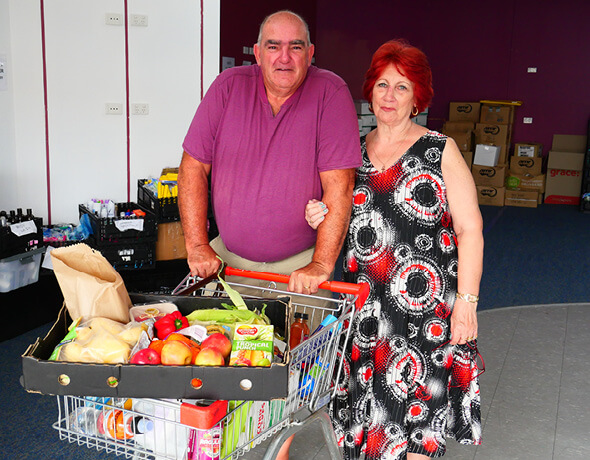
Meet Brian and Julie, a Sarsfield couple who were impacted by the recent bushfire season.

As the fires peaked on the hills above their property, Brian made the difficult choice to stay and fight for his home. As the embers gathered speed and invaded his property, Brian battled the blaze all through the night, making heartbreaking choices about what to save and what to let burn. He lost his treasured garden, a tractor, his front staircase and there was severe damage to an exterior retainer wall – but he feels lucky that his home still stands.

“There’s no longer many trees around the place. All you can see is all the houses that have gone. It’s a bit confronting,” said Brian.

For a small town of 652 residents, more than 130 Sarsfield residents have been displaced by the recent fires. The fires impacted more than 70 percent of homes – 66 were lost.

To help make things a little easier, Brian and Julie have been accessing emergency food and water relief through ADRA Bairnsdale, one of Foodbank Victoria’s charity partners, as they join their neighbours on the long journey to recovery.

“The food relief really helps to take a load off your mind. We are still in the process of rebuilding the front of our home and it takes time.”
“The fight isn’t over, it’s going to take at least a year for the community of Sarsfield to recover,” Brian continued.

HELP PEOPLE LIKE BRIAN & JULIE

Meet Helen

We never thought we’d be in this position. It was just a tragic accident that’s changed everything.

Melbourne couple Terry and Helen have always been hard workers. After raising two sons – now in their 30s – the pair have owned several businesses, acquired a strong work ethic, and have always been known for their kindness and generosity.

Several years ago, they put an offer on a home in Melbourne’s north, an older home which they would work towards renovating.

During the settlement period of their newly purchased home, Terry became ill with the flu. On the way to a doctor’s appointment, Terry felt weak and feverish and collapsed, falling headfirst onto the concrete. Luckily, Terry survived, but not without tragic repercussions.

Sadly, as a result, Terry now suffers from an acquired brain injury and requires full time care. Helen is unable to work as she cares for her husband around the clock, stating she has not had a good night’s sleep since the unfortunate accident.

Helen and Terry went from 2 full-time incomes to none, while also gaining a brand-new mortgage. The financial stress is overwhelming as their pensions barely cover the mortgage repayments.

“We never thought we’d be in this position. It was just a tragic accident that’s changed everything,” said Helen.

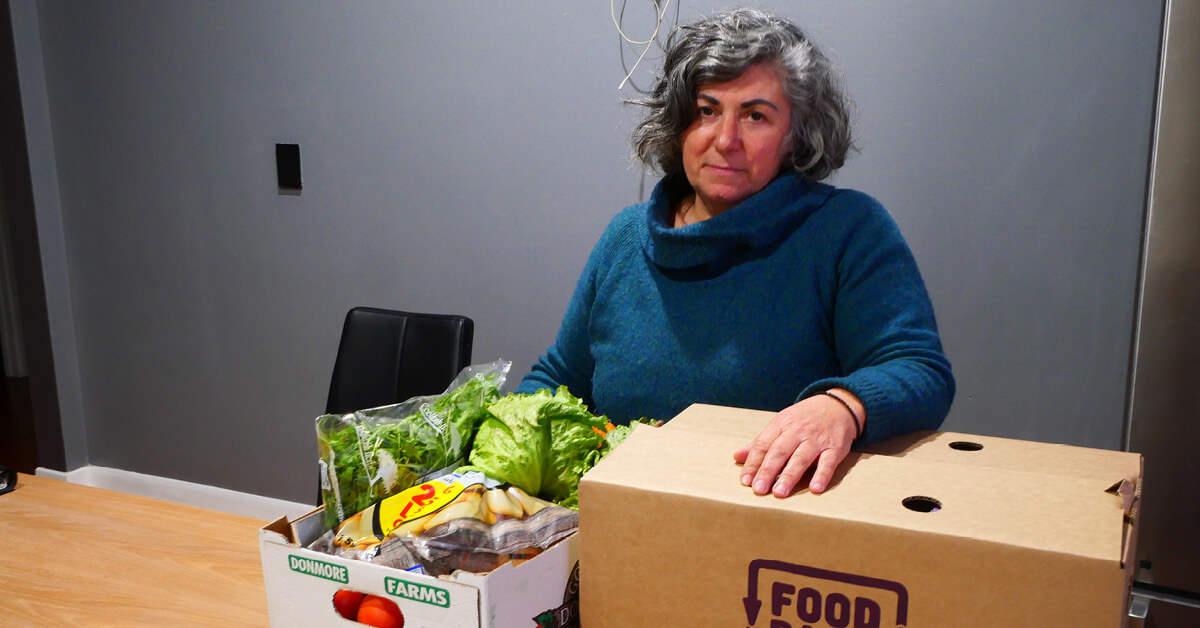
Helen has only been accessing food relief at Reservoir Neighbourhood House, a Foodbank Victoria charity partner, for about a year now and she still struggles with accepting help.

Helen’s story is just one of many we hear. A sudden illness or life-changing circumstance can put anybody in a position where they are unable to pay their bills and desperately require food relief.

HELP PEOPLE LIKE HELEN

1930 – 2020: FEEDING VICTORIANS IN NEED FOR  90 YEARS

Our work in Victoria dates back to 1930, with the establishment of the State Relief Committee in response to the economic distress caused by the Great Depression. Today, our work continues – supporting Victorians with food relief in times of distress caused by financial hardship and through disasters such as bushfires, floods and drought.

Over nine decades of Victoria’s history, Foodbank Victoria has been there in the background, ensuring nobody has to face a crisis alone. Whether it is everyday emergencies or times of crisis – we’ve been providing food comfort and support for 90 years. Here are just some of the stories that are part of our long-standing history assisting Victorians in their time of need.


 Thanks to the Yarra Tram Community Partnerships Program, those of you travelling through the city may have spotted the Foodbank purple across Melbourne’s iconic tram network. We thank Yarra Trams for the opportunity to share the stories of those we have supported, including Helen, Deb and Brian and Julie.

HELP FEED VICTORIANS IN NEED

Children are going hungry

Hard-working mum Hayley absolutely adores her beautiful kids, Grace, Peter and Jake.

Struggling to afford the basics for her family was heartbreaking for Hayley.

She’s always worked incredibly hard to provide for them, but when she lost her job due to COVID-19, it suddenly became much harder to feed them every day.

“My greatest fear is that my kids will go hungry. Things are so expensive… it’s hard to get on top of stuff – and with no income coming in, it’s even tougher.”

The tragic reality is that Hayley is just one of many parents overwhelmed with worry right now about how to feed their children.

Children are going hungry

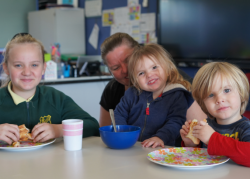
Even before COVID-19, three children in every classroom across NSW and ACT were going to school without breakfast. Today, the situation is much worse.

Foodbank nationally has seen a 78% surge in demand for food relief. Hunger is no longer a hidden crisis, and children are going hungry at alarming rates.

Foodbank’s School Breakfast 4 Health program now serves over 137,000 meals each week to kids who would otherwise go without. But with more children going hungry than ever before, we urgently need your help to meet the skyrocketing demand.

Everyday Aussie kids are arriving at school with an empty lunchbox, some don’t even know if there will be dinner on the table at night.

Hayley shared, “It’s so scary to think what would happen to my children if Foodbank wasn’t around… I don’t know how we’d cope.”

When a child goes to school hungry, there’s much more at stake than just empty bellies, their entire education can be put at risk.

Just imagine how hard it is for a young child to concentrate on the maths or science problems in front of them, when all they can feel is the pain deep of their rumbling tummies.

In fact, teachers estimate that the average student loses more than two hours of learning time when they arrive at school without breakfast. That lost time quickly adds up over weeks and months. You can only imagine the devastating impact on these students as they fall further and further behind their peers.

It’s heartbreaking, but sadly, the obstacles facing hungry kids don’t stop there.

Teachers also say that students who arrive without having eaten a nutritious meal are more likely to express their emotion in disruptive behaviours. Without food in their stomachs, these kids can become restless, irritable, angry and easily upset. On top of that, many hungry kids feel too ashamed to attend their School Breakfast 4 Health program.

We’re working with local schools to help ensure that every hungry child gets the food they need, but that means we need even more food than ever before. With so many kids in need across NSW and ACT right now, we urgently need your help to feed every single hungry child like Grace, Peter and Jake.

Can you give generously today to provide nutritious breakfasts for hungry children and help them start the day right and achieve their very best at school?

Your support will mean so much to parents like Hayley. Many are struggling to cope with the stress of losing their jobs, and some are being forced to decide whether or not to feed their kids when the money has run out.

You’ll be helping thousands of kids like Grace, Peter and Jake:

  • Improve their nutrition and eating habits
  • Improve their mental and physical health
  • Reduce the number of children who stay home from school
  • Help them engage with a clear mind and full stomach in class
  • Help them develop social and leadership skills.


Please donate today to provide the wholesome, nutritious meals that children need to do their best every day.

Thank you for helping feed Kylie’s family

“When you’re fighting between paying rent or buying food, you don’t know what to do.”

When we last wrote to you, Kylie and her young children, like thousands of Victorian families, had reached breaking point. Almost overnight, families who were already struggling now faced a frightening scenario – the prospect of not putting a meal on the table for her family.

Since the tragedy of the bushfires and COVID-19, the number of Victorian families experiencing food insecurity has doubled. More than half of these families skip meals at least once a week.

Thanks to your generous support of our recent appeal, Foodbank Victoria has stepped in to relieve their distress and fears. Without you, far too many families just like Kylie and her kids would have had to go without food.

For Kylie, not being able to feed her own children was heartbreaking. “You have to send your kids to school with food. You can’t send them with nothing.

“I was blown away by the generosity from people we have never met. We’ve received good, healthy food with everyone’s help.

“Now I don’t have to sit and cry about not having any money or food. We can now eat – and that’s the most important thing to me, for my kids.”

Who else do we help?

Vulnerable communities set for increased support as Port of Melbourne extends partnership with Foodbank Victoria


Victoria’s fight against food insecurity is set to receive a much-needed boost, following the signing of a new three-year agreement between the Port of Melbourne and Foodbank Victoria.

The partnership builds on a 2018-19 commitment through which Port of Melbourne employees donated more than 220 hours and distributed nearly 44,000 meals to vulnerable Victorian communities.

Foodbank Victoria CEO Dave McNamara welcomed the partnership as a big step towards his organisation’s ambition of ensuring all Victorians have access to healthy and nutritious food.


“With the bushfires and the COVID-19 pandemic more and more Victorians have turned to us when they have nowhere else to go. In the last few months, we’ve seen demand increase by 20 per cent. And we know that the next few months present even greater challenges as spiralling unemployment and recession begin to take their toll. That’s why this agreement with the Port of Melbourne is so significant. It will help us improve food relief efforts right across the state, delivering considerable benefit for so many vulnerable Victorians – now and into the future.”

The Foodbank Victoria partnership is part of Port of Melbourne’s social impact and sustainability strategy. As well as supporting community groups, each year the Port of Melbourne’s operations provide more than $4 billion in economic benefit to the local government areas surrounding the port.


Port of Melbourne Chief Executive Officer Brendan Bourke said the Port of Melbourne is determined to make a difference for such a critical community priority.

“During the past few months, Foodbank Victoria has seen a growing number of people in need of a helping hand. Many hardworking Victorians are seeking food relief for the first time, finding themselves in situations they never anticipated.

“While our financial contribution will help Foodbank Victoria’s reach and impact, the team at Port of Melbourne is also looking forward to rolling up our sleeves to ensure much-needed nutritious food gets to areas it’s needed most,” Mr Bourke said.

Dozens of Port of Melbourne employees will volunteer their time during the next three years to pick and pack tens of thousands of kilos of food. Others will be deployed to distribution points during food drives associated with emergency response.

Mr Bourke added: “We’re attuned to the immediate need for increased support due to the COVID-19 health crisis and are ready to deploy our assistance now to help Foodbank Victoria’s pressure points. We’re also here for the long-haul, ensuring we remain a valued partner of Foodbank Victoria all the way through to the end of 2022.”

Beiersdorf announces official partnership with Foodbank Australia

Following over hundreds of thousands of product donations, Beiersdorf pledges additional support to Victoria during the current lockdown
31st August 2020

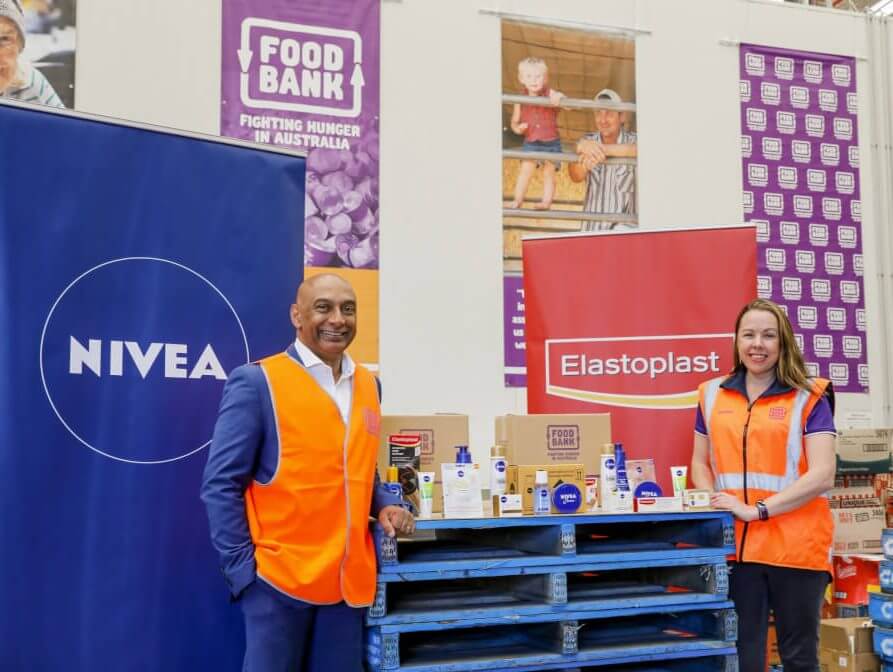
Clynton Bartholomeusz, Managing Director of Beiersdorf Australia (left), and Brianna Casey, CEO of Foodbank Australia (right), launching the partnership at Foodbank NSW & ACT

Today Beiersdorf Australia – manufacturer of NIVEA and Elastoplast products – has announced its official partnership with Foodbank Australia, the country’s largest food and grocery relief organisation.

In 2020, Beiersdorf Australia has donated hundreds of thousands of products to Foodbank Australia, locally driving its ‘Care Beyond Skin’ program. Their most recent donation, just this month, is of over 50,000 personal care items, including hand sanitisers which will be distributed to those in need in Victoria.

Clynton Bartholomeusz, Managing Director of Beiersdorf Australia said, “For nearly 140 years, we at Beiersdorf have had ‘care’ at the heart of everything we do. Our purpose, Care Beyond Skin, not only expresses our passion for skincare, but it embodies our commitment to also caring for people and communities in need. That is why we are so pleased to become an official national donor with Foodbank Australia and support the important work they do.”

This is not the first time Beiersdorf and Foodbank have joined forces. During this year’s bushfire crisis, Beiersdorf donated thousands of products including Elastoplast essentials and NIVEA sun care.

Brianna Casey, CEO of Foodbank Australia said, “We are incredibly grateful for Beiersdorf’s continual support and generous donations of skin and personal care products, and are delighted to be welcoming them as an official national donor.”

“Thank you to everyone at Beiersdorf for your ongoing commitment to Foodbank Australia which enables us to support Australians doing it tough not only now but for the long term.”

Globally, Beiersdorf has pledged 50 million Euros as an immediate international support program to help communities in their fight against COVID-19 pandemic. It will team up with international organisations as well as local authorities to bring the support to the people in need. The global immediate measures are:

  • Donation of 1,000,000 litres of disinfectant
  • Donation of at least 5,000,000 NIVEA skin and hand care products to medical staff all around the world
  • Direct financial support for NGOs, both international organisations as well as local partners of the Beiersdorf Group
  • Beiersdorf commits to double any employees’ personal donations