 Log in


The toughest assignment:
affording food
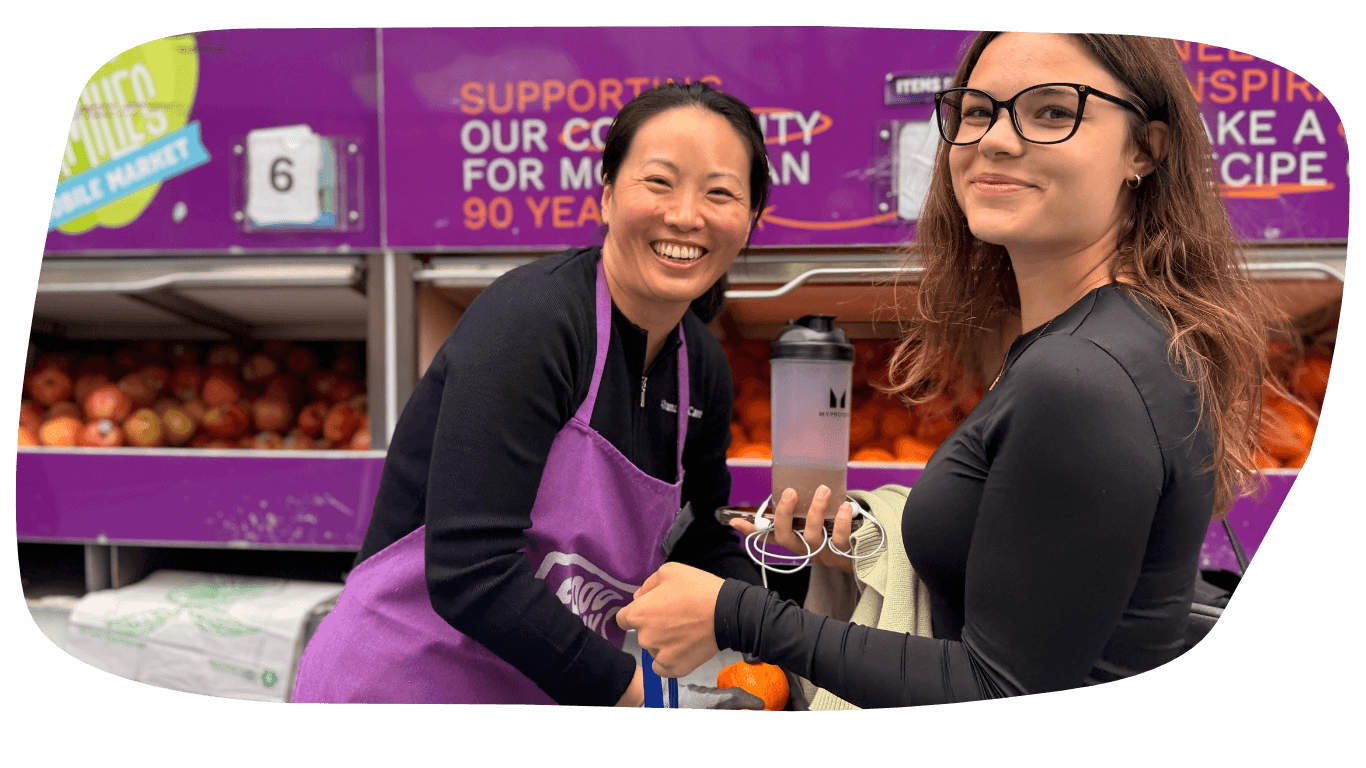
There’s enough to juggle at uni without having to do the maths at every meal. Our on-campus markets are helping put fresh, healthy food on every student’s table.
As students begin to arrive at our Monash Caulfield market, a queue quickly starts to form. Hunger shouldn’t be part of the university experience, but a recent study by Allianz Partners has found that four in five international students worry about having enough food. At our fresh food market today, we meet students who are navigating impossible choices between food, rent, bills and other essentials.
Like Thesa, a PhD student, who’s feeling the cost-of-living pressure. “The cost of living is so incredibly high,” she says. “I think it’s a little early in the morning right now for students, but in a little while you’ll see a massive line, I feel like that’s an indicator of how much this is so needed.”
Since 2024, Foodbank Victoria and Allianz Partners have worked together to deliver an on-campus market series. It’s a vital source of nutritious fresh fruit and veggies for international students as they navigate rising costs while studying far from home, away from established support networks.
“We’re all trying to live within our means, but with rising costs it’s getting harder and harder every day,” says Johnathon, a Master of Social Work student. “Especially with housing costs, sometimes people are having to skip meals because it’s either rent or food.”
Thesa and Johnathon are certainly not alone: Allianz Partners’ 2025 International Student Food Insecurity Impact Report highlights just how widespread the issue has become.
The survey found that over 80% of international students worry about having enough food, with 79% skipping meals or eating less because they do not have enough money. Despite this, 45% had never used food assistance programs.
Food insecurity affects far more than what’s on a student’s plate. It impacts physical health, mental wellbeing, academic performance and a person’s sense of belonging. More than half of those students surveyed reported experiencing depression or anxiety linked to food insecurity, while over two-thirds reported lower self-esteem.
It’s why we’re bringing farm-fresh produce directly to students, helping remove some of the biggest barriers to access: cost, transport and time. And knowing where to go for help.
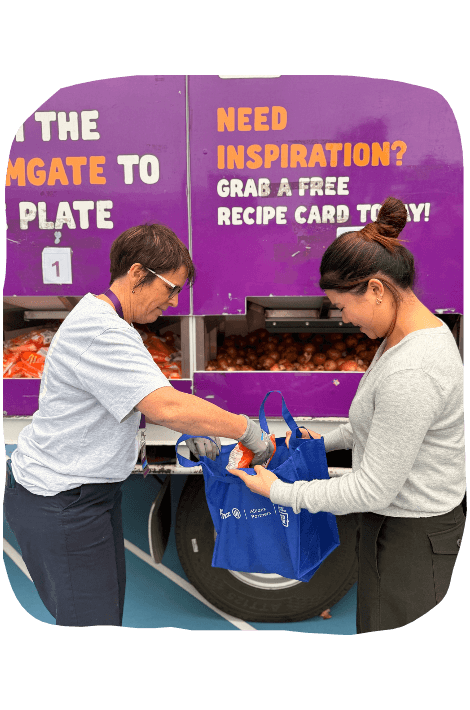
At today’s market, 350 students line up to take home more than 2,600 kilos of fresh produce, from carrots and sweet potatoes to apples and oranges. That’s a colourful haul of more than 7 kilos per student, and the ingredients for a fortnight’s worth of healthy home-cooked meals.
As Saurabh, a Bachelor of Health Science student, puts it, “A lot of people live off a processed diet because it’s cheaper, but obviously, long-term it’s pretty unhealthy. Whereas this market offers us a lot more sustainable and healthy options.”