
Struggling Australians go hungry to feed their pets

Thursday 11 April 2024: Pet owners living in food insecure households are resorting to self-sacrifice to protect the welfare of their pets, with almost a quarter (24%) skipping meals so their pets can eat.

According to a report published today by Foodbank Australia to mark National Pets Day, food insecure households value their pets to such an extent that they don’t want to let them go hungry. 

Despite continued cost of living pressures, surrendering pets is an absolute last resort with 14% of pet owners in food insecure households reported giving up a pet during the previous 12 months. As low as this is, it is still twice the national average for Australian households (7%).

The report, supported by Mars Petcare Australia, a long-standing donor to Foodbank with brands such as Pedigree and Whiskas, reveals that half (56%) of food insecure households in the past 12 months own a pet, higher than the Australian average (48%).

According to survey respondents, pets play a crucial role in their lives. They offer companionship, emotional support, increased social interaction and a sense of security and purpose – all of which can be otherwise challenging for those doing it tough.

“Many families facing food insecurity struggle to provide proper nutrition for themselves, let alone their pets, which can lead to significant health and wellbeing consequences for pet owners as well as their pets,” said Foodbank Australia CEO, Brianna Casey.

We have heard previously that parents skip meals in order to ensure their children can eat, but we are now hearing this sacrifice extends to the welfare of pets, who are very much-loved family members.”

Commenting on the report findings, General Manager of Mars Petcare Australia, Craig Sargeant said, “We know the valuable role pets play in Australian households, particularly households in need, and we are proud to support Foodbank in highlighting the struggle that pet parents in food insecure households are facing. This includes continuing our donation program with Foodbank focused on keeping pets healthy and remaining in loving homes.

We have heard previously that parents skip meals in order to ensure their children can eat, but we are now hearing this sacrifice extends to the welfare of pets, who are very much-loved family members.”

In 2023, Foodbank provided over 430,000 kilograms of pet food, valued at over $6 million, thanks to food industry partners such as Mars Petcare, yet the research reveals that only 9% of pet owners from food insecure households are aware that pet food is available as a part of food relief services.

“This figure is staggering and shouldn’t be happening. We want people to know if they are doing it tough, if they have pets, we can help them and their pets. Head to the Find Food button on our website to find a service near you that can assist,” said Ms Casey.

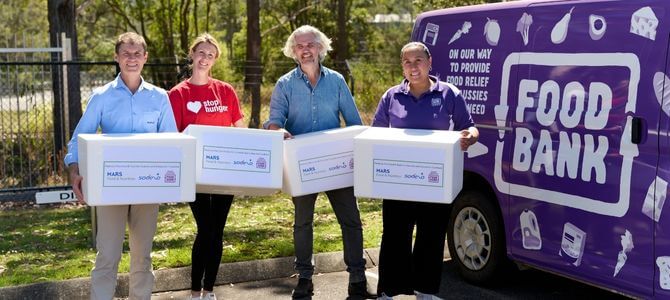
As part of Mars Petcare Australia’s ongoing support of Foodbank Australia to assist Australians experiencing food insecurity, Mars Petcare Associates will be donating their time on National Pet Day to make essential pet food hampers including Pedigree, Greenies, Whiskas and My Dog.

Want to know more?

Get involved

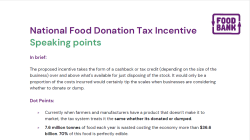
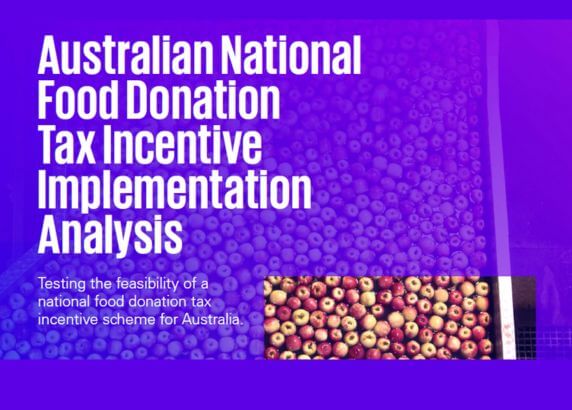
A tax incentive to ensure food ends up in bellies, not bins…


while also protecting our environment.

What is the issue?

Australia currently wastes more than 7.6 million tonnes of food each year, costing the economy over $36.6 billion. 70% of this food is perfectly edible. 

Despite this, Australia’s current tax framework does not support the food industry to donate surplus stock to food relief – in fact, it treats this the same as sending it to landfill. This needs to be changed.

Independent modelling shows that this incentive would potentially save the equivalent of an additional 100 million meals a year and could assist in halving overall food waste by 2030. 

Similar incentives are already effective in countries such as the United States, Canada and France.

What is proposed?

In July 2024, Western Australian Senator Dean Smith introduced the Tax Laws Amendment (Incentivising Food Donations to Charitable Organisations) Bill 2024 in the Senate. This Bill proposes amendments to Australia’s tax laws to incentivise small and medium-sized food producers, such as farmers and growers, to donate surplus fresh food to registered food charities

The proposed tax incentive would provide a cashback or tax credit for businesses based on the costs incurred in donating food.

  • Small businesses (Cashback incentives for food donation costs.
  • Medium businesses ($20m–$50m turnover): above what’s available to a company for disposal of the stock.

  • It would only be a proportion of the costs incurred but will tip the scales when businesses are considering whether to donate or dump.

How would it work?

Example of how the incentive would work for a small enterprise is:

A farmer operating a business with a turnover of less than $20 million has 500kg of zucchinis that cost $1.50 per kg to grow and harvest but they are in excess of customer demand due to a better-than-expected growing season. Instead of dumping the zucchinis, the farmer engages a local transport company at a cost of $250 to deliver the zucchinis to a food relief organisation. The total cost to the farmer of $1,000 would enable him to receive an additional tax refund of $200.

Where to from here?

In November, the same week that two government reports were handed down, both recommending the adoption of the food donation tax incentive as a targeted non-inflationary measure to address cost of living pressures, the Senate economics committee has rejected the Bill that would have brought the incentive to life.

We are asking for businesses to sign the letter of support linked here. To stay up to date about the progress of the proposal and information on what you can do to support it, please fill out the form below.

Help us create meaningful change

Sign the letter of support today 

Click Me!

Stay up to date

Sign up using the form below to receive updates on the progress of the proposal and information on what you can do to support it

Supporters NDTI (FBA)
First Name
Last Name
Email
Title
Company

Spread the word

Join us in driving meaningful change by raising your voice in support of this tax incentive. We’ve prepared key messages to help you get started—download them today and make an impact!

Click to download

Get involved

Foodbank sources record volume of food and groceries in 2023

16 February 2024 – Today, Foodbank Australia revealed it sourced a record 51 million kilograms of food and groceries in 2023, the equivalent of 92 million meals, as the cost-of-living crisis pushed demand for food relief to record highs across the country.

The Foodbank Hunger Report 2023 confirmed food insecurity was experienced in 3.7 million households last year, more than all the households in Sydney and Melbourne combined. This is an increase of 383,000 households from the same time in 2022 and meant that Foodbanks across the country had to source more food and grocery items than ever before.

The main driver of food insecurity is the cost-of-living crisis, causing more Australians to be anxious about putting food on the table with 77 percent of food insecure households experiencing it for the first time in the past year.

Foodbank Australia CEO, Brianna Casey explains that food insecurity is now affecting more Australians than ever before.

“It’s touching groups previously unaffected: young professionals and mid to high-income earners are among those being forced to make sacrifices at the dinner table.

“In any other industry, reaching a volume milestone is cause for celebration. At Foodbank, needing to source 92 million meals is a deeply concerning signal of extreme hardship across our communities, and proof positive of the need for the Federal Government to deliver immediate and significant cost of living relief, including improved funding for the food relief sector to respond to ever-growing demand for food relief in communities we’ve never seen it before.”

Partnering for purpose

Whilst the worsening state of food insecurity in Australia paints a dire picture, it is the generosity and commitment of the Australian food and grocery industry, as well as corporate Australia, that allows Foodbank to support those in need at such an incredible scale.

“We couldn’t do what we do best at Foodbank without the generosity and ingenuity of our partners across the agriculture, production, manufacturing and transportations industries,” said Ms Casey.

Donations of ambient, chilled, fresh food and private label products and personal and household care items are all welcome. By redistributing otherwise wasted products—they may be out of specification, close to expiry, deleted product, surplus or damaged—Foodbank is able feed Australians that would otherwise go without.

Foodbank works with farmers, wholesalers, manufacturers, and retailers who donate food and grocery items and redirect surplus stock so that they can be distributed through Foodbank’s charity network and outlets to those who need it most.

The national food relief sector’s pre-budget submission, which calls for a significant increase in investment for food relief, can be found here.

Join the Cause

OzHarvest SecondBite Foodbank Logos


Food Relief sector calls for urgent action on funding

Wednesday 24 January, 2024


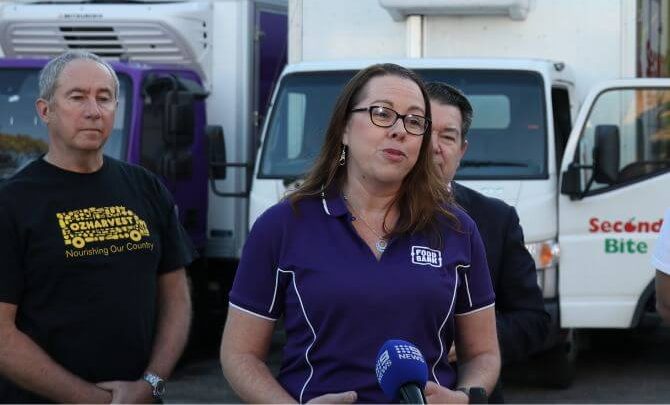
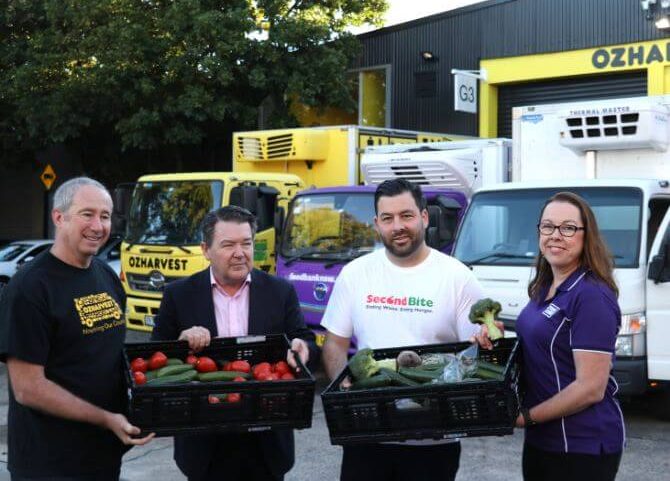
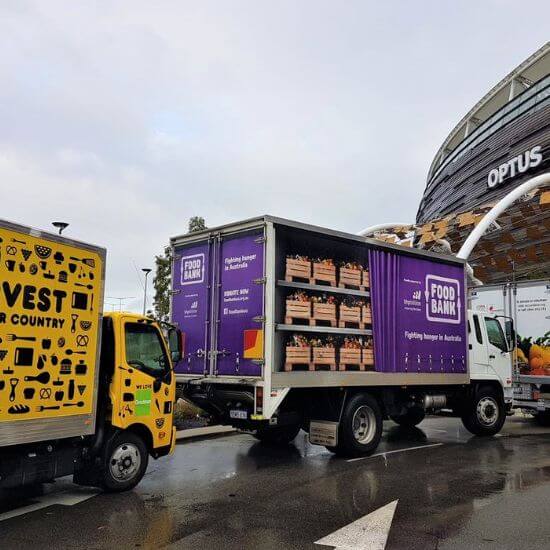
Foodbank and OzHarvest Truck

Ahead of the Prime Minister’s caucus meeting on the cost-of-living crisis, Australia’s food relief sector has called for an urgent and dramatic increase in Federal funding to help respond to unprecedented levels of demand for food relief.

The Foodbank Hunger Report 2023 highlighted that the cost of living is crippling households across the country and there is compelling evidence that the situation has deteriorated in recent months. Despite this, base funding for Foodbank Australia, SecondBite and OzHarvest remains at an embarrassingly low $1.3m per year – combined.

Brianna Casey, CEO of Foodbank Australia, says,

“The Prime Minister is committed to introducing cost of living relief. One of the most obvious solutions that would provide immediate relief to those already struggling would be to bolster support for the food relief sector. This would be a targeted and sensible investment capable of ensuring fresh fruit and vegetables, protein and pantry staples are available to community members most affected by the current crisis.”

Daniel Moorfield, CEO of SecondBite echoed this saying:

“While we are dealing with a cost-of-living crisis that knows no bounds, we’re also preparing for and responding to flash flooding, yet another cyclone record temperatures sweeping in from the west. There is only so much we can do without more meaningful support from the Federal Government.”

According to Ronni Kahn AO, CEO and Founder of OzHarvest:

“Despite more people than ever before needing food relief due to the unrelenting strain on household budgets, the level of funding for the national food relief sector remains woefully inadequate. We are seeing unprecedented demand with long queues every day at our free supermarket, and many of the charities we support say they could take double the amount of food. Government action is long overdue.”

Through its pre-budget submission, the food relief sector has made the case for $50m per annum to be provided to the three organisations to help meet community need for food relief. This comprises $10m for additional capacity, $20m from each round of the Disaster Ready Fund and $20m for emergency food relief following a crisis or natural disaster.

Food Relief CEOs. Brianna Casey Foodbank Australia. Daniel Moorfield SecondBite. Ronni Kahn OzHarvest

Food Relief CEOs. Brianna Casey Foodbank Australia. Daniel Moorfield SecondBite. Ronni Kahn OzHarvest

What happens when the Interest Rate goes up?

Grandma and granddaughter sitting on couch

The Foodbank Hunger Report 2023, revealed 35 percent of all mortgage holders and half of all renters experienced food insecurity in the past 12 months. 

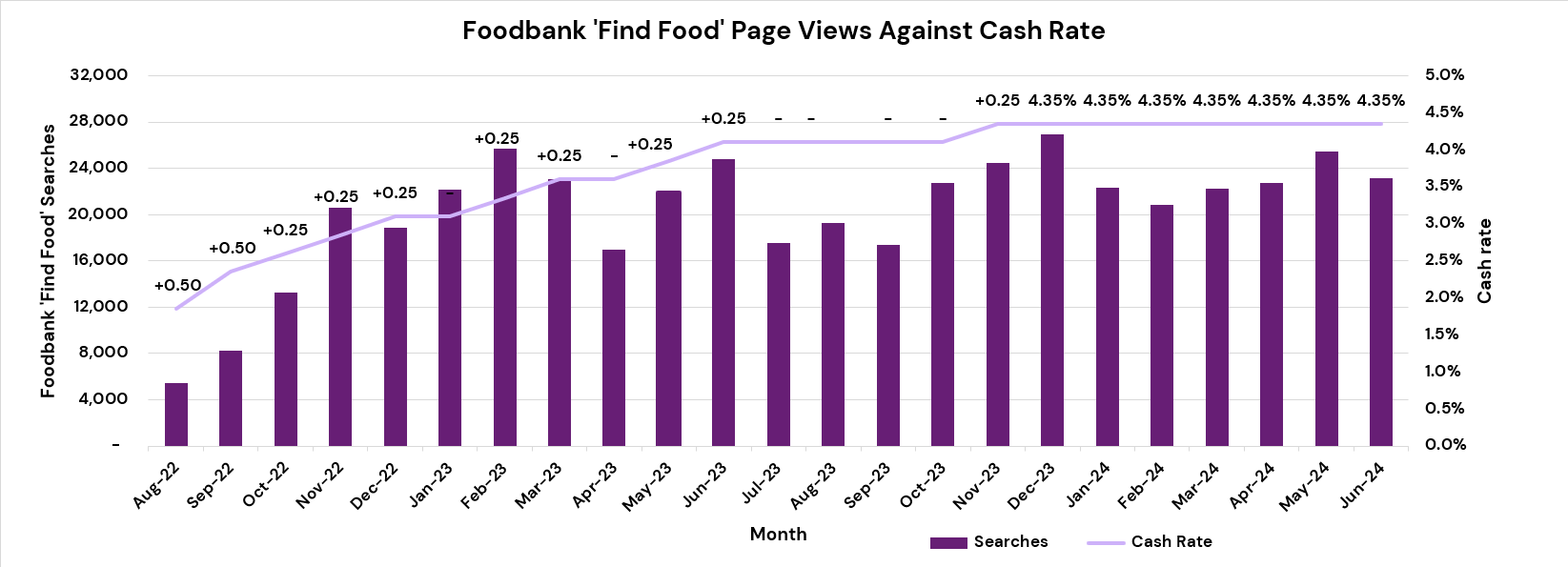
On the first Tuesday of every month, like many Australians across the country, we at Foodbank wait bated breath to see if the Reserve Bank of Australia will increase the Cash Rate or not. Why? Every time the decision is made to increase the Cash Rate, we see an increase in the number of people searching for food relief. This isn’t coincidence. It’s cause and effect.

Foodbank ‘Find Food’ Searched Against Cash Rate

interest rise impact on food relief searches

Young people unloading groceries from car

With every Cash Rate or interest rate rise, we know the number of clicks on our Find Food button goes up.

The Find Food button takes you to Food Relief providers in your local community. It is often the first step for many who are struggling to put food on the table.

We have been tracking the hits to this very vital button against the monthly Cash Rate announcements since August 2022, and it’s plain to see there is a scary correlation of Australians sourcing food relief when that rate rise is announced. 

Food is the pressure valve for many household budgets. It is often the first item people cut back on when trying to make ends meet, with 94 percent of those hurting coped through shifting spend on food and groceries.

If you or someone you know needs food relief, please don’t delay and hit that Find Food button.

Do you need help?

Young, employed, high earners going hungry

Monday 23rd October, 3.7 million households went hungry in Australia in the past year, according to the Foodbank Hunger Report 2023, released today. That’s more than all the households in Sydney and Melbourne combined.


Foodbank Australia says the research highlights one glaringly obvious cause why 36 percent of Australian households are experiencing food insecurity: the cost-of-living crisis.

Food insecurity is now being experienced in homes it has never touched before, with 77 percent of food insecure households experiencing it for the first time in the past year.

The report confirms the face of hunger is changing. More than half of food insecure households have someone in paid work (60 percent), and those experiencing food insecurity for the first time are younger, with mid to higher incomes.

The research highlights what Foodbank sees first-hand every day; food is the pressure valve for the many households doing it tough. It is the most likely item to be sacrificed to make ends meet. Almost all (94 percent) of food insecure households tried to mitigate the cost-of-living pressures by reducing their spend on food and grocery items. Tactics included looking for sales and discounts or cheaper alternative and reducing eating out. In a move that may have future public health consequences, nearly half said they reduced their purchasing of fresh produce and protein.

Mum and young son on couch

Foodbank Australia CEO, Brianna Casey, says the cost of the most basic of rights – food and shelter, is now the most common cause of food insecurity in Australia.

“We have an increasing number of people struggling to secure adequate food and the housing crisis is only exacerbating the problem, with half of all renters and a third of all mortgage holders food insecure in the last 12 months.

“We are fast heading towards a reality where more than half the population will know what food insecurity is because they are experiencing it themselves. Almost one in two Australians have felt anxious about accessing adequate food or struggled to consistently access it. In a country where we produce enough food to feed our population three times over, this should not be happening.”

This week is Anti-Poverty Week and the food relief charity is advocating the Federal Government to use the Foodbank Hunger Report 2023 as a reference point in future policy settings underpinning poverty and inequality and to ensure the food relief sector is adequately resourced to respond to current and future levels of demand across Australia.

Young people unloading groceries from car

Foodbank Hunger Report 2023

The Great Dolmio Cookoff aims for 5,000 meals for people in need on the NSW Central Coast.

Date: 9 October 2023

Sodexo, Foodbank and Dolmio at The Great Dolmio Cookoff

Dolmio, Sodexo, and Foodbank have announced a renewed partnership for the week-long Great Dolmio Cookoff. The event is set to draw attention to World Food Day on 16 October – a day to raise awareness of global hunger and encourage action – while helping those in the NSW Central Coast community.

Data from Foodbank reveals that on any day in Australia, over half a million households are struggling to put food on the table1. In response, Dolmio, is transforming its Central Coast production facility’s commercial R&D kitchen into a ‘Master Chef-worthy’ set for a meal-making marathon.

Sodexo, Foodbank and Dolmio at The Great Dolmio Cookoff (2)

Over 100 members of the Dolmio team, along with staff from Sodexo, are volunteering their time. The team are aiming to make 1,000 meals a day, working three shifts a day throughout the week of 9-13 October.

Around 20 local charity partners within Foodbank Australia’s network – including Coast Shelter – will be collecting the prepared meals and distributing them directly to people in need of food relief.

Bill Heague, General Manager Mars Food & Nutrition Australia, said that he knows the importance of helping to put food on tables.

“Our best loved brands like Dolmio have been helping Australian’s to make meals for over 75 years – based here on the Central Coast,” Bill said.


“Dolmio is all about helping to inspire the small touches that can bring joy to our day-to-day lives. For many of us, that comes through the food we eat and who we eat it with – and that connection is something everyone should get to enjoy. However, sadly there are an increasing number of Australians, including in our own Central Coast, who are struggling with food insecurity. That’s why we are joining forces again with our generous partners to provide healthy cooked meals for people in need in our local community” he said.

Sodexo, an integrated facilities management services company with a base on the Central Coast, are providing support services and the key ingredients for the 5,000 meals.

Keith Weston, Sodexo Australia Managing Director, said the partnership builds on their global Stop Hunger initiative to address food insecurity and malnutrition.

“Sodexo is proud to team up with Dolmio and our national charity partner, Foodbank Australia, to address the growing demand for food relief,” Mr Weston said.


“In Australia alone, 2 million households experienced severe food insecurity in the last year. With this figure set to rise with the increased cost of living and inflation on everyday household goods, it is important that we act today to deliver a better tomorrow for our communities.”


Sodexo, Foodbank and Dolmio loading prepared food into Foodbank van

“Our mission is to improve quality of life through our services, and we believe that quality of life only begins when basic needs are met. This annual event demonstrates tangible actions we can take to enhance the lives of our communities through collaboration and shared social responsibility,” he said.

The teams are cooking balanced and delicious meals with fresh ingredients including Dolmio Bolognese, MasterFoods Honey BBQ chicken and MasterFoods Beef Stroganoff.


Brianna Casey, Foodbank Australia CEO, said the organisation has never seen such a high demand for food relief.

“We could not do what we do without the support of our generous donors like Mars Food Australia and Sodexo who continue to help us get meals to where it’s needed in many communities throughout the country.”


Every $1 donated = 2 meals

Non food relief products in high demand

14 July 2023, Sydney: Food and grocery relief organisation, Foodbank Australia, has revealed 40 percent of people accessing services have requested more household cleaning products, followed closely by personal care items.

Foodbank’s Week of Care, starting Sunday 16th July, is an important week for the organisation to highlight its valuable non-food donors and the essential products donated. Basic, but necessary, items such as nappies, shampoo and conditioner, washing detergent, oral care, period care items and much more – simple items that fall off the family budget when times are tough.

Foodbank 'Find Food' Searched against Cash Rate July 2023

[1] Foodbank website, Find Food page. Google Analytics

Foodbank provides food and grocery relief to more than one million Australians every month. In the past nine months, it has seen an average increase of 21 percent[1] in people seeking food relief, correlating with the cash rate rises each month.

Now in its third year, Foodbank Australia CEO, Brianna Casey hopes Week of Care will shine a spotlight on what these non-food products mean, and just how vital they are to the many vulnerable households around the country.


“To the many people we provide relief to, these non-food items are more than just a product on a shelf. Shampoo represents clean, fresh hair so they can be presentable at work, or school. Washing detergent equals clean clothes, period items make it easier to go to school or simply just leave the house, all this helps maintain a sense of dignity when life becomes really tough.


“If we were not able to rely on the generosity of our non-food donors and provide the toothbrushes, nappies, soap and detergent, many of these items would be out of reach for the thousands of Aussies doing it tough every day,” said Ms Casey.

Foodbank has seen an increase in the demand for food and grocery relief due to the cost of living crisis, changing the demographics of who the food relief organisation traditionally has helped.

“We are seeing people with not one, but two jobs, families with mortgages or rents, students, retirees, people from all different walks of life. We want to be able to essentially wrap our arms around these people and help them. We want to make the step of asking for help easy and accessible and we want to normalise that it’s ok to get help.

“We are so grateful for the number of national donors who provide these personal care, household care and other non-food products which are in such high demand.”

Foodbank would like to acknowledge and thank Beiersdorf, Haleon, Henkel, Kenvue Kimberly-Clark, L’Oreal, P&G, PZ Cussons, Reckitt, Unilever, and Sorbent for their ongoing support in supplying non-food products.

Every $1 will help provide 2 meals

Foodbank South Australia to expand Northern Territory operations

Foodbank VIC staff carrying a foodbank box of food donation

1 July 2023,

Foodbank South Australia and Central Australia services are to expand to the entire Northern Territory from 1 July 2023, in response to the escalating need for food relief in the community.

Foodbank SA and Central Australia currently operates in the Territory, having opened the Alice Springs Foodbank Food Hub in 2020. It will now extend this highly effective model to the Top End, Darwin and Katherine to ensure the rising demand for food relief is met and will be known as Foodbank SA & NT.

Baptist Care Northern Territory (BCNT), which established Foodbank in Darwin in 2010 and has been delivering services under license since then, is working with Foodbank SA and Central Australia to ensure minimal disruptions to the distribution of food relief in the Territory. This change in operations will enable BCNT to focus on its core mission within the community, including outreach and its Food for Life program.

With the cost-of-living crisis and increasing frequency of natural disasters compounding the already dire hardship in regional and remote communities, the need to increase emergency food relief is pressing.  This initiative will result in more Territorians being able to access culturally appropriate, nutritious food relief at a time when it’s never been needed more.

Greg Pattinson, CEO, Foodbank SA and Central Australia acknowledges the work of BCNT in the community and the difference they have made.

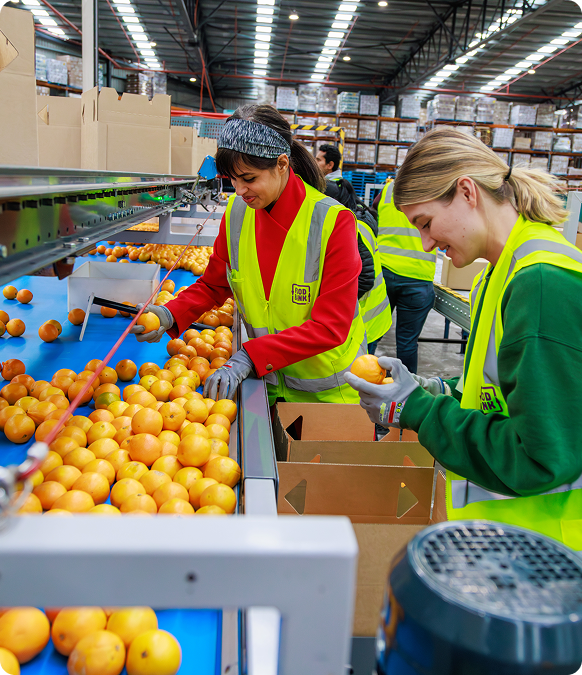
Australian Food Relief Sector preparing fruits

“For many years, Foodbank SA has supported Central Australia and we are delighted to be invited to expand our activities further north to achieve better coverage and operational efficiencies.


“We would like to acknowledge and thank the work of Baptist Care Northern Territory in setting up and developing the Foodbank NT services and look forward to extending the support for vulnerable Territorians,” said Greg.

Every $1 will help provide 2 meals