
MEDIA RELEASE

Thursday, 29 September 2022

New food waste initiative to help millions of food insecure Australians

 Australian businesses and the Australian government can help strengthen food rescue, help feed food insecure Australians, and minimise the environmental impacts of food waste, latest Sector Action Plan from Stop Food Waste Australia outlines. 

Food rescue plays a critical role in Australia meeting its stated target of halving food waste by 2030 while also helping address the growing need for food relief. In 2021, Australia’s food rescue sector redirected or repurposed more than 80 million kilograms of good-quality food and redistributed it as meals for millions of food insecure Australians. 

fruit and vegetable clip art

The Food Rescue Sector Action Plan has been co-designed and developed with Australia’s four biggest food rescue charities – Foodbank, OzHarvest, SecondBite and FareShare. The Plan outlines key interventions in research, policy, business collaboration and education that will help support and strengthen food rescue, reduce food waste across the supply chain and assist food insecure Australians. 

The Sector Action Plan aims to increase surplus food captured for redistribution, highlighting key initiatives for both the food rescue sector and policy-makers, primary producers, manufacturers, retailers, transport and logistics organisations and other associated parties, including: 

  • Improving tax incentives to encourage donations of surplus food and essential services to the food rescue sector. 
  • Establish a collaborative steering group within the sector to discuss and prioritise actions and develop a workable plan for the sector to implement. 
  • Enhance research initiatives to improve collective understanding of the sector and current food rescue models and systems, and investigate alternative models of food rescue and distribution of surplus food. 
  • Partner with the Australian Food Pact Signatories – comprising some of Australia’s biggest food businesses – to embed food donation into business practices and food waste reduction targets. 


Stop Food Waste Australia Chief Executive Officer Dr Steven Lapidge says the value of Australia’s food rescue sector cannot be understated. 

“Food rescue is a unique approach to reducing food waste because it also has the fundamental co-benefit of reducing food insecurity,” Dr Lapidge says. 

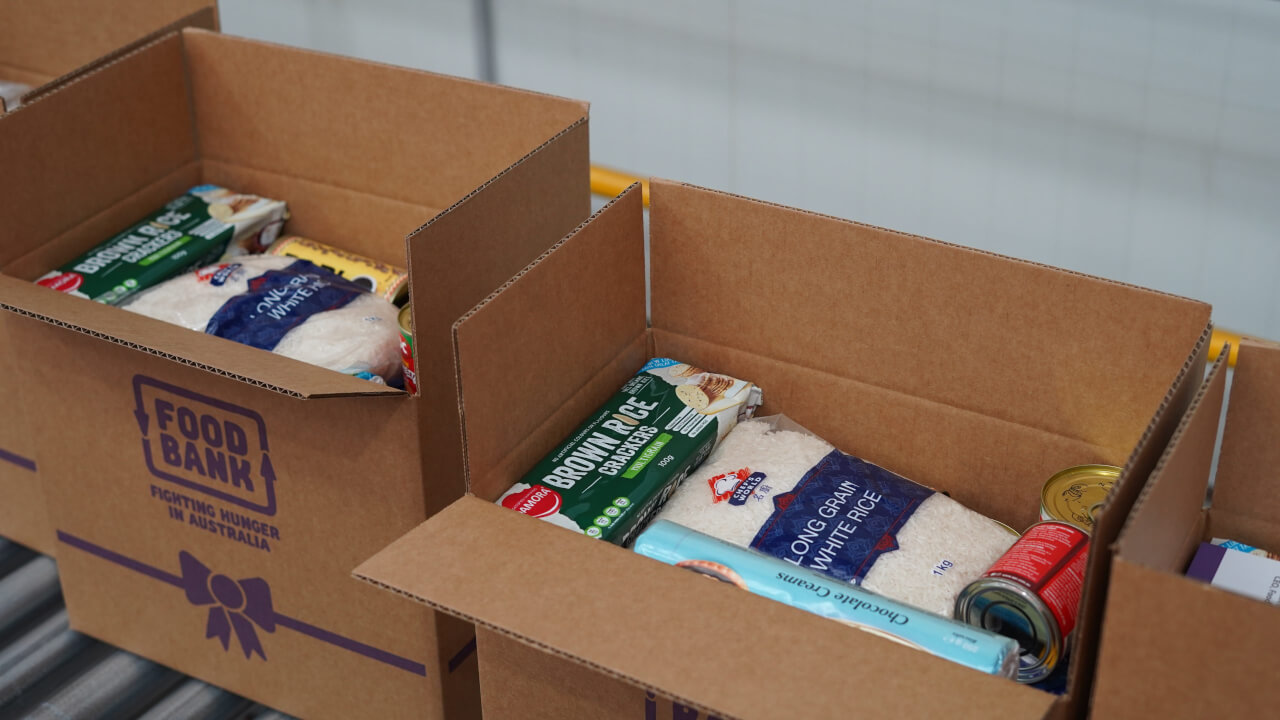
foodbank Hamper packages

Australians continue to waste more than 7.6 million tonnes of food every year – 70% of which is edible. At the same time, one in six Australian adults haven’t had enough to eat in the last year, and 1.2 million Australian children have gone hungry.

Stop Food Waste Australia Chief Operating Officer Mark Barthel says the Sector Action Plan offers a path for increasing the amount of food redistributed to vulnerable Australians and diverted from landfill – contributing to Australia’s target of halving food waste by 2030. 

“The Food Rescue Sector Action Plan highlights the importance of collaboration with and between the biggest food rescue charities, the government and business partners to ensure good-quality surplus food is donated to the people who need it and not wasted. 

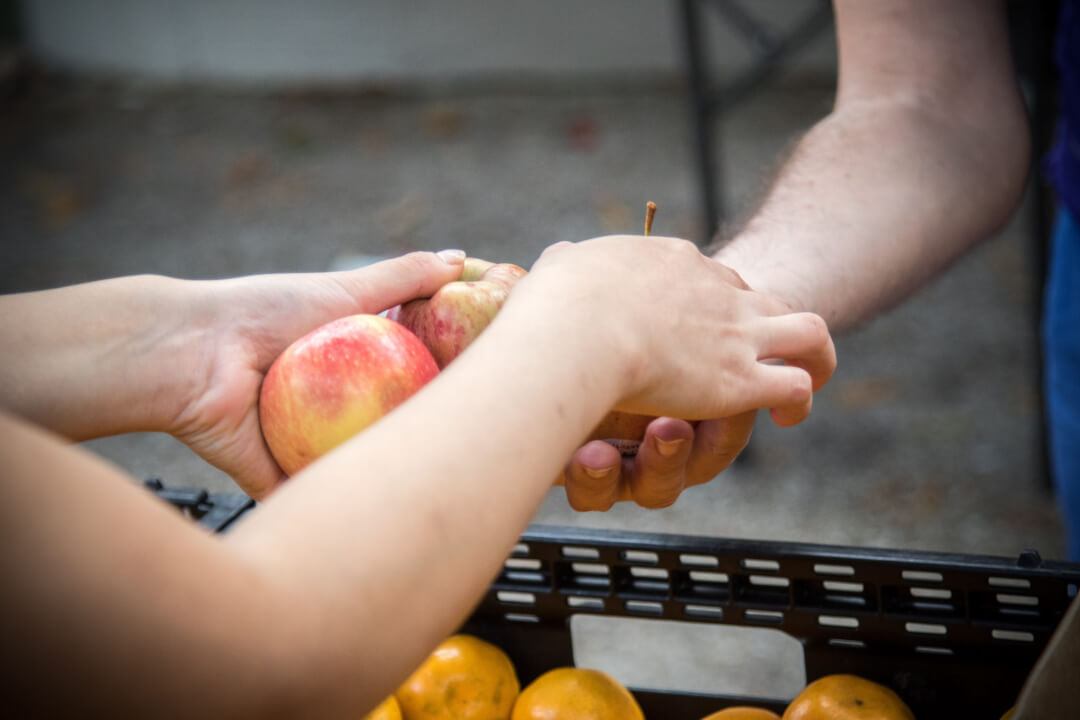
a hand receiving fruits

 “Food rescue is such an important sector for us and the progress we’ve made as part of developing the Plan in a few short years has been truly impressive and driven by a group of very passionate people with a strong sense of purpose. 

“We are also working with a growing number of food businesses, like signatories to the Australian Food Pact, to prevent food from being wasted and to maximise the potential for any surplus food that does exist to be donated to the food rescue sector, through partnerships that are in place and strong.” 

Sarah Pennell, General Manager of Business at Foodbank Australia and member of the Food Rescue Sector Action Plan Steering Committee says,

This work will have a positive impact on the lives of millions of Australians who are currently food insecure. It will have a similarly positive impact on helping to reduce this country’s food waste.

For the food rescue sector itself, having Stop Food Waste Australia bring us together to work on this has been game changing.

The release of the Food Rescue Sector Action Plan aligns with the United Nations’ International Day of Awareness of Food Loss and Waste (Thursday, September 29). Stop Food Waste Australia is proudly working towards the UN Sustainability Goal 12.3 to halve food waste by 2030 and acknowledges that this cannot be achieved without the support and commitment of its partners. 

The Food Rescue Sector Action Plan is the second in a series of sector plans developed by Stop Food Waste Australia, following the Food Cold Chain Sector Action Plan released in July 2022. Sector Action Plans provide targeted insights and interventions for food waste ‘hotspots’. The plans are co-designed to address food waste in collaboration with those most able to affect direct change and tackle the root cause(s) of food waste and to support action to reduce food waste in the value chain. 

For more information on the Food Rescue Sector Action Plan: stopfoodwaste.com.au/Sector-Action-Plans 

Millions of households struggling to put food on the table 

Foodbank Hunger Report 2022 Cover Page

Monday 17th October 2022, SYDNEY: On any given day, over half a million households in Australia are struggling to put food on the table, and disturbingly, those with children are being hardest hit.

Released today, the Foodbank Hunger Report 2022 reveals alarming details surrounding the food insecurity crisis the country is facing.

More than 2 million households in Australia have run out of food in the last year due to limited finances, sometimes skipping meals or going whole days without eating. This has meant that 1.3 million children lived in food insecure households during that time.

Unsurprisingly, the rising cost of living is the most common reason why so many are struggling to meet their household food needs, with the cost of food and groceries confirmed as the top cause followed closely by energy and housing costs.

Assumptions that this is affecting only those who are unemployed or homeless are incorrect with the research showing that over half of food insecure households had someone in paid work and a third of households with mortgages have experienced food insecurity.

Foodbank Australia CEO, Brianna Casey, has witnessed the rise in demand for food relief services over the past year, but even she was shocked by the troubling picture of today’s Australia exposed in the report.

“We know how important it is for people to have access to nutritious food, yet the rising costs of energy, fuel, groceries, rent and mortgages have put this fundamental need beyond the reach of more and more people with no respite in sight,” said Ms Casey.

“These results should make everyone stop in their tracks. The numbers being reported are massive and hard to process, but they represent the harsh reality of living week to week when the cost-of-living crisis collides with an income crisis and the household budget now lists food as a discretionary spend,” said Ms Casey.

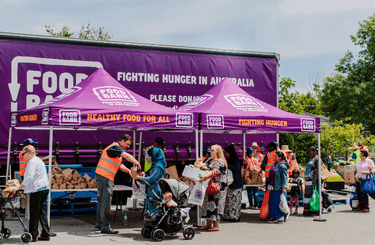
Foodbank Hunger Action of Distributing Foods

The report signals that the problem is only set to get worse with half of all households experiencing difficulty saying that being unable to afford food is happening more often.

The food relief charity is hoping that next week’s Budget will deliver positive change.

“We have heard the Treasurer caution that the October budget is not the time for new spending measures to deliver relief to struggling families, but with more than a million people a month already seeking food relief, if not now, then when?”

KEY STATISTICS

  • On any given day, over half a million households in Australia are struggling to meet their food needs.
  • Households with children are being hit harder than others (32% severely food insecure in the past year vs a national average of 21%) and single parent households are the worst of all (37% severely food insecure).
  • The rising cost of living is the most common explanation for why people are failing to meet their household food requirements (64% of food insecure households). Unpacking this, the cost of food and groceries is the top cause (49%), followed closely by energy (42%) and housing (33%) costs.
  • Over half of food insecure households (54%) had someone in paid work.
  • Nearly a third of households with mortgages (30%) have experienced food insecurity in the last year. The situation is even worse in regional areas (36% vs 27% in metro areas).
  • On a typical day, 306,000 households are receiving assistance from food relief organisations.

METHODOLOGY

This report presents key findings from the Foodbank Hunger Survey, which was conducted between 11 and 28 July 2022, through an online questionnaire of 4,024 people in Australia aged 18 years or older. The sample was nationally representative by age, gender and location (capital city / rest of state) in each major state, with stratified quotas to ensure all major states have a robust minimum sample size of n=600 or above. The data was weighted to nationally representative proportion of age, gender, state and location (capital city/ rest of state).

The term food insecurity covers a range of experiences – from being uncertain about getting enough food and compromising on nutrition right through to disrupted eating patterns and reduced food intake.

August 2022,

At Foodbank, we couldn’t do what we do without the incredible Australian primary producers and the vital role they play in producing the food that sustains us all, and the special role they play in helping and enabling Foodbank’s Agri programs. Throughout the year, Foodbank works paddock to plate with partners in all sorts of ways to rescue food and collaborate with partners to ensure we have access to much-needed essentials like fresh meat, fruit, vegetables, dairy and rice.

We were thrilled when our National Partner, SunRice, asked if we would like to attend and speak at the 2022 Rice Growers Conference to discuss food insecurity issues in regional Australia and what we are doing to help get food to those in need. . We wanted to help break the stigma and shame associated with asking for help and also thank Riverina’s hardworking and generous rice growers and supply chain partners.

Every year with SunRice’s manufacturing support and Deniliquin Freighters transport support, a percentage of the annual Australian Rice crop is grown, harvested, and packaged into 1kg retail packs and donated to Foodbank. This collaboration between these wonderful parties enables Foodbank to distribute to those in need right across the country, including back into rural and remote communities. So a big thank you again to SunRice for your ongoing support of Foodbank and producing this great video to help celebrate our partnership

If you are able to help, please donate today. Every $1 will help provide 2 meals.

Woolworths launches hunger appeal with FareShare and Foodbank to support growing need for food relief across Australia

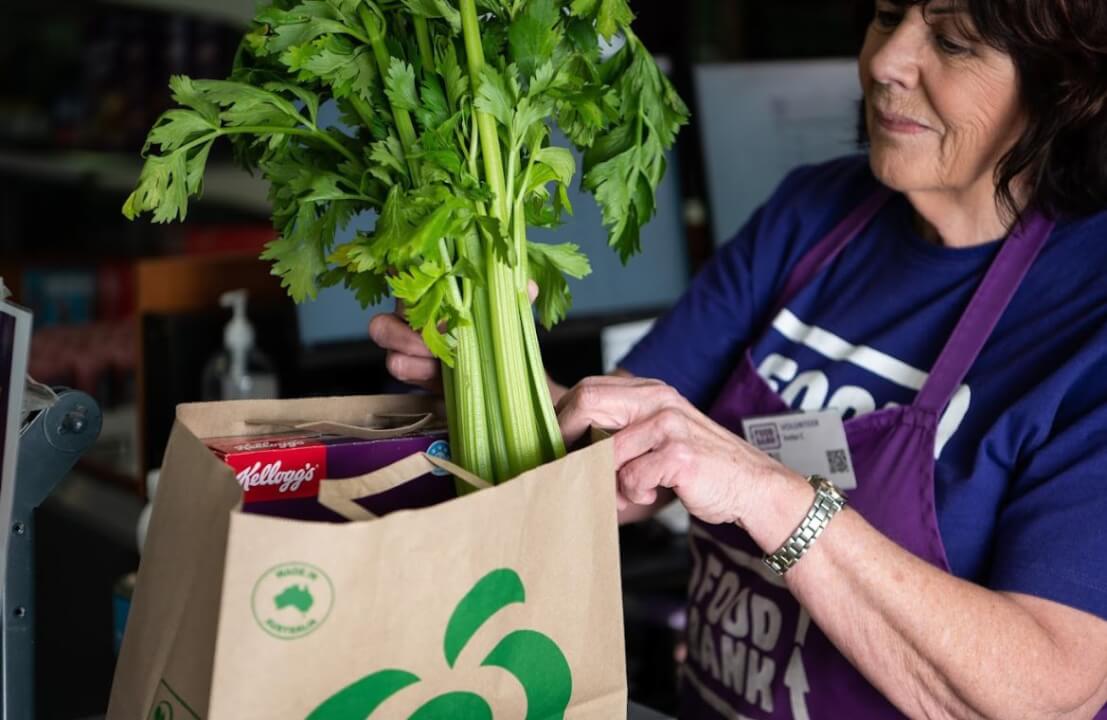
woman putting celery in a paper bag

Wednesday 17 August 2022: With the average monthly demand for food relief in Australia up 50% since 2019 and two in five seeking food relief not getting enough for their household needs*, Woolworths is partnering with Foodbank and FareShare to launch its mid-year Hunger Relief Appeal.

The Appeal will run from Wednesday 17 August until Tuesday 13 September to support the significant funding needed to assist Foodbank and FareShare in providing a portion of the relief required.

Woolworths customers can support Foodbank or FareShare using the ‘round up’ fundraising tool at check out. Throughout the Appeal, Woolworths will also donate 50c from the sale of every Woolworths-branded single-serve Ready Meal to FareShare.

Proceeds from the fundraising tool will go to Foodbank in South Australia, Northern Territory, Western Australia, and New South Wales, and FareShare will be supported by stores in Queensland, Victoria, and Tasmania.

Woolworths Managing Director Natalie Davis said: “As a result of inflation and ongoing impacts of the pandemic, along with increased natural disasters in recent years, the Appeal aims to raise more than $2 million to provide food relief for charities across Australia.

As today’s fresh food people, we are focused on caring for all Australians and small change can make a huge difference—it’s as easy as rounding up a purchase at the self-service checkout, or scanning a barcode after the weekly grocery shopping. We encourage our customers who are in a position to do so to support Foodbank and FareShare via the Hunger Relief Appeal at Woolworths this year.

FareShare operates Australia’s largest charity kitchens in Melbourne and Brisbane, where chefs and volunteers work hand in hand to cook donated food into millions of complete, nutritious meals for those in need. Fareshare has been in partnership with Woolworths since 2008, collecting excess food from more than 100 stores.

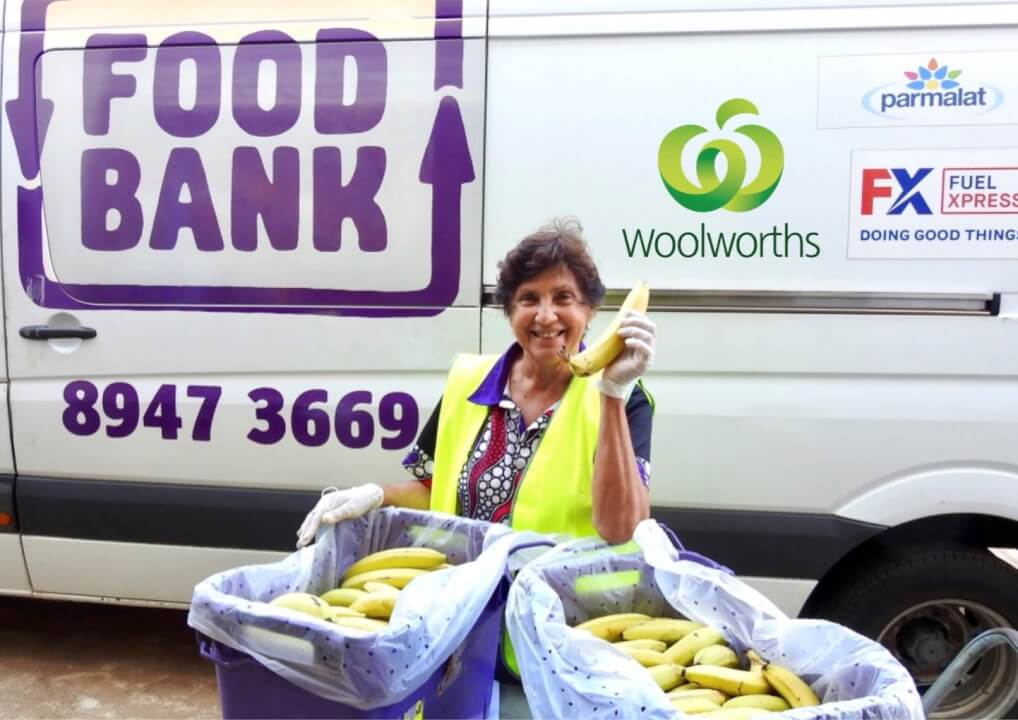
woman holding a banana

FareShare CEO Paul Conroy said: “For over 20 years, FareShare has been using rescued, donated and homegrown ingredients to cook free, nutritious meals for those experiencing hardship. Every donation to the Hunger Appeal tells struggling people that somebody cares.

“When you support FareShare, you are not just feeding someone in need. You are giving them a delicious, ready-to-eat meal which takes the worry out of going hungry and the stress out of cooking. You are making them feel better.”

Foodbank is the largest food relief organisation in Australia, and supplies 70 percent of all food required by the welfare sector. The charity has been a Woolworths partner for 20 years, and currently assists more than one million people a month, with more than 40 percent of these people located in rural areas.

Foodbank Australia CEO, Brianna Casey said: “Across the country we are seeing heightened demand for food relief, especially in the regions, with many seeking help for the first time. Foodbank provides food relief to more than 1 million adults in Australia and it’s thanks to our generous partners such as Woolworths, we can ensure no one goes without.

“Woolworths not only provides Foodbank with key staple foods—the fresh fruit and vegetables that people need—but also helps us transport it to parts of Australia that really need it.

“People living in regional areas are 30 percent more likely to be food insecure than those living in the city*, so the assistance we get to transport food to the parts of Australia that need it the most is essential to us.

“The support of the Hunger Appeal at Woolworths will help families and communities of all ages and in all corners of the country who are going without the basic daily nourishment they need.”

There are three ways Woolworths customers can support the Hunger Relief Appeal:

  • Round Up: If customers spend more than $5 at the self-checkout, they will receive a prompt to ‘round up’ to the nearest dollar, with the difference going to the Appeal.
  • Scan Cards: These printed, handheld cards have a 50c donation barcode that customers can scan.
  • Online: Customers can donate directly via woolworths.com.au on the Community page.

Simplot and Foodbank partnership helping Aussies in need for more than 25 years

six people wearing reflectorized vest

July 2022

After a COVID delay in 2021, Simplot Australia and Foodbank celebrated their 25-year partnership at Simplot’s food manufacturing facility in Echuca.

With more than one in six adults in Australia being food insecure at any one point throughout the year, and 1.2 million children going hungry during the same period, it is an important partnership that aims to address food insecurity in our communities.

Our core business of agriculture and food manufacturing provides quality, sustainable and nourishing food to consumers but what we are doing with Foodbank speaks to what motivates us all as humans. It is about making a difference and supporting people in our community when they need it most.

says Sue Smith, Simplot Australia’s Executive Director of Human Resources and Transformation.

A major feature of the partnership has been Simplot’s involvement in Foodbank’s Collaborative Supply Program. With an increasing demand for food relief in Australia and a focus to reduce waste, Foodbank collaborates with manufacturers and their component suppliers to produce a sustainable source of key staple foods that don’t come in sufficient quantities via normal rescue channels.

CEO of Foodbank Australia, Brianna Casey, visited Simplot to meet and thank the team,

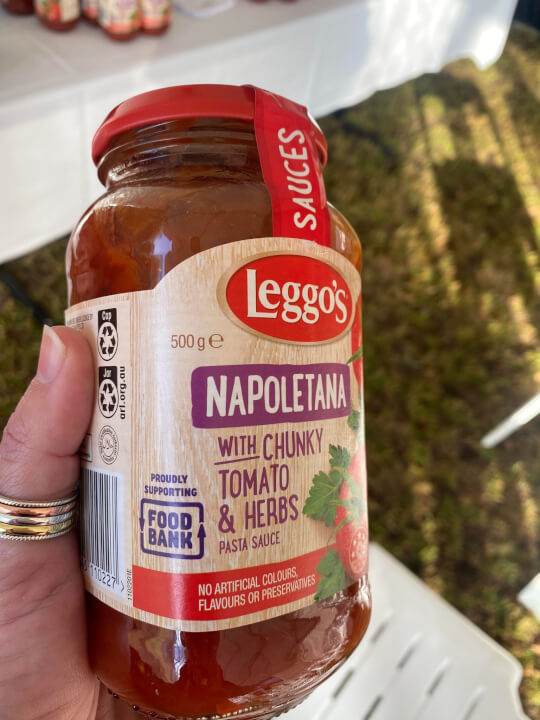
After two and half years of not being able to travel or meet face to face, this has been one event worth waiting for. It has been wonderful to meet the Simplot team who every year produce Leggo’s delicious Napoletana sauce as part of our world-leading Collaborative Supply Program. This program is vital as it ensures our Foodbank warehouses around the country are stocked with staples like pasta sauce and available for the many people doing it tough.


Simplot x Foodbank event_FBA

Since 2011, Simplot has donated more than 2.5 million units of product to the Collaborative Supply Program. This year alone over 300,000 jars of Leggo’s pasta sauce and Chicken Tonight will be provided to Foodbank, which is equivalent to about 1.2 million meals.

Simplot’s Leggo’s Napoletana sauce, which is produced at the Echuca site, now proudly displays the Foodbank logo highlighting to consumers that it is a company that is driven by its purpose of contributing to feeding the world and is steadfast in giving Aussies a helping hand.

Photographed left to right: Dane Smith, Simplot Australia Executive Director Supply Chain, Sue Smith, Simplot Australia Executive Director Human Resources and Transformation, Councillor Paul Jarman Campaspe Shire, Brianna Casey, CEO Foodbank Australia, The Honourable Peter Walsh, Member for Murray Plains and David Maddison, Echuca Plant Manager.

Every $1 will help provide 2 meals

Household basics becoming a luxury instead of a right

15th July 2022,

In the face of relentless cost of living pressures and the housing crisis, more than a million people a month are currently receiving food relief through the Foodbank network. In addition to the healthy fresh fruit, vegetables and pantry staples more commonly associated with Foodbank, the food relief organisation is also increasingly providing period care products, shampoo, conditioner and laundry products. Foodbank’s annual Week of Care shines a spotlight on the importance of these products to people doing it tough right across Australia.


Now in its second year, Foodbank’s Week of Care, which kicks off on Sunday 17th July 2022, celebrates the support of its non-food partners and helps raise awareness of the importance of personal, oral and household care products to ensure those who are struggling have access to products that are needed in every household.


As the cost of living crisis escalates and communities on the east coast face the long road to recovery after yet another significant flood event, Foodbank is experiencing an increase in demand rivalling that experienced at the peak of the COVID-pandemic.


“We’ve seen the cost of fuel, electricity and fresh fruit and vegetables skyrocket, alongside soaring rental and mortgage costs. If you can’t afford food, you certainly can’t afford daily necessities like shampoo, deodorant, period care products and toilet paper. These are much more than just personal hygiene and household care products. They are vital to living a life with dignity and confidence,” said Foodbank Australia CEO, Brianna Casey.


“Toiletries such as toothbrushes and toothpaste, make-up and moisturisers, along with baby essentials like nappies and wipes shouldn’t be a luxury – they are a basic right. For someone who has lost everything in a fire or flood, or for someone escaping family and domestic violence, these everyday items play a significant role for people rebuilding their lives.”


Foodbank would like to thank its national donors and campaign partners, Beiersdorf Australia, GSK, Henkel, the Johnson & Johnson Family of Companies in Australia, Kimberly-Clark Australia, L’Oreal Australia, P&G, PZ Cussons, Reckitt, The Sorbent Paper Company, Unilever ANZ for donating essential personal, oral and household care products year-round, as well as during times of disaster.

Want to know more?

Harvard Research Addresses Food Waste, Hunger, and Climate Change Crisis in Australia

June 2022,

Harvard Law School Food Law and Policy Clinic identifies policy recommendations designed to decrease food waste, support food donation, and combat climate change in Australia.

Foodbank volunteers preparing the fruits for donation

(June  23, 2022)—A new analysis of food donation laws and policies in Australia was released today by the Harvard Law School Food Law and Policy Clinic (FLPC) and The Global FoodBanking Network, with recommendations to help reduce food waste, feed people experiencing hunger, and combat climate change. The research and recommendations were released in partnership with Foodbank Australia as part of The Global Food Donation Policy Atlas, which maps the laws and policies affecting food donation around the world.

  • In Australia, 7.6 million tons of food are wasted annually, costing AUD$36.6 billion, while approximately 3.24 million Australians, or 13.6% of the population, live below the poverty line.
  • Between 625,000 and 1 million Australians receive food assistance each month, a quarter of whom are children.
  • Food insecurity rates are particularly high for the indigenous population–22% to 32% depending on location.
  • Food donation offers an important solution to reduce the amount of safe, edible food that ends up in landfill and divert it to people who need it most.

We can feed people experiencing hunger. We produce more food than we need, yet much of it ends up in a landfill, where it instead contributes to global methane emissions,

Said Emily Broad Leib, clinical professor of law at Harvard Law School and faculty director of the FLPC.

“Australia has already made a national commitment to reduce food waste and increase food recovery. National leaders across the globe, including in Australia, can build a bridge between surplus food and people who are hungry by encouraging food donation. Our hope is that leaders in Australia and beyond will take action on food waste, climate change, and hunger by implementing our recommendations.”

The Global Food Donation Policy Atlas, supported by Walmart Foundation, identifies the existing laws and policies that support or hinder food recovery and donation, featured in a comprehensive Legal Guide and Policy Recommendations for strengthening frameworks and adopting new measures to fill existing gaps. The analysis featured in these country-specific reports are also encapsulated in an interactive atlas tool that allows users to compare policies between countries participating in the project.

The research focuses on six legal issues that influence food donation: food safety for donations, date labeling, liability protection for food donations, tax incentives and barriers, government grants and funding, and food waste penalties or donation requirements. For each country, FLPC developed recommended actions, including the following for Australia:


  • Food Safety Australia New Zealand (FSANZ) should amend the Food Standards Code (FSC) to explicitly state which food safety provisions apply to food donation.
  • The Australian government and its relevant departments and agencies should promote consumer education and awareness on the meaning of date labels in partnership with the private sector.
  • The Australian government should enact national legislation that establishes clear and comprehensive liability protection for food donors and food recovery organizations.
  • The Australian government should amend the Income Tax Assessment Act of 1997 to cover costs incurred in the transport, storage, and refrigeration of donated food.


There is a new normal, with the average monthly demand for food relief in Australia up 50% on pre-COVID levels. On top of this, the frequency and intensity of natural disasters in Australia demonstrate the importance of implementing policies and practices that can immediately respond to crises. The time for smart policy reforms is now so we can reduce food loss and waste, deliver positive climate outcomes, and ensure those confronted with economic turmoil are supported through essential food relief.

said Brianna Casey, Chief Executive Officer for Foodbank Australia.

“An estimated 768 million people are facing hunger globally, and that number is likely to rise as food price spikes, supply chain issues, and climate change continue to strain our food systems,” said Lisa Moon, president and CEO of The Global FoodBanking Network. “Food banks help ensure more people have access to food while also reducing food loss and waste. Strong food donation policies are absolutely critical to this work—they help food banks serve their communities in the most effective and efficient way.”

“Public policy relating to food recovery and donations is complex and varies across countries making it hard to improve how surplus food gets to communities that need it,” said Eileen Hyde, senior director for community resilience at Walmart.org. “The recommendations coming out of the Global Food Donation Policy Atlas are crucial in overcoming barriers to food access, and the Walmart Foundation is pleased to support this great work that seeks to accelerate effective and sustainable solutions.”

Globally, 1.3 billion tons of edible food–a third of production and enough to feed every undernourished person on the planet–is lost and wasted every year while hunger persists and climate change accelerates. This wasted food ends up in landfill and rots, producing methane, a greenhouse gas. About 10% of all greenhouse gas globally is caused by food waste.

Atlas project research is available for 16 countries: Argentina, Australia, Canada, Chile, Colombia, Costa Rica, the Dominican Republic, Guatemala, India, Kenya, Mexico, Peru, Singapore, South Africa, the United Kingdom, and the United States. An interactive map, Legal Guides, Policy Recommendations, and Executive Summaries for each country are available at atlas.foodbanking.org.

9 May, 2022

2,500 MEALS FOR THOSE IN NEED ON THE NSW CENTRAL COAST

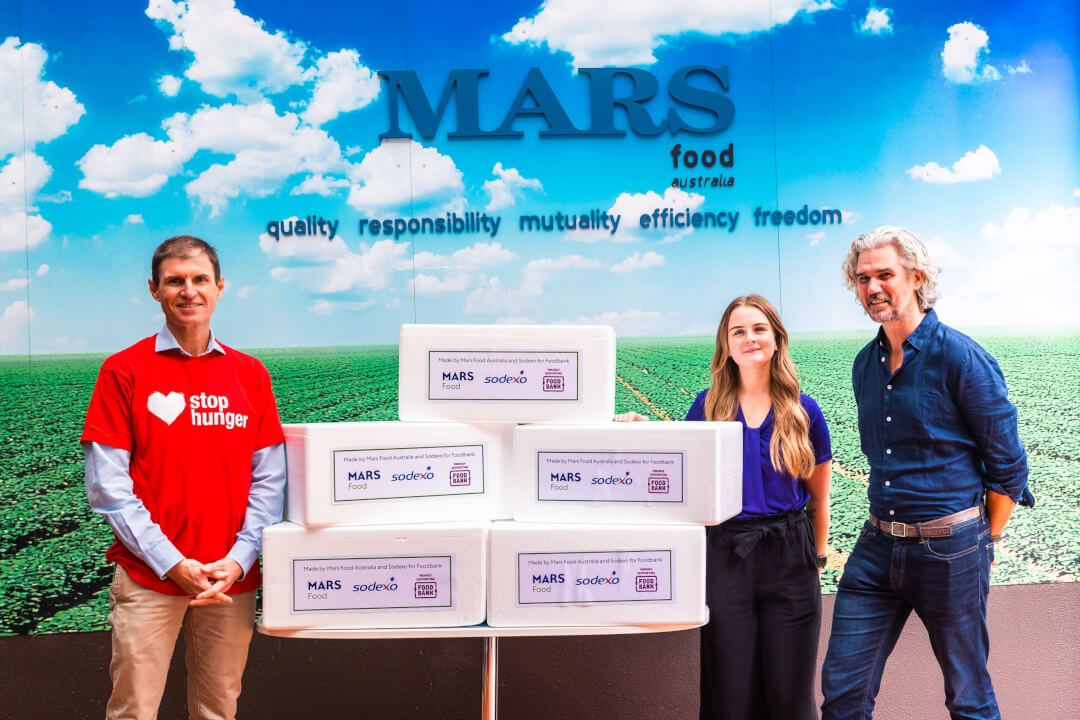
Mars Food Australia, Sodexo and Foodbank are combining resources to cook up a storm in a week-long special event to help people in need of food relief on the NSW Central Coast.

Mars Food Australia, Sodexo and Foodbank preparing meals

The wider staff team at Mars Food Australia is returning to the company’s production facility at Wyong– the first time many have been on site since COVID-19 restrictions took hold – and their commercial R&D kitchen has been converted into a master chef’s culinary workshop to produce meals for local people in need.

During the COVID-19 lockdowns in 2020, the demand for food relief increased by 47 per cent according to Foodbank. In 2021, more than one in six Australian adults hadn’t had enough to eat and, of those, almost 40 per cent had not been in this situation prior to the COVID-19 pandemic.

In response to this need, more than 100 staff across all areas of the Mars Food business, along with staff from Sodexo, have volunteered their time to produce up to 2,500 meals, working two shifts a day throughout the week (9-13 May). Local charities who are part of Foodbank’s network will collect the meals and distribute them to individuals and families on the Central Coast.

Mars Food Australia’s General Manager, Mr Bill Heague, said there was huge enthusiasm for the project amongst the team at their Central Coast facility.

“With everyone finally returning to the site here at Wyong, we wanted to celebrate with a project that got us working together, side-by-side with colleagues, doing something worthwhile for our community,” Mr Heague said.

“We firmly believe that dinner time matters, and we know finding opportunities to cook and share meals with family and friends is good for both physical and mental wellbeing. It’s the foundation of our business.

“As a food company that’s committed to making healthy and good tasting food products that bring people together, what better way to do celebrate our return than by producing meals for those experiencing food insecurity in our local community,” he said.

“With everyone finally returning to the site here at Wyong, we wanted to celebrate with a project that

got us working together, side-by-side with colleagues, doing something worthwhile for our community,” Mr Heague said.

“We firmly believe that dinner time matters, and we know finding opportunities to cook and share meals with family and friends is good for both physical and mental wellbeing. It’s the foundation of our business.

“As a food company that’s committed to making healthy and good tasting food products that bring people together, what better way to do celebrate our return than by producing meals for those experiencing food insecurity in our local community,” he said.

Sodexo, an integrated facilities management services company, with a base on the Central Coast, has teamed up with Mars Food Australia to provide support services and the key food ingredients required to make up the 2,500 meals.

Mr Keith Weston, Executive Director, Energy and Resources and Group Strategic Accounts, Australia, said Sodexo is keen to collaborate on this week-long event to support the local community.

“When we work with stakeholders who share our values, great things can happen. This collaboration also supports Sodexo’s global Stop Hunger program and mission to improve quality of life for people everywhere we operate,” he said.

The teams will be cooking fresh meals with ingredients from Sodexo and sauces and meal bases from Mars Food Australia to create a range of meal options: Dolmio spaghetti bolognaise, Masterfoods butter chicken, Masterfoods beef stroganoff and a vegetable curry.

Brianna Casey, Foodbank Australia CEO, said Foodbank is thrilled to be a partner in this project and help get these meals directly to those who have fallen on tough times in the local area.

“Foodbank provides relief to more than one million Australians every month, and with the cost of living increasing, this figure is not likely to go down any time soon,” Ms Casey said.

“We are so grateful to our wonderful partners – Sodexo and Mars Food Australia – who work tirelessly to support us and have done so for many years.

“We know that a nutritious meal is more than just food. It not only relieves the burden of stress, it enables families to unite and bond at the dinner table. That’s what Mars Food and Sodexo’s cook up will enable for many families and individuals doing it tough right now,”

The four charity partners who will be collecting and distributing meals throughout the week are:

The Entrance Public School which runs a pantry for families and is well known in the community.

FIAM Incorporated Care Arm which runs an outreach service for people in need who can’t travel and shares food with a local homeless support service.

Toukley Neighbourhood Centre which runs a pantry and delivery service for people in need.

Coast Shelter which provides a range of services and personal supports for people experiencing homelessness or domestic and family violence.

Mr Heague said Mars is striving to helping alleviate the growing hunger problem on a world-wide scale.

“Globally, Mars Incorporated is committed to delivering 25 million meals to people in need of a healthy meal by 2025. This project will contribute towards that goal and go some way to helping families struggling with food insecurity and going through difficult times,” he said.

featured image

New Government must commit to essential food relief sector

Thursday 21 April 2022

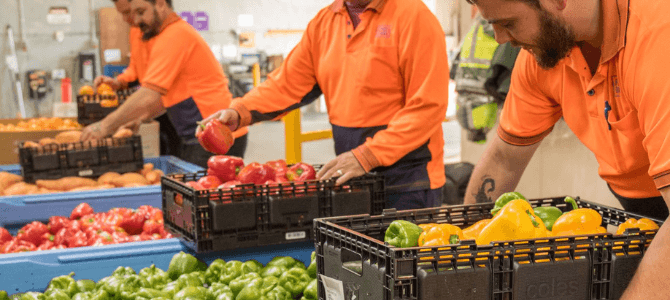
workers putting bell peppers in big trays

Australia’s national food relief sector has come together to ensure those experiencing hardship are not forgotten in the lead-up to the Federal election and beyond. Foodbank, OzHarvest and SecondBite are calling on all sides of politics to deliver improved food relief funding and tax incentives to help reduce food waste and feed more people. 

The three charitable organisations work towards the common goals of eradicating hunger and halving food waste by 2030. They act as a vital frontline safeguard in times of individual and community adversity, whether prompted by disasters such as the recent floods, global pandemic and Black Summer bushfires, or everyday poverty and inequality.

Together, the organisations are providing food relief to more than a million people per month across Australia, distributing more than 85 million kilograms of food and groceries in the 2021 financial year. Yet despite these record volumes, the current community need is not being met, and Federal Government funding for the food relief sector is not confirmed beyond next financial year.

Ahead of the Federal election, Foodbank, OzHarvest and SecondBite are seeking three key commitments from all the parties and independents to ensure vulnerable people have consistent and reliable access to food:

             1. Sustained and adequate funding for food relief

             2. The establishment of dedicated disaster preparedness and emergency food relief programs

             3. The introduction of a national food waste tax incentive, making it easier for the food sector to                 redirect its surplus for food relief


Speaking on these requests, Ronni Kahn AO, Founder of OzHarvest said:

“In spite of what has clearly been minimal support from the Federal Government in the past, we have a strong history of working to reduce food waste and improve food security. Our food rescue activities not only support vulnerable communities, but are crucial from a climate change perspective, preventing more than 134,000 tonnes of greenhouse gases from being emitted in the last 12 months alone.”

Steve Clifford, CEO of SecondBite, added:

“Our sector is focused on impact and delivering a strong social return on investment across both food rescue and food relief activities. Research has shown that every dollar invested in food waste prevention delivers $7 back to the economy, so in addition to the social and environmental benefits, investing in the food relief sector makes good economic sense.”

Foodbank Australia CEO, Brianna Casey, concluded:

“This election presents an opportunity for our political leaders to acknowledge that Australia has a hunger problem and that demands on the food relief sector will only continue to grow, particularly given increased cost of living pressures and the frequency and severity of natural disasters. It is only appropriate that support for this vital sector be commensurate with its impressive impact.”


National Food Relief Sector Funding and Policy Priorities

86 Million meals sourced by Foodbank as tough times continue

February 2, 2022

As Australia continues to be impacted by the COVID-19 pandemic, ongoing poverty and inequality, and natural disasters, Foodbank Australia today revealed in 2021 it sourced 48.1 million kilograms of food and groceries, equating to 86.7 million meals, or 238,000 meals per day.

The country’s leading food relief organisation confirmed this figure is marginally down from its record 48.8 million kilograms of food and groceries sourced in 2020, in a crisis-filled year of Black Summer bushfires, drought, and the start of the pandemic with lockdowns initiated for the first time.

According to Foodbank Australia CEO, Brianna Casey, the continued huge volume of food and groceries needed for food relief is not unexpected, confirming many people are still doing it extremely tough.


“It’s not just COVID-19 contributing to food security issues in Australia” Ms Casey explained. “Right now, we’re seeing food supply problems in both Northern Territory and Western Australia after last week’s floods in South Australia cut both road and rail movement of food and groceries. Any supply chain interruption tends to hit vulnerable communities the fastest and the hardest, making our food relief efforts all the more important.”

“Although we are pleased to have been able to source this staggering amount of food and groceries in 2021 – a year in which many of our food donors and corporate partners also faced enormous challenges – it is a stark reminder of Australia’s ongoing hunger problem, which existed well before the global pandemic hit.”

“The Foodbank Hunger Report 2021 revealed one in six adults haven’t had enough to eat and 1.2 million children have gone hungry in the last year. We also know that two in five people seeking food relief do not get enough food for their household needs.


foodbank volunteer taping a hamper box

So, although 48 million kilograms seems like – and is – a lot of food and groceries, it unfortunately wasn’t enough to meet the current demand from those seeking food relief, let alone those who don’t even reach out for help because they think someone needs that help more than they do.

Foodbank sources a wide and diverse range of food and groceries to provide relief to more than one million people each month. Donations are sourced from the food and grocery sector and key staples are purchased thanks to funding from the Federal Government, corporate Australia and individuals.

Foodbank provides relief to 2,950 frontline charities and 2,890 school breakfast programs. It works with the entire Australian food and grocery sector including farmers, wholesalers, manufactures and retailers who donate and redirect surplus product to be distributed to those who need it most via Australia’s charity network.

“There’s no doubt of the size of the challenge we have in trying to ensure every Australian who needs food relief can access it, but thanks to the incredible generosity of Australia’s food and grocery industry and our many supporters, each day we are one step closer to achieving zero hunger in Australia,” Ms Casey said.

Key Statistics


  • In 2021, Foodbank Australia sourced 48.1 million kilograms of food and groceries which equates to 86.7 million meals, or 238,000 meals a day.
  • In 2020, Foodbank Australia sourced 48.8 million kilograms of food and groceries which equated to 87.9 million meals, an increase of nearly 15% on 2019.


According to the Foodbank Hunger Report 2021:


  • One in six adults in Australia haven’t had enough to eat in the last year
  • 2 million children have gone hungry in the last year
  • One in three people struggling to meet their food needs are new to the situation
  • Two in five people seeking food relief do not get enough for their household’s needs
  • More than half of people impacted by severe food insecurity go a whole day every week without eating
  • 64% of food insecure Australians have a job
  • Foodbank provides food relief to more than a million people each month

READ THE FOODBANK HUNGER REPORT 2021