

The moment we stopped traffic…

Kindness. Relief. Connection. It’s what brought Kororoit Creek Road to a standstill on Sunday.

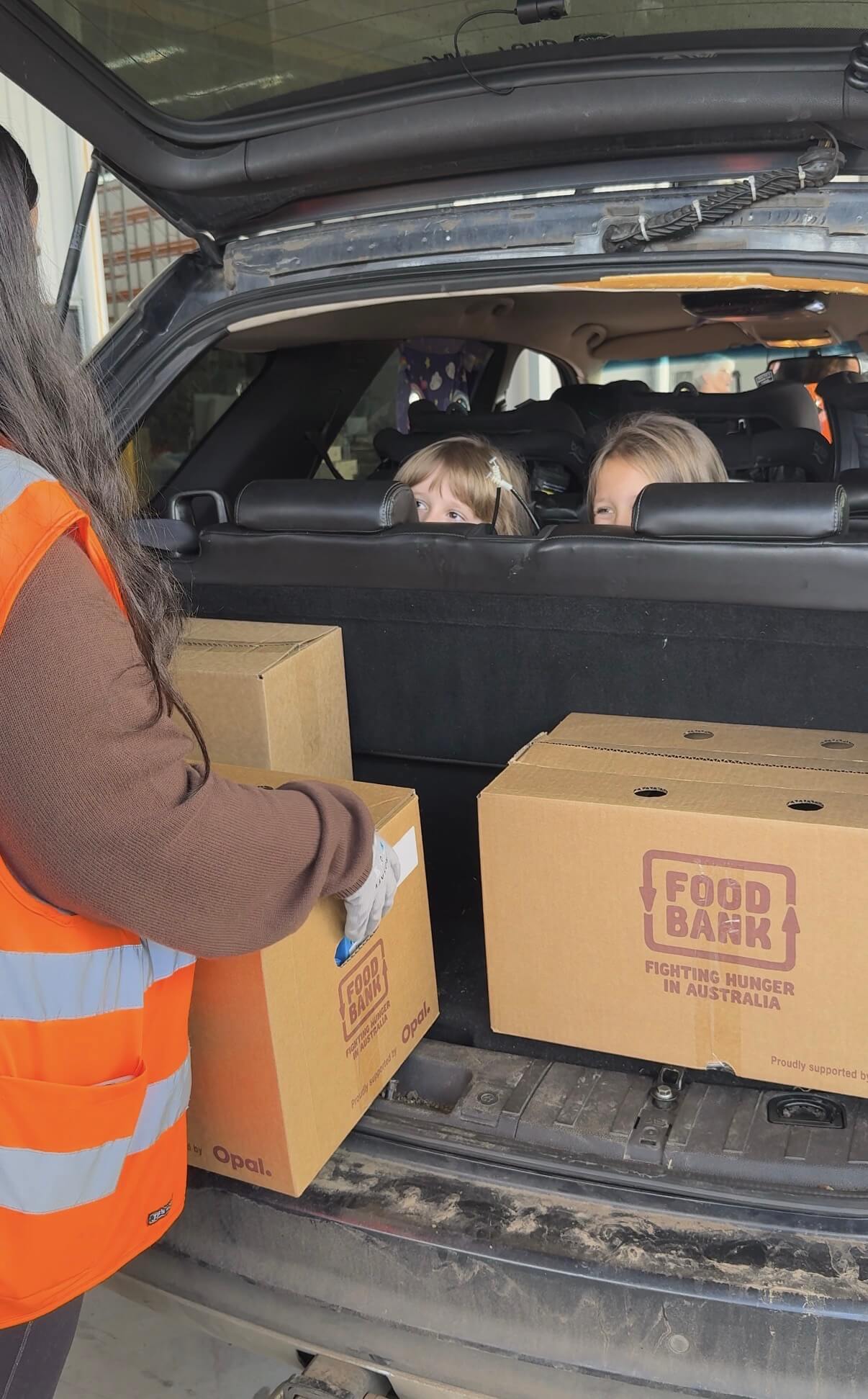
Hundreds of cars loaded with families, neighbours and friends arrived at Foodbank Victoria’s Emergency Hamper Drive Thru. From our Altona warehouse, we filled their boots with pantry essentials and fresh fruit and veggies, as well as yoghurt, whole pumpkins, giant watermelons and chocolate.

Many of the 846 vehicles had kids in the back. In car seats and boosters. Some on their way home from weekend sports. Parents making sure their children would have dinner on the table that night. And lunchboxes for the week ahead.

People drove from as far away as Geelong, Rye, Broadford and Langwarrin, hopeful they’d be able to fill their pantries with nourishing food.

Some told us they were living out of their cars. Others had borrowed a car for the day. Many packed in together, multiple families in the one ride.

A dozen or so arrived on bicycles. The cost of running a car now out of reach for many.

We heard from a single dad who survives on water every few days so that his young son can eat. A grown-up daughter who moved down from Queensland to care for her sick mum. A man in his fifties who isn’t getting enough casual shifts at work to pay the bills and feed his family of four.

For many, it was their first time asking for help. 

And they told us just how hard it can be.

“I’m shaking,” one woman said, visibly overcome. “I’ve got four adults and two children in the house, and it’s really hard. I’m on a pension. This is a bit embarrassing… thank you so much.”

“Things are really tight,” said another mum of school-age kids. “I’m a full-time working parent that still struggles. I’ve just managed to top up my petrol, but something else has got to give at the same time.”

A dad of two boys revealed: “I’m a bit destitute at the moment, just out of work for the last six months. Today will help me get through to the next pay week. It’s good to know that there are people helping.”

The Emergency Drive Thru, our first since COVID, was held in response to record demand for support. Amid the cost of living, fuel, housing and bills, a boot-load of food can make all the difference: “Having something like this gives people a good break. When we heard about it, I just couldn’t believe it really. It relieves a lot of the pressures.”

But as amazing as Sunday was, it was only one day. We distributed more than 36,000kg of food to thousands of people. Yet, right now, we need enough good, nourishing food to feed 76,000 Victorians today. Tomorrow. Every single day.

Even small acts matter. Like the family who came through the Drive Thru, not to pick up food, but because their kids wanted to donate their pocket money. Gold coins to make sure other kids, other families, have something to eat. 

These moments of kindness do more than stop traffic. They have a huge impact.

I’d like to help

Families can’t wait for food – so we’re holding an Emergency Drive Thru
Families can’t afford to wait for food.

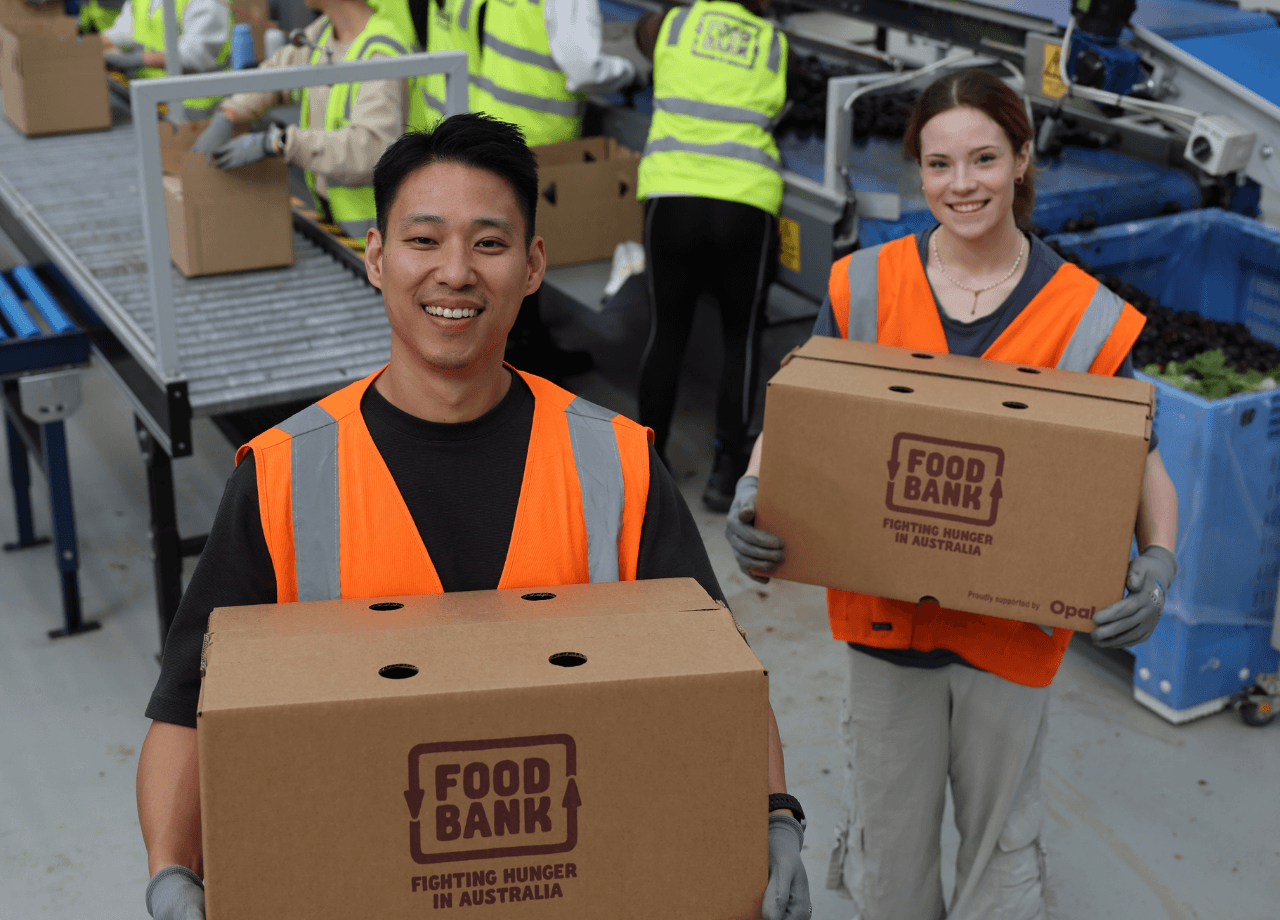
Foodbank Victoria will be holding an Emergency Food Hamper Drive Thru this Sunday 31 May to support Victorians feeling the strain of ongoing cost-of-living pressures. 

Anyone in need will be able to drive through between 10am and 2pm at 441–459 Kororoit Creek Road, Altona and receive a free hamper of fresh produce and pantry staples – no questions asked.

Every day, more Victorians are reaching out for help — many for the very first time. Our CEO Dave McNamara says the stories coming through each day paint a clear picture: households are under enormous pressure, and many are quietly falling behind despite doing everything they can.

“The pressure on households is unrelenting. If anything, it’s becoming more entrenched – and more people are quietly falling behind.     

We’re seeing people who have never asked for help before. People working, raising families, doing everything they can, but still not able to keep up. We’re receiving calls from people every day asking, ‘What do I do? How do I get food to feed my family?’

This Drive Thru is about making it easy. No forms, no questions – just turn up and we’ll help.”

Right now, we’re feeding 76,000 Victorians every day – the highest demand we’ve seen in our 96-year history.

We don’t want anyone to feel like they can’t ask for food. If you need help right now, we’re here and ready to welcome you. The Drive Thru is open to anyone in Victoria experiencing food insecurity, no questions asked.

Emergency Drive Thru Details

Foodbank Victoria
441–459 Kororoit Creek Road, Altona
Sunday 31 May
10:00am – 2:00pm

We can only provide this emergency relief thanks to the ongoing support we receive from the broader community, partners and our wonderful volunteers. If you’re in a position to help, please donate to our ‘Running on Empty’ Winter Appeal. Every $1 donated creates 2 meals.

Donate

Grocery Shopping in Season

Watch this video for practical, easy‑to‑follow tips for grocery shopping in season featuring expert insights from @fruitnerd, Thanh Truong! Learn how you can swap out recipe ingredients with seasonal produce across the year to make the most of your grocery budget.

Enhancing vegetable consumption through food literacy interventions in tertiary settings (HN24005) is funded through Hort Innovation Frontiers with co-investment from Foodbank Victoria and contributions from the Australian Government. Hort Innovation is the grower-owned, not-for-profit research and development corporation for Australian horticulture. Information is provided for general guidance only.

More videos below

Easy Beetroot Salad

This easy beetroot salad is colourful, filling and packed with simple ingredients. Great for lunches, dinners or meal prep during the week.

A short summary of the recipe goes here!

Heading

This easy beetroot salad is colourful, filling and packed with simple ingredients. Great for lunches, dinners or meal prep during the week.

Heading

Makes: 4 serves
Cooking time: >30 minutes

Ingredients

  • 4 medium beetroot, peeled and diced into 1-2cm cubes
  • 1/2 cup couscous
  • 1 teaspoon cooking oil
  • 1/4 teaspoon garlic powder OR 1 garlic clove, finely chopped
  • 1 x 400g can beans or lentils, drained and rinsed
  • 1/2 lemon, juiced
  • 1/2-1 teaspoon dried dill, mint, parsley or oregano
  • 1-2 cups leafy greens, shredded
  • Salt & pepper to taste
EQUIPMENT
  • Knife/grater
  • Stirring spoon
  • Chopping board
  • Large bowl
  • Colander
  • Saucepan
  • Measuring cups/spoons
  • Kettle

Method

1. Peel and slice the beetroot into small wedges.

2. Place the beetroot into a pot of cold, salted water.

3. Bring the pot to a boil over high heat.

4. Reduce to a simmer and cook for 15 minutes, or until tender when pierced with a fork.

5. Drain and rest for 2–3 minutes to dry. 

6. Alternatively, toss the beetroot with oil, salt and pepper and herbs and roast in an oven pre-heated to 200c for about 20 minutes until tender.

7. To make the couscous, simply place in a heatproof bowl with the oil and a pinch of salt.

8. Pour over 1 cup boiling water and cover immediately with a plate or cling wrap and rest for 5-10 minutes.

9. Remove the cover and fluff the couscous with a fork.

10. Combine all the ingredients except the leafy greens in a bowl and mix to combine.

11. Adjust lemon juice, salt and pepper to taste.

12. Add the leafy greens just before serving.

HOW TO STORE

  • Store in an airtight container for 3-4 days.
  • Learn more about storing food safely here.
HELPFUL TIPS

  • Double the recipe to make a bigger batch for easy grab-and-go lunches.
  • Fresh herbs add an extra flavour boost – try adding finely chopped dill, chives, parsley, coriander or mint.
  • Feta is another great flavour booster – crumble over the top before serving.
  • Perfect side salad with your choice of protein.
SUBSTITUTIONS

  • Swap the beetroot for other root vegetables like carrot, pumpkin, potatoes, or parsnip.
  • Try out different greens: spinach, rocket, kale (finely sliced), silver beet or cabbage.
  • Try swapping the beans for a can of tinned fish such as tuna or sardines.


Enhancing vegetable consumption through food literacy interventions in tertiary settings (HN24005) is funded through Hort Innovation Frontiers with co-investment from Foodbank Victoria and contributions from the Australian Government. Hort Innovation is the grower-owned, not-for-profit research and development corporation for Australian horticulture. Information is provided for general guidance only.

More videos below

Sweet Potato Quesadillas

A quick, comforting meal that’s easy to customise with whatever you have on hand, making them perfect for a fast, flavour-packed lunch or dinner.

A short summary of the recipe goes here!

Heading

A quick, comforting meal that’s easy to customise with whatever you have on hand, making them perfect for a fast, flavour-packed lunch or dinner.

Heading

Makes: 2 serves
Cooking time: >15 minutes

Ingredients

  • 1 medium sweet potato
  • 1/2 teaspoon smoked paprika
  • 1/4 teaspoon ground cumin
  • 1/2 teaspoon chilli flakes (optional)
  • 2 wraps OR tortillas
  • 3/4 cup grated tasty cheese
  • 1/2 cup grated/finely sliced carrot, cabbage, zucchini OR leafy greens
  • Salt & pepper, to taste
  • 1 tablespoon salsa or plain yoghurt, to serve
  • Fresh coriander
  • Lime/lemon
EQUIPMENT
  • Microwave
  • Frying pan/air fryer/sandwich press
  • Chopping board
  • Fork
  • Knife
  • Bowl
  • Measuring spoons
  • Spoon

Method

1. Wash the sweet potato and poke holes all over it with a fork.

2. Place on a microwave safe plate and microwave the sweet potato on high for 5–8 minutes, until soft.

3. Allow to cool, cut the sweet potato open carefully and scoop the soft flesh into a bowl.

4. Add the paprika, cumin, chilli flakes, salt and pepper.

5. Mash everything together with a fork until it becomes a chunky spread. Taste and adjust seasoning.

6. Spread the mixture onto a wrap and sprinkle over the cheese and grated/sliced vegetables. Fold over.

7. Place the cooking oil in a sandwich press, or a frying pan with a drizzle of cooking oil. Cook the folded wrap for 2–3 minutes per side until golden and warm.

8. Cut into wedges and serve with fresh herbs, lemon juice and a dollop of yoghurt.

HOW TO STORE

  • Stores well in the fridge for 3-4 days.
  • Can be frozen for up to 2 months.
  • Learn more about storing food safely here.
HELPFUL TIPS

  • Mash beans or a tin of tuna through the sweet potato for an extra protein boost.
  • Save the sweet potato skin for later, add into soups or stews!
SUBSTITUTIONS

  • Swap sweet potato with pumpkin, potato or carrot (microwave until soft).
  • Swap the spices, try Indian‑style (curry powder & yoghurt) or Middle‑Eastern‑style (cumin, lemon & parsley).
  • Replace wraps with pita, naan, flatbread or toast!
  • Add any leftover veggies: capsicum, spinach, corn, grated zucchini, or roasted vegetables.


Enhancing vegetable consumption through food literacy interventions in tertiary settings (HN24005) is funded through Hort Innovation Frontiers with co-investment from Foodbank Victoria and contributions from the Australian Government. Hort Innovation is the grower-owned, not-for-profit research and development corporation for Australian horticulture. Information is provided for general guidance only.

More videos below

Eggplant & Tofu Teriyaki Bowl

A simple, tasty bowl packed with vegetables and sweet‑savoury teriyaki flavour. Easy to make and perfect for any night of the week.

A short summary of the recipe goes here!

Heading

This veggie packed pasta is ideal for meal prep or filling the freezer.

Heading

Makes: 4 serves
Cooking time: >30 minutes

Ingredients

  • 2 medium eggplants
  • 450g firm tofu
  • 1-2 tablespoons oil
  • 2 tablespoons soy sauce
  • 1 tablespoon vinegar
  • 1 teaspoon ground ginger or 2 teaspoons fresh grated ginger
  • 1 tablespoon sugar, honey or maple syrup
  • 1 cup corn kernels
  • 1/2 bunch spring onions
  • Sesame seeds
  • Chilli flakes, optional
EQUIPMENT
  • Microwave
  • Frying pan
  • Chopping board
  • Fork
  • Knife
  • Bowl
  • Measuring spoons
  • Spoon

Method

1. Wash the eggplant and cut it into bite-sized cubes. Sprinkle over a pinch of salt.

2. Cut the tofu into small cubes (about the same size as the eggplant).

3. Heat oil in a pan and cook eggplant for 8-10 minutes until browned on all sides.

4. Add tofu and cook another 5–7 minutes, stirring until browned on all sides.

5. Mix soy sauce, vinegar, ginger and sugar/honey in a small bowl.

6. Pour the sauce over the eggplant and tofu. 

7. Add the corn and spring onion.

8. Cook for 1-2 more minutes, stirring until the sauce coats everything.

9. Serve the teriyaki mixture over noodles or rice.

HOW TO STORE

  • Leftovers make a great lunch, eat within 2 days. Reheat until steaming hot.
  • The teriyaki mixture freezes well for up to 2 months.
  • Learn more about storing food safely here.
HELPFUL TIPS

  • If using tinned corn, drain it first; if using frozen corn, add directly.
  • Microwave rice saves time and clean-up.
  • Add a fried egg on top if you want extra protein.
SUBSTITUTIONS

  • Swap tofu for chicken, red meat, fish, boiled/fried eggs or legumes/pulses. 
  • Swap eggplant for zucchini, mushrooms, or capsicum.
  • Swap the corn for other frozen vegetables such as peas, green beans, cauliflower or broccoli.


Enhancing vegetable consumption through food literacy interventions in tertiary settings (HN24005) is funded through Hort Innovation Frontiers with co-investment from Foodbank Victoria and contributions from the Australian Government. Hort Innovation is the grower-owned, not-for-profit research and development corporation for Australian horticulture. Information is provided for general guidance only.

More videos below

Tips & Tricks for Reducing Food Waste

This video covers practical, easy‑to‑follow tips on reducing food waste at home, featuring expert insights from @fruitnerd, Thanh Truong, on how to make the most of fresh produce and storing leftovers!

Enhancing vegetable consumption through food literacy interventions in tertiary settings (HN24005) is funded through Hort Innovation Frontiers with co-investment from Foodbank Victoria and contributions from the Australian Government. Hort Innovation is the grower-owned, not-for-profit research and development corporation for Australian horticulture. Information is provided for general guidance only.

More videos below

Zucchini & Sweet Potato Fritters

Perfect for using up any vegetables you have at the bottom of the fridge, these veggie fritters make an easy, budget friendly snack or lunchbox filler.

A short summary of the recipe goes here!

Heading

This veggie packed pasta is ideal for meal prep or filling the freezer.

Heading

Makes: 12 fritters
Cooking time: 30 minutes

Ingredients

  • 2 medium zucchini
  • 1 medium sweet potato
  • 1/2 onion, finely sliced OR 1/2 bunch spring onions (optional)
  • 1 1/2 cups self-raising flour
  • 1 1/2 teaspoons dried oregano OR mixed Italian spices
  • Salt & pepper, to taste
  • 3 eggs (optional)
  • Cooking oil
EQUIPMENT
  • Mixing bowl
  • Frying pan
  • Stove top
  • Grater
  • Chopping board
  • Knife
  • Spatula/egg flip
  • Measuring cups/spoons
  • Large spoon

Method

1. Grate or finely slice the zucchini and sweet potato.

2. Squeeze the excess juice from the zucchini, by placing in a tea towel or cloth and squeezing over the sink/a bowl.

3. Finely slice the onion.

4. Place in a large mixing bowl.

5. Add the flour, herbs/spices, salt and pepper. Mix to combine.

6. Crack the eggs and add to the bowl. If not using eggs, add 1 cup of water and mix to combine. Mix to form a batter.

7. Heat a frying pan over medium high heat.

8. Add oil and carefully spoon in 1/2 cup of batter.

9. Cook until golden on one side and then carefully flip. Cook until golden on the other side and cooked through. 

10. Remove the fritter and allow to cool slightly. Alternatively, cook fritters in the air fryer at 180C for 10-12 minutes, turning once.

11. Taste test and adjust seasoning before frying the remaining batter.

HOW TO STORE

  • Store in a container in the fridge for up to 3-4 days.
  • Cooked fritters can be frozen individually, best eaten within 6 months.
  • Learn more about storing food safely here.
HELPFUL TIPS

  • Serve with mayonnaise and kecap manis, or a simple sauce made from plain yoghurt, lemon juice and mint.
  • Perfect with a side salad, fried egg, extra protein and/or served with flat bread or as a burger.
  • These are great eaten hot or cold.
SUBSTITUTIONS

  • In winter swap the zucchini for ¼ cabbage and add dashi stock or soy sauce for an okonomiyaki style fritter. Top with Japanese Mayonnaise and kecap manis.
  • Any type of vegetable can be used in this fritter recipe, simply ensure they are grated/finely sliced.
  • Frozen peas and corn are a great addition to boost the veg!
  • Change the flavour by adding Italian herbs and spices, fresh herbs, feta cheese, curry powder, paprika or lemon zest.

Enhancing vegetable consumption through food literacy interventions in tertiary settings (HN24005) is funded through Hort Innovation Frontiers with co-investment from Foodbank Victoria and contributions from the Australian Government. Hort Innovation is the grower-owned, not-for-profit research and development corporation for Australian horticulture. Information is provided for general guidance only.

More videos below

Spiced Capsicum Hummus

Inspired by Muhammara, a delicious Syrian roasted capsicum dip! A bold twist to classic hummus that’s perfect for spreading, dipping, or dolloping onto your favourite dishes.

A short summary of the recipe goes here!

Heading

This veggie packed pasta is ideal for meal prep or filling the freezer.

Heading

Serves: 4-6 people
Cooking time: 20 minutes

Ingredients

  • 1 tablespoon cooking oil
  • 1 large capsicum, diced
  • 1 teaspoon ground cumin
  • 1 x 400g tin chickpeas OR cannellini/butterbeans
  • 1/4 teaspoon garlic powder OR 1-2 cloves garlic, finely sliced
  • 1 tablespoon lemon juice OR vinegar
  • Salt & pepper, to taste
EQUIPMENT
  • Frying pan
  • Microwave
  • Chopping board
  • Knife
  • Large bowl
  • Blender/fork/potato masher
  • Measuring cups and spoons

Method

1. Heat the oil in a frying pan on medium heat. Add the capsicum, a pinch of salt, and the cumin, and cook for 7–10 minutes or until soft and starting to brown, stirring occasionally.

2. While the capsicum is cooking, drain the chickpeas into a bowl and save the liquid for later.

3. Place the chickpeas, ¼ cup of the chickpea liquid, garlic and pinch of salt into a microwave safe bowl.

4. Heat in the microwave, covered, for 4-5 minutes.

5. Carefully remove from the microwave.

6. Allow to cool slightly before mashing with a potato masher or fork. Alternatively place in the blender. Add lemon juice/vinegar, salt and pepper and mash.

7. Add extra chickpea water until you have a nice smooth dip.

8. Taste and adjust seasoning. Add more salt or lemon/vinegar if needed.

9. Place into a container or bowl and pour over the cooked capsicum. Alternatively you can blend it all together.

HOW TO STORE

  • Stores well in the fridge for 3-4 days.
  • Can be frozen for up to 6 months.
  • Learn more about storing food safely here.
HELPFUL TIPS

  • Hot smokey paprika and toasted nuts are a great addition to this dip – inspired by Muhammara!
  • Serve with vegetable sticks, bread or crackers, on toast or spread over a wrap.
  • Also great as a healthy side dish with your choice of protein.
SUBSTITUTIONS

  • Swap the capsicum for zucchini, tomatoes or eggplant in summer. If using eggplant, cook until soft and browned.
  • In winter, try mashing steamed/roasted pumpkin, carrot or sweet potato through the hummus instead.

Enhancing vegetable consumption through food literacy interventions in tertiary settings (HN24005) is funded through Hort Innovation Frontiers with co-investment from Foodbank Victoria and contributions from the Australian Government. Hort Innovation is the grower-owned, not-for-profit research and development corporation for Australian horticulture. Information is provided for general guidance only.

More videos below

Seasonal Veggie Pasta

This veggie‑packed pasta is ideal for meal prep or filling the freezer. It’s hearty, colourful, and designed to stay delicious even after a few days.

A short summary of the recipe goes here!

Heading

This veggie packed pasta is ideal for meal prep or filling the freezer.

Heading

Serves: 6 people
Cooking time: 30 minutes

Ingredients

  • 1 onion, diced
  • 1 zucchini, diced
  • 1 eggplant, diced
  • 1 capsicum, diced
  • 2 tablespoons cooking oil
  • 2 garlic cloves, sliced or 1/2 teaspoon garlic powder
  • 1 1/2 heaped teaspoon mixed Italian herbs
  • 1/2 teaspoon chilli flakes (optional)
  • 2 x 400g tins whole or diced tomatoes
  • 2 x 400g tins beans (any type), drained and rinsed
  • Salt and pepper, to taste
  • 500g dried pasta
EQUIPMENT
  • Pot
  • Large frying pan
  • Stove top
  • Chopping board
  • Knife
  • Spatula
  • Measuring cups/spoons
  • Large spoon

Method

1. Place a large frying pan/saucepan on the stove and turn the heat to medium.

2. Add the cooking oil.

3. Add the onion and garlic, cook for 3-4 minutes, stirring until softened.

4. Add the zucchini, eggplant and capsicum. Add a pinch of salt.

5. Cook for 8-10 minutes, until softened and starting to brown, stirring every 1-2 minutes.

6. Sprinkle in the Italian herbs, cumin and chilli, if using. Stir well.

7. Add the tomatoes to the pan.

8. Reduce heat to low and simmer for 10–15 minutes, stirring occasionally.

9. While the sauce is cooking, fill a large pot with water and bring to the boil. Add a good pinch of salt to the water.

10. Add pasta to the pot of boiling water and cook according to the packet instructions (usually 8–12 minutes). Drain the pasta.

11. Add the drained beans to the pasta sauce and stir through.

12. Taste the sauce and adjust seasonings to taste.

HOW TO STORE

  • Stores well in the fridge for 3-4 days.
  • Can be frozen for up to 6 months.
  • Learn more about storing food safely here.
HELPFUL TIPS

  • If vegetables stick to the pan, add a small splash of water and stir.
  • Add a little grated cheese, lemon zest, chilli or some olives for extra flavour.
  • Add a tin of tuna or other type of fish or serve with a fried egg on top for a protein boost!
SUBSTITUTIONS

  • In winter, substitute the zucchini, eggplant and capsicum with carrot, cauliflower and potato. Please note that the carrot and potato will require more time to soften and cook.
  • Swap the herbs and spices for fresh herbs and garlic cloves.


Enhancing vegetable consumption through food literacy interventions in tertiary settings (HN24005) is funded through Hort Innovation Frontiers with co-investment from Foodbank Victoria and contributions from the Australian Government. Hort Innovation is the grower-owned, not-for-profit research and development corporation for Australian horticulture. Information is provided for general guidance only.

More videos below