
Zucchini & Sweet Potato Fritters

Perfect for using up any vegetables you have at the bottom of the fridge, these veggie fritters make an easy, budget friendly snack or lunchbox filler.

A short summary of the recipe goes here!

Heading

This veggie packed pasta is ideal for meal prep or filling the freezer.

Heading

Makes: 12 fritters
Cooking time: 30 minutes

Ingredients

  • 2 medium zucchini
  • 1 medium sweet potato
  • 1/2 onion, finely sliced OR 1/2 bunch spring onions (optional)
  • 1 1/2 cups self-raising flour
  • 1 1/2 teaspoons dried oregano OR mixed Italian spices
  • Salt & pepper, to taste
  • 3 eggs (optional)
  • Cooking oil
EQUIPMENT
  • Mixing bowl
  • Frying pan
  • Stove top
  • Grater
  • Chopping board
  • Knife
  • Spatula/egg flip
  • Measuring cups/spoons
  • Large spoon

Method

1. Grate or finely slice the zucchini and sweet potato.

2. Squeeze the excess juice from the zucchini, by placing in a tea towel or cloth and squeezing over the sink/a bowl.

3. Finely slice the onion.

4. Place in a large mixing bowl.

5. Add the flour, herbs/spices, salt and pepper. Mix to combine.

6. Crack the eggs and add to the bowl. If not using eggs, add 1 cup of water and mix to combine. Mix to form a batter.

7. Heat a frying pan over medium high heat.

8. Add oil and carefully spoon in 1/2 cup of batter.

9. Cook until golden on one side and then carefully flip. Cook until golden on the other side and cooked through. 

10. Remove the fritter and allow to cool slightly. Alternatively, cook fritters in the air fryer at 180C for 10-12 minutes, turning once.

11. Taste test and adjust seasoning before frying the remaining batter.

HOW TO STORE

  • Store in a container in the fridge for up to 3-4 days.
  • Cooked fritters can be frozen individually, best eaten within 6 months.
  • Learn more about storing food safely here.
HELPFUL TIPS

  • Serve with mayonnaise and kecap manis, or a simple sauce made from plain yoghurt, lemon juice and mint.
  • Perfect with a side salad, fried egg, extra protein and/or served with flat bread or as a burger.
  • These are great eaten hot or cold.
SUBSTITUTIONS

  • In winter swap the zucchini for ¼ cabbage and add dashi stock or soy sauce for an okonomiyaki style fritter. Top with Japanese Mayonnaise and kecap manis.
  • Any type of vegetable can be used in this fritter recipe, simply ensure they are grated/finely sliced.
  • Frozen peas and corn are a great addition to boost the veg!
  • Change the flavour by adding Italian herbs and spices, fresh herbs, feta cheese, curry powder, paprika or lemon zest.

Enhancing vegetable consumption through food literacy interventions in tertiary settings (HN24005) is funded through Hort Innovation Frontiers with co-investment from Foodbank Victoria and contributions from the Australian Government. Hort Innovation is the grower-owned, not-for-profit research and development corporation for Australian horticulture. Information is provided for general guidance only.

More videos below

Spiced Capsicum Hummus

Inspired by Muhammara, a delicious Syrian roasted capsicum dip! A bold twist to classic hummus that’s perfect for spreading, dipping, or dolloping onto your favourite dishes.

A short summary of the recipe goes here!

Heading

This veggie packed pasta is ideal for meal prep or filling the freezer.

Heading

Serves: 4-6 people
Cooking time: 20 minutes

Ingredients

  • 1 tablespoon cooking oil
  • 1 large capsicum, diced
  • 1 teaspoon ground cumin
  • 1 x 400g tin chickpeas OR cannellini/butterbeans
  • 1/4 teaspoon garlic powder OR 1-2 cloves garlic, finely sliced
  • 1 tablespoon lemon juice OR vinegar
  • Salt & pepper, to taste
EQUIPMENT
  • Frying pan
  • Microwave
  • Chopping board
  • Knife
  • Large bowl
  • Blender/fork/potato masher
  • Measuring cups and spoons

Method

1. Heat the oil in a frying pan on medium heat. Add the capsicum, a pinch of salt, and the cumin, and cook for 7–10 minutes or until soft and starting to brown, stirring occasionally.

2. While the capsicum is cooking, drain the chickpeas into a bowl and save the liquid for later.

3. Place the chickpeas, ¼ cup of the chickpea liquid, garlic and pinch of salt into a microwave safe bowl.

4. Heat in the microwave, covered, for 4-5 minutes.

5. Carefully remove from the microwave.

6. Allow to cool slightly before mashing with a potato masher or fork. Alternatively place in the blender. Add lemon juice/vinegar, salt and pepper and mash.

7. Add extra chickpea water until you have a nice smooth dip.

8. Taste and adjust seasoning. Add more salt or lemon/vinegar if needed.

9. Place into a container or bowl and pour over the cooked capsicum. Alternatively you can blend it all together.

HOW TO STORE

  • Stores well in the fridge for 3-4 days.
  • Can be frozen for up to 6 months.
  • Learn more about storing food safely here.
HELPFUL TIPS

  • Hot smokey paprika and toasted nuts are a great addition to this dip – inspired by Muhammara!
  • Serve with vegetable sticks, bread or crackers, on toast or spread over a wrap.
  • Also great as a healthy side dish with your choice of protein.
SUBSTITUTIONS

  • Swap the capsicum for zucchini, tomatoes or eggplant in summer. If using eggplant, cook until soft and browned.
  • In winter, try mashing steamed/roasted pumpkin, carrot or sweet potato through the hummus instead.

Enhancing vegetable consumption through food literacy interventions in tertiary settings (HN24005) is funded through Hort Innovation Frontiers with co-investment from Foodbank Victoria and contributions from the Australian Government. Hort Innovation is the grower-owned, not-for-profit research and development corporation for Australian horticulture. Information is provided for general guidance only.

More videos below

Seasonal Veggie Pasta

This veggie‑packed pasta is ideal for meal prep or filling the freezer. It’s hearty, colourful, and designed to stay delicious even after a few days.

A short summary of the recipe goes here!

Heading

This veggie packed pasta is ideal for meal prep or filling the freezer.

Heading

Serves: 6 people
Cooking time: 30 minutes

Ingredients

  • 1 onion, diced
  • 1 zucchini, diced
  • 1 eggplant, diced
  • 1 capsicum, diced
  • 2 tablespoons cooking oil
  • 2 garlic cloves, sliced or 1/2 teaspoon garlic powder
  • 1 1/2 heaped teaspoon mixed Italian herbs
  • 1/2 teaspoon chilli flakes (optional)
  • 2 x 400g tins whole or diced tomatoes
  • 2 x 400g tins beans (any type), drained and rinsed
  • Salt and pepper, to taste
  • 500g dried pasta
EQUIPMENT
  • Pot
  • Large frying pan
  • Stove top
  • Chopping board
  • Knife
  • Spatula
  • Measuring cups/spoons
  • Large spoon

Method

1. Place a large frying pan/saucepan on the stove and turn the heat to medium.

2. Add the cooking oil.

3. Add the onion and garlic, cook for 3-4 minutes, stirring until softened.

4. Add the zucchini, eggplant and capsicum. Add a pinch of salt.

5. Cook for 8-10 minutes, until softened and starting to brown, stirring every 1-2 minutes.

6. Sprinkle in the Italian herbs, cumin and chilli, if using. Stir well.

7. Add the tomatoes to the pan.

8. Reduce heat to low and simmer for 10–15 minutes, stirring occasionally.

9. While the sauce is cooking, fill a large pot with water and bring to the boil. Add a good pinch of salt to the water.

10. Add pasta to the pot of boiling water and cook according to the packet instructions (usually 8–12 minutes). Drain the pasta.

11. Add the drained beans to the pasta sauce and stir through.

12. Taste the sauce and adjust seasonings to taste.

HOW TO STORE

  • Stores well in the fridge for 3-4 days.
  • Can be frozen for up to 6 months.
  • Learn more about storing food safely here.
HELPFUL TIPS

  • If vegetables stick to the pan, add a small splash of water and stir.
  • Add a little grated cheese, lemon zest, chilli or some olives for extra flavour.
  • Add a tin of tuna or other type of fish or serve with a fried egg on top for a protein boost!
SUBSTITUTIONS

  • In winter, substitute the zucchini, eggplant and capsicum with carrot, cauliflower and potato. Please note that the carrot and potato will require more time to soften and cook.
  • Swap the herbs and spices for fresh herbs and garlic cloves.


Enhancing vegetable consumption through food literacy interventions in tertiary settings (HN24005) is funded through Hort Innovation Frontiers with co-investment from Foodbank Victoria and contributions from the Australian Government. Hort Innovation is the grower-owned, not-for-profit research and development corporation for Australian horticulture. Information is provided for general guidance only.

More videos below

Foodbank NSW & ACT partners with BARC to reduce anxiety for rescue dogs using simple household ingredients

Media Release    

Pets make up such a huge part of our lives, and for many, their welfare is just as important as any other family member.  

So, what if there was a simple way to help calm your furry friend when they become anxious or bored? 

Ahead of National Pet Day, Foodbank NSW & ACT has partnered with Blacktown Animal Rehoming Centre (BARC) to reduce stress and bring enrichment to the lives of hundreds of animals in their care – and it could work for your pet too.  

As the largest and most trusted food relief organisation in the state and territory, Foodbank NSW & ACT works with a network of over 700 Community Partners to deliver vital food relief to individuals and families facing hardship across NSW and the ACT.  

And that work also includes supporting the animals within those communities, as the organisation regularly supplies pet food, toys and accessories to support households of all shapes and sizes.  

Most recently, Foodbank NSW & ACT linked up with BARC by providing boxes of surplus donated dried herbs, which are used by the Centre to help stimulate rescue dogs and enrich their senses.  

BARC uses the herbs inside sniff “enrichment stations” to help calm dogs prior to their daily walks, which is often the most stressful part of their day.   

Kate Bojarojc, Animal Attendant at BARC, said simple scent enrichment techniques were helping reduce stress and improve behaviour in the dogs in their care. 

“Animal wellbeing is such a holistic topic and enrichment is one of the key aspects of animal lives, especially domesticated pets,” 

“Herbs create great scent enrichment, and the sniffing behaviours can reduce stress, and activities like jumping and barking. They make the animals calmer and everyone a little bit happier. 

“Thank you, Foodbank, for these donations. I know our pups really appreciate the opportunity to make their lives that little bit more interesting.” 

Kate Bojarojc

Animal Attendant at BARC

As a community-focused organisation, Foodbank knows the significant role pets play in supporting households in need.  

The 2025 Pet Hunger Report found 56% of food insecure households across Australia had a pet, with more than half of those citing the importance of their four-legged friend in providing companionship, as well as mental and emotional support.  

Samantha Prescott, Chief Operating Officer of Foodbank NSW & ACT, said the organisation is committed to supporting the communities they serve in any way they can.  

“At Foodbank NSW & ACT, we’re dedicated to supporting those facing hardship – and that extends to the pets in our network too,” Mrs Prescott said.  

“While they may seem small, we know the herb donations make a big difference for those animals in BARC’s care, and we’re proud to help support their enrichment while they wait to be adopted.  

“We know how important animals are to the people we serve, with many choosing to feed their pets before they feed themselves.  

“So, if we can play a small role in contributing to the overall wellbeing of animals at BARC, we’re hopeful they can go on to enrich the lives of individuals and families doing it tough across the state and territory.” 

Samantha Prescott

Chief Operating Officer

“Blacktown Animal Rehoming Centre is an important community facility, providing high-quality care for animals across Blacktown City and greater Sydney. 

“This partnership with Foodbank NSW & ACT is a practical example of how organisations can work together to support that care and improve outcomes for animals while they wait to be rehomed. 

“We know pets play an important role in people’s lives, especially for those doing it tough, and that’s something we take seriously as a Council.” 

Brad Bunting

Major of Blacktown City

As the cost-of-living crisis hits Australians harder than ever, Foodbank NSW & ACT is calling on the support of those who can help. 

To support Foodbank NSW & ACT, visit the Donate Now page below.  

If you or someone you know needs food assistance, please visit the Find Food Assistance page below and look for the ‘Find Food’ button. 

Dan Elsom


Communications Manager

For all state media enquiries

M: 0439 425 176 

E: daniel.elsom@foodbanknsw.org.au

Take action today

Join the messiest, most fun fundraiser.

Donate Now

Every dollar provides two meals.

Find out more
Join the messiest, most fun fundraiser.

Find Food Assistance 

If you or someone you know needs help.

Find out more
Join the messiest, most fun fundraiser.

Learn more about our impact

Read the full Foodbank Hunger Report 2025.

Find out more

When housing eats the grocery budget  

Right now, the housing crunch is landing squarely on the dinner table. 

Across Australia, rents have risen 2.5 times faster than wages in the past five years, pushing rental affordability to a record low. In WA, the gap is even wider. Average rents are up 66% in five years, while wages rose about a third of that. 

For many households, the food budget is what gets cut first. 

At the same time, everyday costs have shifted against families. To December 2025, the largest contributors to inflation were housing (+5.5%) and food and non-alcoholic beverages (+3.4%) – the two essentials with the fewest “cutback” options. It’s no surprise we’re meeting more people who’ve never sought help before, including working parents and single parent families.

The numbers behind the stories are stark. The Hunger Report 2025 shows 1 in 3 households experienced food insecurity in the past year, with nearly 1 in 2 renters affected. In WA, a tight rental market has repeatedly recorded vacancy rates around 0.7%, and community snapshots placed the median rent near $680 per week through 2025 – conditions that leave very little for groceries after housing and utilities are paid. 


What we’re seeing at Foodbank WA 

Last financial year, we provided 9.3 million meals across Western Australia. That scale tells us demand is no longer just seasonal – it’s persistent. Families tell us the same story in different words: pay rent first, then work out what meals we can skip. Stigma remains a real barrier, and many arrive later and hungrier because they worry about being judged. We’re countering that with choice based, trauma informed services designed to protect dignity and make it easier to ask for help.  


Classrooms on the frontline 

Teachers are seeing more students arrive hungry, tired and unable to concentrate. In recognition of the positive impact of breakfast on readiness for learning, the State Government is supporting Foodbank to expand the School Breakfast Program to more schools. 


Where you come in 

Your donations turn into fresh fruit and pantry staples for families weighing impossible choices. They put food on the table for families. And they help us stretch every kilogram of food we rescue, because supply is tight and demand is high. 


What helps most right now? 

Bottom line: Until housing pressures ease, hunger will keep rising in the mainstream, not just at the margins. With your help, we can make sure no West Australian has to choose between rent and food this week.  


Sources: ABC News (rents vs wages), ABS CPI (Dec 2025), Foodbank Hunger Report 2025, SQM/AdviserVoice (vacancy), Anglicare WA (rent snapshot), WA Government (School Breakfast Program). [abc.net.au], [abs.gov.au], [reports.fo…ank.org.au], [adviservoice.com.au], [anglicarewa.org.au], [wa.gov.au

Latest news

Driving impact through collaboration at Metcash 2026

Find out more
Driving impact through collaboration at Metcash 2026

Rising fuel costs and the shared impact on food relief

Find out more
Rising fuel costs and the shared impact on food relief

Government House open day 2026

Find out more
Government House open day 2026

Peel Thunder helps to kick hunger to the sidelines for Foodbank

Find out more
Peel Thunder helps to kick hunger to the sidelines for Foodbank

Building skills for dignified food relief

Find out more
Building skills for dignified food relief

Working together to support our community

Find out more
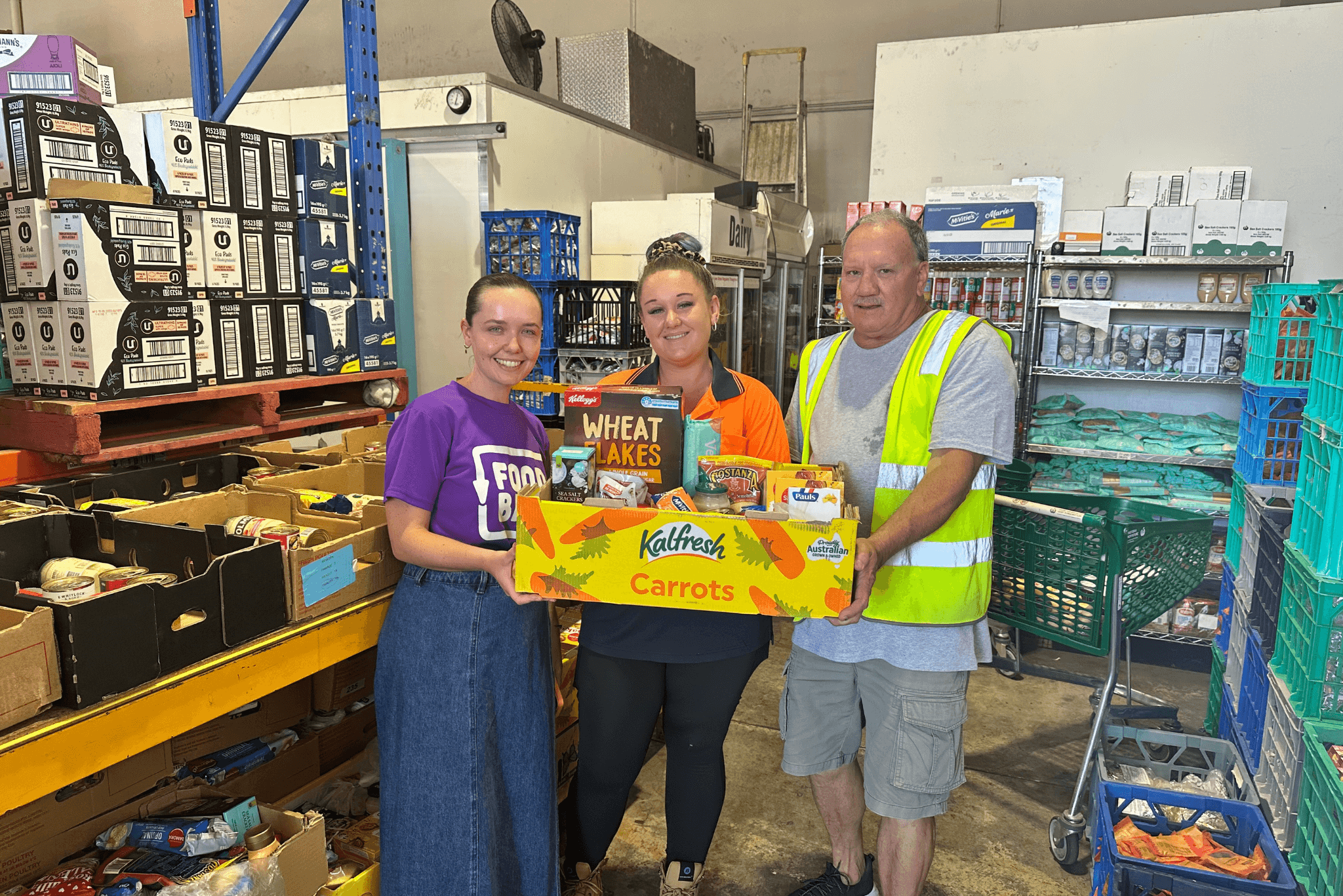
Working together to support our community

Fuelling Wellbeing One Meal at a Time 

By the time the first students arrive, the room is already warm. The smell of toast drifts down the corridor, and the quiet clink of bowls and cutlery signals that breakfast is ready.

Inside the breakfast club room, cereals are laid out, fruit is stacked within easy reach, and the milk is chilled and ready. For around 50 students at Vermont Secondary College each morning, this space is where the school day truly begins.

The set‑up is simple by design. The classroom chosen for its storage cupboards and tables arranged to encourage conversation and connection. But what happens here every morning makes a powerful difference.

Breakfast club runs every school day, quietly supporting any of the school’s 1,700 students who arrive hungry, may be feeling a little anxious, or simply needing a safe and inviting space before the bell rings.

Students move through clearly defined zones – cereal, toast, fruit – supported by fellow students who volunteer their time. On Thursdays, the atmosphere lifts just a little more, because it’s ‘Toastie Thursday’ – the clear highlight for all.

The day before, the wellbeing team and a small group of hand‑picked student helpers prepare a few loaves of bread, ready for the following morning’s rush. On Thursdays, the toastie press works at double speed, with platters of freshly toasted goodness disappearing quicker than you can say, well…toast.

Image of man in kitchen with text overlayed saying 3.4 million households in Australia are food insecure

Powered by young people

Several students who volunteered in 2025, returned in 2026, bringing experience, confidence and leadership. School Captain Juliet is a regular helper, leading by example and helping create a calm, welcoming environment where students feel comfortable to come in, eat, and stay awhile. 

“I just really want to help out as much as I can. It’s a really great initiative,” says Juliet. “For me, in the morning it’s often a choice between sleeping in a little bit longer, or eating breakfast – to have a place where I can do both helps me get through the day. And I know a lot of students are in the same boat.”

For many student volunteers, this is their first experience of responsibility, teamwork and giving back. They quickly grow into their roles – learning how small actions can have a big impact and gaining a few new life skills at the same time.

Supporting student wellbeing beyond breakfast

The connections made over breakfast often lead to something more. The wellbeing team has found that these informal morning interactions make support more accessible. Conversations that start over cereal or toast often continue later, when students feel ready.

Understanding that the need for nutrition doesn’t stop at breakfast, Vermont Secondary College also provides targeted lunch support for students identified as needing additional assistance. Working closely with teaching staff, the wellbeing team ensures students facing who need it, have reliable access to food across the school day.

Lunch items are made available in a planned, discreet way, protecting student dignity and removing the need for explanation. Tuna rice bowls, noodle soups and rice-based options are organised each morning, with many students choosing to collect their lunch ahead of time. This simple step reduces anxiety and allows students to focus on learning, rather than worry about the day ahead. Staff have noticed the increase in need for lunch, with Wellbeing Leader, Leesa telling us, “The tuna bowls disappear within minutes.”

At Vermont Secondary College, Breakfast Club is doing exactly what it’s meant to do. It’s reliable access to nutritious food, it’s strengthening student confidence and leadership and supporting student wellbeing in real, tangible ways.

BREAKING NEWS: Latest data shows 44% of Australian households are struggling to put food on the table.  

Media Release

BREAKING NEWS: Latest data shows 44% of Australian households are struggling to put food on the table.  


Wednesday 1 April 2026, SYDNEY – Foodbank Australia is warning the escalating fuel crisis is placing the national food relief network under severe strain, just as new data reveals a sharp rise in Australians struggling to afford food.

Released overnight, the latest IPSOS research (March 2026) shows 44% of Australians are finding it harder to put food on the table than last month – the highest level recorded since August 2024.

Alarmingly, of that 44%, 23% say they have been unable to afford the cost of living for a long time, a historic high, with rising rents reportedly continuing to drive hardship.

At the same time, soaring fuel costs are impacting every stage of Foodbank’s operations, from transporting food across the country, to families and individuals struggling to access it.

Foodbank Australia CEO, Kylea Tink said the situation is deteriorating rapidly.

“We couldn’t do what we do without the incredibly generous support from the transport and logistics sector. Yet we are now seeing an immediate impact on the space available to move emergency food relief to Australians in need. These partners desperately want to continue supporting us, but they are being squeezed themselves.”

As a not-for-profit, Foodbank relies heavily on pro bono and low bono transport. However, rising fuel costs are forcing some partners to scale back support, while others are understandably introducing fuel levies, adding pressure to an already stretched system where even small cost increases have a significant national impact.

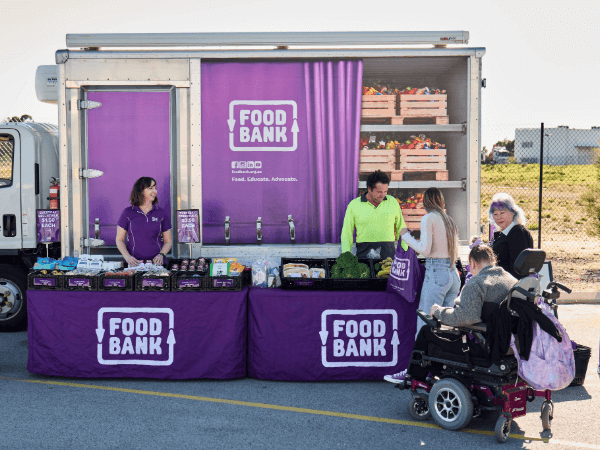
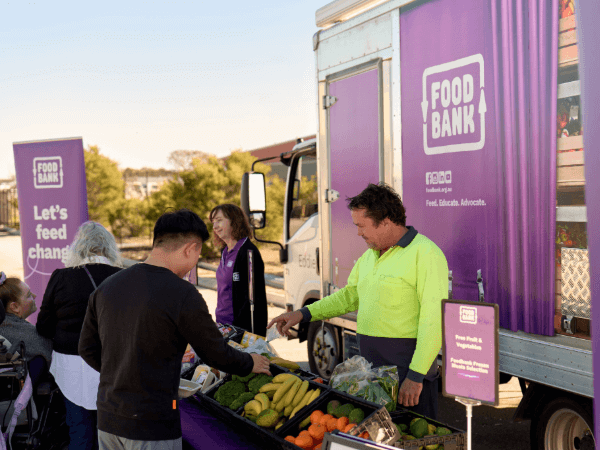
The effects are also being felt on the ground. Many Australians can no longer afford the fuel needed to reach food relief centres. More people are relying on public transport or carpooling, limiting how much food they can take home and forcing difficult decisions about what to leave behind.

Foodbank Australia is calling on the Federal Government to urgently release at least a portion of the $20 million in emergency surge funding earmarked for crises like this.

“We don’t have time to wait. Releasing even a portion of this funding would make an enormous difference.”

Foodbank says this funding would allow it to purchase and transport critical food supplies at scale, ensuring families, pensioners and individuals across Australia can continue to access safe, nutritious food during a period of escalating need. 

Get involved

A full pantry and a lighter load

Tina never imagined she would need help to put food on the table.

She and her husband had built a life they were proud of in Bunbury. They both worked in stable government roles and were managing the ongoing healthcare needs of their daughter. Life felt steady, safe and they believed they were coping well.

That changed when it became clear their daughter needed full‑time, high‑level support. Tina stepped away from her career to care for her, doing what was best for her family, even though it was not the path they had planned. They tried to make one income stretch by cutting every extra and using their savings, but as the cost of living continued to rise, it became harder to keep up.

Tina remembers sitting at the kitchen table, bills spread out in front of her, trying again and again to make the numbers add up.

“I kept trying to make the numbers work, but they just wouldn’t,” she says. “There was nothing left.”

Her biggest worry was her daughter. She is autistic and prefers certain foods and as prices rose, buying those foods became impossible. Her daughter loves fish, but they had to stop putting it in the trolley and each time Tina had to explain they could not afford it, it broke her heart.

Tina had heard of Foodbank WA before, but she thought we were there for people doing it tougher than she was. She never imagined her family would need help. Many people feel the same, right up until the moment the pressure becomes too much.

“Picking up the phone to ask for help was one of the hardest things I’ve done,” she says.

That call changed everything. Tina spoke to a team member who listened with warmth and without judgement and for the first time in a long while, she felt a little of the weight lift.

When she arrived at Foodbank Bunbury for the first time, she sat in her car gathering the courage to walk inside.

“Walking toward the door, something in me just broke,” she says. “But as soon as I stepped inside, everyone was so kind. I felt safe straight away.”

Inside, she noticed people from all walks of life, families, pensioners, people in work clothes and students in school uniforms.

“I looked around and thought, it’s everyone. Anyone can find themselves needing help”, Tina says.

Shopping with us changed things in both, practical and emotional ways. When Tina saw fish on the shelves at a price they could afford, she nearly cried again, but this time it was relief. “I could finally make her favourite dinner,” she says.

Now, Tina can fill four bags for around $45, knowing the same groceries would cost close to $200 elsewhere. Her daughter has the same snacks and fruit in her lunchbox as other children and feels like she belongs. “It might sound small but to a mum, it means everything.”

Tina no longer feels ashamed. She feels grateful.

“Having Foodbank in our lives feels like a gift,” she says. “Having a full pantry and a lighter load.”

Tina’s story is one of many we see every day, families doing everything they can, families who never thought they would need help and families who just need a little breathing space during a hard moment.

Donations help us be there in those moments. They help keep our shelves stocked with affordable essentials, support our Community Kitchen and keep our Mobile Foodbank on the road. Most importantly, they help us say yes when someone like Tina walks through our doors, offering dignity, kindness and the chance for a full pantry and a lighter load.

Please donate today

Latest news

Meet Leah

Find out more
Meet Leah

When love stretches further than money

Find out more
When love stretches further than money

A full pantry and a lighter load –

Find out more
A full pantry and a lighter load –

When life changes in a single phone call

Find out more
When life changes in a single phone call

Finding hope through Foodbank

Find out more
Finding hope through Foodbank

Alice worked hard all her adult life, now she has nowhere to go

Find out more
Alice worked hard all her adult life, now she has nowhere to go

From chopping to confidence

Cooking Class days at Magpie Primary School quickly became the highlight of the week. Each Tuesday, the art room transformed into a lively kitchen filled with sizzling pans, excited chatter and the joy of kids discovering something new. Over four weeks, students built confidence, learnt practical skills and found that food literacy can be fun, creative and empowering.

Knife‑skills day set the tone. What began with furrowed-brow concentration soon turned into lifted-chin pride as students realised they could prepare food safely and independently. Each recipe became a chance for personal expression. 

Mia declared rice paper rolls her favourite, okonomiyaki introduced new flavours, and pancake week turned the room into a mini test kitchen. Tyler added fruit to his batter; Jack mastered flipping; Toby quietly produced perfect circles every time.

The program strengthened the school community just as much as it built skills. One staff member shared, “The program enabled the families to build closer and more positive relationships with each other and socially with other families. They enjoyed trying new recipes together and spending one‑on‑one time doing something their children were excited about”. 

A grandparent rearranged his Tuesdays just so he and his grandson could attend, telling us: my grandson ”wanted us to put our names down, so I made myself available every week.”

Parents noticed changes at home too.

 “My child doesn’t usually try different foods, and she surprised me by tasting different veggies.”

 “After the first week, my son showed me all the chopping techniques he’d learnt – he even corrected me.”

Food hampers were also appreciated, with several families recreating class recipes at home each week. For many, this helped build confidence and connection beyond the school gates.

In a heart‑warming act of kindness, a staff member attended each session with a Grade 2 student whose parents couldn’t come. Every week the attentive and thoughtful youngster made sure to take enough food home for all his siblings, capturing the spirit of food as an act of care.

The program aligned beautifully with the school’s wellbeing goals. It created a safe, inclusive space where students built confidence, learnt healthy habits and experienced success. Families connected socially and supported one another throughout the program. As the school Cooking Classes key contact, Karen, reflected, “Students have learnt valuable life skills, healthy eating habits and have grown their confidence in the kitchen – all while having fun.”

By the final week, the students weren’t just cooking, they were creating, tasting, sharing and laughing. They were building memories and skills that will stay with them long after the last pancake had been flipped. 

Karen summed it up perfectly: 

“This program teaches families about healthy cooking and eating while supporting students’ wellbeing through spending quality time together.”


Sharing our passion for nutrition across borders 

Our Nutrition Education team is continuing to make an impact well beyond Western Australia, helping to grow national understanding of food waste and healthy food behaviours. 

Recently, Cath travelled to South Australia to train the Foodbank South Australian and Northern Territory nutrition staff on The Great Unwaste – Australia’s first nationwide behaviour‑change campaign designed to help households reduce food waste at home.

The campaign focuses on seven evidence‑based behaviours that support households to waste less, save money and contribute to a more sustainable future. 

During her visit, Cath delivered a detailed wrap‑up of everything we’ve achieved in The Great Unwaste space since September last year when our partnership began. She was able to share the incredibly positive feedback we’ve received to date, particularly from participants attending our presentations and the partnerships we’ve developed with local government authorities through the campaign.

The Great Unwaste campaign draws on extensive national insights into household waste behaviours, showing that combined average Australian households throws out 2.5 million tonnes of food each year which is equivalent to 7.7 million meals a day, with most people wasting twice as much food as they think.

Cath also delivered a practical Great Unwaste workshop to 16 enthusiastic participants at the City of Charles Stuart, guiding them through the seven behaviours and exploring the small, everyday habits that can significantly reduce food waste. Participants were delighted to take home a Foodbank South Australia and Northern Territory meal pack, which included minestrone soup or a tuna pasta bake. The food packs contained all of the necessary non-perishable foods and contained a note with a reminder to purchase the fresh components – onions and carrots, to help them put their learning into action.

The Great Unwaste movement reinforces that a few simple changes such as better storage, smarter meal planning, and making the most of leftovers can save households up to $2,500 – $2,700 per year. These small steps also reduce our environmental impact and help Australia achieve its national goal to halve food waste by 2030.

Cath’s visit marks another exciting step in expanding the reach of our nutrition education and strengthening collaboration across the Foodbank network.

Watch out, world: our nutritionists are taking over, one state at a time! And this is just the beginning

Latest news

Driving impact through collaboration at Metcash 2026

Find out more
Driving impact through collaboration at Metcash 2026

Rising fuel costs and the shared impact on food relief

Find out more
Rising fuel costs and the shared impact on food relief

Government House open day 2026

Find out more
Government House open day 2026

Peel Thunder helps to kick hunger to the sidelines for Foodbank

Find out more
Peel Thunder helps to kick hunger to the sidelines for Foodbank

Building skills for dignified food relief

Find out more
Building skills for dignified food relief

Working together to support our community

Find out more
Working together to support our community