The innovative initiatives making a difference

Here at Foodbank, we love partnering with organisations that are using creativity and generosity to fundraise on our behalf. From coffee to car warranties, cycling to celebrity spatulas, these initiatives are helping us to feed 69,000 people every day, right across Victoria.

Here are some incredible examples of businesses rallying behind the cause, helping to raise the vital funds needed for us to get healthy food on tables across the state. Supporting these initiatives is just one of the many ways that you can help Foodbank Victoria.

Chobani

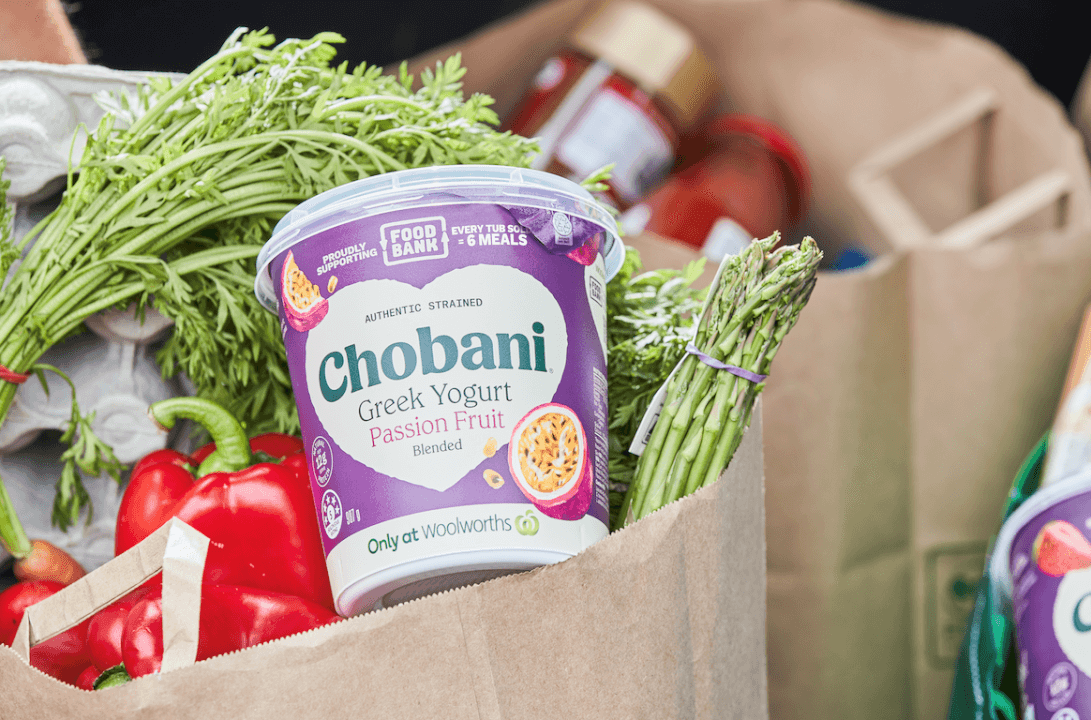
Chobani created limited-edition yogurt made just for us, the ‘Fruit for Good’ yogurt, with 100% of the profits being donated to Foodbank. Sold nationally, this limited-edition yogurt raised the equivalent of 850,000 meals in Victoria alone.  

Encore Tissue

Encore Tissue has partnered with Foodbank Australia to produce toilet paper that directly supports our mission. The goal is to raise 1,000,000 meals. Available exclusively at Woolworths in-store and online, this initiative is designed to have a lasting impact on people doing it tough.

FYXO – Melburn Roobaix

FYXO – Melburn Roobaix cycling event kindly contributed $5 from the sale of each early bird ticket and $1 from all other tickets sold for the 2025 event. Melburn Roobaix is a fun ride around the city and suburbs that celebrates everything rad about riding rides with friends. In its 20th year, the continued popularity is down to the grass roots feel that celebrates creativity and kookiness over speed and athleticism – with prizes to rival the Tour De France just for participating! 

Halidon Hill Finance 

Halidon Hill Finance has joined hands with Foodbank Victoria by donating $10 from each settled transaction, which equals 20 nourishing meals for those who need our support.

Hallmark 

Hallmark invites online customers to round up their spend with a donation at the point of purchase. As one of the world’s leading gift card and gifting retailers, Hallmark is helping to make a difference, one small act of kindness at a time.

Grindhog Day Coffee

In a significant effort to tackle food insecurity, Grindhog Day Coffee is contributing $2 for every 250 grams sold across its Grindhog Day coffee packages. This initiative has already generated an impressive $24K in funds. 

Minimax 

Minimax has taken fundraising to the next level by selling spatulas designed by celebrities, including Hamish Blake, Chrissie Swan, Sophie Monk, Glenn Robbins, Mark Knight, and Adam Liaw. With 100% of profits donated, across all campaigns Minimax has raised almost 385,000 total meals.

Presidian Group 

Every $1 donated is 2 meals created – and Presidian Group are kindly contributing $1 from each car warranty administered. This really makes a difference, with more than $100,000 raised to date for Foodbank Victoria. 

Trade For Good 

Trade For Good is making an impact by donating 50% of their brokerage when investors select Foodbank as their preferred charity. So far, this initiative has raised 18,000 meals, and the momentum continues to grow. 


Each of these initiatives showcases the power of collaboration to get healthy meals on the tables of Victorians doing it tough. We couldn’t do it without these amazing partners – so we celebrate their creative and impactful fundraising efforts.   

Got a cool idea for how your organisation can help raise funds for Foodbank? Our partnerships team would love to hear it! corporateparnterships@foodbankvictoria.org.au 



Our two cents on the Victorian Food Security Inquiry — read the response here

Foodbank Victoria has submitted a response to the Victorian Parliamentary Inquiry into Food Security, reflecting on key themes and areas of opportunity raised in the report.

Foodbank Victoria’s response to the Legal and Social Issues Committee (LSC) of the Victorian Legislative Council report: Food Security in Victoria, released Thursday 14th November 2024 following the Inquiry into Food Security in Victoria.


About Foodbank Victoria

Foodbank Victoria has been providing vital food relief to Victorians for 95 years. Our dynamic and responsive model has shifted over time as we respond to the changing needs of the Victorian community.

We deliver food to people who need it in three different ways: in partnership with our charity partners, through schools and via our regional Community Food Centres, and we maintain strong relationships with all our partners to ensure our work is responsive. Across our network of 473 charity partners, 1173 schools and the two regional Community Food Centres, we have distributed over 25 million meals in the last 12 months, which provides approximately 75% of the food into the statewide Food Relief Sector, and we currently feed 69,000 Victorians a day. Social supermarkets, cooking classes and a social cafe run in our two purpose-built Community Food Centres in Ballarat and Morwell. As the state’s dedicated emergency food relief organisation, we also assist Victorians through natural disasters and pandemics. Foodbank Australia recently undertook external research examining their Social Return on Investment and determined that for every dollar invested, $5.83 of social, economic and environmental value is expected.


LSC report: Food Security in Victoria

Foodbank Victoria commends the LSC on a comprehensive report and set of 25 recommendations looking at short- and long-term activities and solutions to food insecurity in Victoria. Foodbank Victoria recognises three key themes centred around schools, healthy food relief and data-driven decision making from this report that should be areas of focus for the Government to drive change in food insecurity across Victoria.


Schools

In partnership with the Victorian Government, we deliver Australia’s largest School Breakfast Clubs Program (SBCP) to primary and secondary state schools across Victoria and will expand to all Victorian Government schools by end of FY26, which is timely given 86% of schools reported an increase in demand for SBCP food in the 2024 SBCP survey.

The importance of this program cannot be overstated. A recent study of nearly 30,000 students found those who skipped breakfast did worse on NAPLAN numeracy and reading tests than those who ate breakfast daily. It is a concern that one in ten students reported they never ate breakfast, about a half of students skipped breakfast some of the time. Over three quarters of responders to the 2024 SBCP survey felt the program supports student learning.

In response to school feedback, there is a menu review in progress across the program that will provide a more culturally reflective menu. All final menu items will be green rated according to the Healthy Eating Advisory Services Food Checker and Victorian grown and manufactured items will be prioritised.

This standardised, whole of state model is proven to be cost effective and provides equitable access. Schools can tailor their delivery model to align with student and community needs, including providing take home packs so students have food available at home as well. Three quarters of schools currently use SBCP items to provide lunch for identified students and report this meets their needs. This quote highlights the value of the program from a school perspective:

“It’s a way for them to engage socially with each other, enjoy a nutritious and filling breakfast and an opportunity for the school to ensure that students have lunch, fruit for recess and fruit break times, and an opportunity for students who wish to assist with the preparation.”


Healthy food relief

We believe that all Victorians should have regular access to healthy and culturally appropriate food. We work with partners across the food and grocery sector, from farmers and growers through to retailers, to source, rescue and purchase essential food and grocery items to distribute to our communities. We prioritise supporting Victorian businesses where possible.

In 2022, Foodbank Victoria committed to providing nutritious foods as a major component of our 2022-2026 strategy. Since then, we have established systems to categorise and monitor food we procure according to the traffic-light system of the draft and now finalised Victorian Healthy Food Relief Guidelines, work that was led by VicHealth. Further to this, we prioritise fresh produce and high-quality protein, knowing these are sought after items and are often the first to be sacrificed out of necessity by people experiencing food insecurity. In the 12 months to March 2025, green-rated foods made up 85% of food distributed to the Foodbank Victoria charity network, including 3.4M kg of fresh produce, which was 38% of the food we distributed to charity partners.

We support the Committee’s recommendation for recurrent funding for the food relief sector and advocate for a healthy food lens to be included as a requirement of receiving such funding.


Data-driven decision making

We are pleased to see a more comprehensive measure of food insecurity has been recommended for inclusion in the Victorian Population Health Survey. With a better understanding of food insecurity in Victoria across the continuum, evidence-based strategies can be better tailored and enable a multi-component approach from Government.

Foodbank Victoria has invested in extensive data collection and software design to develop a statewide lens of food security. We have combined our data collection tools for measuring and understanding charities, schools, food distribution, volunteers along with distribution and 3rd party data into a whole of state model. This drives our deep understanding of food insecurity and ensures a data-led approach to equitable and impactful decisions around sourcing and distribution.

We congratulate the Committee again on a comprehensive report and look forward to reading the Government’s response.

For further information, please refer to Foodbank Victoria’s submission to the Inquiry into food security in Victoria. 


More than lunch: How schools are serving up support

At Footscray High School (Kinnear Campus) student wellbeing is at the heart of everything they do. With Dana leading the charge as the Mental Health Practitioner, big steps have been made to improve food access for students. Dana and the team have worked hard to break down stigma around accessing food, creating an open and welcoming space for communication and building connection.

Through the School Breakfast Clubs Program, schools can access a range of emergency lunch products to further support students who may not have access to a sufficient or nutritious lunch. Providing lunch items at school enables identified students to concentrate and participate effectively in the school day.

“Food is nurture” says Dana, “And it’s an access point to wellbeing. The lunch program at Footscray High is not just about the food, this is a supportive space all round.”

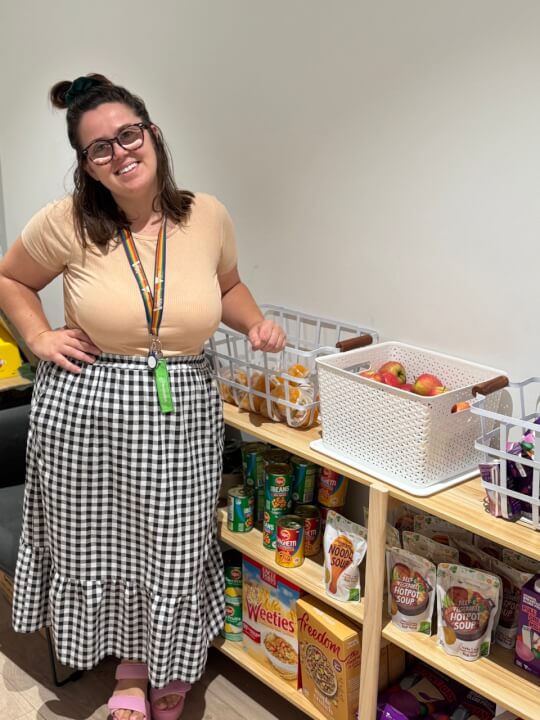
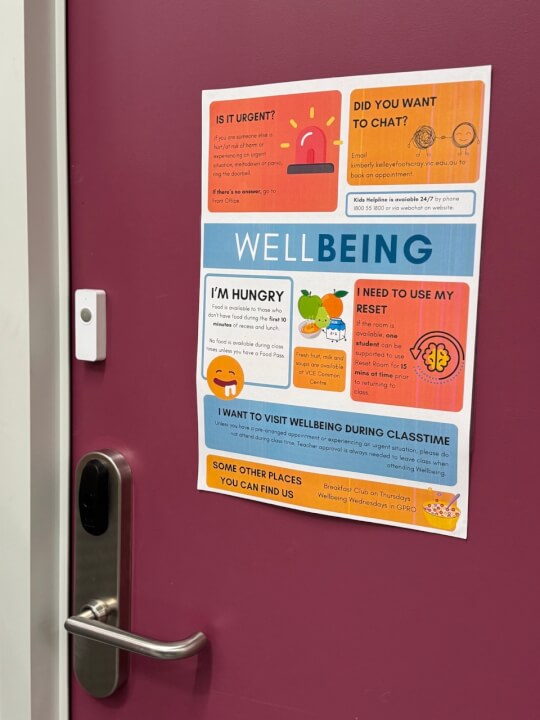
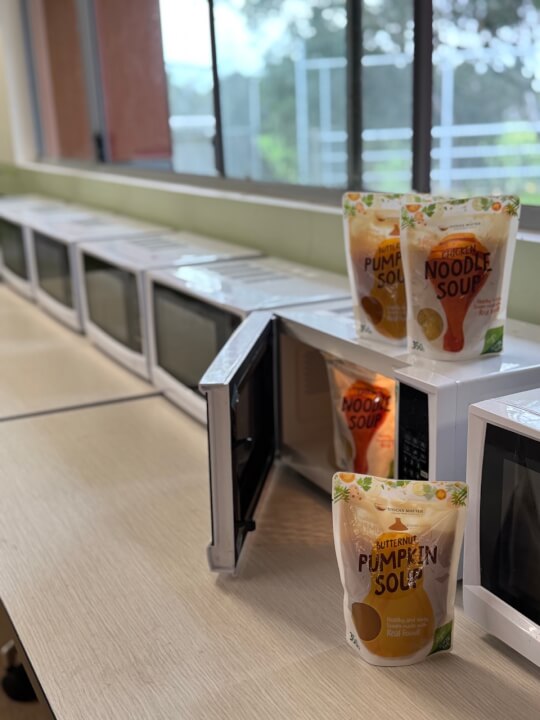
Lunch items are available for students who require additional access to food throughout the day and are accessed via the wellbeing office. Everything from the School Breakfast Clubs Program soups to tuna bowls is available, right next to the wellbeing office, where Dana and the Wellbeing team sit. Students ring the doorbell to access the area, ensuring that Wellbeing team have an opportunity to build meaningful connections with students through food. Students can then use the microwaves in the VCE and canteen areas to heat up their lunch.

There’s no going without at Wallan Primary School

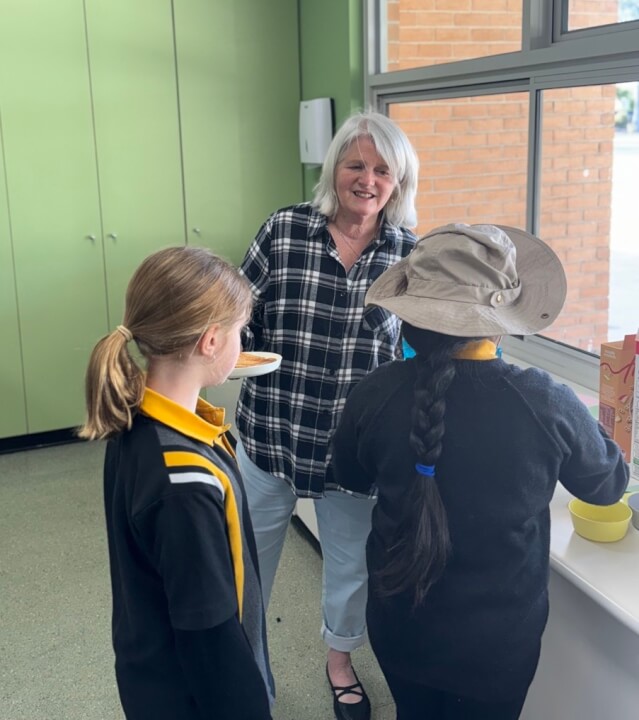
Meanwhile, at Wallan Primary, they’ve made sure that no student goes without food. Every day, they offer a lunch program that gives all students who need it, easy access to lunch. Around 20 students benefit each day, making sure they’re fuelled up for learning. The tuna and rice bowls and the fresh fruit are particularly popular choices.

Breakfast Club Coordinator Karen is grateful they can give their students lunch when they need it.  “It is fantastic that we are able to provide food for our students, no questions asked. Students particularly like having apples available to them during class time”.

Like Footscray High School, the lunch program serves a greater purpose at Wallan Primary, “providing lunch to our most vulnerable students helps to get them ready for learning. We are also able to identify families that may require further assistance,” said Karen.

Wellbeing in focus at Werribee Secondary College

Amy, a Mental Health Practitioner from Werribee Secondary College has found the lunch program particularly helpful with engagement and wellbeing. “Food is a great way to connect with kids” she said. “The lunch products are a great way to get to know the students. While they’re waiting for meals to heat up, we use that time to build rapport and make sure that they have a positive experience with people at the school.”

“Food is such a great way to connect with people, especially teenagers, and it is such a great starting point to get to know them and build a sense of trust.”

All these schools have shown just how important it is to take care of students’ nutritional needs. They’ve created environments that reduce stigma and make sure students feel nourished—physically and emotionally.

The lunch programs at Footscray High School (Kinnear Camus), Werribee Secondary College and Wallan Primary School are just a few brilliant examples of how food access plays a vital role as a connector to wellbeing.


Gleneagles Secondary College: Stirring Up Success and Building Bonds 

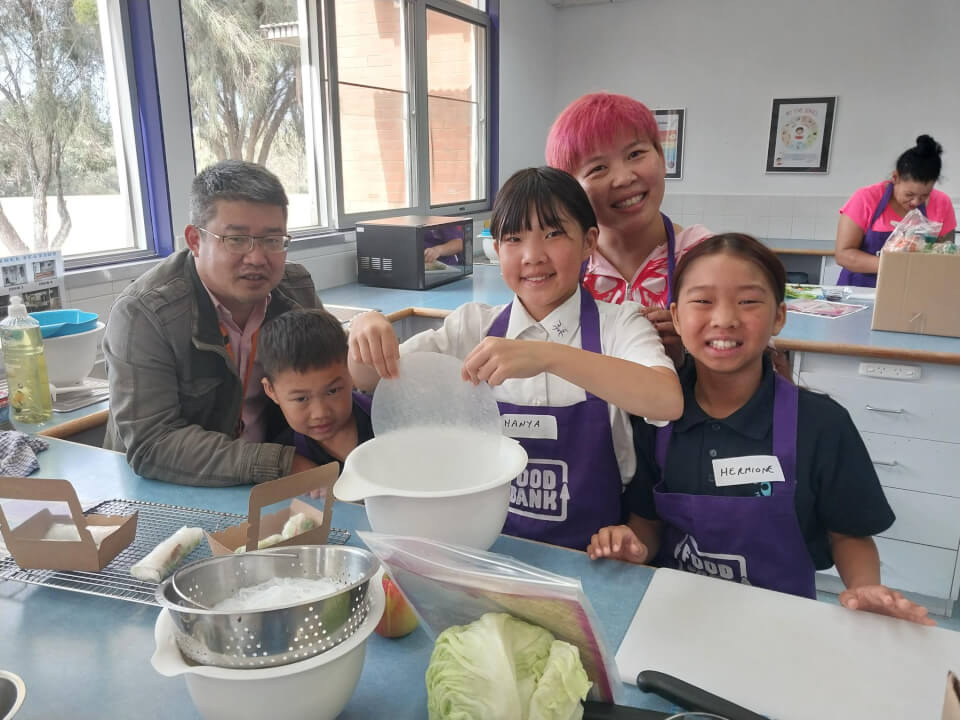
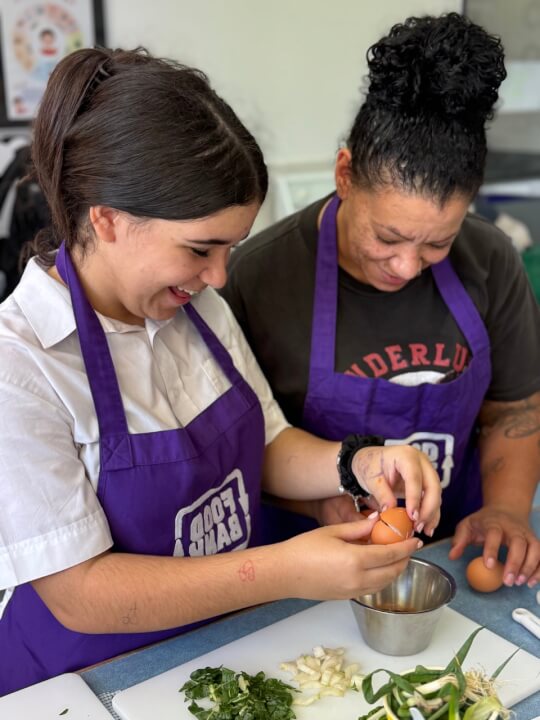
The School Breakfast Clubs Program Cooking Classes at Gleneagles Secondary College have been a hit!  

It’s not just about learning to cook; it’s about bringing people together and creating lasting connections. The program has added even more variety to Gleneagles’ offering, helping staff, students, and parents build stronger bonds.  

Teachers and staff have had the chance to get to know students and their families better, making the school feel even more like a supportive and inclusive community. Plus, students have made new friends, boosting their social skills and sense of belonging. 

Why Gleneagles loved it 

Gleneagles Secondary College signed up to the Cooking Classes program to build stronger relationships within the school community. “We thought it was a great chance to build relationships.” said Sabrina, Youth Support Officer. “It also educates families on the benefits of healthy eating and supports those families with extra food.”  The take home hampers provide families with nutritious ingredients, helping put what they learn in class into practice at home. 

Why the families loved it 

Families love joining the Cooking Classes because it’s a special time to bond. With everyone’s busy schedules, it can be hard to find quality time together. The classes give parents and kids a chance to cook side by side, strengthening their relationships and creating wonderful memories. 

“We don’t get to do too much together” said Candice, mum of year seven student, Mya. “Mya’s younger brother takes up a lot of my spare time, so this was a great way to do something that’s just us”. 

Students enjoy the Cooking Classes for many reasons. They learn how to cook, gain confidence in the kitchen, and get to take charge. This sense of ownership and responsibility is empowering, and it lets them guide their parents through the cooking process, flipping the usual roles and building mutual respect. 

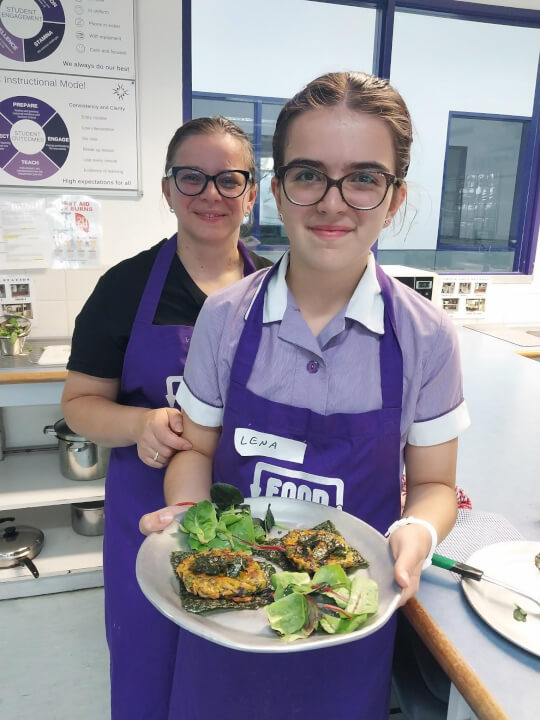
Marwa, who is currently in Year 12 said she signed up to take part in Cooking Classes as she enjoys cooking and it “helps her de-stress”, while Lena, Year 7, signed up with mum to make new friends at the school.  

Youth Support Officer, Sabrina, shared touching stories from families about how the program has made a difference. One family, who used to rely on take away, now cooks healthy meals together at home. This change not only improves their nutrition but also helps their child develop better eating habits. Another family shared that dad had never cooked before, but through the program, he learned to cook with his daughter, creating a special bond and gaining a valuable new skill. 

Cooking at home 

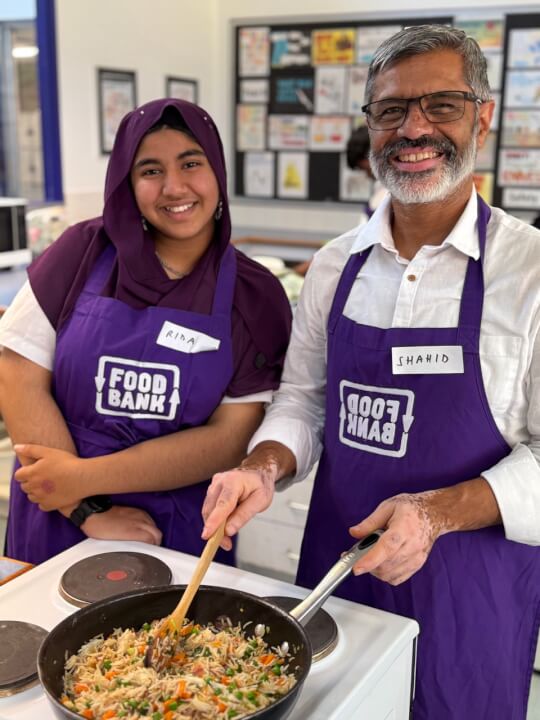
The families really appreciated the food hampers. Many have tried the recipes provided, as well as mixing it up with some of their own touches, while others are still exploring them. Budding chef Rida mixed it up, substituting some of the ingredients in the Rice Paper Rolls take home hamper to make a fusion meal for the family!  

The Cooking Class program at Gleneagles Secondary College has had a wonderful impact on the students and their families. By bringing them together, promoting healthy eating, and teaching valuable skills, it is an essential part of the school’s efforts to support and engage families. 


What a cracking result – YOU helped create 5.4 million seats at our Christmas table.

It was always going to take a Hercules sized response from our community to support the epic scale of need leading into Christmas (try 69,000 people a day), but we didn’t expect such bedazzling feats of generosity.

Like ABC Melbourne host Sammy J who kayaked the mighty Yarra River as part of ABC Gives to Foodbank to help put 700,000 meals on awfully empty Christmas tables.

Cecilia and her son at a Foodbank market

Speaking of heart, 295 of you set up Virtual Christmas tables online for Foodbank including a couple hosted by our big-hearted friends Zoe Foster Blake and Melissa Leong.

All up we raised over 5.4 million seats in our ’24 Christmas Appeal…and by seats, we mean beautiful, healthy meals delivered with YOUR help.

Victorians truly are the most generous people on earth (nah, we’re not biased).

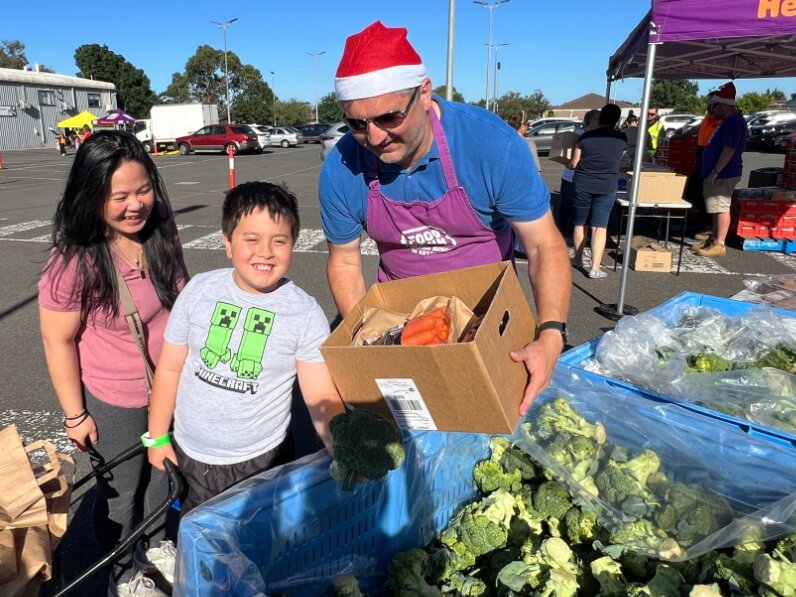
Cecilia and her son (pictured above) were so overwhelmed by the kindness, community spirit and help from our volunteer Edi (who loaded bags and boxes into their boot without raising a sweat) at our Christmas Market they couldn’t stop handing out hugs – including an extra special one just for YOU.

“Thank you so much. You’ve been wonderful… I can’t tell you what this food means,” Cecilia told us.

Every $1 donated creates 2 meals

More stories below

Kids grow quickly, and so does the School Breakfast Clubs Program

It’s been a whirlwind of excitement for the School Breakfast Clubs Program over the past few months, and we’re thrilled to share the news – more schools, more students, and more healthy food!

The program is making waves across Victoria, with 49% of new schools in metropolitan areas and 51% in regional areas – a nice even mix that’s slowly working towards covering all corners of the state.

But it’s not just about the numbers, it’s about the real impact happening in school hallways and classrooms. In the most recent quarter, the program served up a whopping 903,314 net kilograms of food, marking an 8.6% increase on the previous quarter. That’s a whole lot of breakfasts fuelling students for a busy day ahead! And it doesn’t stop there.

The Home Food Packs program has seen a massive 57% increase in food distributed to school families over the last quarter, meeting an ever-growing need for food support in communities across Victoria beyond the classroom. These packs are making a tangible difference, providing families with the essentials they need and ensuring more people have access to healthy food.

AND THE REAL CHERRY ON TOP? THE INCREASE IN FRESH FOOD! IN TERM 4 2024, THE PROGRAM SAW A 14% JUMP IN FRESH FOOD DISTRIBUTION ON TERM 4 IN 2023 – TALK ABOUT SERVING UP HEALTHY MEALS THAT MAKE A LASTING IMPACT.


As the School Breakfast Clubs Program continues to grow, we’re not just seeing more food being served; we’re seeing a ripple effect that’s reaching deeper into schools and communities.

With every new school that joins, and every extra kilo of food distributed, we’re one step closer to ensuring every student—no matter where they are—has access to the healthy fuel they need for an awesome day of learning and growing.

Here’s to even bigger things ahead!

Every $1 donated creates 2 meals

We’ll be turning 5 million kilos of ‘waste’ into nourishing food over the next 3 years!

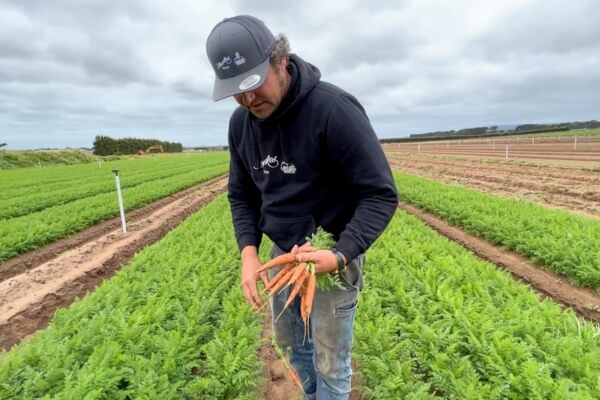
Fact is Australia produces MORE than enough food to feed everyone. In Victoria alone, 125,000 tonnes of edible fruit and veg is lost on farms every year.

Why? When crops do exceptionally well, growers end up with a surplus they can’t sell – and can’t afford to transport to charities like ours.

Of course, WE want that surplus here at Foodbank…so our unique approach to sourcing is making sure that’s happening.

Working alongside farmers, growers and packing houses to understand how their season is shaping up, we provide innovative and sustainable ways to secure any surplus – supplying collection bins, and finding empty space on trucks to move the produce.

Growers can then donate the product in a really positive way. Tangibly helping Victorians, without the cost of getting the food to us. Wins all round

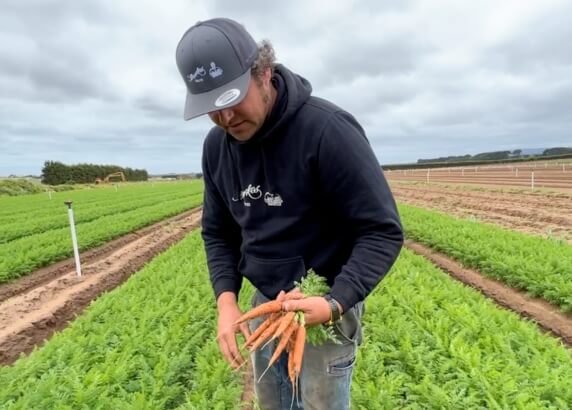
Farmer working with Foodbank to reduce food waste (1)

What we’ll do with YOUR help


Every $1 donated is 2 meals created

More stories below

A supermarket where everything’s special

Imagine not being able to feed your family. Such a stressful, lonely place to be.

Then you hear about a cool new supermarket in your neighbourhood… where you can fill a trolley to help nourish the people you love AND it’s completely free of charge.

Ta da. We’ve just opened a supermarket EXACTLY like that at our Morwell and Ballarat Community Food Centres providing 100s OF LOCAL FAMILIES PER WEEK with trolleys full of fresh produce, dairy and all their pantry essentials.

Putting the ‘super’ back into supermarket for hard hit regional communities – with YOUR support.

Foodbank community supermarket

In Ballarat, our supermarket opened in March last year with a pilot program run in partnership with our friends at Federation Uni for students experiencing severe hardship. It has since supported over 1,000 young people living in and around Ballarat.

Now, the supermarket is open to local families who are referred through our local charity partners, so they can do their weekly shop minus the unimaginable stress of wondering how to feed their kids on a non-existent food budget.

Over in Morwell, we opened our supermarket at the beginning of December last year, launching a 16 week pilot program in collaboration with two of our local charity partners. The program gave 50 families a week living in Morwell and surrounding areas easy access to healthy food leading up to that painful Christmas period and is now continuing right through into Autumn.

It’s been a huge success so far, with each family getting their hands on 25kg of food per visit – enough to fill a whole trolley!

What are the supermarkets like?


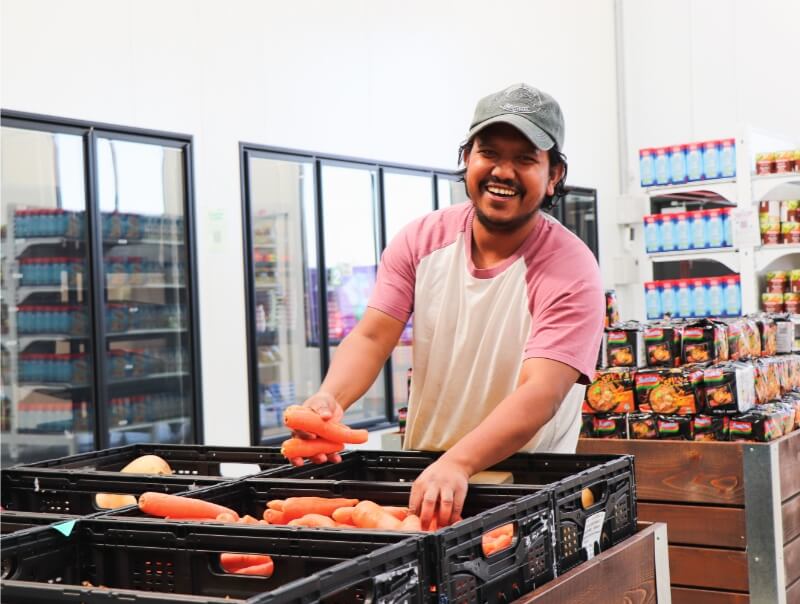
Well, shoppers get to select their food from baskets brimming with fresh seasonal fruit and veggies, bays stacked with fresh bread, fridges stocked with yoghurt and milk, and aisles full of pantry staples like pasta, rice, cereal, and cans of tuna and legumes. It’s exactly the same as shopping at your local supermarket, but without the cost!

We’re so grateful to YOU for helping provide 100s of regional families with the most caring supermarkets on the planet

Every $1 donated is 2 meals created

More stories below

Charles La Trobe Breakfast Club The Heart of Community  

At the Charles La Trobe College Breakfast Club, a warm and welcoming atmosphere transforms the mornings of 126 primary school students into something special. With a dedicated team of volunteers and a commitment to nourishing young minds, the club epitomises the power of community connections.  

Breakfast Club runs every school day, drawing in 12-15 eager students who gather around a communal table to start their day with a nutritious meal and a smile. Community volunteers serve as the backbone of the Charles La Trobe Breakfast Club ensuring that every child starts the day with a healthy breakfast. An incredible 90% of the program’s volunteer pool is made up of local community members, who are passionate about contributing to the wellbeing of the children. Lorem dolor sit amet, consectetur adipiscing elit. Cras malesuada nisi eu elit congue, quis a liquet neque ornare. Nulla facilisi. Orci varius natoque penatibus et here magnis dis parturient montes, nascetur ridiculus mus. Proin in mauris est. Nunc nec lacinia odio, sit amet rhoncus urna. Donec iaculis dolor elementum purus dignissim, ac commodo lacus bibendum.

Impact on school community 

Since the Breakfast Club’s inception, the program has evolved into an essential part of the school’s offering, enhancing student engagement and creating a positive atmosphere. Volunteers work closely with school staff, fostering relationships that benefit the entire community. 

Volunteer coordinator, Brooke noted, “The children are so excited to come to school and are so friendly and kind to one another.”  

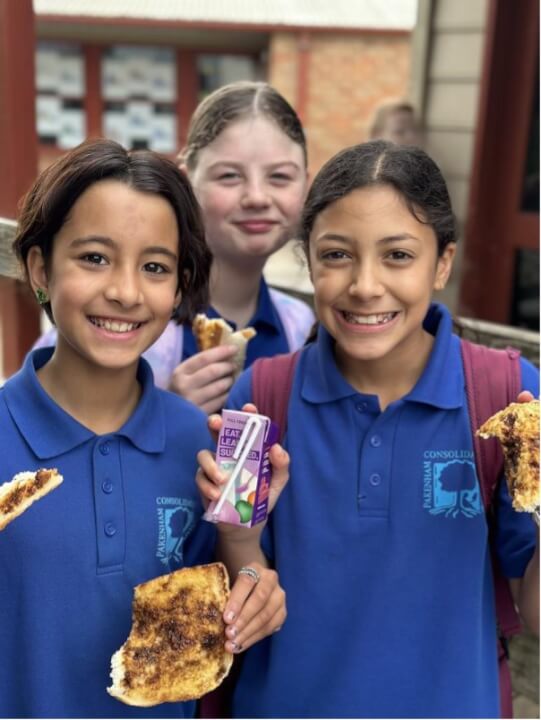
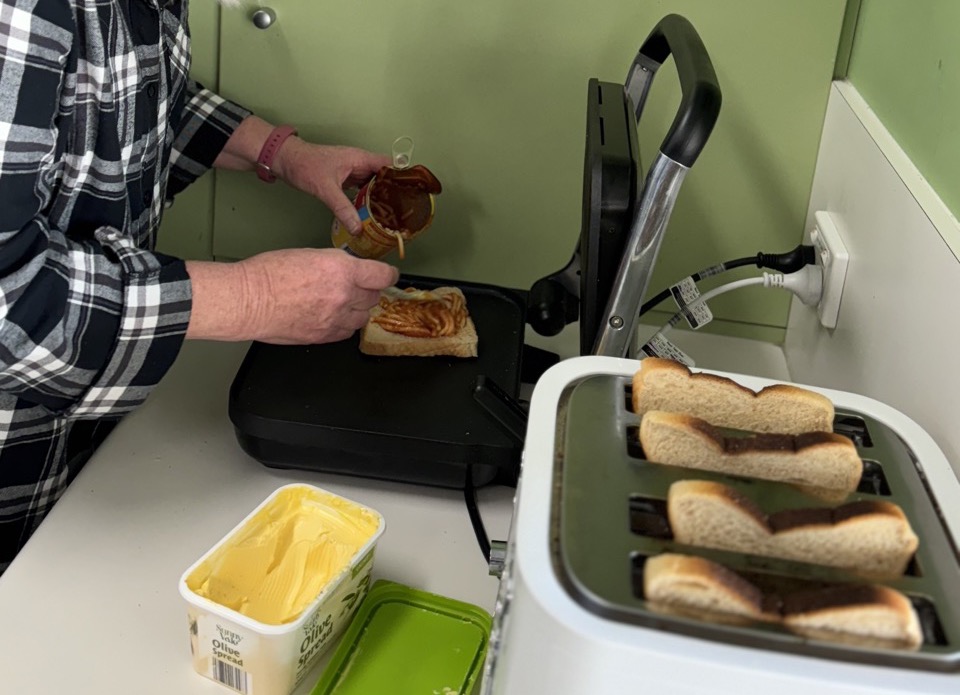
The Breakfast Club serves a variety of food options, with the small milk cartons a favourite, while fresh fruit is available throughout the day. Students are encouraged to eat at a communal table, encouraging a sense of community and belonging. They also learn responsibility by cleaning up after themselves—scraping their plates into the bin and placing their dishes in the sink—a small but significant step towards independence that parents likely appreciate as well!  

The Breakfast Club is more than food. Volunteers come together to create an environment where children feel safe and valued. Children from Prep to Grade six come together, sharing not only breakfast but also stories, jokes and songs.  

They take turns making announcements, filling the air with their favourite jokes and music, and even created a whimsical song about the Breakfast Club inspired by their rehearsals for the Wizard of Oz school musical: “Somewhere over Breakfast Club, skies are blue, and the toastie that you dare to dream of, really does come true.” 

Going Above and Beyond

Currently, six enthusiastic volunteers dedicate their time each week, bringing their unique backgrounds and experiences to the club. From a retired teacher who also assists with the reading program to community members recruited through friendship networks, each volunteer contributes to a shared mission: ensuring that no child needs to worry about a healthy breakfast.  

Volunteer Barbara goes the extra mile to ensure the Breakfast Club runs smoothly. If supplies run low, she steps in to provide what’s needed to ensure the children don’t go without. Barbara is a retired organisational psychologist, and she brings these skills into her interaction with the children. So, they don’t just get breakfast they get some valuable leadership learning through day-to-day interaction. 

Impact on Volunteer community 

Being part of the Charles La Trobe Breakfast Club has profoundly impacted the volunteers. They share moments of joy, surprise, and connection with the students, reminding them of the simple joys of childhood. 

“The best part of interacting with the students is they surprise us every day and connect us to what it feels like to be young again,” said Brooke. “That’s what I love about the volunteers – each of them has deep personal and professional experience that they bring to the role. We have a retired teacher, accountant, nurse, university lecturer and senior executive all giving up their time to volunteer because they care about the next generation and want the school and families to be strong, healthy and happy.” 

Brooke “decided to volunteer because well-nourished children do better in school. It’s heartwarming to see how much joy and excitement the Breakfast Club brings.” Adding, “Our kids went to local schools, and we know the value of lifelong friendships and the bonds that are built at school and by getting involved.” 

The Breakfast Club at Charles La Trobe Primary School is more than just a meal program; it is a vibrant hub of community engagement. By leveraging the strengths of local volunteers, the program not only feeds hungry bellies but also fosters a sense of belonging and support, paving the way for a healthier, more confident and connected student cohort.  

Testimonial

“Having the Breakfast Club at our primary school makes a real difference to our students. It not only provides them with a healthy meal to start the day but also gives them a sense of community and support. We’re incredibly grateful to Foodbank for their generous donations”.

Mike Palfrey | Wellbeing Coordinator

Cooking Classes Creating Cross Generational and Community Connections 

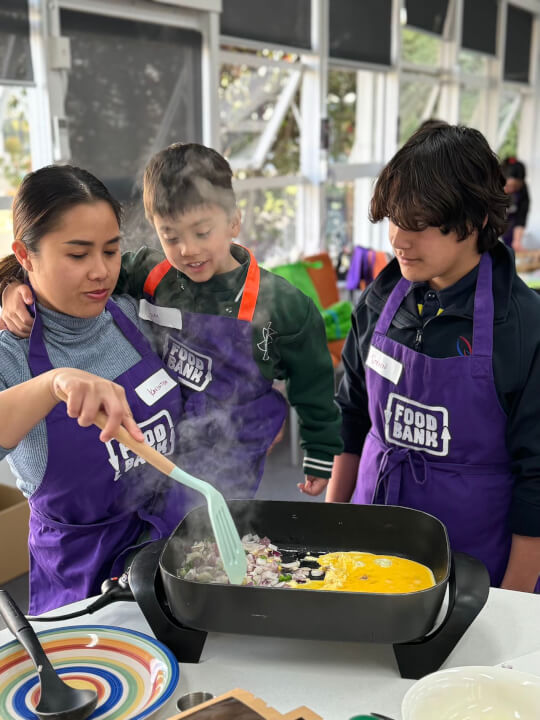
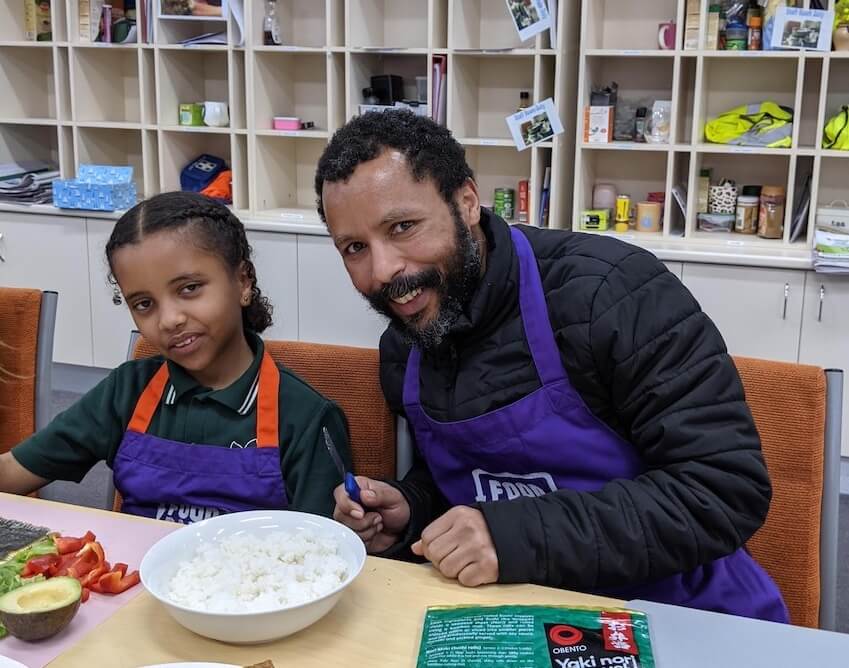
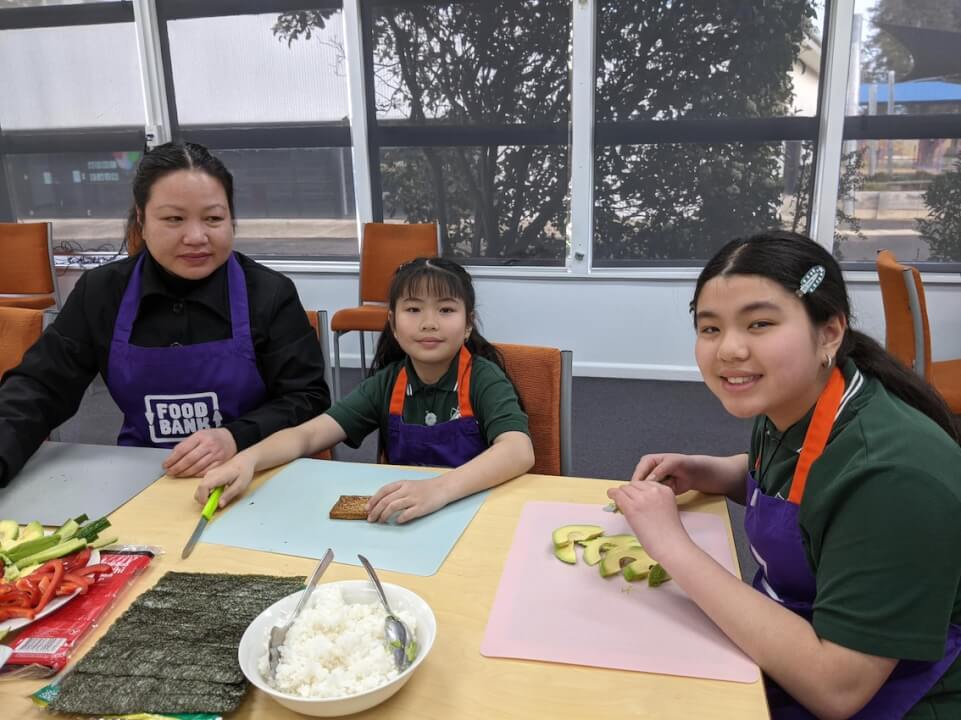
St Alban’s North Primary School jumped at the chance to bring the Cooking Class program, to their students. In addition to the regular benefits this program brings, fostering community involvement, and promoting healthy eating habits, the school had another motive. They wanted to strengthen family bonds within their community.   

We know that food brings people together. And by inviting students, siblings and their parents to the cooking classes, the school together with the School Breakfast Clubs Program Cooking Classes offered an opportunity for students and their families to engage in a shared activity and foster stronger connections. 

And that it did! The classes successfully drew in families who were previously not engaged in school activities. Students were able to work together with their siblings and parents in both a productive and enjoyable setting.  

“We wanted to provide a positive experience for (the families) where they could work together to create something and then share it at the end. The cooking Classes were perfect and the way Foodbank provides the food hampers to take home gives an opportunity for them to repeat the process of working together in the home environment, hopefully building some teamwork, respect and tolerance.” said assistant principal Rob Guppy.  

Alex and family 1

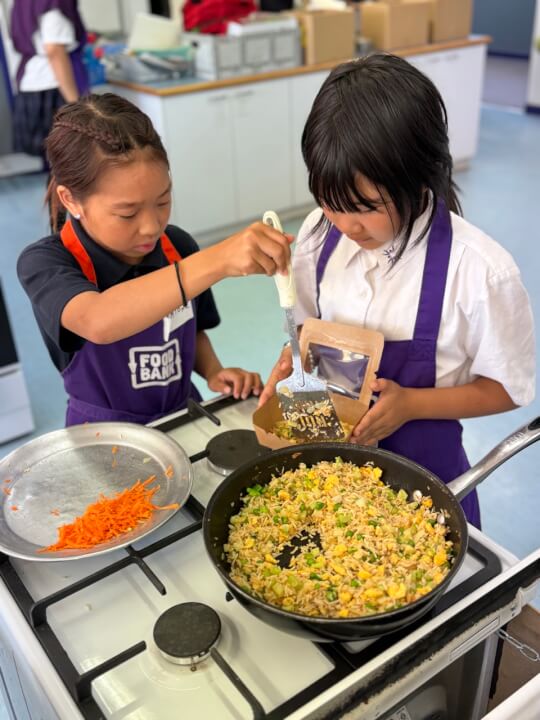
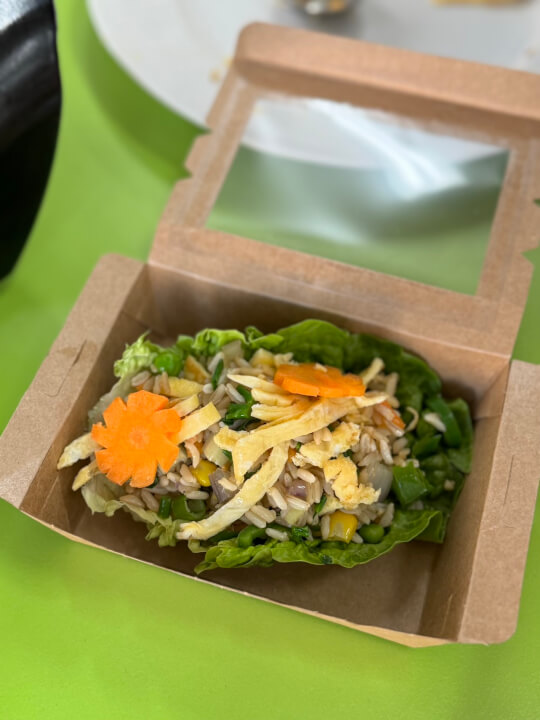
fried rice

Creating Connections

The families that took part in Cooking Classes appreciated the chance to spend quality time with their children while learning about healthy cooking. One parent noted, “The Cooking Classes program was a fantastic opportunity for us to bond as a family and learn new recipes. My children were thrilled to see me at school and work together on something so fun and educational.”   

The Cooking Classes experience and learning extends beyond the classroom, giving students practical experiences that enhance their teamwork and problem-solving skills, not just at school, but in the home. The food hampers provided mean that families can continue building on their in school positive experiences and connections, at home. 

One parent, who attended with her prep student, also brought her year seven son along – on his birthday no less. She loved that it was a fun and educational activity they could do as a family, noting that group activities catering to varying age groups can be difficult. (As is bonding with a teenager!) 

Iyor w dad

Nguyens

Testimonials

From the school’s perspective, the Cooking Classes have been a tremendous success. They saw quite a few of the participants try sushi and rice paper rolls for the first time. Assistant Principal Rob Guppy said “the cooking classes are a fantastic initiative that helps bring families together and educates them on healthy cooking. Our school saw benefits with parents and students working together, as well as families mixing with each other which was great to see.”