Everyone deserves dignity

Mum and son doing laundry

Week of Care

Shining a light on essentials

From July 14 to 20, Week of Care highlights the everyday items many of us take for granted — and the difference they make for people doing it tough. When money is tight, household and personal care items are often the first to go.

Why it matters

Millions of Australians are struggling to put food on the table, with some skipping meals or going whole days without eating. The rising cost of living means more people are turning to food relief, and they’re needing support more often.


At Foodbank, we believe everyone should have access to good food and the dignity that comes with essential personal and household items.
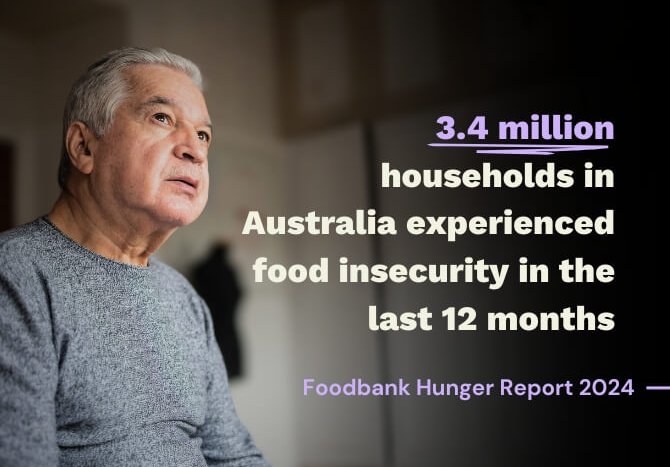
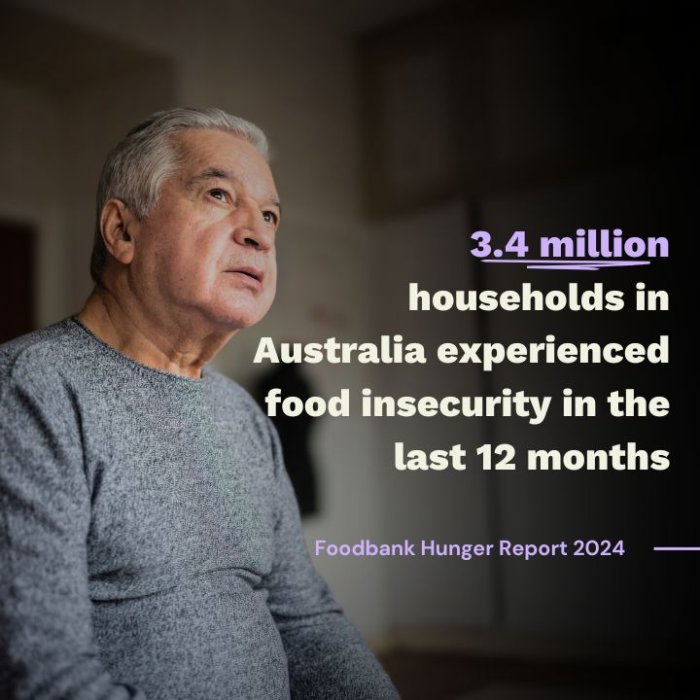
Image of man in kitchen with text overlayed saying 3.4 million households in Australia are food insecure

Everyday items that make a difference
Website x px


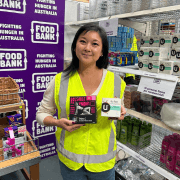
Things like toothbrushes and toothpaste, period products, makeup, moisturiser, nappies and baby wipes shouldn’t be a luxury — they’re basic essentials. For someone who has lost everything in a fire or flood, or is escaping domestic violence, these everyday items can make all the difference in helping them feel clean, cared for and ready to face the day.


That’s what Week of Care is all about — raising awareness of the growing need for personal and household care items, and the real impact they have on people’s lives.


The need is real and growing

“The toiletries that are available mean I can treat myself to something that I would not have the financial means to do so at this time and knowing the fact these items are donated makes it even more special.”

– Foodbank SA & NT client

    • Of the 3.4 million households experiencing food insecurity, almost half expressed a growing need for personal and household care products from charities and community groups.
    • For families with children, the struggle is even greater. More than half (51%) of food insecure households with kids asked for personal care while close to half asked for cleaning items.
    • The need for period care also remains high, with 26% of food-insecure households seeking access to these essential items.

What was donated to Foodbank last year

Thanks to the incredible generosity of our partners, more than 1.8 million kilograms of non-food essentials were donated to Foodbank last year. That’s a huge volume of everyday items. All sorted, packed and delivered to people doing it tough right across the country

We’ve highlighted some items we love below.
Period Care
We hear stories of people rationing pads or using socks or toilet paper to get by. For some, that idea seems unimaginable, yet it’s a harsh reality with severe and hidden consequences that many people across the country face. Period care is a necessity. It helps protect dignity, health and confidence — no one should feel ashamed because they can’t afford it. By making access easier, we can help people feel seen, supported and ready to keep going. “It’s just been a lifesaver to come to a place like this. I just appreciate it so much, it’s been a saviour… I am a strong woman and against all odds, I am always going to find a way to keep going.”
Baby Care
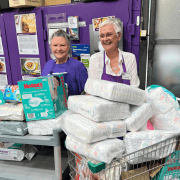
Every baby deserves to be clean, comfortable and cared for so they can thrive. Items like nappies and baby wash are essential for families doing it tough. These products support a child’s health and give parents peace of mind. For parents like Melonie*, having access to baby care essentials brings both relief and dignity. “I’m a single mother on disability having epilepsy. Foodbank means a lot to me and my family. It means we can eat quality food and have baby supplies etc.”
Makeup
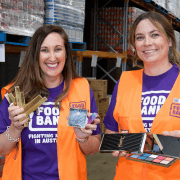
You might not expect us to provide makeup. But for many, it’s more than just appearance. Makeup supports self-care, confidence and a sense of normalcy. For some women, it helps conceal DV bruises or feel ready for work. Access to makeup can offer comfort, control and dignity in tough times. “I have a young son and a mortgage. I was getting bills and debt faster than I could pay. But thanks to Foodbank I was able to feed myself and my son nutritious food with all the staples plus treats and toiletries.”
Oral Care
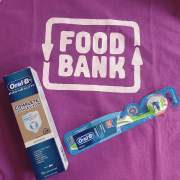
Taking care of oral health is crucial for overall well-being, from confidence to the ability to eat comfortably. Many of us understand the pain of oral issues and the expense of dental visits, which is why oral care is a daily priority. Unfortunately, for individuals and families like Keith* who struggle to afford food, access to essential grocery items like toothbrushes and toothpaste can be limited. “The toiletries that are available mean I can treat myself to something that I would not have the financial means to do so at this time and knowing the fact these items are donated makes it even more special.”
Household Cleaning
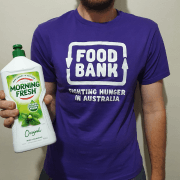
While cleaning the house or washing dishes may seem like mundane tasks, they are the building blocks of a happy home. They are the first lessons we teach our children, often accompanied by memories of soap suds fights with siblings or lively post-dinner chats. Clean spaces not only promote physical wellbeing but also contribute to our mental and emotional health, making them more than just chores. “Some weeks I don’t have much or sometimes nothing at all to eat or can’t afford cleaning products or self cleansing products. But I can get most general products from Foodbank.”
Hair Care
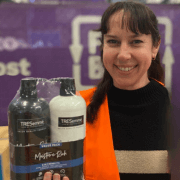
We can all agree how good it feels to have freshly washed hair. But for many Aussies, essentials like shampoo and conditioner are out of reach. These products are about more than hygiene — they help restore dignity, confidence and a sense of normal. This matters even more when there are children in the household. “I could not afford many items on my shopping list. Meat, fruit and vegetables were always a concern, carefully budgeted. Biscuits and treats were rare as well as many personal items. To discover Foodbank locally is such truly a Godsend. I have never been so content and eaten so well, a big thank you.”
Toilet Paper
Imagine the worry of not knowing if you can find toilet paper. For many of us, it was a brief experience during the panic buying of the pandemic. But for people struggling right now, this can be a daily stress: “Can I afford toilet paper this week?” “Trying to maintain a house on just a disability pension is difficult and with rising costs, it’s made life just a little bit easier having Foodbank as a backup to get the essentials.”
Skin Care
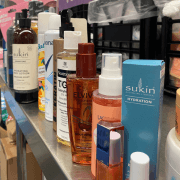
When budgets are tight, self-care products often get cut from the shopping list. Moisturisers, cleansers, and other products are not luxuries—they are essential for many men, women, teenagers, and children facing tough times. Everyone deserves healthy skin. It impacts confidence and can significantly affect those already struggling to pay the bills. That’s why we partner with companies to ensure a regular supply of products for our charities to offer their communities. “I am a pensioner and renting. I have little left out of my pension for food and personal things. I am so glad I found out about Foodbank. It has helped me so much and I thank you very much.”

THANK YOU

In times of natural disaster, emergency, or just everyday hardship, our personal and household care partners are always ready to lend a hand. We are so grateful for their ongoing support in helping make sure Australians everywhere have access to the essentials they need.
Get involved

Max Gawn calling on Aussies to help provide three million meals to families facing winter hunger

Website x px

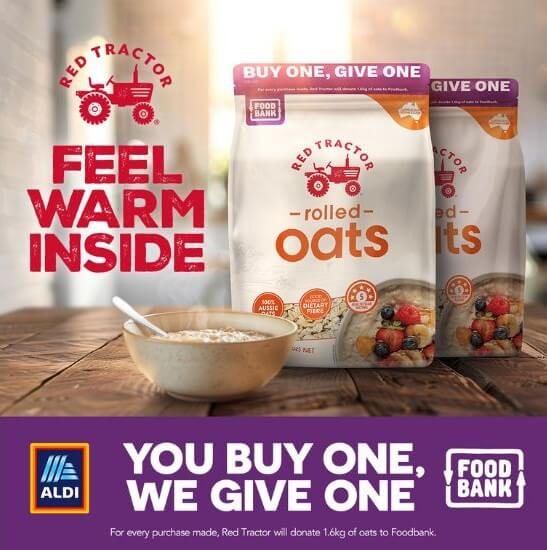
With winter hitting hard and food costs soaring, AFL superstar Max Gawn is challenging Australians to help deliver three million* breakfasts to families doing it tough through Red Tractor, ALDI Australia and Foodbank’s ‘Buy One, Give One’ campaign.

From Wednesday, 2 July, every 1.6kg bag of Red Tractor oats purchased at ALDI stores across the country will see 1.6kg of oats donated to Foodbank when the product will be available as a Special Buy, with each donated pack of oats providing up to 40 meals for families in need.
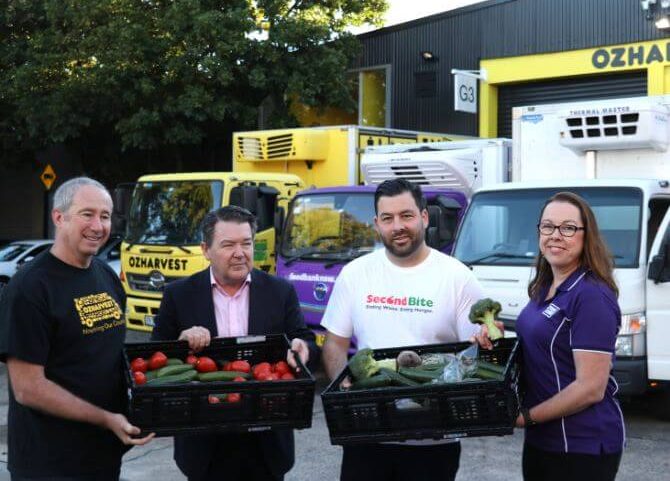
Supporting the campaign is AFL superstar and Melbourne FC Captain Max Gawn, who kicked off the initiative at Foodbank’s distribution centre in Yarraville, Victoria.

“As an athlete, I know how important a good brekkie is to set you up for the day. But millions of Aussies are going without that basic start. When you grab your Red Tractor oats during this campaign, you’re not just feeding your family, you’re feeding another family too. It’s such a simple way to make a huge impact for Aussies doing it tough this winter,” said Gawn.

*3 million breakfasts are calculated using the 40g serving size of the 1.6kg product

Red Tractor and ALDI’s partnership with Foodbank comes at a pivotal time for Australians in need.
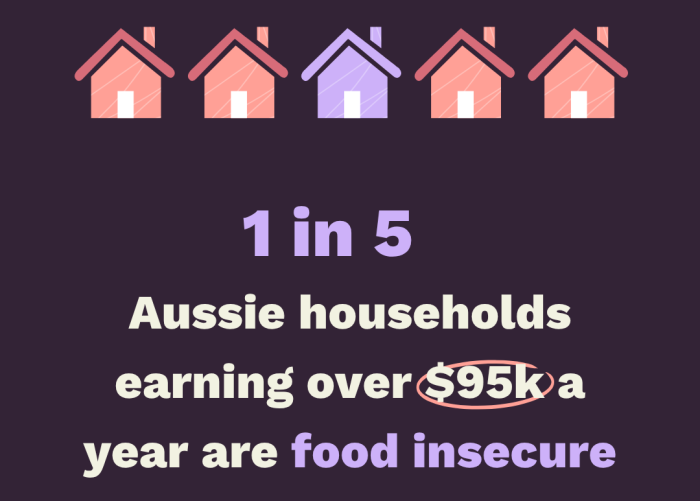
Foodbank’s Hunger Report 2024 highlights that low-income households are at a breaking point. One in five median income households (earning >$95K per year) are food insecure and more than half (59%) of all food insecure households in Australia are experiencing it at the severe level, regularly skipping meals or going entire days without food.

Red Tractor CEO Andrew Loader said, “Every day we see Australians choosing between heating and eating. This winter, we’re not just asking people to buy oats, we’re asking them to be part of the solution.”

Help deliver three million meals: Max Gawn Backs Foodbank Campaign
Website x
“As a proud Australian brand, we see this as our responsibility. Every bag purchased doesn’t just support Australian farmers, it directly feeds families who otherwise might go without.”

Red Tractor’s ‘Buy One, Give One’ campaign and partnership with ALDI is in its second year, with last year’s campaign saw three million meals donated through Foodbank’s community programs. This year’s campaign aims to deliver even greater impact across the campaign period.

Foodbank Australia CEO, Brianna Casey AM, said, “We believe everyone deserves to have access to good food and there is nothing more satisfying on a cold winter’s morning than a warm bowl of oats to start the day. We are incredibly thankful to Red Tractor and ALDI for the generous support they provide Foodbank with this much-needed donation of delicious, nutritious Australian grown oats.”

Website x
ALDI Australia Buying Director of Breakfast products, Daniel Quinlan, said the company looks forward to continuing this partnership with Red Tractor and Foodbank.

“At ALDI, we’re proud to partner with Red Tractor and Foodbank on this meaningful initiative that supports Aussie families doing it tough this winter,” said Mr Quinlan.

“The ‘Buy One, Give One’ campaign is a simple yet powerful way to make a Good Difference, and we’re grateful to be part of a program that delivers real impact to local communities.”

THANK YOU, Red Tractor & ALDI

Food Security Strategy Crucial for Australia’s Hunger Problem

Food Security Plan Feature Copy

4 March 2025, Sydney: Foodbank Australia has welcomed today’s commitment that a re-elected Labor Government will develop a new, National Food Security Strategy.

Foodbank has been calling for a bipartisan, whole-of-government approach to food security for almost a decade, recognising the importance of a forward-looking strategy to underpin the efforts of the public, private and non-profit sectors on this issue.

“Every Australian should have reliable access to healthy, culturally appropriate food, but this is not the case for more than 3 millionhouseholds across the country”, Foodbank Australia CEO, Brianna Casey AM said today.

Website x px
Website x px

“With a cyclone barrelling towards South-East Queensland, heatwaves across much of northern Australia and fires still burning in Victoria and Tasmania, the resilience of our food systems is being continually tested,” Ms Casey said. “Whether triggered by natural disasters, geopolitical instability or workforce issues, supply chain disruption is now the norm, and the impacts are only adding to the strain on household budgets”.

Untitled design

The Foodbank Hunger Report 2024 revealed that food insecurity is no longer just a low-income household problem. One in 5 median income households is now experiencing food insecurity, with 10% of these median income households severely food insecure, meaning they are skipping meals and even going entire days without eating to ensure they can keep a roof over their heads.

“Foodbank is already sourcing 252,000 meals a day and supporting more than a million people a month, but despite our best efforts, we simply cannot keep up with the demand for food relief across Australia,” Ms Casey said.

“The cost-of-living crisis not only drives up demand for food relief, with more and more households struggling with the increased costs of food, housing and utilities, but also impacts Foodbank’s supply,” Ms Casey explained. “The cost of sourcing, storing and transporting essential food relief is increasing by the day and simply cannot be sustained at current funding levels.”

“We have called for strong leadership on food security, with strong policies backed by meaningful investment” Ms Casey said. “A National Food Security Strategy is a crucial first step towards securing food security for every Australian, no matter their circumstances and a positive sign of things to come”.

Learn how we’re ending hunger and create change every day, with the help of our incredible partners.

We source and distribute meals nationwide—supporting charities, schools and communities in need.

Rectangle 76 1

Charity partners

Schools

Transport services

Natural disaster relief

Collaborative Supply Program

(i.e. generating or supplementing food supply efforts)

Nutrition

Reducing food waste

Advocacy

Research and reports

Get involved

This is more than just toilet paper

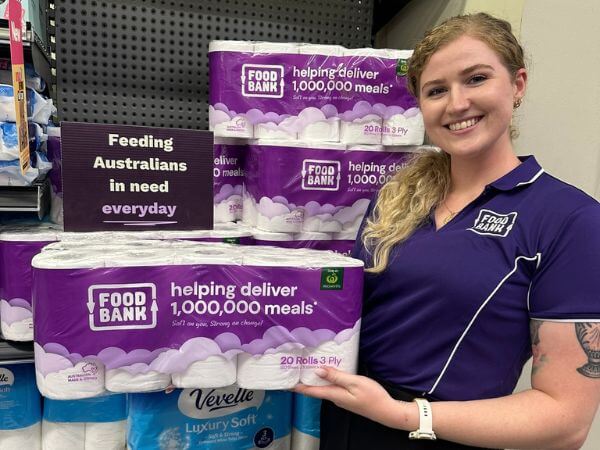
Foodbank staff member smiling holding up Foodbank Toilet paper in store at Woolworths.

We’re helping end hunger

With every pack of Foodbank Toilet Paper, you’re doing more than stocking your home with an essential. You’re helping provide meals for people in need. 
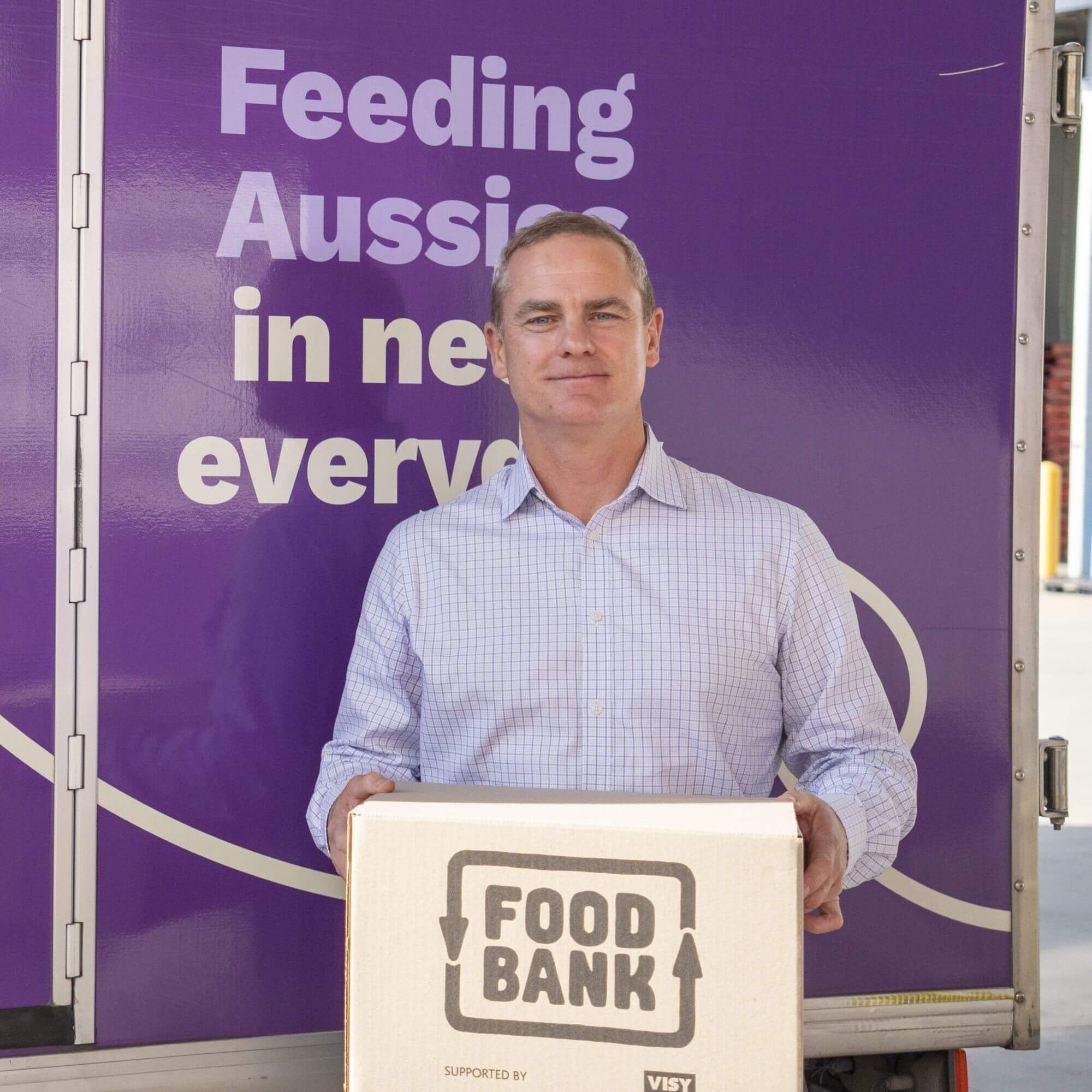
Together with our partner Encore Tissue, the makers of this product, we’re on a mission to provide 1 million meals by 2026.

Together, we’ve raised…

Goal: 1000000 meals
250,000
500,000
750,000
95771 meals !

Why your choice matters

FBA Research FoodbankHungerReport2025 DaughterWithMumInWheelChair Stock (600x450px)

3.5 million households across Australia are experiencing food insecurity. This means they are often skipping meals, reducing portion sizes or even going entire days without eating. 

Foodbank Hunger Report

Foodbank across Australia

51M

kg of food and groceries sourced

92M

Equivalent meals sourced

2966

Charities Supported

3649

School Feeding Programs Supported

$1.8B

Social Return On Investment (SROI)

Thank you to our incredible partner, Encore Tissue, for making this possible.

Encore Tissue Logo

Get involved

Duncan Makeig elected new Foodbank Australia Chair

22nd November 2024, SYDNEY:

Former Managing Director of Lion Asia Dairy, Duncan Makeig has been elected unopposed as Foodbank Australia Chair of the Board, succeeding outgoing Independent Chair, Tony Froggatt following his nine years of service.

Having served on the Foodbank Australia Board since the start of 2023, Mr Makeig brings a wealth of experience in legal and corporate governance from his 30-year management career working across various senior leadership positions in Australia and the United States at Heineken-Lion, PepsiCo, China Road and Tricon Restaurants (Yum! Brands), complementing his agricultural experience as Director of Wirrabilla Pastoral.

Duncan is equipped with a deep understanding of the not-for-profit sector having previously chaired the Sydney Children’s Hospitals Foundation and Curing Homesickness Ltd, and is currently serving as an Independent Non-Executive Director on the Endeavour Board.
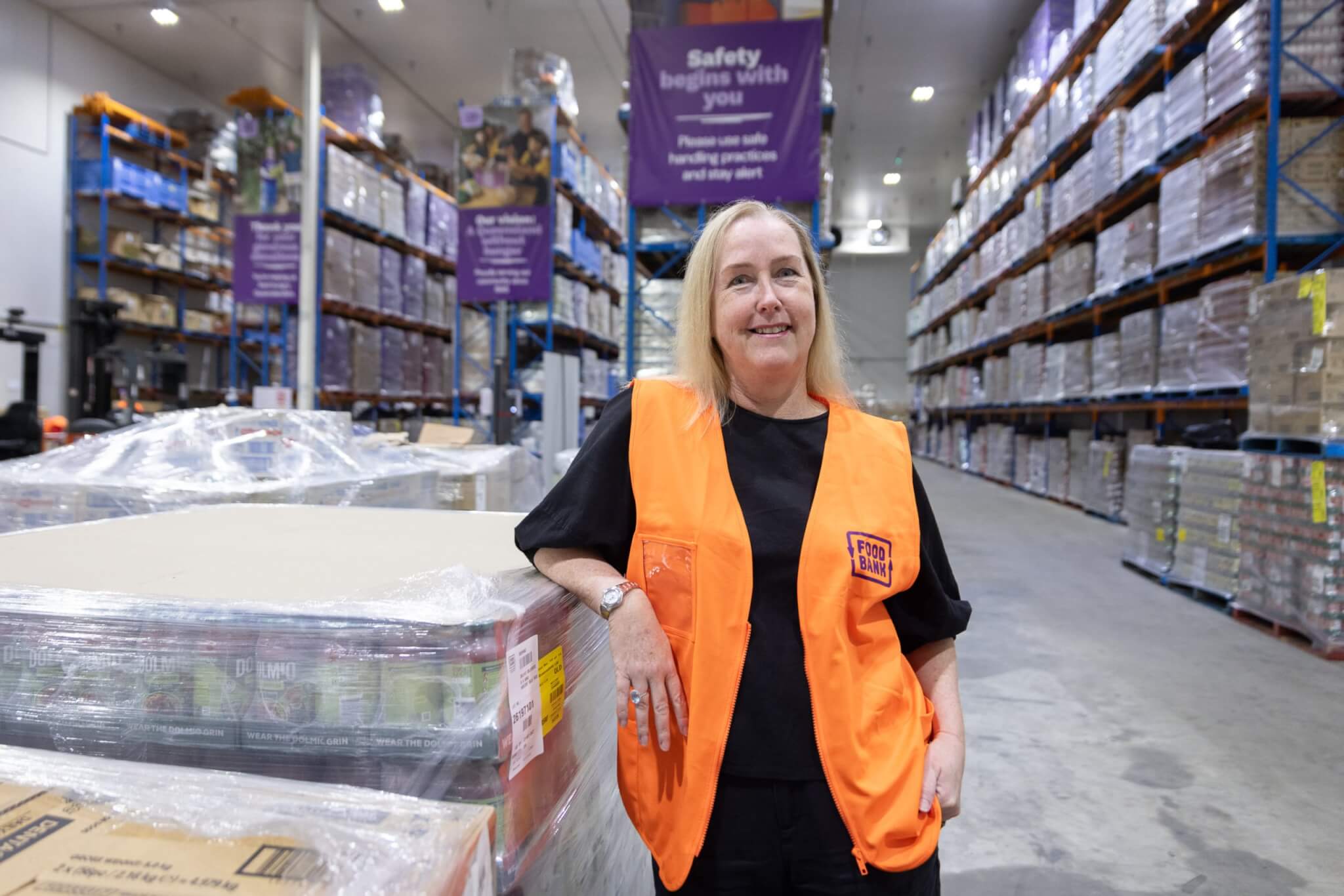
“Having sat on the Foodbank Australia Board for the last 18 months, I have seen firsthand the extraordinary impact that Foodbanks have across Australia”, Mr Makeig said.

“I look forward to working alongside my fellow Board members and the Foodbank Australia team, led by CEO, Brianna Casey as we look to build on Tony’s legacy and meet the ever-growing demand for food relief in city and country communities across Australia.”

DHM Headshot2

“Having sat on the Foodbank Australia Board for the last 18 months, I have seen firsthand the extraordinary impact that Foodbanks have across Australia”, Mr Makeig said.

“I look forward to working alongside my fellow Board members and the Foodbank Australia team, led by CEO, Brianna Casey as we look to build on Tony’s legacy and meet the ever-growing demand for food relief in city and country communities across Australia.”

Outgoing Chair, Tony Froggatt, leaves the role after a successful nine years, helping build awareness of and trust in Foodbank while fostering closer collaboration between members of the food relief sector over the course of his tenure.

This relationship has allowed the sector to promote policies that prioritise the millions of Australians going hungry, notably the ongoing push for a National Food Donation Tax Incentive.

Since joining in 2015, Mr Froggatt has guided the Foodbank team through natural disasters, the Covid Pandemic, and the ongoing cost-of-living crisis.

Tony Froggatt 1

“It has been a privilege to serve as the Foodbank Australia Chair. I have enjoyed the experience, and it has given me such purpose to work alongside my colleagues on the board to make a difference to the lives of so many Australians. I wish Duncan well in this next chapter of Foodbank’s ongoing commitment to helping those in need”, said Mr Froggatt.

With 3.4 million Australian households experiencing food insecurity, Mr Makeig takes the reins as the cost-of-living crisis continues to heavily impact the lives of vulnerable communities.

His extensive leadership experience and charity sector background inspires confidence that he will oversee Foodbank’s next chapter with stability amongst an increasingly unpredictable social and economic climate.

Brianna Casey Foodbank Australia CEO (14)

Commenting on the Chair transition, Foodbank Australia CEO, Brianna Casey AM, said, “Tony’s leadership over the past decade has left a legacy on the food relief sector in this country. His commitment to supporting those in need has ensured we have been able to grow to where we are today, establishing strong foundations for Duncan to build on as we strive for an Australia without hunger.”

Learn how we’re ending hunger and create change every day, with the help of our incredible partners.

We source and distribute meals nationwide—supporting charities, schools and communities in need.

Rectangle 76 1

Charity partners

Schools

Transport services

Natural disaster relief

Collaborative Supply Program

(i.e. generating or supplementing food supply efforts)

Nutrition

Reducing food waste

Advocacy

Research and reports

Get involved

Pressure growing for Federal Government to adopt targeted cost of living relief

Feature Image tax

Monday 18 November 2024: Foodbank Australia insists the federal government can no longer ignore the mounting pressure to adopt an incentive for farmers and small to medium businesses that has the potential to halve food waste by 2030 and provide the equivalent of 100 million nutritious meals every year to food relief organisations, something that is vital in this current cost of living crisis.

Tax Incentive Bill could help to halve food waste by 2030

Website x

The Tax Laws Amendment (Incentivising Food Donations to Charitable Organisations) Bill 2024, introduced by WA Senator Dean Smith, aims to incentivise small to medium food producers, such as farmers and growers, to donate excess fresh fruit and vegetable to charitable organisations like Foodbank, critical in meeting the rising demand of those accessing food relief in Australia.

In the same week that two government reports were handed down, both recommending the adoption of the food donation tax incentive as a targeted non-inflationary measure to address cost of living pressures, the Senate economics committee has rejected the Bill that would have brought the incentive to life.

Foodbank Australia believes that ignoring the advice of industry experts, ultimately fails our agriculture sector and the many Australians struggling to put food on the table despite growing evidence and overwhelming support for the incentive.

Foodbank CEO: Rejection a blow to farmers and families in need

According to Foodbank Australia CEO, Brianna Casey AM, the rejection of the bill is a blow to the food relief organisation’s efforts to provide consistent, nutritious food relief to millions of people experiencing food insecurity.

“At a time when 3.4 million Australian households are struggling to put food on the table, this decision is not just perplexing but disheartening for hardworking farmers and growers who desperately want to do more to help get food on the tables for those doing it tough.

“The Federal Government has the opportunity to make a positive difference and to act on the numerous recommendations coming from the Senate, House of Representatives and Victoria, South Australia and New South Wales state governments, all calling for this smart policy to be adopted. We urge the federal government to adopt the tax incentive which would deliver an immediate increase in healthy food to struggling families weeks out from Christmas,” Casey said.

Pressure Mounts on Federal Government for Food Donation Tax Incentive

Help us create meaningful change

Sign the letter of support today 

Stay up to date


Sign up using the form below to receive updates on the progress of the proposal and information on what you can do to support it

Supporters NDTI (FBA)
First Name
Last Name
Email
Title
Company

Spread the word


Join us in driving meaningful change by raising your voice in support of this tax incentive. We’ve prepared key messages to help you get started—download them today and make an impact!

a white background with text and a white background


Get involved

Low-income households at breaking point and routinely skipping meals

Feature Image hunger report
Tuesday 15 October: Low-income households are enduring the highest rates of food insecurity since the onset of the cost-of-living crisis, according to the Foodbank Hunger Report 2024, released today.

Now in its eleventh year, the report from food relief organisation Foodbank, surveyed 4,260 people and highlights the growing divide between those who are able to absorb or adapt to rising costs and those being left behind. More than 870,000 (48%) of Australia’s low-income households (earning less than $30,000) are experiencing food insecurity. This is the highest rate since the onset of the cost-of-living crisis, up 5% on 2022. 

The report offers an insight into the state of hunger across the country and reveals more than half (59%) of all food insecure households are experiencing the most severe level of hardship, regularly skipping meals or going entire days without food.

Food Security Plan Feature Copy

Single parent households are the hardest hit with over two-thirds (69%) facing food insecurity and 41% of these also experiencing the severest form.

Foodbank Australia CEO, Brianna Casey AM is extremely concerned with the latest findings.

“We warned at the beginning of the cost-of-living crisis that low-income households were always going to suffer first, worst and for the longest and these findings confirm this. We are seeing families that were just getting by, now reaching their limits and making unimaginable choices.”

This year’s report highlights the most common contributing factors to food insecurity in Australia.

“Unsurprisingly, people are being forced to cut back on the most basic of essentials, nutritious food, because of the combination of higher costs of housing and essential goods, particularly food and utilities, while wages fail to keep pace – all of which are entirely outside of the control of most Australian households,” said Ms Casey.

FBA Charity Schools Kidseatingtoast Foodbank

Food relief charities such as Foodbank are continuing to experience heightened demand, not only because of the ongoing impacts of the cost-of-living crisis, but also the increase in awareness of where to get help, coupled with core support systems, such as family and friends, no longer being able to assist.

More than half (53%) of food insecure households reported they are receiving food relief more often than a year ago. Worryingly, food insecure households receiving help from friends and family has dropped significantly from 32% in 2023 to 25% in 2024.

“This is an alarming statistic that demonstrates just how desperate the situation has become for those who were once a lifeline suddenly finding themselves living pay to pay, watching every dollar and sadly, no longer in a position to extend help to loved ones and friends.

“We know it’s going to take months, if not years, for many families to bounce back. We will continue to wrap our arms around our communities for as long as it takes, doing our bit to help nutritious, culturally appropriate food get to as many struggling households as possible,” said Ms Casey.

Rectangle 76

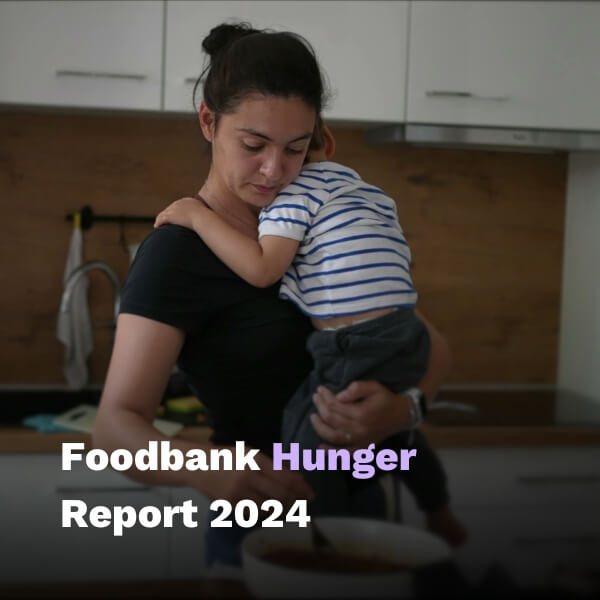
Foodbank Hunger Report 2024

Read now

Struggling Aussies requesting period care products

Feature Image period care
15 July 2024, Sydney: The inability to afford period products has hidden and severe consequences including missing school or work or using unhygienic items such as socks, newspapers and rags as replacements, potentially leading to medical issues.

Foodbank Hunger Report 2023 revealed that 29% of food insecure households need more period products from charities and community groups. The report also found that 47% of food insecure households were requesting more everyday household items such as cleaning and personal care products with the cost of living being the main reason for so many households doing it tough.

Research by Share the Dignity, a charity dedicated to sourcing and distributing period care products to those who need it, found that 19% of high school students often or sometimes stayed at home because they could not afford pads or tampons while one in ten tertiary students and employees reported having trouble buying period products every month for the same reason.

Struggling Aussies requesting period care products

Brianna Casey AM, Foodbank Australia CEO, understands that ensuring period products are available to everyone who needs them is essential for the wellbeing of those in need, “Providing access to essential period care products is about more than just health – it’s about dignity, comfort and confidence when they turn up to school or work and providing them with what they need to simply be themselves.”

Get involved

Historic reform a step towards feeding hungry Australians

Feature Image tax incentive

Friday 28 June 2024: Legislation introduced next week aims to unlock tonnes of fresh fruit and vegetables for hungry Australians struggling with the cost-of-living crisis. Inspired by the National Food Donation Tax Incentive, this new reform represents a significant step forward in addressing food insecurity in Australia.

Western Australian Senator Dean Smith will table a Private Senator’s Bill, the Incentivising Food Donations to Charitable Organisations Bill, in the Senate. This Bill aims to change Australia’s tax system to encourage the donation, rather than dumping, of food. It has the potential to deliver millions of extra meals and help Australia reach its bipartisan commitment to halve food waste by 2030.

The Bill is inspired by the National Food Donation Tax Incentive, a proposal developed by KPMG through the support of End Food Waste Australia, the NSW Environmental Protections Agency and Queensland Department of Environment and Science. It incentivises food businesses, such as farmers, wholesalers and transporters to donate surplus food and allied services to Australian food relief charities.

The incentive has garnered support in recent Parliamentary inquiries and was a key recommendation in the House of Representatives Standing Committee on Agriculture’s Report into Food Security in Australia. It also enjoys widespread endorsement from representative organisations and businesses in the Australian food industry and works successfully in other countries, including France, Canada, and the United States.

Website x px
Website x px

Foodbank Australia CEO, Brianna Casey AM, stressed the importance of this incentive.

“We have families unable to put food on the table despite tonnes of perfectly edible food being dumped or ploughed in each year. We know that households under financial pressure have been forced to reduce – or even remove – their spend on fresh fruit & vegetables and protein, meaning demand for these products at food banks across Australia has skyrocketed. This tax incentive is smart policy, and the debate in the Senate next week should be about how quickly we can introduce it, not about party politics.”

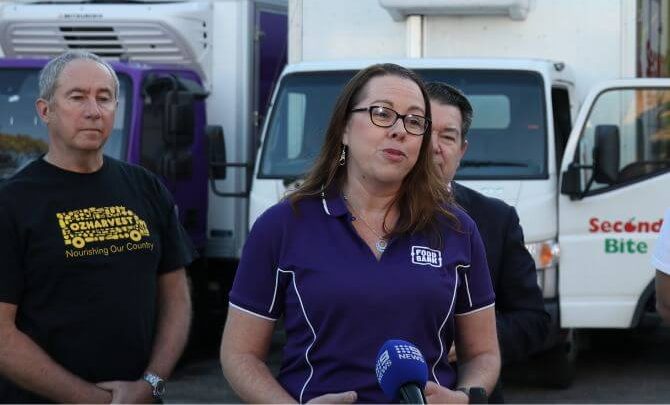
OzHarvest CEO, James Goth, agreed, “Demand for food relief is at an all-time high and our charities are telling us they are struggling to cope with the ongoing increase in numbers. This bill has the potential to get edible food off farms and onto the plates of those who need it most, addressing food security and food waste simultaneously. It’s crucial for politicians to recognise this need in the community and unite to implement this reform.”

SecondBite CEO, Daniel Moorfield, added, “We are committed to working with the government and all stakeholders to ensure the successful implementation of this tax incentive. Together, we can make a lasting impact on the lives of millions of Australians and move closer to achieving our food waste reduction goals.”

Website x px

Senator Dean Smith stated that the Bill represents a single, straightforward solution to two problems.

“Food relief charities are fighting to meet unprecedented demand, while at the same time an unbelievable amount of food is dumped each year, much of it edible, and often because it’s cheaper than donating it. My Private Senator’s Bill – originally shaped by the National Food Donation Tax Incentive and refined through close consultation with the Australian charity sector – is aimed at turning that around and delivering meaningful help to Australians in need.”

The Bill will be introduced into the Senate on 3 July and is expected to be referred to a committee for inquiry. Stakeholders will have an opportunity to make submissions of their suggested changes and improvements, with a Parliamentary report to be delivered by 30 October.

Latest news

Noongar artists invited to help shape Foodbank WA’s new South West facility

Find out more
Noongar artists invited to help shape Foodbank WA’s new South West facility

Her Excellency, the Hon Ms Sam Mostyn AC, Governor-General of Australia, appointed as Patron of Foodbank Australia

Find out more
Her Excellency, the Hon Ms Sam Mostyn AC, Governor-General of Australia, appointed as Patron of Foodbank Australia

Foodbank Australia – Welcomes Chef Matthew Butcher as National Ambassador

Find out more
Foodbank Australia – Welcomes Chef Matthew Butcher as National Ambassador

A New Chapter Begins: Meet Our New CEO Ben Scales

Find out more
A New Chapter Begins: Meet Our New CEO Ben Scales

Foodbank WA helps power the journey to Dust Up

Find out more
Foodbank WA helps power the journey to Dust Up

Foodbank welcomes Sam Evans as Chief Executive Officer

Find out more
Foodbank welcomes Sam Evans as Chief Executive Officer

Struggling Australians go hungry to feed their pets

Thursday 11 April 2024: Pet owners living in food insecure households are resorting to self-sacrifice to protect the welfare of their pets, with almost a quarter (24%) skipping meals so their pets can eat.

According to a report published today by Foodbank Australia to mark National Pets Day, food insecure households value their pets to such an extent that they don’t want to let them go hungry. 

Despite continued cost of living pressures, surrendering pets is an absolute last resort with 14% of pet owners in food insecure households reported giving up a pet during the previous 12 months. As low as this is, it is still twice the national average for Australian households (7%).

The report, supported by Mars Petcare Australia, a long-standing donor to Foodbank with brands such as Pedigree and Whiskas, reveals that half (56%) of food insecure households in the past 12 months own a pet, higher than the Australian average (48%).

According to survey respondents, pets play a crucial role in their lives. They offer companionship, emotional support, increased social interaction and a sense of security and purpose – all of which can be otherwise challenging for those doing it tough.

“Many families facing food insecurity struggle to provide proper nutrition for themselves, let alone their pets, which can lead to significant health and wellbeing consequences for pet owners as well as their pets,” said Foodbank Australia CEO, Brianna Casey.

We have heard previously that parents skip meals in order to ensure their children can eat, but we are now hearing this sacrifice extends to the welfare of pets, who are very much-loved family members.”

Website x px
Website x px

Commenting on the report findings, General Manager of Mars Petcare Australia, Craig Sargeant said, “We know the valuable role pets play in Australian households, particularly households in need, and we are proud to support Foodbank in highlighting the struggle that pet parents in food insecure households are facing. This includes continuing our donation program with Foodbank focused on keeping pets healthy and remaining in loving homes.

We have heard previously that parents skip meals in order to ensure their children can eat, but we are now hearing this sacrifice extends to the welfare of pets, who are very much-loved family members.”

In 2023, Foodbank provided over 430,000 kilograms of pet food, valued at over $6 million, thanks to food industry partners such as Mars Petcare, yet the research reveals that only 9% of pet owners from food insecure households are aware that pet food is available as a part of food relief services.

“This figure is staggering and shouldn’t be happening. We want people to know if they are doing it tough, if they have pets, we can help them and their pets. Head to the Find Food button on our website to find a service near you that can assist,” said Ms Casey.

As part of Mars Petcare Australia’s ongoing support of Foodbank Australia to assist Australians experiencing food insecurity, Mars Petcare Associates will be donating their time on National Pet Day to make essential pet food hampers including Pedigree, Greenies, Whiskas and My Dog.

Want to know more?

Get involved