MESSAGE FROM FOODBANK AUSTRALIA CEO, BRIANNA CASEY

We made it! After what has seemed like the longest and toughest year imaginable, we are crossing our fingers and toes that this summer will be a very different one to the last. That said, experience has taught us well, so every Foodbank across the country is ready should we be called upon to assist with emergency food relief, no matter the natural disaster. Being a La Nina year, this is more likely to be cyclones and floods than drought and bushfires, but as the fires currently burning on Queensland’s Fraser Island and the consistently high fire danger warnings in Western Australia are showing us, anything is possible in an Australian summer.

As the year draws to a close, it would be remiss of me not to acknowledge the tireless efforts of every state and territory Foodbank team across the country, including their wonderful volunteers. Most teams have not had a moment’s pause this year, transitioning straight from drought to bushfires and then COVID-19, on top of our everyday role of assisting those experiencing food insecurity for any number of reasons.

Foodbank’s unrivalled ability to scale up and reach more vulnerable communities than we ever have before is only possible because of our incredible donors and supporters. I’ve never been prouder to be a Foodbanker, and I have been so humbled by the generosity, kindness and compassion we have seen from Australian businesses, manufacturers, retailers, farmers, community groups and general members of the public this year. Please know how grateful we are and how much your support has touched the entire Foodbank family.

I hope the festive season is a happy, healthy and relaxing one for you, your team and your family, and – border restrictions permitting – we look forward to seeing you next year!

Foodbank bushfire appeal calls for funds, food and groceries

Thursday 9 January 2020 – Australia’s leading hunger relief organisation, Foodbank, is playing a crucial role in the current unprecedented bushfire crisis and has the latest urgent request – Foodbank is still accepting donations from the public in all states around the country, but it’s preference is funds to be donated at www.foodbank.org.au.

Foodbank warehouses are open in every capital city for the general public to drop off donations of much-needed food and groceries.

Most wanted items:

  • Donated funds to www.foodbank.org.au
  • UHT Milk
  • Bottled water
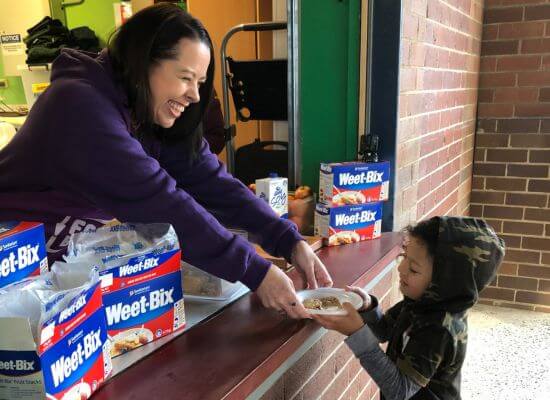
  • Breakfast cereals
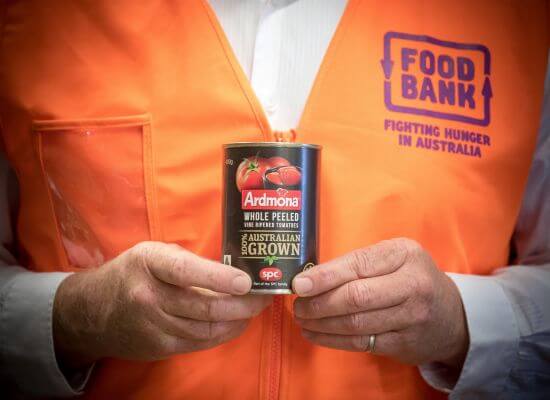
  • Good quality tinned foods and meals (with ring pulls)
  • Pasta, rice and noodles
  • Grab-and-go foods like muesli bars
  • Pet food
  • Baby products – formula, nappies, pureed food in jars / pouches


With more than one in five Australians experiencing food poverty at some point in the last 12 months[1], Foodbank Australia is currently providing food and grocery relief to 815,000 Australians every month, on top of additional support to communities currently experiencing natural disasters.


See www.foodbank.org.au/bushfire-emergency for locations and opening hours.


-Ends-

Media enquiries

Rebecca Collins
Foodbank Australia
M +61 409 786 132
E Rebecca@foodbank.org.au

[1] Foodbank Hunger Report 2019

Vital drought and disaster relief funding sought by leading food relief organisation

Monday 16 December 2019 – Australia’s leading food relief organisation, Foodbank, is seeking crucial investment in drought and natural disaster relief in its submission to the Federal Government ahead of the forthcoming annual budget.


As the only dedicated food relief organisation involved in providing emergency relief, at scale, to hard-hit regional communities, Foodbank is being stretched to the limit. This essential work comes on top of providing food and groceries to 815,000 Australians every month as part of its ongoing food relief services via 2,400 charities nationally.


Foodbank has identified a number of areas that require urgent Federal Government investment if Foodbank is to be able to answer the call for even more support at the same time when many of its traditional sources of food, including farmers and manufacturers, are themselves suffering from the fallout of the ongoing drought conditions.


Foodbank Australia CEO, Brianna Casey, emphasised the urgency of the situation, “We are currently struggling to assist all communities affected in the unprecedented bushfire emergency gripping both New South Wales and Queensland. Given emergency relief is on top of our day to day food relief efforts across the country, in addition to the growing number of drought-affected communities, we’re seriously questioning whether we can sustain this level of intensity for what’s set to be a particularly challenging summer.


“Foodbank plays a unique role in emergency response. When the crisis hits, we are able to quickly mobilise with essential supplies to stricken areas. This may be with items such as bottled water, batteries, toilet paper and food that doesn’t require refrigeration and cooking when there is no power in the area. Over time the need may change to ingredients for hot meals in evacuation centres, and ultimately to hampers of key staples and household cleaning products for people returning to their homes.


“Foodbank is playing an essential role in helping Australia make it through these incredibly challenging times. We can only continue to do this with increased support from the Federal Government,” Casey explained.

Foodbank releases ‘Most Wanted’ list for Christmas giving

Christmas can be a tough time for many Australians, particularly those in our communities struggling to put a meal on the table, or trying to fill hungry bellies these school holidays. More than one in five Australians have experienced food poverty in the past 12 months – that is, they have run out of food and are unable to buy more. These are everyday Australians who have fallen on tough times, whether it be related to drought or natural disasters, job loss, rental or housing unaffordability, unexpected expense or a serious medical condition.

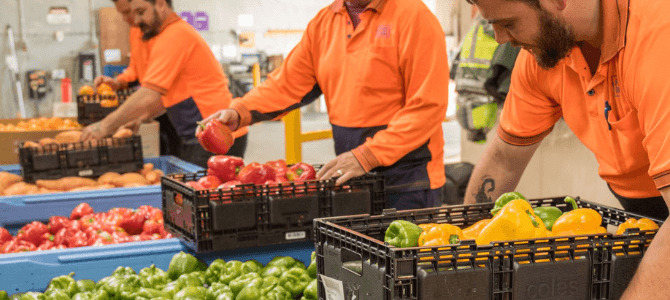
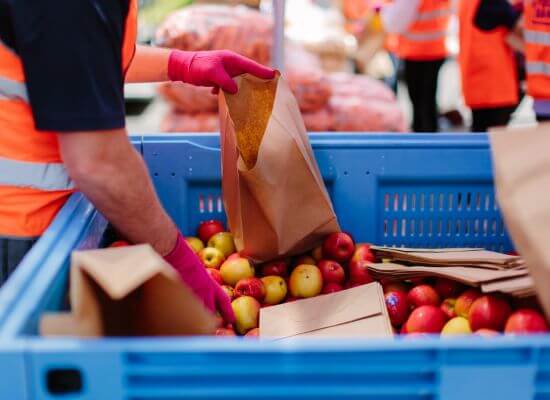
Foodbank Australia is working hard right across the country to ensure families and individuals can put a meal on the table – not only on Christmas day – but for as long as it takes to get them back on their feet. This means sourcing and distributing massive volumes of food and groceries.

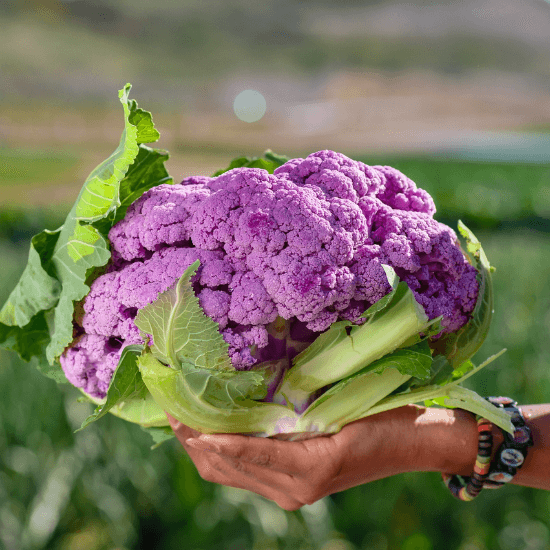
At this time of year Foodbank relies on donations of wonderful fresh produce from farmers right across Australia; a mix of products from the Australian food and grocery manufacturing sector and retailers; food donated from food drives held by preschools, schools, community groups and corporate Australia; and financial donations through fundraising appeals. With both drought and bushfires affecting so much of Australia right now, the need for donations has never been higher.

Foodbank Australia CEO, Brianna Casey, said, “It’s an absolute joy to see so many people holding food drives to ensure Foodbank can get more food and grocery items to vulnerable families this Christmas. However, we strongly encourage people to consult our ‘most wanted’ list before embarking on food drives to ensure they are focusing on the food and grocery items in strongest demand.”

Foodbank’s most wanted items this Christmas include everyday non-perishable items like breakfast cereal, pasta, noodles, rice, tea and coffee, canned fruit, vegetables, pulses, long-life milk, baked beans, tinned spaghetti, personal hygiene products, spreads like vegemite and honey. Christmas treats like Christmas cake or pudding, UHT custard or shortbread also make the world of difference during the holiday season.

“It’s times like this that we see Australians at their absolute best, supporting the most vulnerable in our communities through their generosity and kindness”.

Foodbank’s ‘Most Wanted’ Items

  • Breakfast cereal such as Weet-Bix and Cornflakes
  • Pasta, noodles and rice
  • Tea and coffee
  • Long life milk
  • Canned fruit, vegetables and tuna
  • Baked beans and spaghetti
  • Spreads like jam, peanut butter and Vegemite
  • Shelf stable meals, eg meals that can be stored at room temperature in a sealed container
  • Personal hygiene products such as shampoo, conditioner, toothpaste and toilet paper

Food waste in Australia

Did you know Australia produces enough food to feed everyone three times over? Yet 3.4 million households struggled to put a meal on their table last year.

Australia currently creates more than 7.6 million tonnes of food waste each year – enough to fill the Melbourne Cricket Grounds nine times. This is costing the Australian economy over $36.6 billion despite 70 percent of it is perfectly edible.

Around 10 percent of global greenhouse gas emissions come from food produced but wasted. In Australia, this represents 17.5 million tonnes of CO2 each year.

Australia is committed to the United Nations Sustainable Development Goal (12.3) to half food waste by 2030. We have a plan to help reach that goal. Foodbank’s food and grocery rescue operations saved 86.6 million kilograms of CO2 emissions in 2022*. We are an active participant in Stop Food Waste Australia and the Fight Food Waste Cooperative Research Centre, which are both committed to halving food waste by 2030.

We are also advocating the government to adopt a National Food Donation Tax Incentive, developed by KPMG Australia, with the support of the Fight Food Waste CRC and the food relief sector. If implemented today, this tax incentive would save around an additional 100 million meals a year by 2030, making an immeasurable difference to our sustainability and the well-being of vulnerable Australians.

Incentives along the same lines as our proposal are currently working successfully in the USA, France, Canada and the Netherlands. This approach has the potential to help generate social, economic and environmental benefits valued at $2 billion per annum. It would directly assist in achieving our ambitious food waste reduction target.

How can I help prevent food waste in my home?

More than a third of Australia’s food waste is generated in the home, so we all have a part to play. We often waste food because of confusion between best-before and use-by dates or because we’re unsure whether leftovers are safe to reheat. A little bit of food-handling knowledge goes a long way! To help fight food waste in your home, it’s as easy as clickinghere. With the average Aussie household wasting $3,800 every year thanks to wasting food, it’s worth the effort!

Do you have food or stock to donate?

Women bear the brunt of hunger in Australia


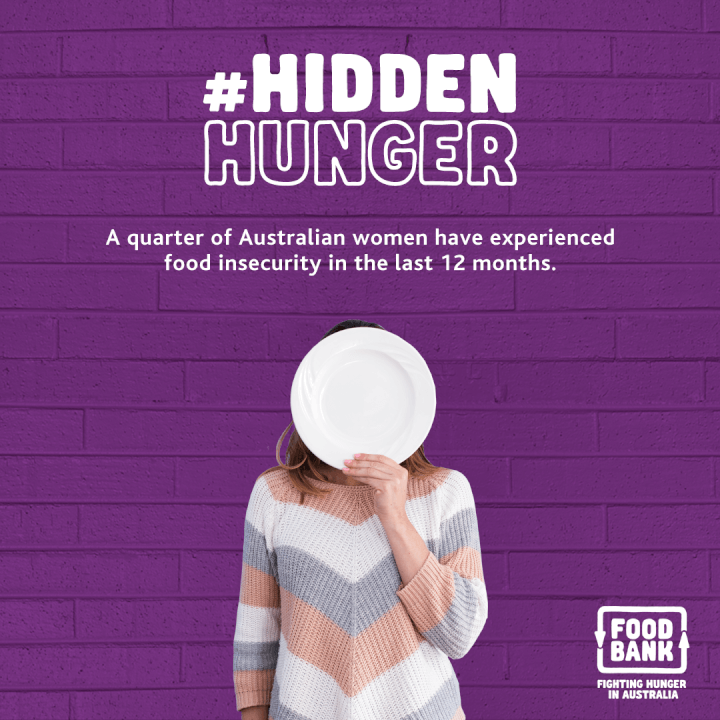
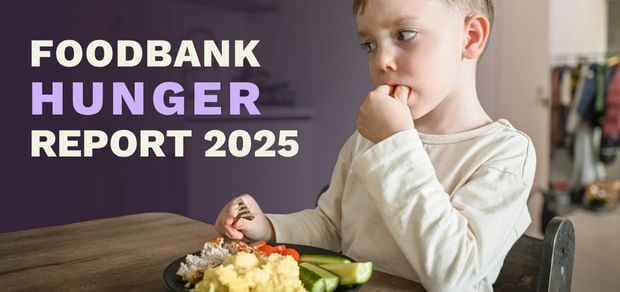
Foodbank has today revealed that women in Australia are 50% more likely to experience food insecurity than men and, in fact, a quarter of all women have experienced food insecurity in some form in the past 12 months.

The Foodbank Hunger Report 2019 discloses that the events that make women susceptible to food stress are also different to those for men. Women are significantly more likely at some time in their lives to have experienced domestic violence or financial abuse or to have raised children on their own for an extended time. Men, on the other hand, are more likely to have been unable to find a job for a lengthy period.

Food insecurity is also more likely to take an emotional toll on women the research finds, as they report being more likely to feel stressed and anxious than men. For example, mothers are twice as likely as fathers to feel like a bad parent when there is not enough food in the house.

The Foodbank Hunger Report, now in its seventh year, surveys 2,000 charities and 1,000 individuals from around the country who are experiencing food insecurity. Foodbank Australia CEO, Brianna Casey, explained the report aims to better quantify and understand what is a growing social crisis.

“We hear so many heart-breaking stories, from mothers skipping meals so their children can eat, to elderly women left on their own feeling isolated because they can’t offer their neighbours or friends so much as a cup of tea or coffee” she said. “We knew the situation was bad, but this year’s report confirms that it’s getting worse and the impact is skewed towards our most vulnerable women in the community.”

“In spite of the fact that Foodbank is now providing food relief for more than 810,000 people every month, what the report shows is that our charity network is still not meeting demand. There has been a 22% increase in the number of individuals accessing food relief in the past year and only 37% of charities believe they are meeting the full demand in their communities” stated Casey.

In the wake of these findings, Casey has challenged the government to act. “This problem is clearly not going away in fact its impact on the health and wellbeing of our communities is only going amplify. What is required is a long-term, whole-of-government plan to tackle this crisis head on. We are calling for a commitment to introduce a National Food Security Strategy to ensure we achieve zero hunger in this country by 2030,” Casey said.

The public can join the growing movement on social media to shine a spotlight on the issue of hunger in Australia by using the hashtags #HiddenHunger and #ZeroHunger, donating at www.foodbank.org.au or asking their local Member of Federal Parliament what they are doing to address food insecurity in Australia.

image content right

Foodbank Victoria named Yarra Trams Community Partner

We are very excited to be partnering with Yarra Trams as part of their Community Partnerships Program in 2020.

Yarra Trams is the largest, and one of the oldest, tram networks in the world and an iconic, much-loved symbol of Melbourne.

Just like our network of charity partners, Melbourne’s tram network brings people together by providing a service where everyone is welcome and included – no matter what their background, beliefs, preferences or abilities.

It’s at the heart of our community, connecting people to the places they want to go by providing a safe, sustainable, and inclusive travel option. And we know that with 5000 services a day, 1700 stops, and 487 trams in its fleet, Yarra Trams is playing a role in food relief too – transporting Melburnians on a daily basis to any one of our 280 metro-based charity partners for a warm meal, emergency food hamper or other vital support service.

The 2020 Yarra Trams Community Partnerships Program will provide $1 million of free advertising value to eight community organisations making a positive impact on diversity and inclusion in Melbourne. And this year, Foodbank Victoria is thrilled to have made the cut!

Keep your eyes peeled for us on Melbourne’s tram faces from October to December 2020, to celebrate our 90th year helping to feed Victorians in need.

Farmer Adrian

Foodbank is here for the long haul as the drought persists

Over a year ago, the Australian public rallied behind farming communities struggling with the devastation of the ongoing drought. Drought conditions have worsened dramatically in others and it’s time to look after our rural communities.

Foodbank has unique insights into the impact of drought from two perspectives – firstly through the voices of rural and regional charities and schools who are increasingly reliant on our support; and secondly through shortages of some of our most important food items, from rice, milk and meat to breakfast cereals, fruit and veggies.

We are proud to have nurtured wonderful relationships with our farming communities. In fact, in good seasons, our farmers are among our most generous donors, regularly donating their produce – both perfect and imperfect – to help fight hunger in Australia. That’s why we are so determined to return that generosity. Our rural and regional communities need us now more than ever, and we are acutely aware of the need for support to be provided to those in crisis throughout the drought recovery period and beyond.

Foodbank is but one part in a much wider effort from many charities and organisations working collaboratively to provide the most effective and efficient relief to affected communities. We know that the impacts of drought are felt well beyond the farm gate, and Foodbank is here for you all. We are working closely with the National Farmers’ Federation, Country Women’s Association, support agencies and our charity network across drought-affected regions to identify what additional support is required in terms of food and grocery relief.

We are also keenly focused on rural mental health and wellbeing, not just for those directly affected, but also for those supporting our farmers and rural communities through one of the toughest periods they’ve ever had to face. It’s okay not to be okay, and we encourage you to reach out to one of the support services below if you or someone you know needs support.

  • Lifeline on 13 11 14
  • Beyond Blue on 1300 22 46 36
  • Kids Helpline 1800 551 800

 
By harnessing our terrific relationships across the food and grocery sector, our established partnerships and the community’s ongoing support, we will continue to provide ongoing food and grocery assistance. Whether it be food or personal care items, Foodbank is here to make sure families feel supported throughout, and we assure you, we’re right here with you for the long haul.

Paula’s Story

Hunger can be such a complex issue, as there are so many triggers that can lead to food insecurity. For Paula, it was domestic violence.

Imagine having to choose between fleeing an abusive relationship knowing it would make it almost impossible to make ends meet, or staying in an environment where you constantly feared for your safety.

“Leaving an abusive relationship was really hard. What was even harder was knowing that I wasn’t going to be able to feed my children” said Paula.

While no one should ever have to face that choice, the reality is 1 in 4 women have experienced domestic violence, and many of them care for young children.

Paula has been kind enough to share some of her darker days with us so we can try and understand what it was like for her.

“I used to get so hungry and break into tears because I didn’t have enough money for food. Sometimes I used to cry in the car, so the kids didn’t see” – Paula is back on her feet now but still gets a little help from Foodbank to help ends meet. She is living proof that your generosity is helping break the cycle of domestic violence.

As a supporter of Foodbank, your valuable donations go exactly where it is needed the most. To provide families and children across Victoria with wholesome nutritious food, vegetables, dairy and staples.

Thank you for helping fight hunger in Australia.

Want to help people like Paula?

Cox Automotive Australia teams up with Foodbank to drive away hunger

Drive Away Hunger – a Cox Automotive global campaign – is an initiative aimed to support local foodbanks in a bid to help world hunger.

For the fourth consecutive year, Cox Automotive Australia (CAA) brands across Australia ran a 12-day food drive, with all donations going to Foodbank.

As part of the initiative, CAA invited all staff to take part in a nationwide CANstruction – building sculptures entirely of donated food!

Here are some of the marvelous creations….

Over 12 days, a total of 1,741 kilograms was collected and donated to Foodbank – including 270 kilograms to Foodbank Victoria. This gigantic donation will provide more than 3,130 meals to Australians who may be struggling to put food on the table.

“Supporting our local community is a value we as a company take very seriously. We encourage our team members to volunteer and help out as much as possible,” said a Manheim staff member.

Thank you to Autotrader, CarsGuide, Dealer Solutions, Manheim, Sell My Car and Xtime for choosing Foodbank for this CAN-tastic initiative!


Inspired to hold a Food Drive?