COVID-19 brings desperate hardship to Angelina’s family

Before the pandemic hit, life was already tough for loving parents Angelina and Jakob. Jakob works long hours at a dairy factory to provide for their family – but despite his long, exhausting shifts, his income was never quite enough.

“My husband works very hard to provide for us all, but due to COVID-19, his hours have been reduced. It’s a very tough time for us,” Angelina said.

featured image

Now, with Jakob’s hours slashed, there simply isn’t enough money for food. All too often Angelina and Jakob go without, skipping meals so their children can eat.

It’s a heartbreaking situation – and one far too many families are facing right now, with so many livelihoods lost to COVID-19. Latest Foodbank figures show 28% of Queenslanders in crisis are going a whole day a week without eating.

These times are especially hard for people like Angelina and Jakob, who have no family network to turn to.

“We don’t have any family here in Australia. We live in a three-bedroom house and often my husband sleeps in the dining room as we don’t have enough space for all our children. Sometimes I don’t have much hope for a better life when a bill comes and we don’t have money to pay on time. I try my best but it’s really hard to have hope.”

featured image

“I always pay bills before buying food, as I need to keep a roof over my children’s heads. It’s better to be hungry than not pay our rent.” Angelina said.

For families like Angelina’s, gifts of nutritious food and groceries are a lifeline in times of desperate hardship. That’s why your support is so important.

Your generosity has made sure that people like Angelina and her family were able to receive food and support during a time of crisis. Thank you for making a difference.
HELP HUNGRY QUEENSLANDERS LIKE ANGELINA, PLEASE DONATE TODAY.

Partnership provides 85 million meals to Australians in need

20th October 2020

Australian family-owned agribusinesses, Manildra Group and MSM Milling, have marked a unique partnership with food producers Simplot and Rinoldi, and leading Food relief organization, Foodbank Australia, resulting in 85 million meals donated to Aussies in need.

The Australian businesses have donated flour since 2004 as well as oil and sugar since 2009 to manufacturers Rinoldi and Simplot, as part of Foodbank’s vital collaborative food supply programs.

Manildra Group and MSM Milling source wheat and canola from local farmers, handle the milling and consolidation locally and help people across Australia, including in the Central West of NSW, with finished products distributed via the Foodbank network of front-line charities.

Manildra Group’s flour is donated to Rinoldi which produces pasta specifically for Foodbank to distribute across Australia. MSM Milling’s auzure canola oil and Sunshine Sugar are donated to Simplot to produce Leggo’s Napoletana Pasta Sauce.

The Manager of Manildra Flour Mill, John Brunner, says each year Manildra’s flour donation delivers five million serves of pasta to Australians experiencing all types of hardships.

“Now, more than ever the Foodbank Pasta Program is invaluable to those Australians who need it most. Australians who were struggling to get enough food before COVID-19 are now going hungry more often, with 43 per cent going a day a week without eating. As an Australian-owned family business we’re proud to step up and donate 350 tonnes of locally milled flour and 12 tonnes of sugar to this vital program to help vulnerable Australians in need. Our partnership with Foodbank is now in its 16th year, and it’s heartwarming to be part of a program that provides millions of serves of pasta for food relief activities, as well as natural disasters,” said Mr Brunner.

MSM Milling’s expeller pressed, Non-GM canola oil is a vital ingredient in the 250-thousand jars of Leggo’s Napoletana pasta sauce made for the partnership each year, delivering almost a million serves of sauce to Australians. Director Bob Mac Smith says the company is honoured to play an essential part in a program that alleviates food insecurity in local communities.

“Every year for the last 12 years MSM Milling has proudly donated thousands of litres of canola oil to this valuable program to ensure such a versatile pantry staple is made available to those who most need it. We’re a family business and the team is proud and humbled to donate oil to the program and see the difference it makes to everyday Australians, including those in our own backyard,” he said.

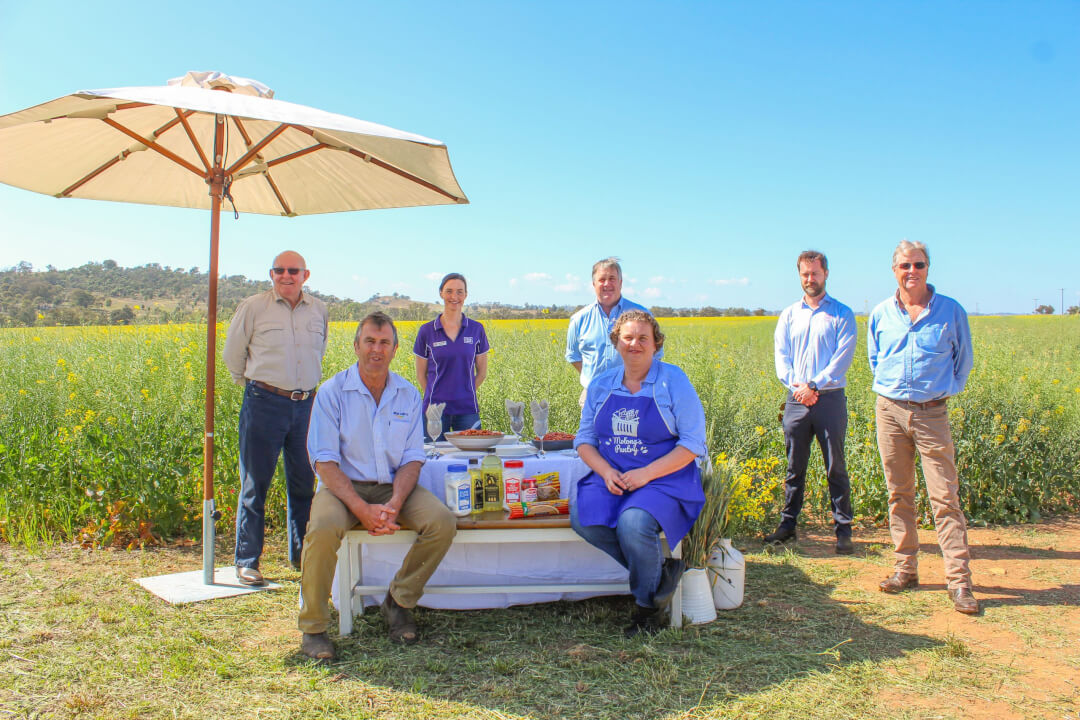
“This year has really highlighted the vital importance of Australian businesses supporting local farmers, manufacturers, organisations and other Australian businesses. We’re standing in the canola today which will be expeller pressed in a few weeks at our presses a stone’s throw from here. It truly is a unique partnership that highlights what can be achieved when suppliers and food manufacturers come together to collectively benefit Australian communities, from farmers, local businesses and our most vulnerable. It’s extremely humbling to be involved in this,” said Mr Mac Smith.

Foodbank National Program Manager – Agriculture, Jacqui Payne added, “We are extremely grateful for Manildra Group and MSM Milling’s dedication to our cause and ongoing involvement in our vital programs. Our Collaborative Supply Programs are a world-leading and globally unique model for food relief, and we’re delighted to have proud Australian businesses like Manildra Group and MSM Milling playing such major roles. They understand the importance of Foodbank being able to make these pantry essentials available to families from all regions and all walks of life who are doing it tough right now. Put simply, if we did not receive this support, families and individuals across Australia would be going without.”

Community Friends provides food relief to more people than ever before

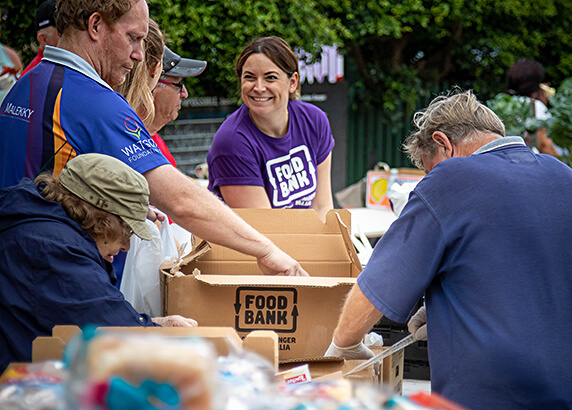
Community Friends is a local Brisbane charity providing free, life-changing food relief and support to the homeless, disadvantaged and people in need.

Founded in 2011, Community Friends provides essential food and groceries every Wednesday to more than 150 people and their families living in West End and greater Brisbane.

Sadly, COVID-19 is severely impacting Queensland’s hunger crisis, with Community Friends seeing many people, including casual workers and international students, being forced to reach out for help for the very first time.

To tackle the increasing demand in these two new groups, the charity has started an additional food run on Thursdays for TAFE Queensland to provide them with as much food as possible for their local and international students facing hunger.

Mark McDonnell, Community Friends Founder and Director, said the charity is experiencing very challenging times with more people seeking food relief than ever before.

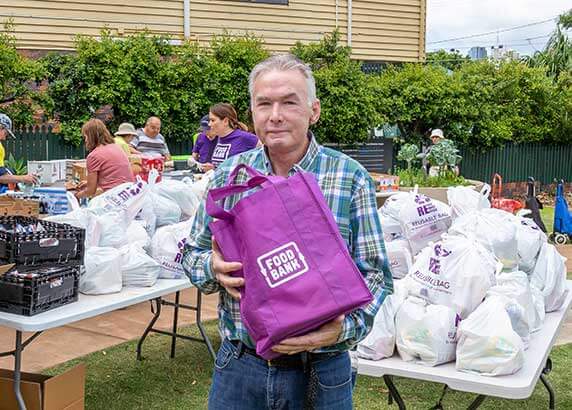
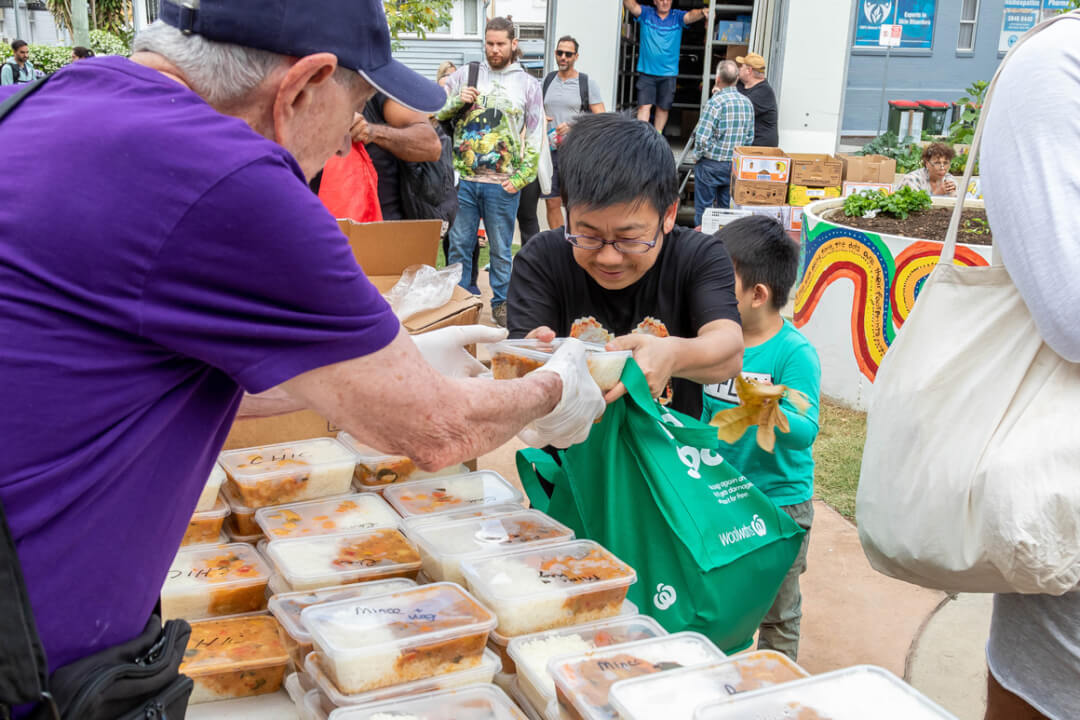
“COVID-19 has resulted in a lot more work, which is why we now start setting up and preparing the food much earlier than we used to. It also costs us more money and requires more volunteers, as we now prepack all food into reusable bags, so people seeking food relief don’t touch the food directly.”

“Prior to the pandemic, people could pick which food they wanted. Now, they get two prepacked bags of groceries only. They don’t get the opportunity to go through the bags or say what they want or don’t want. If there is food left over, they can go through a second time,” he said.

featured image

featured image

The charity also provides milk, bread, hot meals in takeaway containers, noodles, and small goods such as drinks and muesli bars in addition to the two prepacked bags, which people can choose to take.

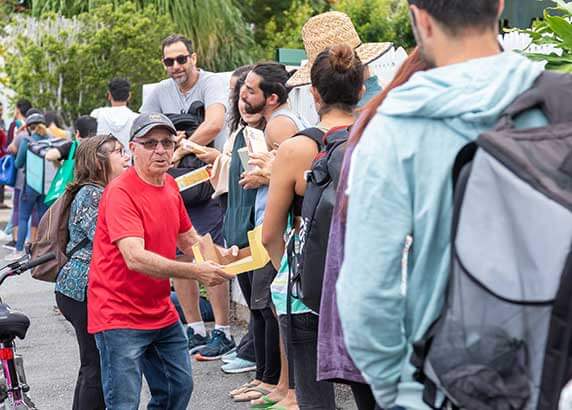
Community Friends aims to give everyone enough food to feed themselves and their families for three to four days. However, one of Community Friends’ volunteers said, since COVID-19, they have been struggling to provide enough food for everyone who needs it.

“The saddest part was on one of the days we still had about 30 people cueing up and we didn’t have enough bags for them,” she said.

With more and more people seeking food relief, the charity has been forced to move to a bigger location, Punyapa Park in West End, as there wasn’t enough space for them to enforce social distancing.

featured image

featured image

Foodbank Queensland provides essential food directly to charities, including Community Friends, who support people seeking food relief. We currently work with over 250 charities across the state. If you are a Queensland charity, Foodbank Queensland membership is a great way to support your food relief projects, offering your organisation a reliable source of food and groceries all year round. If you are in a position to help Foodbank Queensland provide more food across the state to support Queenslanders in need, please consider joining the fight against hunger as a regular giver.

EVERY $1 YOU DONATE PROVIDES 2 MEALS TO A QUEENSLANDER IN NEED

Reduce your waste footprint with Repurpose It

In support of our commitment to reducing waste, we’re teaming up with Repurpose It, an organisation who champions sustainability and believes “all waste can be converted into valuable resources”.

Providing a true closed loop solution, Repurpose It will use new and best-practice technology converting waste to resource, reducing the reliance on extractive materials.

“We couldn’t be more excited by our partnership with Foodbank Victoria, an organisation who shares our values in relation to creating a better planet and minimising food waste,” says George Hatzimanolis, CEO & Co-Founder.

“Our goal is to provide 1 million meals to struggling Victorians through the term of this partnership”, says George. Repurpose It have already committed support of Foodbank Victoria by providing 50,000 meals to vulnerable Victorians.

Whilst we do our best at Foodbank to distribute all our food out to our charity partners there is some food that even we can’t use.

You too may have excess waste that can be re-diverted from landfill. If this is the case, and you are interested in finding better ways to minimise waste and learning more about this new technology please contact our partnerships team via CorporatePartnerships@foodbankvictoria.org.au  or 03 9362 8383. We would love to get you involved with this great initiative.

What’s even better is that for every 1,000 kilograms of waste that is processed through the plant from our food donor network, Repurpose It have committed to donating $5 to Foodbank Victoria – that’s 10 meals to people in need. So not only will you be redirecting waste that will be converted into valuable resources, but you will also be helping provide more meals on the table of those that need it most.

Together we can close the loop and move one step closer to a future that is waste free and hunger free.

Want to learn how you can minimise your waste?

featured image

Foodbank bracing for a further rise in hunger


12th OCTOBER 2020: Foodbank, Australia’s leading food relief organisation, today reported that demand for food relief is up and believes it has not yet seen ‘peak hunger’ in the COVID-19 crisis.

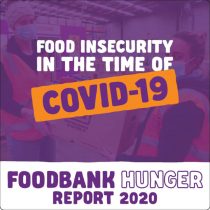
The organisation today published a special edition of its annual Foodbank Hunger Report which revealed that, while government assistance measures such as JobSeeker and JobKeeper have provided much needed temporary relief, charities and food insecure Australians alike have an extreme sense of unease about the future as these measures are rolled back. More than one in three (35%) food insecure Australians receiving benefits don’t know how they will cope or expect they will not cope well at all.

Foodbank Australia CEO, Brianna Casey, said this year’s report emphasises that COVID-19 is having a profound effect on the food security of Australians. “The report highlights that, while need for food relief has become somewhat erratic and unpredictable, charities are reporting that overall demand is up by 47% and many of those now experiencing food insecurity (28%) have never before needed support,” Casey explained.

People seeking assistance at least once a week have more than doubled since last year (from 15% to 31%). “Those who were already struggling before coronavirus hit have been impacted more quickly and seriously than others as they have lower resilience against life’s turbulence,” Casey commented.

“In addition, we are seeing new groups reach out for help, in particular casual workers and international students. These individuals tend to be younger, so it’s not surprising that our report shows it’s Australia’s youth who are bearing the brunt of COVID-19. They are going without food more often than any other age group with 65% of food insecure Gen Z (aged 18-25) going hungry at least once a week compared to 25% of food insecure Baby Boomers (56-74) and 25% of Builders (75+).”

Now in its eighth year, the Foodbank Hunger Report brings together research between April and August undertaken with both charities and individuals experiencing food insecurity.

Key Statistics

  • Charities are seeing overall demand up by an average of 47%.
  • The proportion of food insecure Australians seeking food relief at least once a week has more than doubled since last year, from 15% to 31%.
  • When it comes to COVID-19 causing hunger in the community, young Australians are being hit the hardest. 65% of food insecure 18 to 25-year-olds are going without food at least once a week due to the pandemic.
  • More than a quarter (28%) of those experiencing food insecure had never faced it before the pandemic.
  • Charities are seeing significant numbers of two new groups in particular: casual employees and international students.
  • 43% of food insecure Australians are going a whole day a week without eating vs 30% in 2019.
  • 61% of food secure Australians have accessed food relief since COVID-19 hit but the other 40% have not reached out for the help they need. The most common barriers to accessing relief are embarrassment (33%), shame (30%) or thinking there might be others in greater need (33%).
  • While government assistance, such as JobKeeper and JobSeeker, have provided vital temporary relief for many, 62% say they are not receiving the assistance they need.
    • 37% say they need more than they’re getting,
    • 21% are ineligible for any additional support and
    • 4% have found it too difficult to apply
    • Post-COVID-19, almost 35% of food secure Australians don’t know how they will cope or expect they won’t cope at all when the additional government support is withdrawn.

Queensland braces for a further rise in hunger

12th OCTOBER 2020: Queensland’s largest hunger relief charity, Foodbank Queensland, today reported that demand for food relief is higher than ever recorded and warns it has not yet seen ‘peak hunger’ in the COVID-19 crisis.

Foodbank today published its annual Foodbank Hunger Report which revealed that, while government assistance measures, such as JobSeeker and JobKeeper, have provided much needed temporary relief, charities and Queenslanders in crisis have an extreme sense of unease about the future as these measures are rolled back.

Almost half (45%) of hungry Queenslanders who are receiving benefits do not know how they will cope or expect they will not cope well at all.

Foodbank Queensland CEO, Sara Harrup, said COVID-19 is having a profound effect on Queensland’s hunger crisis, with one third (33%) of those facing hunger in 2020 having never experienced it before.

“We are seeing the highest demand in our 25-year history, with more than 340,000 kilograms of essential food leaving our warehouse every week to help Queenslanders in need,” she said.

Ipswich Foodbarn Managing Director, Qim Kauwhata, said they are being forced to turn away more families every week than ever before due to increasing demand.

“Since COVID-19, our centre has been supplying food hampers to approximately 500 families every week, but are sadly, due to food shortage, sending away more than 300 families who need our support,” Qim said.

While need for food relief has become somewhat erratic and unpredictable, charities are reporting that overall demand is up by 47%.

Ms Harrup said the organisation is seeing new groups reach out for help, in particular casual workers and international students.

“These individuals tend to be younger, so it is not surprising that our report shows it’s our youth who are bearing the brunt of COVID-19. They are going without food more often than any other age group with 65% of food insecure individuals aged 18-25 going hungry at least once a week.”

In Queensland, people seeking assistance at least once a week has increased since last year (from 11% to 18%).

Now in its eighth year, the Foodbank Hunger Report brings together research between April and August 2020 undertaken with both charities and individuals experiencing a hunger crisis.

-ENDS-

Media enquiries

Zoe Templeton
Marketing & Communications Specialist
Foodbank Queensland
P: 07 3395 8422
E: zoe@foodbankqld.org.au

Bridging the gap between Breakfast Club and remote learning at Sebastapol Primary School

Located on the outskirts of Ballarat South, Sebastapol Primary School has been running Breakfast Clubs since the Program’s launch in 2016 and welcomed the addition of lunch and school holiday supply packs in Term 3, 2019.

Before COVID-19 restrictions were in place, the school welcomed local community members to help facilitate Breakfast Club on-campus.

Michelle Wilson, School Principal, says “before COVID-19 we were running Breakfast Club every morning at 8.30am with around 20 students attending each day. Our volunteers varied from day to day with people from the business, community, church, and government sectors. Our students loved the social aspect of Breakfast Club and valued the relationships with our volunteers.”

“Breakfast Club is also a part of our student leadership program. Dedicated students work closely with community volunteers in a range of tasks including unpacking, display, distribution, and the running of Breakfast Club. Some volunteers have remained mentors for students.”

Michelle says Breakfast Club also encourages positive relationships between students.

“The program promotes social cohesion among students as they share breakfast and conversations before class. It provides children with a caring human connection and helps us ensure they have adequate nutrition for learning throughout the day,” she says.

Around 95 per cent of the school’s students are now learning remotely, with around five students continuing to learn on-campus. While Breakfast Club has been postponed until on-site learning returns, Michelle says maintaining connection with the community is vital.

“Rather than running a Breakfast Club on-campus, we have been using Breakfast Club products and School Holiday Supplies to create food hampers for students and their families. We have been delivering food boxes to parents without a car or driver’s license, as well as holding a drive through collection service where families are invited to come along and collect a hamper to take home with them,” she says.

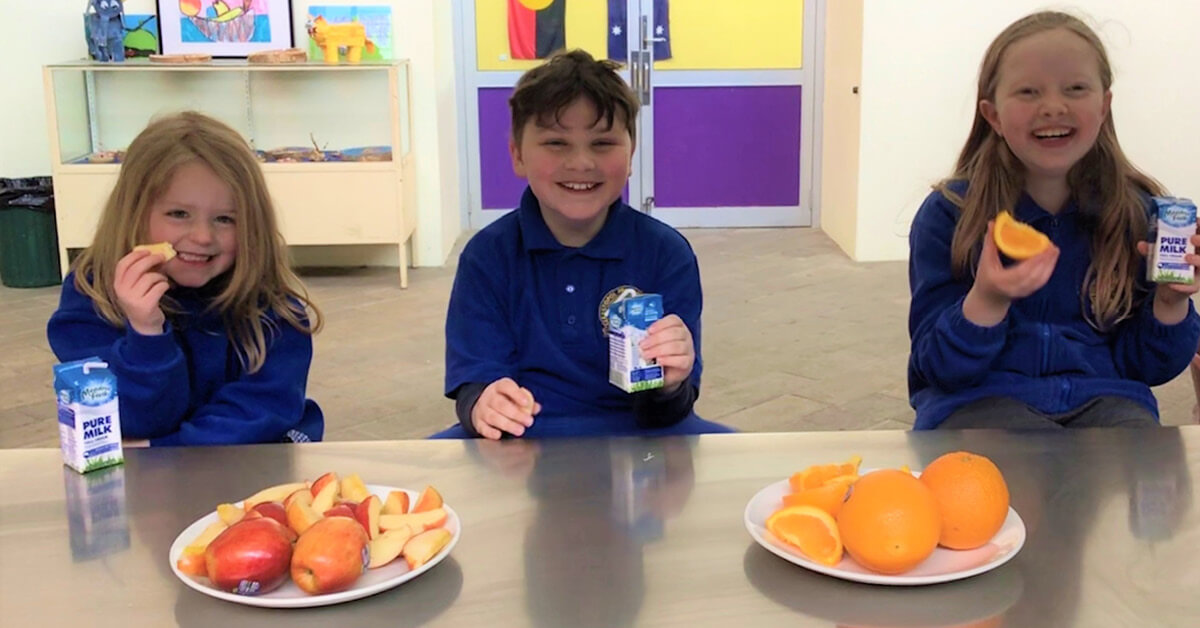
“The food packs have been able to assist families doing it tough. Many families have faced unemployment, uncertainty with casual roles or are still working full time while supporting their children through remote learning. Since remote learning came into place, we have been able to provide all of our 55 school families with food packs. For those students on-campus, we still host our Fruit Break program where they are invited to come along and enjoy fresh apples and oranges.”

Michelle says the food boxes offer a variety of products including fresh fruit, long life milk, cereal and other essentials required for a balanced diet. She says the School Holiday Supply packs have been a helpful addition to the Breakfast Club products on offer.

“Food insecurity is a real issue in our community, and we are so pleased to have an extensive range of food items available to us. We plan to continue ordering the school holiday packs and checking in on families who have requested additional support and are experiencing food insecurity during COVID-19. Some of our parents have been too anxious to go to the supermarket in fear of falling ill,” Michelle says.

“We look forward to welcoming the students back to campus. We hope to host a big family breakfast as part of our extended wellbeing initiatives when things get back to normal.”

Read more School Breakfast Club stories

Feed Me Bellarine

Feed Me – Bellarine, Geelong & Surf Coast are one of 533 charity partners we assist across the state of Victoria. Utilising food and groceries provided by Foodbank Victoria, the hard-working and compassionate team offer a friendly space for struggling folks in the Geelong, Bellarine and Surf Coast region to not only collect quality food and healthy take-away meals, but also to connect with the community.

Meet our Charity Partneres

Celebrating 8 Years of Farms to Families

We’re thrilled to be celebrating the eighth year of our Farms to Families Market! Since the program’s launch, the market has enabled us to provide almost 300,000 kilograms of healthy  fresh produce to more than 15,000 families in regional Victoria.

Fighting Food Waste with Repurpose It

We are excited to announce our partnership with Repurpose It, an organisation who champions sustainability and believes “all waste can be converted into valuable resources”.

There is some food that even we can’t use, and as part of a new strategic project, Repurpose It will take our packaged perishable food and turn it into soil and renewable energy.

We are totally committed to feeding those in need and reducing food waste, and with the help of Repurpose It, we are one step closer. Repurpose It have also generously committed to providing one million meals for those doing it tough.