A food fight for Foodbank. No really, we’re not kidding!

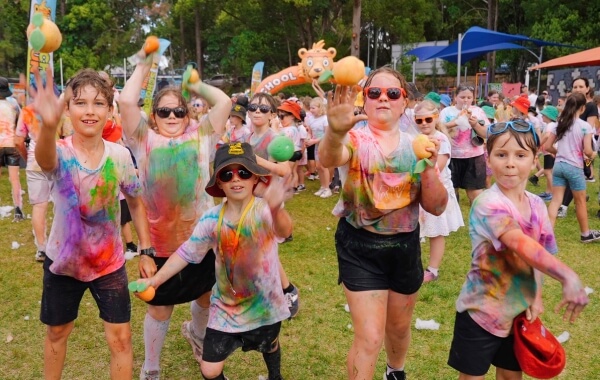
Yes. Kids across Victoria are flinging food* to fundraise for Foodbank (phew… try saying that three times fast)!

Students covered in colour, throwing fake food sponges

*No ACTUAL food has been harmed of course. This term, more than 135 schools are piffing and sloshing fake food as they take part in our brand new, feelgood fundraising day called Food Fight.

There’s nothing like mess, fun and slime to get kids excited about raising funds for a good cause!

Know a school that would want to get involved?

More articles below

An orchard full of sweetness

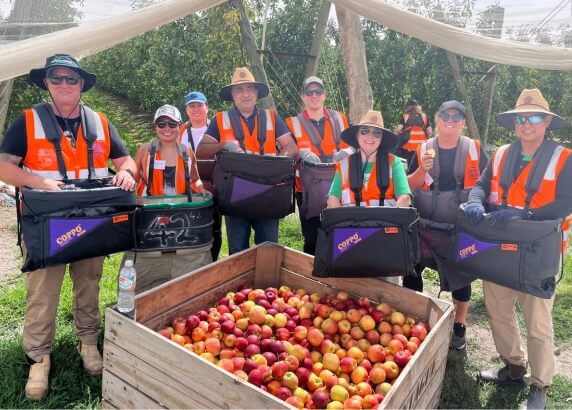
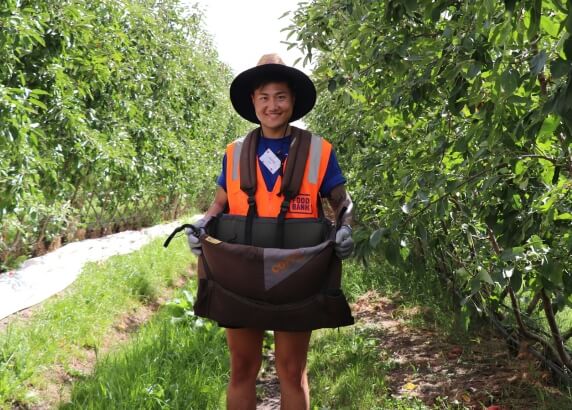
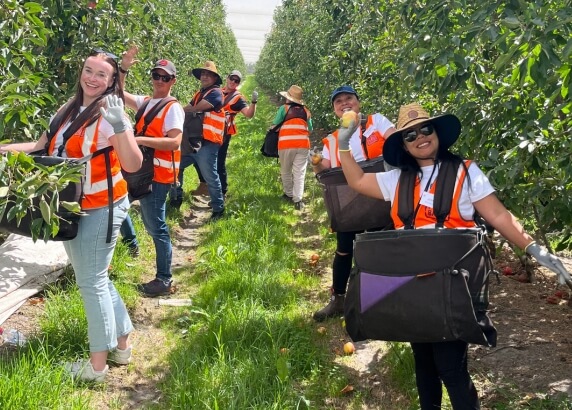
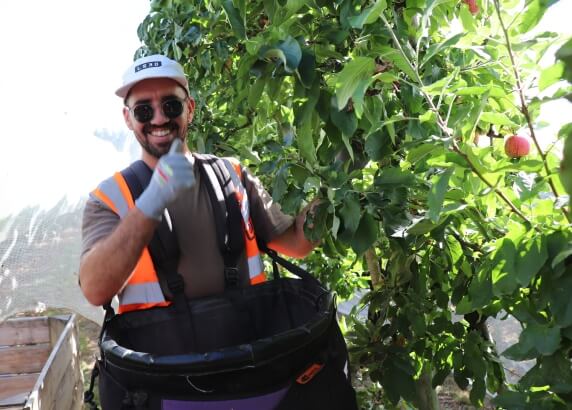
We didn’t have to ‘sweet talk’ any of the teams that signed up for our new corporate challenge Fruit Loop. They just put their best fruit pickin’ gear on and stripped the apple trees bare at Montague Orchard in Narre Warren on March 1 to raise fruit and funds for little old Foodbank.

Fruit Loop participants wearing their apple picking bags standing behind a crate full of apples

As our weary travellers plonked themselves down for a well-earned feast at Stella’s Kitchen and some gastronomically entertaining chat from Attica’s founder and head chef Ben Shewry, 50,000 apples were already on the way back to Foodbank. Ready to be distributed to folks in need around the state.

A tractor full of thanks to our amaaaazing teams of apple pickers:

AusNet, BildUrban, Chobani, DECJUBA Foundation, Jamf, McCain Foods, Peters Ice Cream, Repurpose It, Salesforce, Southern Cross Austero, Villawood and Woolworths.

Oh, and between them they raised 180,000 meals – yee haw!

More articles below

When towns lost connection, food got through because of you

Remember the giant storm that ripped through the state in February, leaving 135,000 homes without power?

While many of us moved on with our lives and the news cycle ticked over, weeks after the event hundreds of families living in regional Victoria were still in the dark.

Literally. Living without power and access to ATMs. Their local supermarkets unable to keep food chilled and the lights on.

We partnered with Red Cross Australia as we always do to supply emergency food hampers to those towns and communities until they were back on the grid. All thanks to your amazing support!

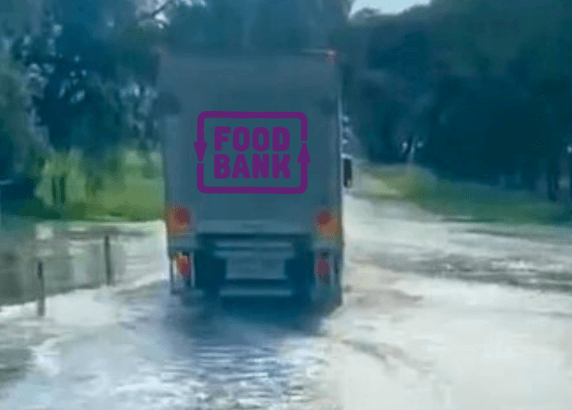
Foodbank truck in flood water

More articles below

What a ripper result!

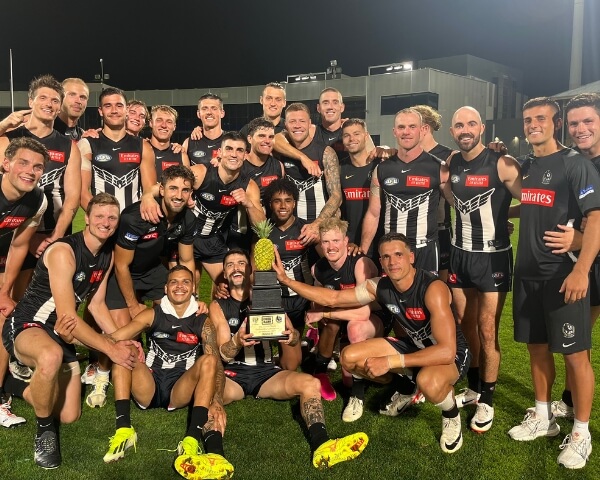
A Tuesday night, still over 30 degrees and playing in enemy territory – but over 10,000 footy fans trucked along to Ikon Park in Melbourne to watch an epic pre-season battle between the mighty Tigers and the reigning Pies.

And we were lucky enough to be in the thick of it.

Thanks to Richmond footy club who helped drive this incredible Charity Shield initiative and every person like you who bought a ticket or made a donation if they couldn’t make it to the game.

120,000 meals will now be on the tables of Victorians struggling to get by. We are humbled and energised – and ready to go around again next year!

Chobani and Woolworths

Partnering with Foodbank to increase access to fresh produce for Aussies in need

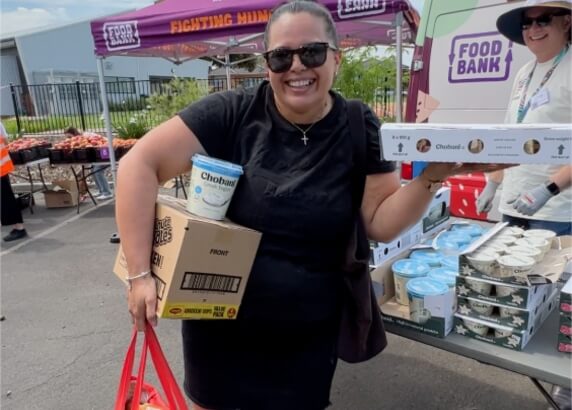
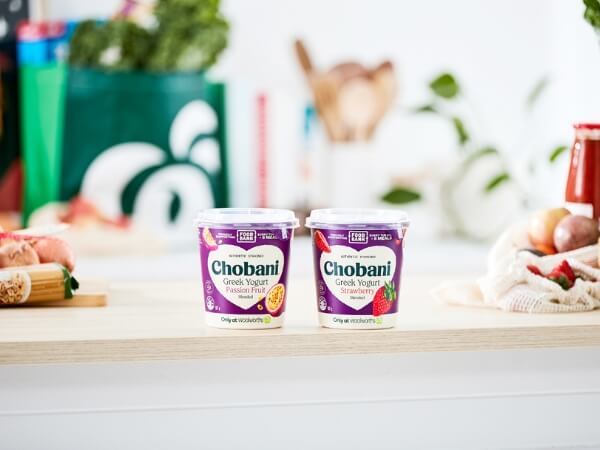
In February 2024, Chobani teamed up with Foodbank and Woolworths to launch two new 907g tubs of Strawberry and Passion Fruit yogurt, with every tub sold donating 6 meals to Aussies in need. This is the second campaign of this type, with the inaugural campaign in 2022 providing the equivalent of 552,000 meals.

With a commitment to donate 100% of profits, the limited edition product was exclusive to Woolworths and helped provide the equivalent of 1.56 million meals.

The funds raised from the campaign will go towards the purchasing and distribution of fruit and vegetables across the country.

Tim Browne, GM ESG & General Counsel Chobani, reflects on the collaborative nature of Chobani’s relationship with Foodbank. “As a food and drinks manufacturer we have a responsibility to ensure everyone has access to nutritious food. However, we recognise that understanding the specific needs of communities requires expertise – that’s where Foodbank comes in. Our partnership with Foodbank is more than just a collaboration; it’s a friendship built on a shared mission to use food as a force for good. We are always looking for new and innovative ways to support Foodbank and make a tangible impact. Through our close collaboration, Foodbank has highlighted the pressing need for fresh produce, and we’ve tailored this initiative to address this directly.”

Driven to use its platforms, resources and influence to improve food access, Chobani hopes that this campaign will also encourage other brands to make their own positive impact on individuals and local communities. “Collective corporate efforts have the power to ignite positive impact on individuals and communities experiencing hunger,” said Browne.

Trafalgar Primary Cooking Up A Community

The School Breakfast Clubs Program – Cooking Classes provide a food literacy, cooking and nutrition education program, focused on bringing families together in the school environment to learn life-long healthy eating habits.   

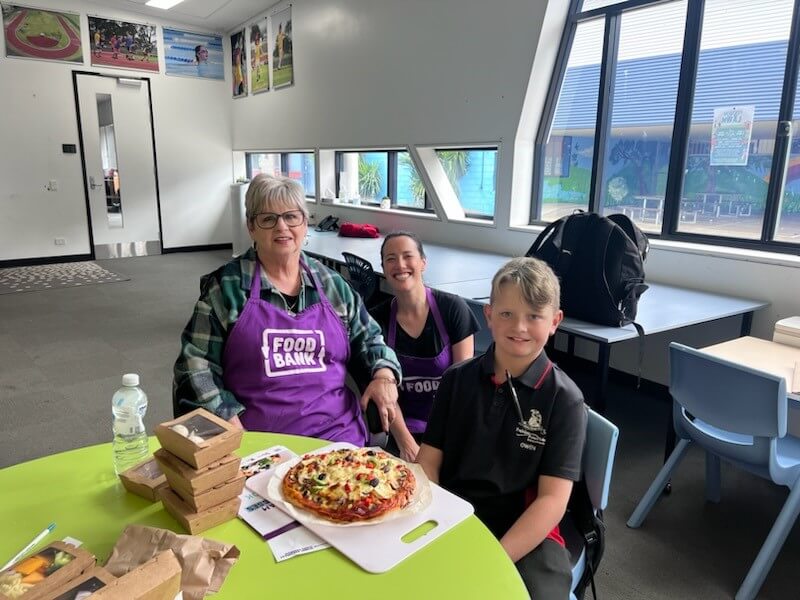
The Cooking Class team recently had the pleasure of delivering Cooking Classes at Trafalgar Primary School. The program brings families together to learn life-long healthy eating habits and aims to provide a hands-on environment where families cook and enjoy a meal together.  

Cooking Classes provided an opportunity for the school to connect with different families within the school community, and for these families to create connections with each other. The team at the school found the fun and casual setting within the classes created the perfect environment to check in with the attending families, both for the school Principal and teachers alike. This helped to strengthen relationships between the staff, parents/carers and the students in a relaxed school context. 

Another added benefit of the Cooking Classes was the relationships that were created between the attending families. Community is so important to the school, and seeing new friendships spark up was an unexpected outcome.  

One grandparent carer attending the classes struggled to make social connections within the school community, until she attended the Cooking Classes. She met another carer, they chatted each week and planned to continue to catch up after the classes. A lovely outcome to create community!  

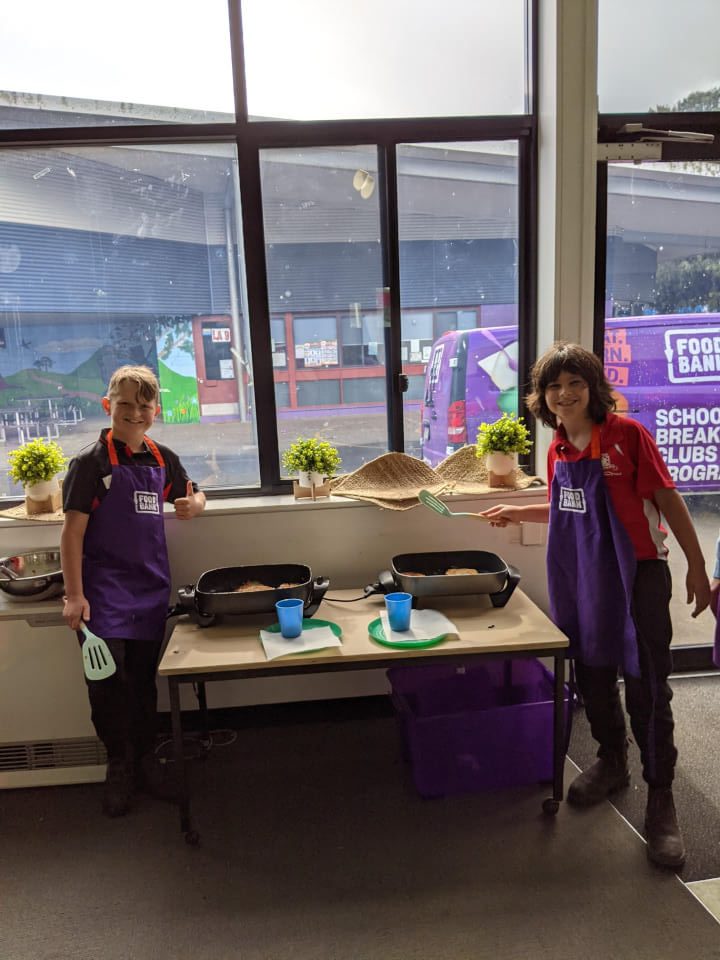
Trafalgar Primary Cooking Up A Community - Owen and Isaac

Trafalgar Primary Cooking Up A Community

Who attended the Cooking Classes?

Student leaders in the group are given responsibility overseeing the food distribution, which is providing them with valuable organisational and communication skills. An unexpected benefit is that the students are also washing up their own dishes. The school has a bucket with warm water and a brush on a table, where the dishes are rinsed and placed into another bucket. A student helper stays at the table to make sure that the process is followed, and then puts the dishes into the dishwasher for a final clean.

While we were visiting the school, two students came into the Breakfast Club to ask if they could help. The Helper positions and badges are sought after. These positions are provided to students who have displayed good behaviour, and they are also used as an incentive for good behaviour.

Another change that has been introduced is the move from many small tables to sit at, to two long tables. This change encouraged different age groups to sit with each other and mingle, with great outcomes.

The team at Trafalgar Primary wanted to create a welcoming community within the Cooking Classes, so chose families that would benefit most from this. The families were chosen for a variety of reasons, including recent bereavements, financial hardships, children with learning and behavioural needs and students with past struggles at the school.   

What about those hampers! 

Each week the families take home a hamper full of fresh and staple food. This ensures they can practice the weekly recipes at home.  The families at the Trafalgar Primary Cooking Classes loved the generous hampers. Not only did they enable families to try new recipes at home, but it also helped to cut down their weekly grocery bills. 

The kids love trying something new

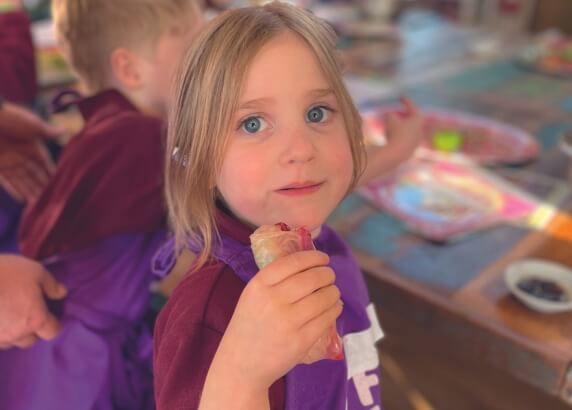
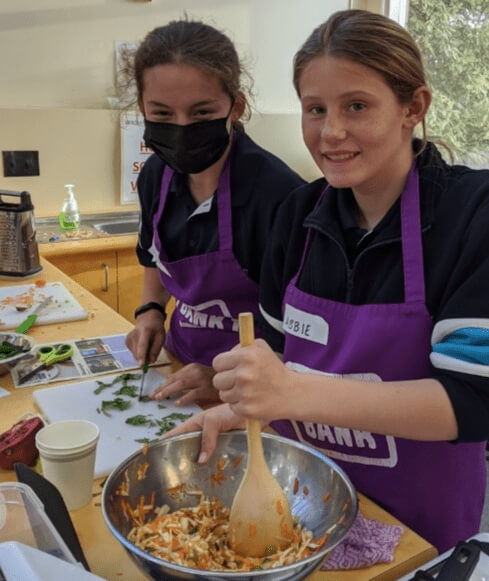
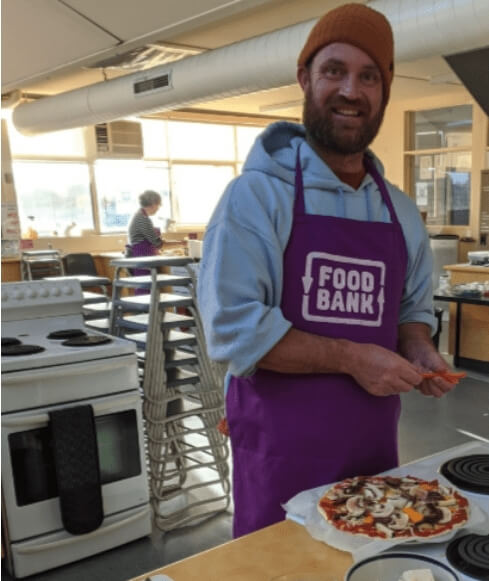
Each week the Cooking Classes whip up a different recipe, either pizza from scratch, fried rice, or rice paper rolls to name a few.  Young kids can be fussy eaters and wouldn’t try this new food at home.  But when the students make the food themselves and see other students eating it, they are more likely to try it too!   

One family, with four children all diagnosed with Autism, particularly loved the Cooking Classes. Their mother told the Cooking Classes team that food has been a real obstacle at home, where she struggles to get her kids to try new foods and feels like the family’s diet has not been as healthy due to their sensory issues with vegetables and other foods. 

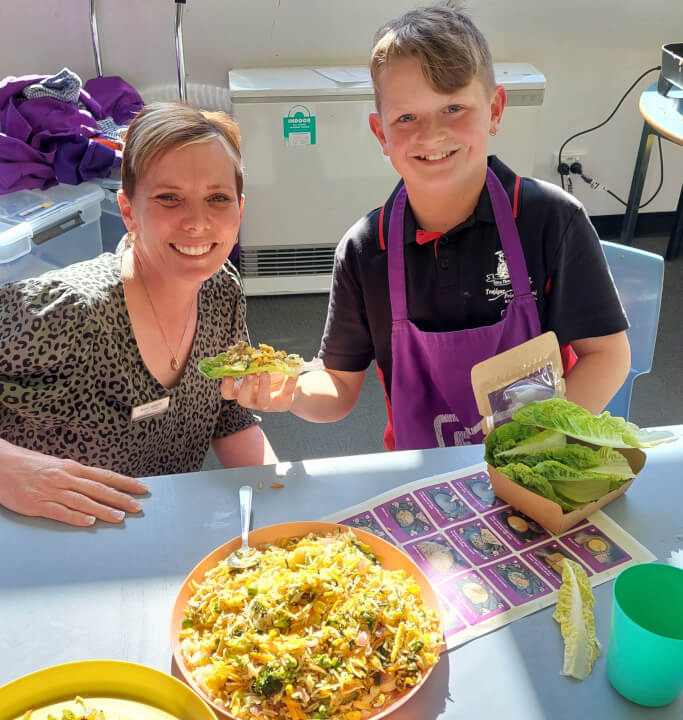
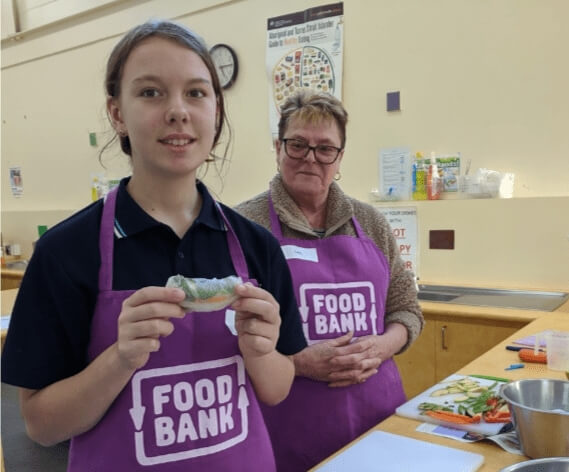
Trafalgar Primary Cooking Up A Community – Marg and Owen

She was absolutely delighted to see her two youngest children participating in the classes and trying something that they wouldn’t normally try, including the Vietnamese Rice Paper Rolls, packed with colourful, crunchy vegetables.  

Positive impact on the community 

The success of the Foodbank Cooking Classes at Trafalgar Primary School demonstrates the positive impact of the community-focused program. The Classes not only provided practical cooking skills but also serve as a catalyst for building relationships, fostering social connections, and creating a supportive environment for families facing various challenges. The collaboration between the school, families, and Foodbank identifies the outcomes of the program for bringing about positive change and strengthen community bonds. 

Testimonials from Trafalgar Primary School

A participating parent shared, “Foodbank Cooking Classes have been awesome, and the recipes have been good! The kids are happy! We’ve already made the fried rice again at home. It’s making us want to cook more as a family.” 

From the school’s perspective, Jess Burns, the Breakfast Club Coordinator, remarked, “We loved hosting Foodbank Cooking classes at our school! Alanna and Jane did a marvellous job creating a warm and inviting environment for our families to connect with one another and learn some valuable lessons on nutrition and cooking.” 

Greater Shepparton Secondary College

In 2022, four local secondary colleges were merged into the new Greater Shepparton Secondary College. The College has 2,500 students attending from years seven to 12. The past two years have seen the school thrive, and the School Breakfast Clubs Program has been at the center of this success ensuring kids have the nutritional energy they need to learn every day.

How does a school provide a Breakfast Club to 2,500 kids every day? With a well planned and creative program!

A new school linking to local roots

Greater Shepparton Secondary College was built to include three identical main buildings known as neighbourhoods. The College and its neighbourhoods give Shepparton students new school facilities providing contemporary shared teaching, learning spaces and specialist areas.

The Local Aboriginal Education Consultative Group (LAECG), part of the Shepparton Education Plan’s Koorie Engagement Group, led the initiative to name the three neighbourhoods in Aboriginal language. After community consultation, three names, Biyala (River Red Gum), Dharnya (Grey Box), and Bayuna (Yellow Box), were endorsed as the official names symbolising the significance of trees in culture, education, and community gathering.

The selected names are connected to trees found along waterways in the local landscape and compare the neighbourhoods to branches and the students to leaves, emphasising the vital role of education and growth.

A Breakfast Club for the masses

Traditionally School Breakfast Clubs Programs are run in the morning before school, but expecting teenagers to get to school early can be a hard ask for most. After experimenting with different times, the team at the College landed on running their Breakfast Club during the first recess break of the day as well as in the mornings too.

Every day the bell rings at 11am, the kids are hungry and the team here are prepared. It was quickly realised that high school students don’t want to sit down to eat, they are in a hurry and want to spend time with their friends.

Each neighbourhood is equipped with a kitchen and community room. The community room in the Bayuna neighbourhood is where the Breakfast Club happens every day.

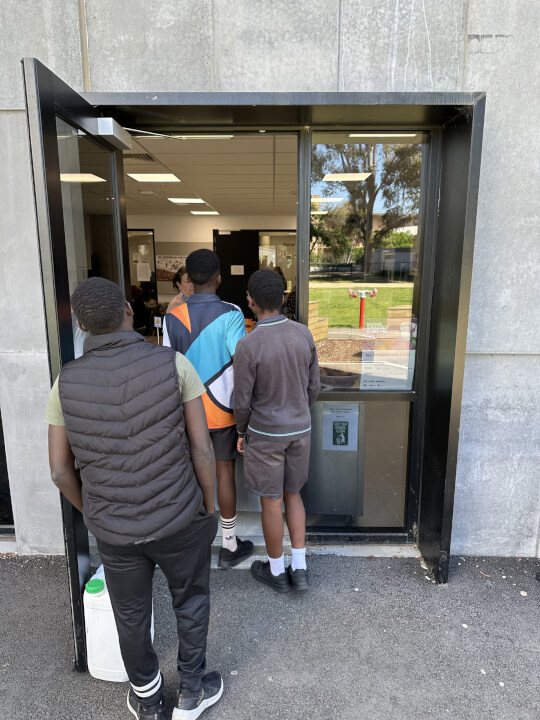
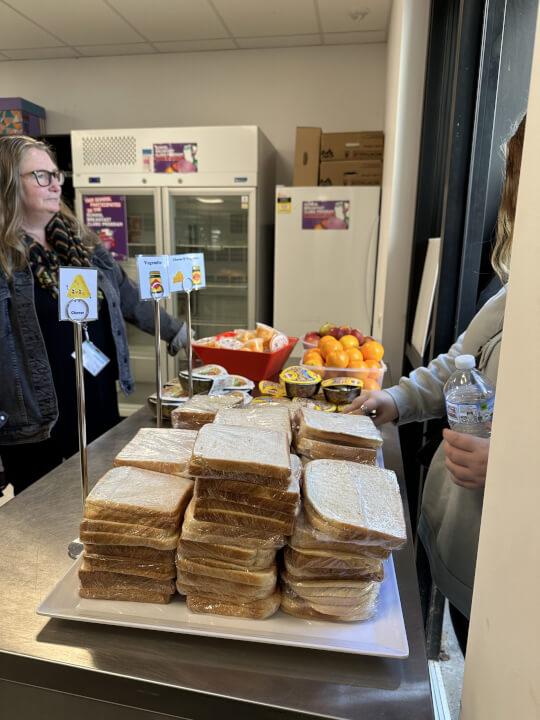
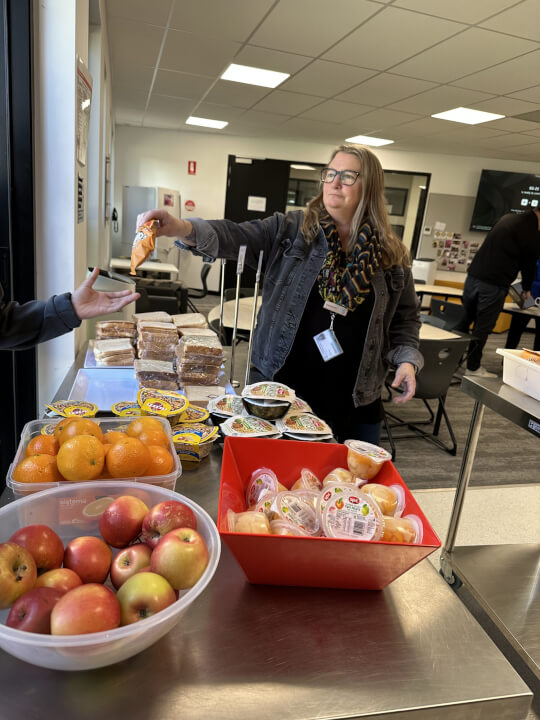
The team has a portable commercial trolley that is stacked with the School Breakfast Clubs Program food. The trolley is set up and rolled to an external door. The kids line up and before you know it there are polite hands reaching in for apples, oranges, pears, fruit cups, Messy Monkeys, vegemite sandwiches and, with help from another organisation, they have cheese sandwiches too. The team also offer the tuna meals and lentil bowls for the kids to take for their lunch break.

During the 20 minute recess break, 80-100 kids receive essential food. The grab and go style of service provides the ease of access for every student, and it reduces the stigma that a teenager can feel about accessing food relief.

Given the size of the school, it is hard to get food to every student. To help manage this, School Breakfast Clubs Program snacks are left in communal areas of each Neighbourhood. This ensures students have access to food when and where they need it, in an easily accessible way.

Testimonials

“The Breakfast Program is integral in assisting our students to be “ready to learn”. It supports our acknowledgement that there is a strong connection between student wellbeing and academic outcomes. The program runs out of our Community Hub every morning before school and again during first break. A warm welcome given by the staff who run the program combined with a variety of nourishing foods makes sure that every student in our College starts the school day positively.”

Karen Utber | Assistant Principal

“We (the school) love being able to supply our students with some breakfast to start their day and then be able to supply them with something at recess to get them through the rest of the day. The program is a very welcomed part of our student’s day and the variety of items is great. Thank you for allowing us to do this.”

Linda | Breakfast Club Coordinator

Thoughts from an old student

“I remember a time when there was no breakfast club program. Some days I would go to the library to read, just so other kids didn’t realise that I didn’t have lunch when they were eating. Because of the Breaky Club, even when I have forgotten my lunch or I have lunch, and feel like I need a little more, I know that with a smile and a please and thank you, I won’t go hungry.”

Patrick Challis | Now a Science/Math Teacher

All we want for Christmas is a spatula that feeds 250,000 Australians

FBV Spatulas Home Tile

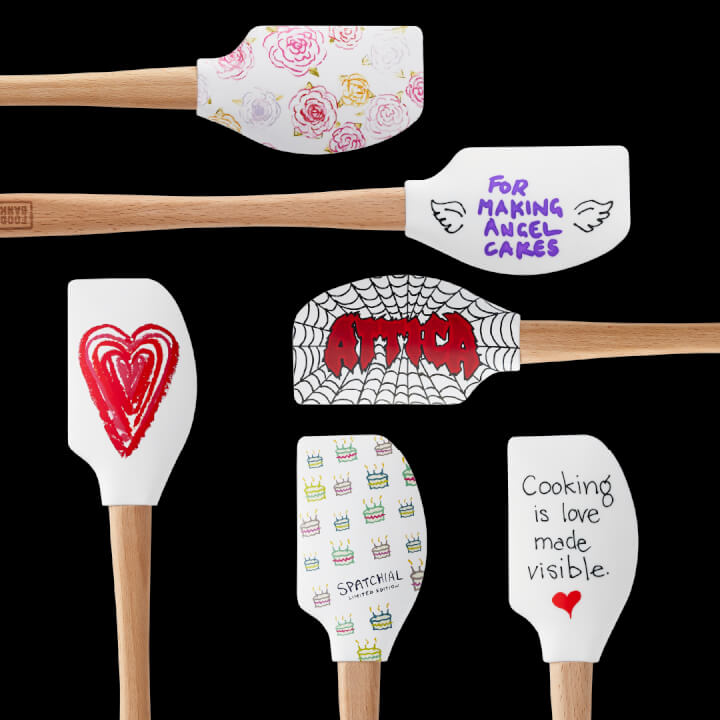
What happens when you give five community minded celebrities the opportunity to channel their inner Banksy on a spatula to help Foodbank feed families in need?

Well, you end up with five unique pieces of collectable art, that also help make super delicious Christmas cakes*

Foodbank Ambassadors Hamish Blake and Chrissie Swan have joined forces with Attica head chef Ben Shewry, MasterChef dessert queen Kirsten Tibballs and model/presenter Rebecca Judd to design these limited-edition Foodbank spatulas produced in partnership with our generous friends at Minimax.

There are velvety hearts, pastel roses, pop art cupcakes, Attica graphics and words to inspire a thousand slightly sticky smiles. We love them all.

It’s the ultimate feel-good Christmas gift that puts food on the table for vulnerable families right across the country.

On any given day in Australia, there are half a million households who can’t afford food so these big hearted, beautifully crafted spatulas couldn’t have come at a better time.

The Spatula by Foodbank can be purchased from Minimax stores and minimax.com.au for $19.95 and 100% (yes, 100%) of the proceeds will go to Foodbank.

Every spatula sold equals 25 meals, so that’s going to add up to an incredible 250,000 extra meals by Christmas with the help of gift shoppers who know just how hard a year it has been for so many.

*We can’t actually ‘guarantee’ the super delicious bit, but the odds are good!

Spatulas designed by celebrities

Every spatula sold equals 25 meals

Lyndhurst Secondary College

Lyndhurst Secondary College is a busy secondary college with 722 students, located in the suburb of Cranbourne in the outer southeast suburbs of Melbourne.   

The school focuses on empowering students for learning and life. With this in mind, when they were offered the opportunity to host the School Breakfast Clubs Program Cooking Classes, they grabbed that opportunity with confidence. 

The College invited students and their primary carers to attend the four week program, once a week. The Foodbank Victoria team came along with the equipment and ingredients, and the rest was up to the participants to get cooking. 

The food is great

One major benefit that the Lyndhurst Secondary College students found was learning how to cook simple meals, like pizza from scratch and rice paper rolls.  

Often these students don’t cook at home or like to try new foods. These classes taught them basic cooking skills for life, and when they made the food, they wanted to eat the food too. Trying new foods was good in the end! 


It’s the social life

Schools report that there is so much more to these Cooking Classes than the fabulous cooking skills the kids learn. Often the social side of things shines through.  

One of the participants brought their Primary Carer along, their grandparent. The grandparent was thrilled to have an opportunity to spend some bonding time with her grandchild, and to get some help with cooking in the evenings at home too.  

Another student came along with their Primary Carer who was a Government Mentor. The mentor liked the benefit of spending time with their student, and also getting to know the school staff better. 

Food hampers were essential

Each week the groups attending receive a full box of food, valued at $55 per box. These recipe boxes are filled with fresh ingredients (fruit, vegetables and herbs) as well as culturally diverse dry goods such as rice, olive oil, spices, noodles, nori and pita breads. 

Participants are encouraged to use the food to cook the recipes that they are learning in the classes.  

The families at Lyndhurst Secondary College found these hampers an incentive to attend the classes each week, and they also found that they provided enormous relief to their food shopping bills at the supermarkets.  

They would use the food to try the recipes, but also to add to their normal cooking ideas too. 


Testimonials from Lyndhurst Secondary College

“The impact of this program on our school community is so much more than feeding families and ensuring everyone has a full belly at school and at home.

This program has enabled us to establish and foster positive working partnerships between school and home. It has enabled students and their parents and carers to find common interests through cooking and instilling a culture where time between family members is shared and valued.

For us as a college, one of the greatest benefits was being able to see students continue their learning alongside their parent/carer/significant adult and to hear that this continues at home with new routines of cooking and enjoying a meal together.

Undoubtedly, this has also benefitted student engagement with school, connection to school and parent/carer involvement and trust with our college. We believe the work Foodbank has done with our college will have long term positive impact on the students and families involved both academically and socially.”

Eloise Haynes | Lyndhurst Secondary College Principal

“I like cooking and I enjoyed eating the food after because it was yum. The staff there were very nice.

We got to bring home big boxes of food to cook at home. This meant that we were able to cook different meals together and eat together as a family.

I would 100% go back and do this program again.”

Abbie W | Year 7 Student

DoorDash and Melbourne United

Slam dunking the season away with 41,000 meals donated to Foodbank

During the 2022/2023 NBL season, DoorDash and Melbourne United (MU) partnered with Foodbank to donate meals for struggling Victorians.

Across Melbourne United’s 28 home and away games, DoorDash committed to donating $250 to Foodbank Victoria for every slam dunk made by an MU player, equating to a total of 500 meals. Closing the door on another incredible season, MU scored a total of 82 dunks, resulting in 41,000 meals delivered to Foodbank via DoorDash for those doing it tough.

DoorDash General Manager in Australia and New Zealand Rebecca Burrows said it was important to DoorDash to be part of this cause. “We are so thrilled to have established this formidable partnership with Melbourne United and Foodbank Victoria, which draws on our brand’s mission to empower local communities and create meaningful connections with the people we serve. Being able to deliver 41,000 meals to Australians living with food insecurity through such a wonderful sporting event fills us with such pleasure.”

Melbourne United CEO Nick Truelson voiced how proud he was to see his team so enthusiastically coming on board to support Foodbank while doing something they love.“ Being part of this initiative has been both eye-opening and rewarding for the entire Melbourne United team. We had 8 different players contribute to the tally, ranging from our tallest dunker (7ft) to our shortest (6ft), so it truly was a whole team effort. We are feeling immensely grateful to have been given the opportunity to give back to a cause so vital to the welfare of our community.”